Tracking employee hours accurately is an essential part of running an organized business. Whether you manage a small team, operate a growing company, work as a freelancer, or supervise hourly employees, knowing exactly how much time is spent on work can improve payroll accuracy and overall productivity. This is where The Benefits Of Using A Sample Time Card Calculator become especially valuable. A simple calculator can help transform daily clock-in and clock-out information into clear totals that are easier to review and manage.
A sample time card calculator provides a practical framework for recording work hours, breaks, overtime, and total time worked. Instead of manually calculating every shift, users can rely on a structured tool to reduce repetitive work and minimize common mathematical mistakes. When used consistently, a time tracking calculator can support better payroll preparation, employee accountability, project planning, and workforce management.
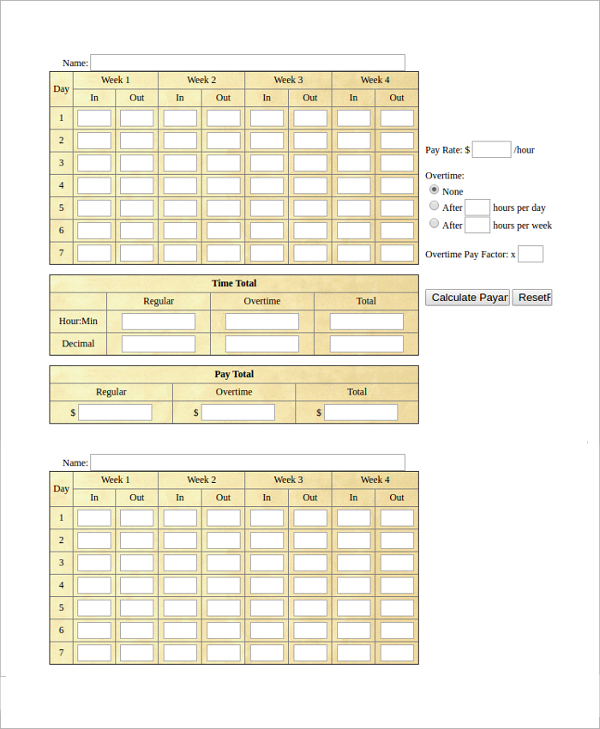
For businesses that still rely on spreadsheets or paper timesheets, using a sample calculator can also create a smoother transition toward more organized digital timekeeping. The goal is not simply to count hours. It is to create a reliable system that makes working time easier to understand and manage.
What Is a Sample Time Card Calculator?
A sample time card calculator is a tool designed to calculate the total number of hours worked during a specific day, week, or pay period. Users typically enter start times, end times, and break periods. The calculator then determines the total working hours based on the information provided.
Many time card calculators are available as spreadsheets, printable forms, online tools, or editable templates. A basic version may calculate standard hours, while more advanced versions can also help with overtime, unpaid breaks, decimal time conversion, and payroll estimates.
Common Information Included in a Time Card
- Employee name or identification information
- Clock-in and clock-out times
- Lunch or rest break duration
- Total daily working hours
- Weekly or pay-period totals
- Regular and overtime hours
- Manager approval or employee signature fields
This structure makes it easier to maintain consistent records. It also gives managers and employees a clear overview of time spent at work.

Improves Accuracy in Work Hour Calculations
One of the biggest benefits of using a sample time card calculator is improved accuracy. Manual calculations can easily lead to errors, especially when shifts include multiple breaks, unusual schedules, or minutes that must be converted into decimal hours.
For example, calculating the difference between 8:15 AM and 5:00 PM may appear simple, but the process becomes more complicated when an employee takes a 45-minute unpaid lunch or works additional overtime. A time card calculator helps organize these details and produces a more consistent total.
Accurate time calculations can help businesses reduce:
- Payroll discrepancies
- Overpayment or underpayment issues
- Manual calculation mistakes
- Disputes about recorded work hours
- Time spent correcting timesheet errors
When everyone follows the same time tracking process, payroll records become easier to verify. This consistency can be especially helpful for companies with several employees working different schedules.
Saves Time for Employees and Managers
Manual timesheet calculations can consume valuable time every week. Employees may need to total their own hours, while managers may need to review each entry before sending information to payroll. A sample time card calculator simplifies this process by handling the arithmetic automatically or providing a ready-made calculation structure.

Saving even a few minutes per employee can make a meaningful difference over an entire pay period. Managers can spend less time checking basic calculations and more time focusing on scheduling, customer service, project management, and employee development.
Useful for Different Types of Work Schedules
A flexible time card calculator can support many different working arrangements. It can be useful for employees with traditional office hours, rotating shifts, part-time schedules, remote work arrangements, or project-based assignments.
For example, a weekly time card calculator can provide a complete view of hours worked across several days. Meanwhile, a daily calculator may be more suitable for temporary workers or short-term projects. Choosing the right format makes time tracking easier for the people who use it.
Supports Better Payroll Preparation
Payroll depends on accurate information. If recorded hours are incorrect, the entire payroll process can become more complicated. One of The Benefits Of Using A Sample Time Card Calculator is that it helps create organized records before payroll calculations begin.
A completed time card can give payroll staff a clearer starting point when reviewing regular hours, overtime, and paid working time. This can reduce the amount of manual checking required before employee wages are processed.

Businesses should still ensure that their payroll procedures follow applicable employment rules, company policies, and local regulations. However, a well-designed calculator can make it easier to maintain consistent internal records.
Helps Monitor Employee Attendance and Productivity
Time tracking is not only useful for calculating wages. It can also provide helpful information about attendance patterns and workforce planning. When time records are organized consistently, managers can identify scheduling challenges, staffing needs, and unexpected changes in work patterns.
For example, repeated overtime may indicate that a team needs additional support. Frequent schedule gaps may suggest that staffing levels should be adjusted. A sample time card calculator does not measure the quality of an employee’s work by itself, but it can provide useful data for broader workforce decisions.
Creating More Transparent Records
Clear time records can also improve communication between employees and management. When both parties can review clock-in times, breaks, and total hours, misunderstandings may be easier to resolve.
Transparency is particularly important when employees work remotely or have flexible schedules. A consistent time tracking template provides a shared format that everyone can understand.
Provides a Simple Starting Point for Customization
A sample time card calculator is useful because it does not have to remain exactly the same for every business. Companies can customize a template to match their own scheduling and reporting needs.
- Add company or department information
- Create separate sections for regular and overtime hours
- Include project or job codes
- Add approval fields for supervisors
- Track multiple break periods
- Create weekly, biweekly, or monthly totals
Customization allows a basic time tracking tool to become part of a larger workflow. A construction company may need project-specific hour tracking, while a retail business may focus on shift scheduling. A freelancer may only need a simple record of billable hours.

Useful for Small Businesses and Growing Teams
Small businesses often need practical tools that are easy to understand and affordable to implement. A sample time card calculator can provide a straightforward solution without requiring a complicated system for basic work-hour calculations.
As a business grows, the same principles can also help establish better administrative habits. Consistent time records, clear approval processes, and accurate totals can make it easier to move toward more advanced workforce management systems when necessary.
The key is to choose a method that employees can use consistently. An overly complicated timesheet may create more errors, while a simple and well-organized calculator can encourage regular and accurate entries.

Practical Tips for Using a Time Card Calculator Effectively
To get the most value from a time tracking calculator, establish a simple process that everyone understands. Employees should know when to record their time and how breaks or schedule changes should be documented.
Review Entries Regularly
Checking time entries at the end of each day or shift is often easier than trying to correct an entire week of missing information. Regular reviews can improve the accuracy of the final timesheet.
Keep the Format Consistent
Use the same time format throughout the document. Mixing 12-hour and 24-hour formats can create unnecessary confusion. Consistent formatting makes calculations easier to review.
Record Breaks Clearly
Break periods should be entered according to the company’s timekeeping process. Clear records help prevent confusion when calculating the final number of working hours.
Store Completed Records Safely
Once a time card is completed and approved, keep it in an organized location. Digital files should use clear names and dates so they can be found easily when needed for payroll reviews or internal recordkeeping.
Conclusion
The Benefits Of Using A Sample Time Card Calculator extend far beyond simple arithmetic. A well-organized calculator can improve accuracy, save administrative time, support payroll preparation, increase transparency, and help businesses maintain clearer attendance records. It can also provide a flexible starting point for companies, managers, and independent workers who need a practical way to track working hours.
By choosing a simple format, entering information consistently, and reviewing records regularly, users can make time tracking more reliable and less stressful. Whether you manage a small team or simply want a better way to monitor your own working hours, a sample time card calculator can be a valuable tool for creating clearer, more organized, and more efficient time records.