However, writing a successful interview essay involves more than simply asking questions and recording answers. You need to prepare thoughtful questions, conduct an effective interview, organize the information, and present the interviewee’s perspective in a clear and interesting way.
In this comprehensive guide, you will learn what an interview essay is, how to structure it, how to prepare interview questions, and how to write an effective essay. You will also discover practical examples, useful writing tips, and a printable interview essay template to make the entire process easier.
What Is an Interview Essay?
An interview essay is a type of academic or personal writing that presents information gathered through an interview with another person. The purpose is to explore someone’s experiences, knowledge, opinions, or perspectives about a particular subject.
Unlike a traditional research essay, which primarily relies on books, articles, and other published sources, an interview essay uses firsthand information collected directly from an interviewee.
For example, a student might interview a teacher about effective teaching methods, a business owner about entrepreneurship, or a grandparent about historical experiences. The writer then organizes the answers into a meaningful essay.
A good interview essay usually includes three important elements:
- Personal perspectives: Authentic opinions, experiences, and insights from the interviewee.
- Supporting details: Specific examples, explanations, and relevant information gathered during the conversation.
- Writer’s analysis: Thoughtful explanations that connect the interview responses to the essay’s main topic.
Ultimately, the goal is to help readers understand the interviewee and gain valuable knowledge from the conversation.
Common Types of Interview Essays
Interview essays can take several forms depending on the assignment, audience, and purpose. Understanding the different types will help you choose the most appropriate writing style.
1. Personal Interview Essay
A personal interview essay focuses on an individual’s life, background, achievements, challenges, or personal experiences. It often explores the interviewee’s personality and the events that have influenced their life.
For example, you could interview a successful entrepreneur about how they started a business or ask an experienced professional about their career journey.
2. Informational Interview Essay
An informational interview essay provides knowledge about a particular profession, subject, or area of expertise. The interviewee shares professional insights that help readers better understand the topic.
This type of essay is especially useful for students researching potential careers or learning about a specific industry.
3. Narrative Interview Essay
A narrative interview essay presents the interviewee’s experiences in a storytelling format. Instead of simply listing questions and answers, the writer develops a connected story using important events, descriptions, and direct quotations.
4. Question-and-Answer Interview Essay
This format presents the conversation through organized questions and responses. It allows readers to follow the interview directly and understand the interviewee’s answers in their original context.
How to Write an Interview Essay Step by Step
Creating a strong interview essay becomes much easier when you follow a clear writing process. From choosing a subject to proofreading the final draft, every step contributes to the quality of your work.
Step 1: Choose an Interesting Interview Topic
Start by selecting a topic that has a clear purpose and is relevant to your assignment. Your topic should give you enough opportunities to ask meaningful questions and gather useful information.
Consider topics that encourage detailed answers rather than simple yes-or-no responses.
Here are some interview essay topic ideas:
- A teacher’s perspective on modern education.
- The challenges of becoming a successful entrepreneur.
- How technology has changed everyday life.
- The experiences of working in healthcare.
- Lessons learned from overcoming personal challenges.
- The importance of family traditions and cultural values.
- Advice from experienced professionals about career development.
Step 2: Research Your Interviewee
Before conducting the interview, learn a little about the person you plan to interview. Understanding their background will help you create relevant questions and avoid asking questions that have already been answered in publicly available information.
For instance, if you are interviewing a business owner, research their company, industry, and professional achievements. This preparation allows you to ask more specific questions during the conversation.
Step 3: Prepare Thoughtful Interview Questions
Questions are the foundation of a successful interview. Prepare a list that follows a logical order, beginning with simple introductory questions and gradually moving toward more detailed topics.
Open-ended questions are particularly useful because they encourage interviewees to explain their thoughts and provide examples.
Some effective interview questions include:
- Could you tell me a little about your background?
- What inspired you to pursue this career?
- What has been your biggest challenge?
- How did you overcome that challenge?
- What important lessons have you learned from your experiences?
- What advice would you give to someone starting in this field?
Remember to keep your questions relevant to your main topic. Additionally, prepare a few follow-up questions in case the interviewee provides an interesting answer that deserves further discussion.
Step 4: Conduct the Interview
Once your questions are ready, schedule a convenient time for the interview. You can conduct it in person, over the phone, or through a video meeting.
During the conversation, create a comfortable atmosphere so the interviewee feels confident sharing their experiences.
Follow these practical suggestions:
- Introduce yourself and explain the purpose of the interview.
- Ask permission before recording the conversation.
- Listen carefully without interrupting unnecessarily.
- Take notes of important statements and examples.
- Ask follow-up questions when clarification is needed.
- Thank the interviewee for their time and participation.
Most importantly, remain flexible. Sometimes, an unexpected answer can provide valuable information that makes your essay more interesting.
Step 5: Organize Your Interview Notes
After completing the interview, review your notes or recording and identify the most important information. Group similar responses together and remove details that do not support your essay’s main purpose.
Look for memorable statements, relevant examples, important experiences, and recurring ideas. These details will become the foundation of your body paragraphs.
It is also important to verify names, dates, job titles, and other factual information before including them in your final essay.
Step 6: Write Your First Draft
With your information organized, begin writing your interview essay. Follow a clear structure and make sure each paragraph contributes to the overall topic.
Rather than presenting every interview response, select the most meaningful information and explain why it matters to your readers.
Step 7: Edit and Proofread Your Essay
Finally, review your draft for grammar, spelling, punctuation, clarity, and organization. Make sure quotations accurately represent the interviewee’s statements.
Read your essay aloud to identify awkward sentences and unnecessary repetition. You can also ask another person to review your work before submitting it.
Interview Essay Structure and Format
A well-organized interview essay generally follows a traditional essay structure consisting of an introduction, body paragraphs, and a conclusion. Each section has a specific purpose and helps readers follow the information naturally.
1. Introduction
The introduction introduces the interviewee, explains the subject, and establishes the purpose of the essay.
Include relevant background information, such as the interviewee’s name, profession, experience, or connection to the topic. You should also present a clear thesis statement that communicates the main idea of your essay.
Example: This interview essay explores the professional journey of Sarah Johnson, an experienced elementary school teacher who believes that patience, creativity, and communication are essential qualities for successful teaching.
2. Body Paragraphs
The body paragraphs contain the main information gathered during the interview. Organize them according to important themes instead of simply following the original order of every question.
For example, a career-focused interview essay might include the following sections:
- Background and education: Explain the interviewee’s personal and educational history.
- Career development: Discuss how the person entered their profession.
- Challenges and achievements: Highlight important experiences and accomplishments.
- Lessons and advice: Present valuable insights and recommendations.
Use direct quotations when the interviewee expresses an important idea particularly well. You can also paraphrase longer responses to improve readability while preserving their original meaning.
3. Conclusion
The conclusion summarizes the most important insights from the interview and reinforces the main message of your essay.
Explain what you learned from the conversation and why the interviewee’s experiences are relevant to the topic. Avoid introducing completely new information in this section.
Example: The interview demonstrates that professional success requires continuous learning, dedication, and the ability to overcome challenges. Sarah’s experiences show how passion and commitment can make a meaningful difference in education.
Interview Essay Template for Students
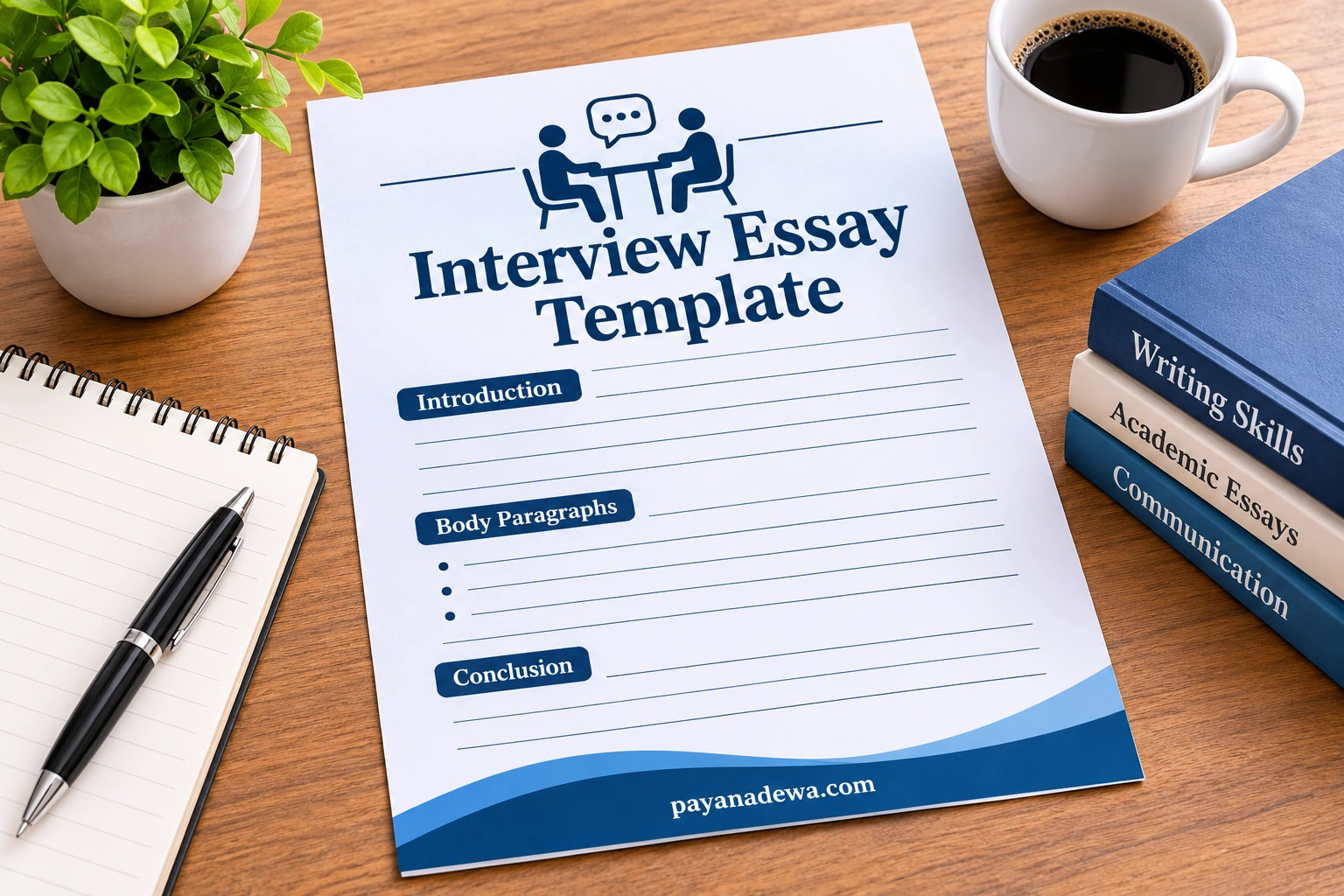
Using a template can make the writing process more organized, especially if you are completing your first interview essay. A printable template provides a simple framework for arranging your ideas before writing the complete essay.
The following structure can be used for school assignments, college projects, and personal writing activities.
- Essay Title: Write a clear title that reflects the interview topic.
- Introduction: Introduce the interviewee and explain the purpose of the interview.
- Background: Provide relevant information about the person’s life or professional experience.
- Main Discussion: Present important interview responses, examples, and quotations.
- Personal Insights: Explain the lessons or perspectives gained from the conversation.
- Conclusion: Summarize the main findings and explain their significance.
You can use the printable Interview Essay Template below to plan your writing, organize your interview information, and develop a complete essay.
Practical Tips for Writing a Better Interview Essay
Even with a good structure, the quality of your essay depends on how effectively you present the interview information. These practical tips can help you create a more engaging and professional result.
Use Accurate and Meaningful Quotations
Direct quotations can make your essay more authentic. Choose statements that communicate important experiences, opinions, or lessons. Always represent the interviewee’s words accurately and use quotation marks when appropriate.
Maintain a Clear Writing Style
Use straightforward language and avoid overly complicated sentences. Your readers should understand the main ideas without having to reread every paragraph.
Focus on the Most Relevant Information
Not every interview answer needs to appear in your essay. Select information that supports your thesis statement and contributes to the reader’s understanding of the subject.
Use Smooth Transitions
Connect your paragraphs with transition words and phrases such as furthermore, however, for example, in addition, and as a result. These expressions help create a logical flow between ideas.
Respect Your Interviewee’s Perspective
Present the interviewee’s opinions fairly and avoid changing the meaning of their statements. If you disagree with a particular perspective, distinguish your own analysis from the interviewee’s original comments.
Common Interview Essay Mistakes to Avoid
Several common mistakes can reduce the clarity and effectiveness of an interview essay. Fortunately, most of them are easy to prevent with careful preparation and editing.
- Asking vague questions: Prepare specific questions that encourage detailed answers.
- Including too many details: Focus on information that directly supports your topic.
- Writing without a thesis: Establish a central idea to guide your essay.
- Misquoting the interviewee: Check your notes and recordings before using quotations.
- Ignoring paragraph structure: Give each paragraph one clear main idea.
- Forgetting proofreading: Review grammar, spelling, and sentence clarity before submission.
- Adding unsupported information: Do not invent answers, experiences, or personal details.
By avoiding these mistakes, you can produce an essay that is more accurate, readable, and informative.
Frequently Asked Questions About Interview Essays
How long should an interview essay be?
The length depends on the assignment requirements. A short school assignment may require 500 to 800 words, while a more detailed college essay may contain 1,000 to 2,000 words or more. Always follow your instructor’s guidelines.
Should an interview essay be written in first person or third person?
Both perspectives can be appropriate. First person is useful when the assignment includes your personal reflections, while third person often creates a more formal and objective presentation. Follow the required academic style.
Can I use direct quotes in an interview essay?
Yes. Direct quotations are useful for highlighting meaningful statements. Make sure the quotations are accurate, relevant, and properly attributed to the interviewee.
What should I include in an interview essay introduction?
Your introduction should identify the interviewee, provide relevant background information, introduce the topic, explain the interview’s purpose, and present the central idea of your essay.
How do I end an interview essay?
End your essay by summarizing the most important insights, explaining what you learned, and connecting the interviewee’s experiences to the main topic.
Can I write an interview essay without recording the interview?
Yes. You can take detailed notes during the conversation instead. However, recording with the interviewee’s permission can help you verify important statements and avoid inaccurate quotations.
Conclusion
Writing an effective interview essay requires thoughtful preparation, meaningful questions, accurate information, and a well-organized structure. By following a clear process, you can transform an ordinary conversation into an engaging piece of writing that communicates valuable experiences and perspectives.
Start by choosing a relevant topic, researching your interviewee, and preparing open-ended questions. Next, conduct the interview, organize your notes, and develop your introduction, body paragraphs, and conclusion. Finally, edit and proofread your work to ensure clarity and accuracy.
Whether you are writing for school, college, or personal development, an interview essay template can make the process easier and more efficient. Use the guidance and printable template in this article to plan your next interview essay with confidence.