Equipment plays an essential role in almost every industry, workplace, and everyday activity. From construction machinery and manufacturing tools to office supplies and personal protective equipment, the right equipment helps people complete tasks efficiently, safely, and professionally. Whether you are managing a business, organizing a workplace, or preparing for a project, understanding equipment and its proper use can make a significant difference.
Choosing suitable equipment is not simply about purchasing tools or machines. It involves understanding your requirements, evaluating quality, considering safety, and maintaining everything properly. In this comprehensive guide, we explore different types of equipment, their importance, practical selection tips, maintenance strategies, and how to create an effective equipment checklist.
What Is Equipment?
Equipment refers to the tools, machines, devices, and other physical resources used to perform specific activities or achieve particular objectives. It can range from simple hand tools to advanced industrial machinery, depending on the application and working environment.
Businesses, professionals, institutions, and individuals rely on equipment to improve productivity, reduce manual effort, maintain consistency, and complete tasks more effectively. The equipment required for a construction project, for example, differs considerably from the equipment needed in a hospital, laboratory, office, or commercial kitchen.
In general, equipment can be categorized according to its function, industry, size, complexity, and intended purpose.
Common Types of Equipment
Equipment comes in many forms, each designed to support particular operations. Understanding these categories makes it easier to identify the right resources for different activities.
1. Industrial Equipment
Industrial equipment is used in factories, production facilities, warehouses, and manufacturing environments. It supports large-scale operations and helps businesses maintain consistent production standards.
- Manufacturing machines and production lines
- Industrial compressors and pumps
- Conveyor systems and material handling equipment
- Packaging and processing machines
- Generators and industrial power systems
Industrial equipment often requires trained operators, regular inspections, and specialized maintenance procedures.
2. Construction Equipment
Construction equipment helps workers build, repair, and maintain infrastructure, buildings, roads, and other structures. These tools can significantly improve project speed and reduce physical labor.
- Excavators and bulldozers
- Concrete mixers and compactors
- Power drills and cutting tools
- Cranes and lifting equipment
- Scaffolding and ladders
Safety is particularly important when using construction equipment because many machines involve heavy loads, moving components, or hazardous working conditions.
3. Office Equipment
Office equipment supports administrative activities, communication, documentation, and daily business operations. Modern workplaces depend on reliable office equipment to maintain organization and efficiency.
- Computers and laptops
- Printers and scanners
- Projectors and presentation devices
- Telephone systems
- Document shredders and office accessories
Selecting suitable office equipment can improve employee productivity while supporting comfortable and organized working environments.
4. Safety Equipment
Safety equipment protects workers and individuals from workplace hazards, injuries, and environmental risks. It is an essential part of responsible operations in many industries.
- Safety helmets and hard hats
- Protective goggles and face shields
- Safety gloves and protective clothing
- Respirators and hearing protection
- Safety harnesses and protective footwear
Safety equipment should always be appropriate for the hazards involved and maintained according to manufacturer instructions and applicable safety regulations.
5. Medical and Laboratory Equipment
Medical and laboratory equipment supports healthcare professionals, researchers, and technicians in performing examinations, treatments, measurements, and scientific investigations.
- Diagnostic instruments
- Microscopes and laboratory glassware
- Medical monitoring devices
- Laboratory centrifuges
- Sterilization equipment
These equipment categories require appropriate handling, calibration, cleaning, and maintenance to ensure reliable performance.
Why Equipment Is Important
Having the right equipment can influence the quality, speed, and safety of almost any operation. Properly selected equipment provides several important benefits.
Improved Productivity
Equipment helps individuals and businesses complete tasks faster and more efficiently. Machines can perform repetitive activities, while specialized tools allow workers to achieve better results with less effort.
Better Work Quality
Suitable equipment improves accuracy, consistency, and precision. For example, calibrated measuring instruments help technicians obtain dependable measurements, while professional power tools support more consistent construction results.
Enhanced Workplace Safety
Appropriate equipment reduces exposure to hazards and supports safer working conditions. Protective equipment, machine guards, lifting devices, and safety monitoring systems can help prevent accidents when used correctly.
Reduced Operating Costs
Although equipment purchases may require substantial investment, reliable equipment can reduce labor expenses, minimize waste, and improve operational efficiency over time. Preventive maintenance also helps avoid expensive unexpected repairs.
How to Choose the Right Equipment
Selecting equipment requires careful consideration of your objectives, budget, operating conditions, and long-term requirements. The following steps can help you make informed purchasing decisions.
Identify Your Requirements
Begin by determining exactly what the equipment needs to accomplish. Consider the tasks involved, expected workload, operating environment, and required performance standards.
Creating a detailed list of requirements helps prevent unnecessary purchases and ensures that the equipment meets practical needs.
Compare Quality and Specifications
Review product specifications before purchasing equipment. Important factors include capacity, power requirements, dimensions, durability, compatibility, and operating limitations.
Compare multiple options and prioritize reliable construction, appropriate functionality, and suitable performance rather than focusing exclusively on appearance or price.
Consider Your Budget
Establish a realistic equipment budget that includes more than the initial purchase price. Additional costs may include installation, transportation, accessories, training, maintenance, replacement parts, and energy consumption.
Evaluating the total cost of ownership provides a clearer picture of the long-term financial commitment.
Check Warranty and Support
Choose equipment from suppliers that offer clear warranty terms, dependable customer support, and access to replacement parts. Reliable after-sales service can reduce downtime and simplify future repairs.
Evaluate Safety Requirements
Before purchasing, determine whether the equipment meets relevant safety standards and includes necessary protective features. Make sure operators can receive appropriate training and understand safe operating procedures.
Equipment Maintenance and Care
Regular equipment maintenance is essential for preserving performance, extending service life, and reducing the likelihood of breakdowns. A consistent maintenance program also supports workplace safety and operational reliability.
Follow a Preventive Maintenance Schedule
Preventive maintenance involves inspecting, servicing, and maintaining equipment before problems occur. Depending on the equipment type, maintenance activities may include lubrication, cleaning, adjustment, calibration, and component replacement.
Follow manufacturer recommendations and establish maintenance intervals based on operating conditions and usage frequency.
Inspect Equipment Regularly
Routine inspections help identify damage, unusual noises, excessive vibration, leaks, loose components, and other potential problems.
Equipment showing signs of malfunction should be removed from service when necessary and inspected by qualified personnel before being used again.
Keep Equipment Clean and Properly Stored
Dust, moisture, chemicals, and improper storage can damage equipment over time. Clean equipment according to manufacturer instructions and store it in a suitable environment.
Use protective covers, designated storage areas, and appropriate containers to prevent unnecessary damage.
Maintain Equipment Records
Document equipment purchases, inspections, maintenance activities, repairs, warranties, and replacement dates. Accurate records help organizations monitor equipment condition and plan maintenance expenses.
How to Create an Equipment Checklist
An equipment checklist is a practical document used to organize, inspect, and track equipment. It can be particularly useful for construction projects, businesses, offices, workshops, warehouses, and event planning.
A well-organized equipment checklist should include the following information:
- Equipment name: The identification or description of each item.
- Quantity: The number of items required or available.
- Condition: Whether the equipment is new, operational, damaged, or requires inspection.
- Location: Where the equipment is stored or used.
- Responsible person: The individual assigned to manage or inspect the equipment.
- Maintenance status: Information about servicing and inspection schedules.
- Notes: Additional instructions, replacement requirements, or observations.
Using a printable equipment checklist template can simplify this process and make equipment management more organized.
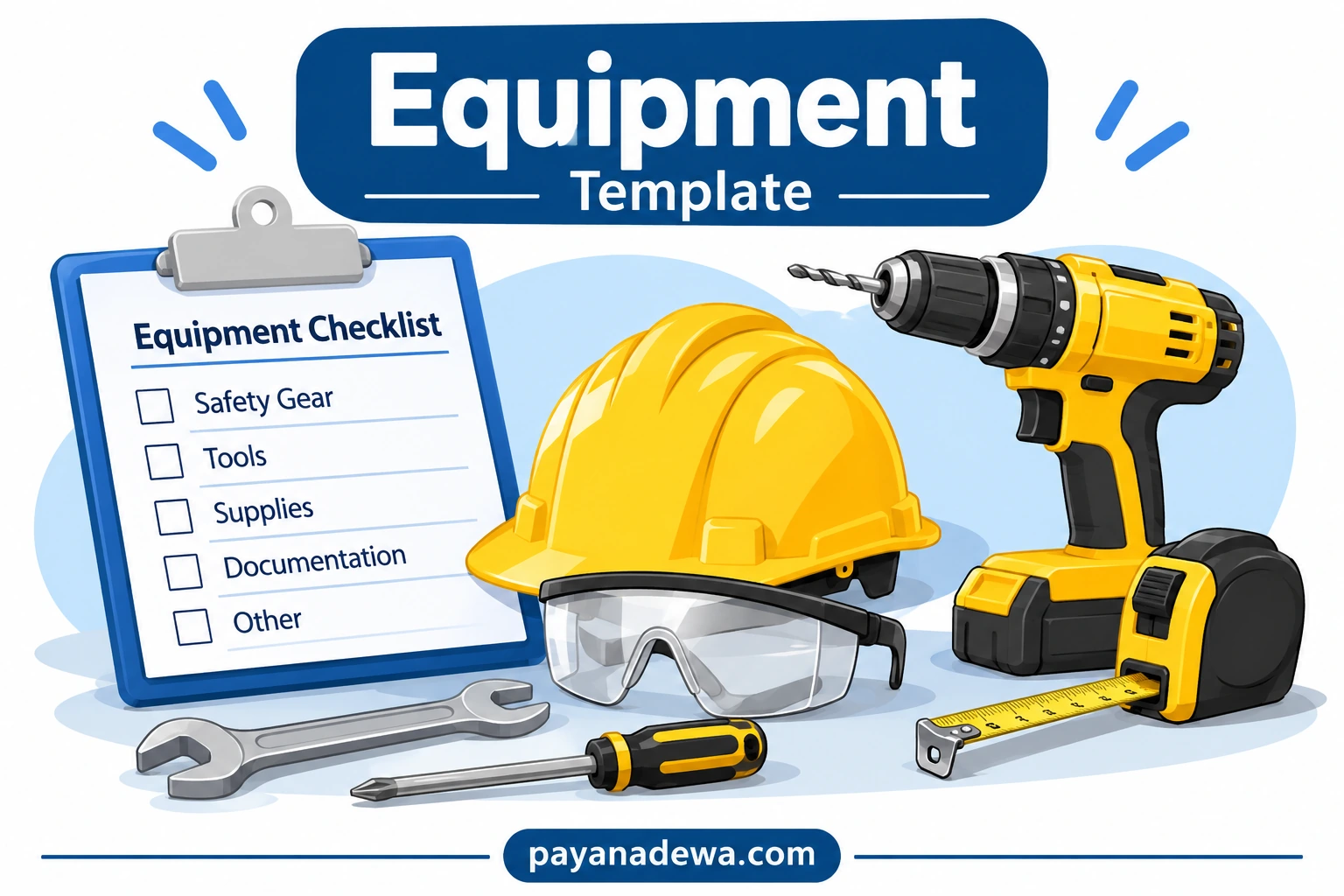
For better results, review the checklist before beginning a project, update it whenever equipment changes, and keep a copy accessible to the people responsible for equipment management.
Essential Equipment Management Tips
Effective equipment management involves more than purchasing and maintaining tools. It also requires organization, accountability, and planning.
- Label equipment clearly: Use identification labels or inventory numbers to simplify tracking.
- Assign responsibility: Designate individuals to manage inspections, maintenance, and storage.
- Track usage: Monitor equipment availability and usage frequency.
- Train operators: Ensure users understand equipment functions and safety requirements.
- Replace damaged items: Avoid using equipment that could create unnecessary risks.
- Review inventory regularly: Remove obsolete items and identify missing equipment.
- Plan future purchases: Use inventory records and maintenance history to make better purchasing decisions.
These simple practices can improve equipment availability, reduce waste, and support more efficient operations.
Equipment vs. Tools: Understanding the Difference
The terms equipment and tools are often used interchangeably, but they can have slightly different meanings depending on the context.
Tools generally refer to individual instruments or devices used to perform specific tasks. Examples include screwdrivers, hammers, wrenches, and measuring tapes.
Equipment is a broader term that can include tools, machines, systems, accessories, and other resources required to complete an activity. A construction site, for example, may contain hand tools, heavy machinery, safety equipment, and material handling systems.
Understanding this distinction can help businesses organize inventories and develop more accurate purchasing plans.
Conclusion
Equipment is an essential part of modern workplaces, industries, businesses, and everyday activities. The right equipment improves productivity, supports safety, enhances work quality, and helps organizations achieve their objectives more efficiently.
By understanding different equipment categories, evaluating purchasing requirements, following proper maintenance practices, and using organized equipment checklists, individuals and businesses can manage their resources more effectively.
Whether you need industrial machinery, construction tools, office devices, or protective equipment, careful planning and responsible management are the keys to getting the best value from your investment.
Start by identifying your equipment requirements, organizing your inventory, and establishing a maintenance routine. These practical steps can help you build a safer, more productive, and better-organized working environment.