Following up after an important conversation, application, proposal, or business opportunity can make a significant difference. A thoughtful follow-up reminds the recipient of your previous communication, reinforces your interest, and gives you an opportunity to provide useful information or move the conversation forward. The key is to be polite, concise, and purposeful rather than sounding impatient or overly persistent.
A well-structured Follow-Up Letter Template gives you a practical starting point for creating professional correspondence. Whether you are checking on a job application, following up with a potential customer, responding after a meeting, or asking about a business proposal, the right format can save time while helping you make a stronger impression. The source file likewise presents follow-up letters as useful for job applications, business proposals, and sales opportunities.
What Is a Follow-Up Letter?
A follow-up letter is a written message sent after an earlier interaction or communication. Its purpose is usually to remind someone about a previous conversation, confirm continued interest, provide additional information, request an update, or encourage the next step.
Follow-up correspondence can be sent by email or as a traditional business letter. In today’s workplace, email is usually the most convenient option, but the principles of effective follow-up communication remain the same: identify the previous interaction, explain why you are contacting the recipient again, and make your desired next step clear.
The original template material emphasizes that an effective follow-up can demonstrate professionalism, attention to detail, dedication, and continued interest.
Why Is a Follow-Up Letter Important?
People are busy, messages can become buried in crowded inboxes, and decisions sometimes take longer than expected. A polite follow-up gives your communication another opportunity to receive attention without requiring you to start the conversation from the beginning.
- Reinforces your interest: It shows that the opportunity or discussion remains important to you.
- Keeps communication active: A follow-up can prevent a promising conversation from going quiet.
- Provides additional information: You can include documents, answers, or details that were unavailable previously.
- Encourages action: A clear request can help the recipient understand what you need next.
- Demonstrates professionalism: Timely and respectful communication can strengthen your professional image.

When Should You Send a Follow-Up Letter?
The ideal timing depends on the reason for your message and whether the recipient gave you a specific deadline. If someone said they would respond by a particular date, wait until that date has passed before checking in. If no timeline was provided, a few business days is often a reasonable starting point for many professional situations.
After a Job Interview
A follow-up message after an interview can thank the interviewer, reinforce your interest, and briefly mention something relevant from the conversation. It can also be used to provide information you promised to send.
After a Job Application
If you have submitted an application and have not heard back after a reasonable period, a concise follow-up can politely ask whether there is an update on the hiring process.
After a Business Meeting
A post-meeting follow-up can summarize important points, confirm responsibilities, and establish the next action. This makes it particularly useful for project discussions and business partnerships.
After Sending a Proposal
When you have submitted a proposal or sales pitch, a follow-up can confirm that the recipient received it and invite questions or further discussion.

What to Include in a Follow-Up Letter
A strong follow-up letter should be easy to understand at a glance. Include only the information that helps the recipient understand the context and decide what to do next.
- A clear subject line: Make the purpose immediately obvious.
- A professional greeting: Address the recipient by name when possible.
- A reminder of the previous interaction: Mention the meeting, application, proposal, call, or earlier message.
- Your reason for following up: Explain why you are contacting them now.
- Relevant information: Include updates, answers, documents, or supporting materials.
- A clear next step: Politely state what you would like the recipient to do.
- A professional closing: Thank the recipient and provide your contact information where appropriate.
Sample Follow-Up Letter Template
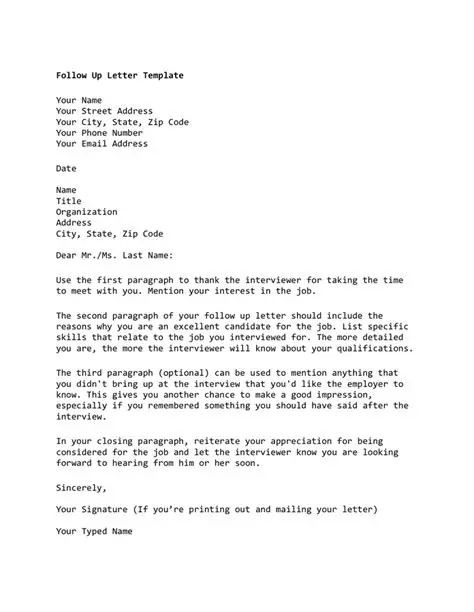
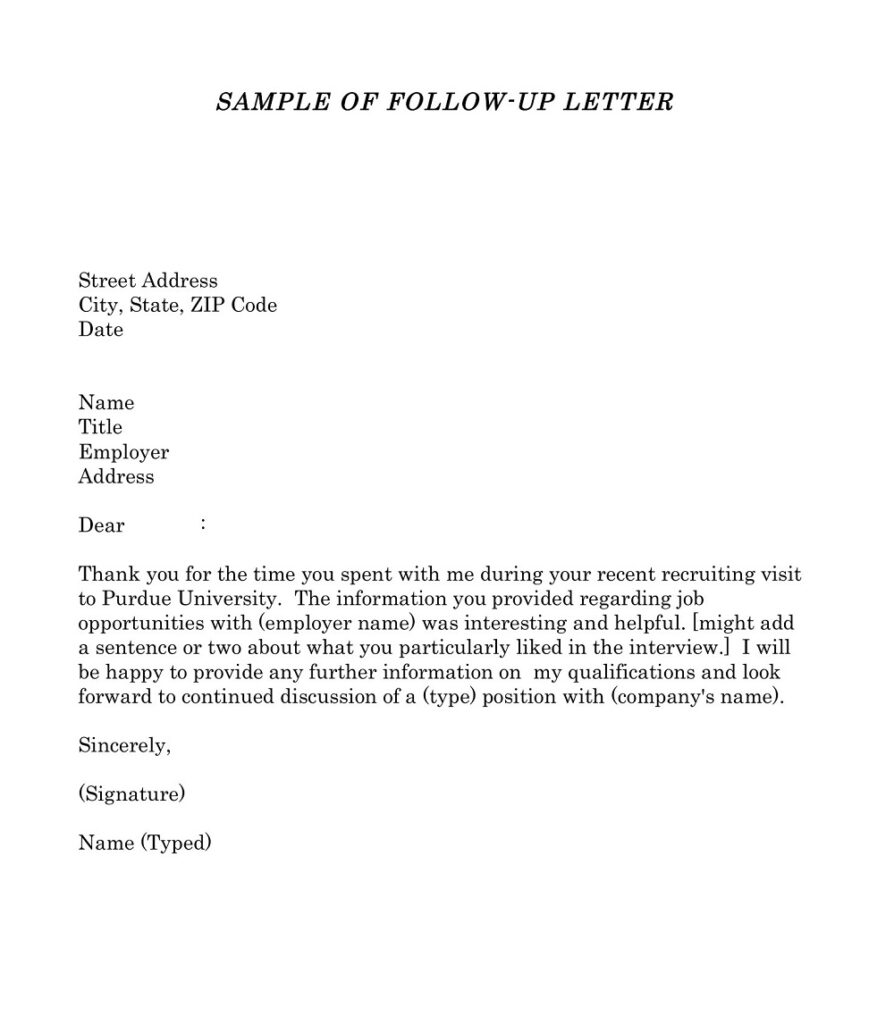
The following flexible Follow-Up Letter Template can be customized for employment, business, sales, networking, and other professional situations:
Subject: Follow-Up Regarding [Topic or Opportunity]
Dear [Recipient’s Name],
I hope you are doing well. I am writing to follow up on our previous [conversation/meeting/email] regarding [specific topic, position, proposal, or opportunity]. I wanted to express my continued interest and check whether there are any updates regarding the next steps.
I appreciated the opportunity to discuss [specific subject] and enjoyed learning more about [company, position, project, or opportunity]. Based on our conversation, I believe my [relevant skills, experience, qualifications, or services] could contribute positively to [specific goal or organization].
I have also attached [resume, portfolio, proposal, document, or other material] for your reference. Please let me know if you need any additional information or documentation from me.
Thank you for your time and consideration. I look forward to hearing from you and would be happy to discuss this further at your convenience.
Best regards,
[Your Name]
[Job Title or Organization]
[Phone Number]
[Email Address]
How to Write an Effective Follow-Up Letter
Keep the Opening Direct
Your opening should quickly establish the reason for contacting the recipient. Avoid spending several paragraphs on small talk before mentioning the purpose of your message.
For example, “I am following up regarding the marketing proposal we discussed last Tuesday” immediately provides useful context.
Reference the Previous Conversation
Specific details make a follow-up feel personal rather than automated. Mention the date of the meeting, name of the project, position applied for, proposal discussed, or another relevant detail.
Offer Something Useful
A follow-up is more effective when you provide value rather than simply asking, “Have you decided yet?” You might include an additional document, answer a question, clarify a proposal, or suggest a practical next step.
Make Your Request Easy to Answer
If you need an update, ask a straightforward question. If you want to schedule a meeting, suggest a few possible times. Making the next action simple can increase the likelihood of receiving a response.
Follow-Up Letter vs. Follow-Up Email
The terms are often used interchangeably, but there can be a slight distinction. A follow-up letter may refer to a formal written document, while a follow-up email is specifically delivered electronically. For most modern professional communication, an email provides the advantages of speed, convenience, and easy document sharing.
Regardless of the format, the same basic structure works well: greeting, context, purpose, relevant information, requested action, and professional closing.

Common Follow-Up Mistakes to Avoid
A follow-up should demonstrate persistence without becoming annoying. Avoid mistakes that can make your message feel demanding or unprofessional.
- Following up too quickly: Give the recipient reasonable time to respond unless there is an urgent deadline.
- Sounding impatient: Avoid language that pressures or blames the recipient.
- Repeating the entire previous message: Summarize the context instead of copying a long conversation.
- Being too vague: Clearly explain what you are following up about.
- Sending too many reminders: Multiple messages in a short period can create a negative impression.
- Forgetting attachments: If you mention a file, make sure it is actually attached.
- Using an overly casual tone: Match your language to the professional relationship and situation.
How Many Times Should You Follow Up?
There is no universal rule because circumstances vary. In many situations, one well-timed follow-up is enough. If the matter is important and there is still no response, a second brief reminder may be reasonable after an appropriate interval.
The source material similarly notes that a single follow-up is generally acceptable and that another polite reminder may be appropriate if a reasonable amount of time has passed without a response.
If repeated messages receive no response, consider whether the recipient has chosen not to proceed or whether another communication channel is more appropriate. Continuing to send frequent reminders rarely improves the situation.
Tips for Making Your Follow-Up More Professional
- Personalize every message: Use the recipient’s name and reference the specific situation.
- Stay concise: Make the email easy to scan on a computer or mobile device.
- Be positive: Focus on your continued interest rather than frustration about the lack of response.
- Proofread carefully: Check names, dates, attachments, grammar, and contact details.
- Choose an informative subject: Make it easy for the recipient to identify the conversation.
- End with a clear action: Tell the reader what response or next step would be helpful.
Frequently Asked Questions About Follow-Up Letters
How long should a follow-up letter be?
A follow-up should generally be brief and focused. Include enough information to establish context and communicate your request, but remove unnecessary details. The appropriate length can vary depending on the complexity of the matter.
Can I use a Follow-Up Letter Template for different situations?
Yes. A reusable template can be adapted for job applications, interviews, business proposals, sales opportunities, networking, meetings, and other professional communications. However, personalization is essential. The source file also recommends customizing a template to suit the specific situation and recipient.
What if I receive no response?
Wait an appropriate amount of time before sending another message. Keep the second follow-up shorter than the first, remain courteous, and avoid expressing frustration. If there is still no response, it may be better to move forward rather than continue contacting the recipient repeatedly.
Should I attach my resume or other documents?
If the document is relevant and useful, yes. Mention the attachment in the email and make sure the file name is professional and easy to identify. When following up on a job application, for example, an updated resume or portfolio can provide useful additional context.
Conclusion
A professional Follow-Up Letter Template can help you stay organized, communicate with confidence, and keep important conversations moving forward. Whether you are checking on a job application, thanking someone after an interview, following up on a business proposal, or reconnecting after a meeting, the most effective messages are polite, specific, concise, and focused on the next step.
Use a template as your foundation, but always adapt it to the recipient and circumstances. Mention the previous interaction, explain why you are following up, provide anything useful, and make your request clear. With the right timing and professional tone, a thoughtful follow-up can strengthen relationships, demonstrate reliability, and create another opportunity for a positive response.