Writing an effective email can be surprisingly difficult. Whether you are contacting a client, applying for a job, making a request, responding to a complaint, or sending an important business message, the way you organize your words can influence how your email is received. A well-designed Letter Template For Email Communications provides a reliable structure that helps you communicate clearly, professionally, and confidently.
Email templates are useful because they save time while ensuring that important information is not forgotten. Instead of starting with a blank screen every time you need to write an important message, you can use a proven format and customize it for your specific situation. The source material for this topic similarly highlights the value of templates for saving time, maintaining a professional tone, organizing information, and reducing misunderstandings.
What Is a Letter Template for Email Communications?
A Letter Template For Email Communications is a reusable writing framework designed to help you create an organized email. It typically includes a greeting, introduction, purpose of the message, supporting details, requested action, closing statement, and sign-off.
Although traditional letters and emails have different formats, the fundamental principles of good communication remain similar. A professional email should have a clear purpose, appropriate tone, logical organization, and enough context for the recipient to understand what you need.
Templates can be adapted for both professional and personal communication. The important point is to customize the wording instead of sending the exact same message to every recipient.
Why Use an Email Letter Template?
Starting from a template does not mean your communication has to sound generic. In fact, a good template gives you more time to focus on the message itself rather than worrying about formatting and structure.
- Saves time: You can begin with an established structure instead of writing from scratch.
- Improves organization: Important information can be presented in a logical order.
- Maintains professionalism: A consistent format helps create a polished impression.
- Reduces mistakes: A template reminds you to include essential details.
- Improves clarity: A structured message is easier for recipients to read and understand.
- Supports consistency: Businesses can maintain a consistent communication style across different messages.

Essential Parts of a Professional Email
A successful email does not need to be complicated. In most situations, you can create a strong message by following a simple structure.
1. Write a Clear Subject Line
The subject line should tell the recipient what the email is about before they open it. Avoid vague subjects such as “Hello” or “Important.” Instead, use descriptive phrases such as “Request for Meeting on Project Timeline” or “Application for Marketing Coordinator Position.”
2. Use an Appropriate Greeting
When you know the recipient’s name, using it is usually the best choice. For formal communication, “Dear Mr. Smith” or “Dear Ms. Johnson” may be appropriate. For a less formal professional relationship, “Hello Sarah” or “Hi David” can work well.
3. State Your Purpose Early
Do not make the reader search through several paragraphs to discover why you are writing. Explain the main purpose near the beginning of the email.
For example: “I am writing to request additional information about the project timeline and the next steps for our team.”
4. Provide Relevant Details
After stating the purpose, provide the information the recipient needs to understand the situation. Keep supporting details relevant and avoid unnecessary background information.
5. Make the Desired Action Clear
If you need the recipient to respond, approve something, provide a document, schedule a meeting, or complete another action, state that request directly and politely.

Sample Letter Template For Email Communications
The following flexible template can be adapted for many professional email situations, including requests, business correspondence, follow-ups, and general communication:
Subject: [Clear Subject of Your Email]
Dear [Recipient’s Name],
I hope you are doing well. I am writing regarding [state the purpose of your email]. I would like to discuss [briefly describe the topic or situation] and provide some additional information for your consideration.
In order to [state the desired outcome], I would like to propose [solution, request, or action]. This would help [explain the benefit, reason, or expected result]. I have also attached [document, file, or supporting information] for your reference.
Please let me know if you have any questions or require additional information. I would be happy to discuss this further by email, phone, or during a meeting at your convenience.
Thank you for your time and consideration.
Best regards,
[Your Name]
[Job Title, if applicable]
[Company or Organization]
How to Customize an Email Template
A template should be treated as a starting point rather than a finished message. Personalization is especially important when communicating with customers, employers, managers, colleagues, or business partners.
- Replace every placeholder with accurate information.
- Use the recipient’s name whenever appropriate.
- Adjust the tone according to your relationship with the recipient.
- Remove sections that are not relevant to your situation.
- Add specific dates, names, numbers, or documents when necessary.
- Review the entire message before sending it.
For example, an email to a potential employer should sound different from a message to a close colleague. Similarly, a customer complaint requires more empathy and careful wording than a routine internal update.
Types of Email Letter Templates You Can Use
There is no single format that works for every communication. Building a small collection of templates can make frequent email tasks much easier.
Business Email Template
A business email template can be used for inquiries, proposals, project updates, scheduling, client communication, and other workplace correspondence. Keep the language concise and focus on the purpose of the message.
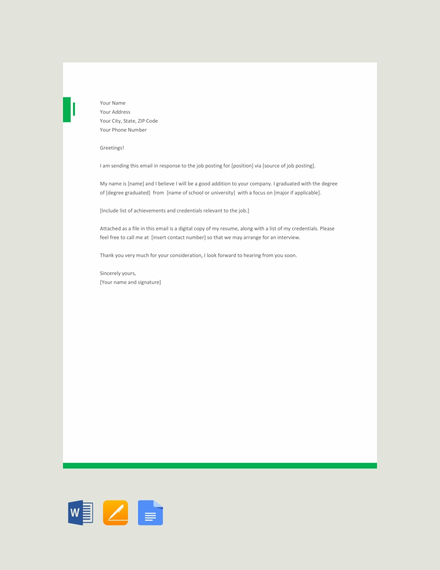
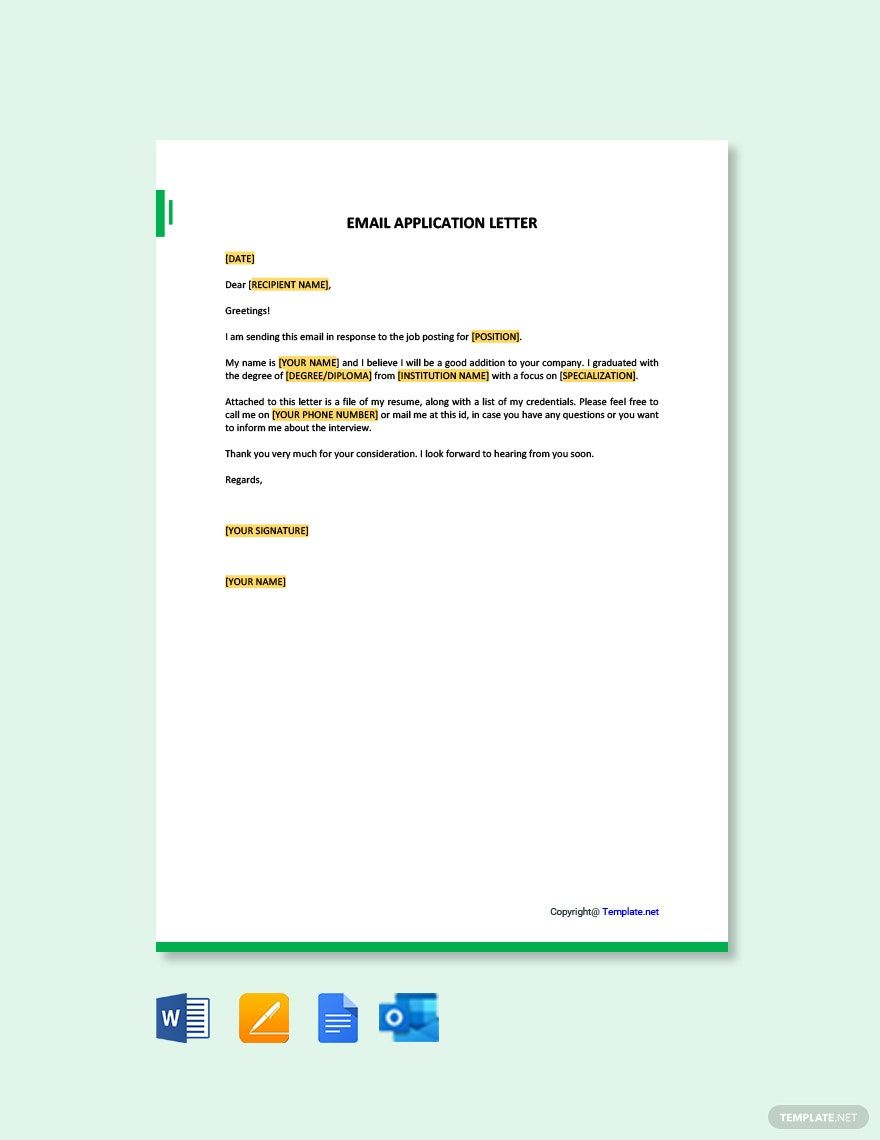
Job Application Email Template
A job application email should briefly introduce you, identify the position you are applying for, highlight your relevant qualifications, and explain any attached documents such as a resume or cover letter.
Request Email Template
When requesting information, assistance, approval, or a meeting, clearly explain what you need and why. Giving the recipient enough context makes it easier for them to provide an appropriate response.
Thank-You Email Template
A thank-you message should be sincere and specific. Mention what you appreciate and, when appropriate, explain how the person’s assistance or time was valuable.
Complaint or Resolution Email Template
Complaint correspondence should remain factual and respectful. Explain the problem, provide relevant details, describe the resolution you are seeking, and allow the recipient an opportunity to respond.
Email Writing Tips for Better Communication
Even an excellent template needs careful editing before it is sent. A few simple improvements can make your message significantly more effective.
- Keep it concise: Remove information that does not help the recipient understand or act on your message.
- Use short paragraphs: Large blocks of text can be difficult to scan on a screen.
- Choose professional language: Avoid slang, excessive abbreviations, or overly casual expressions when writing formally.
- Be specific: Include dates, deadlines, documents, and requested actions when relevant.
- Proofread: Check names, dates, grammar, spelling, attachments, and email addresses.
- Consider your tone: Read the message once from the recipient’s perspective before sending it.
- Use attachments carefully: Mention important attachments in the body of the email so the recipient knows to look for them.
How to Choose the Right Email Tone
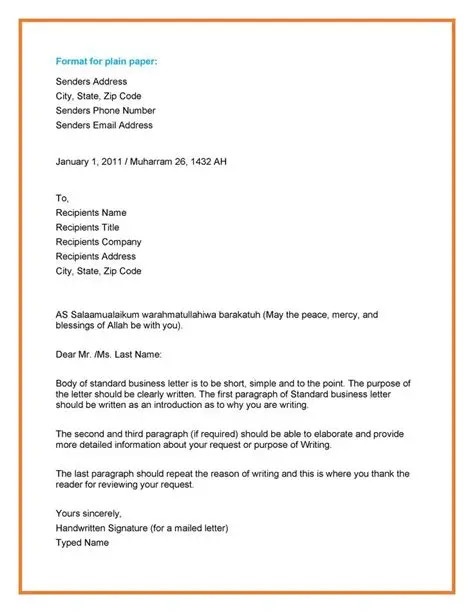
The tone of an email should reflect both its purpose and your relationship with the recipient. A formal letter to a government office, for example, requires a different approach from a quick message to a teammate.
For formal communication, use respectful language, complete sentences, and a professional closing. For everyday workplace communication, a friendly but concise tone may be more appropriate. Personal emails can be more relaxed, but clarity still matters.
When you are uncertain, it is generally safer to begin slightly more formal and adjust your tone as the relationship develops.
Common Email Communication Mistakes to Avoid
Templates can prevent many common mistakes, but only if you use them thoughtfully. Avoid sending a message that looks copied and pasted without considering the recipient or circumstances.
- Sending an email without a useful subject line.
- Failing to explain the purpose of the message.
- Using an inappropriate or overly casual tone.
- Including excessive unnecessary information.
- Forgetting attachments referenced in the email.
- Making demands instead of polite requests.
- Sending the message without proofreading it.
A professional communication template should make your writing easier, not make your emails sound robotic. Always make enough changes to ensure that the final message sounds natural and relevant.
Frequently Asked Questions About Email Letter Templates
Can I use the same template for every email?
You can reuse the basic structure, but you should customize the content for each recipient and situation. Personalization makes your message more relevant and professional.
Are email templates suitable for personal emails?
Yes. Templates can also help with personal messages when you need to communicate something important, organize details, or make a formal request. Simply use a warmer and more conversational tone where appropriate.
How long should a professional email be?
There is no universal word count. A good email should contain enough information for the recipient to understand the situation and respond appropriately, without unnecessary detail. For many everyday messages, a few concise paragraphs are sufficient.
Should I attach supporting documents?
If a document is necessary to support your request or provide additional information, an attachment can be useful. Mention the attachment clearly in the email and check that it is actually included before sending your message.
Final Thoughts on Letter Template For Email Communications
A well-prepared Letter Template For Email Communications can simplify everyday correspondence while helping you maintain a clear, professional, and consistent communication style. Whether you are writing a business inquiry, job application, request, thank-you note, complaint, or personal message, a reliable structure gives you a strong foundation.
The most effective approach is to combine the convenience of a template with thoughtful personalization. Start with a clear subject line, introduce the purpose of your email, provide relevant information, explain the action you need, and close politely. Before pressing send, take a moment to check the tone, accuracy, spelling, attachments, and recipient details. With these habits, email templates become more than a shortcut—they become a practical tool for clearer and more confident communication.