An executive CV is more than a summary of your professional experience. It is a strategic document that communicates your leadership abilities, business achievements, industry expertise, and potential value to an organization. Whether you are applying for a CEO, Managing Director, Chief Financial Officer, Operations Director, or senior management position, your CV must demonstrate why you are the right person for the role.
At the executive level, employers are not simply looking for someone who can perform daily responsibilities. They want leaders who can make important decisions, manage complex operations, develop successful strategies, and deliver measurable business results. Therefore, a well-structured executive CV should highlight your professional accomplishments rather than simply list your previous jobs.
In this guide, you will learn how to create an effective executive CV, choose the right format, present your leadership experience, and write compelling achievements that attract recruiters and executive search professionals.
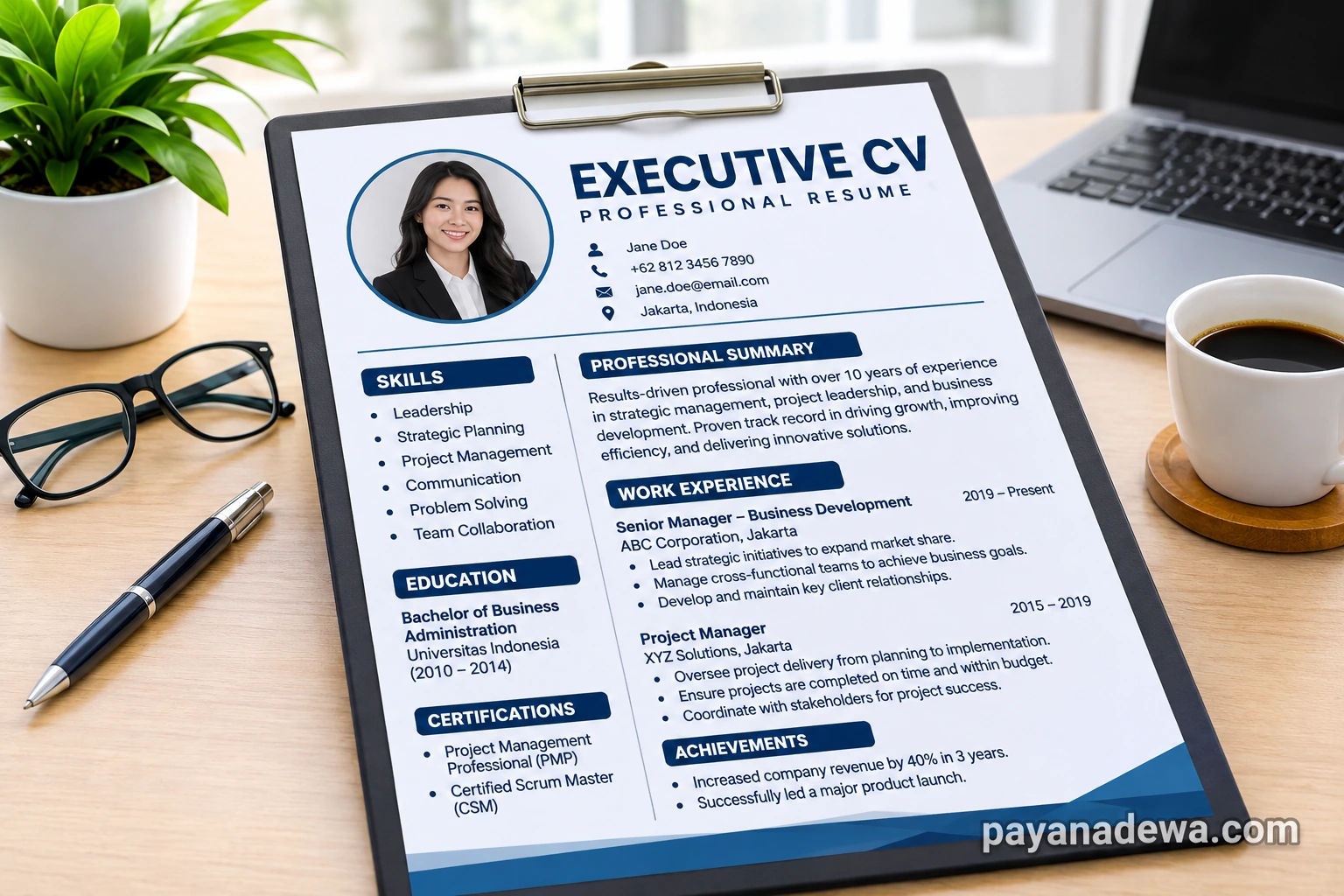
What Is an Executive CV?
An executive CV is a professional document designed for senior-level professionals, business leaders, and experienced managers. It presents a candidate’s career history, leadership experience, strategic capabilities, and measurable contributions to previous organizations.
Unlike an entry-level resume, an executive-level CV focuses heavily on business impact. It explains how your decisions influenced company performance, improved operations, increased revenue, reduced costs, or supported organizational growth.
Common positions that require an executive CV include:
- Chief Executive Officer (CEO)
- Chief Financial Officer (CFO)
- Chief Operating Officer (COO)
- Chief Technology Officer (CTO)
- Managing Director
- Executive Director
- Vice President
- Senior Operations Director
- General Manager
- Business Development Director
Although each position has different requirements, a strong executive CV should communicate leadership, strategic thinking, professional credibility, and measurable results.
Why Is a Professional Executive CV Important?
Senior-level recruitment is highly competitive. Recruiters often review candidates who already have extensive professional experience and impressive career backgrounds. Consequently, your CV must quickly explain what makes you different from other applicants.
A professional executive CV provides several important benefits.
1. Demonstrates Leadership Experience
Your CV should show that you can lead teams, manage departments, influence stakeholders, and guide organizations through important business decisions. Include examples of leadership responsibilities and successful initiatives.
2. Highlights Measurable Achievements
Recruiters want evidence of your performance. Instead of writing that you were responsible for business growth, explain how your leadership increased annual revenue, expanded market share, or improved operational efficiency.
3. Builds Professional Credibility
A clear, well-organized document creates a positive first impression. It demonstrates attention to detail and helps recruiters understand your professional background without unnecessary effort.
4. Supports Career Advancement
An effective executive CV can help you pursue board appointments, director positions, C-suite opportunities, and senior leadership roles across different industries.
Essential Sections of an Executive CV
A successful executive CV should contain several important sections. Each section has a specific purpose and should contribute to a clear professional story.
1. Professional Header and Contact Information
Start with your full name and professional contact details. Make sure recruiters can easily identify you and contact you for an interview.
Include the following information:
- Full professional name
- Professional job title or executive specialization
- Phone number
- Professional email address
- City and country
- LinkedIn profile URL
- Professional portfolio or personal website, if relevant
Use a professional email address and avoid unnecessary personal details. Your header should be clean, simple, and easy to read.
2. Executive Professional Summary
The executive summary is one of the most important parts of your CV. It should provide a brief overview of your leadership background, industry experience, specialist knowledge, and most significant achievements.
A strong summary usually contains three to five sentences. Focus on your professional value and the results you can deliver.
Example:
Results-driven senior executive with more than 15 years of experience in business strategy, organizational development, and operational management. Proven ability to lead cross-functional teams, improve business performance, and develop sustainable growth strategies. Experienced in managing large-scale projects, optimizing operational processes, and building strategic partnerships. Recognized for delivering measurable results and supporting long-term organizational success.
Customize this section for every opportunity. Avoid generic descriptions that could apply to almost any management professional.
3. Core Leadership Skills
Your executive CV should highlight the skills that are most relevant to your target position. Choose skills that reflect your actual experience and professional strengths.
Examples of valuable executive competencies include:
- Strategic Planning and Business Development
- Executive Leadership and Team Management
- Financial Planning and Budget Management
- Organizational Transformation
- Corporate Governance
- Risk Management
- Stakeholder Relationship Management
- Performance Management
- Change Management
- Negotiation and Decision-Making
- Business Operations Management
- Market Expansion and Growth Strategy
Prioritize the competencies mentioned in the job description. This helps recruiters understand your suitability for the position.
4. Professional Experience
This section demonstrates your career progression and leadership responsibilities. List your most recent position first, followed by earlier roles in reverse chronological order.
For every position, include:
- Job title
- Company name
- Employment dates
- Location
- Leadership responsibilities
- Major accomplishments
Focus on your contributions instead of copying a standard job description. Use strong action verbs such as led, developed, transformed, implemented, negotiated, increased, and optimized.
Example:
- Led a team of 120 employees across five business departments.
- Developed a strategic growth plan that increased annual revenue by 35%.
- Reduced operating costs by 18% through process optimization.
- Established strategic partnerships that expanded the company’s market presence.
- Implemented performance management systems to improve organizational productivity.
Whenever possible, support your accomplishments with numbers, percentages, budgets, team sizes, or other measurable indicators.
5. Education and Academic Qualifications
Include your highest relevant academic qualifications. Senior executives often have degrees in business administration, finance, economics, engineering, management, or related disciplines.
List the following details:
- Degree or qualification
- University or educational institution
- Graduation year, where relevant
- Relevant academic distinctions, if applicable
You can also include executive education programs, leadership courses, and relevant professional development qualifications.
6. Professional Certifications
Professional certifications can strengthen your executive profile, especially when they demonstrate specialized expertise.
Depending on your industry, relevant qualifications may include:
- Project Management Professional (PMP)
- Certified Public Accountant (CPA)
- Chartered Financial Analyst (CFA)
- Certified Management Accountant (CMA)
- Certified ScrumMaster (CSM)
- Executive Leadership Programs
Only include qualifications that you have actually earned. Clearly distinguish completed certifications from courses that are still in progress.
7. Key Career Achievements
A separate achievements section can help your strongest accomplishments stand out. Use this section to highlight major milestones that demonstrate your impact as a leader.
Examples include successful mergers and acquisitions, international market expansion, significant revenue growth, digital transformation, organizational restructuring, and major cost-saving initiatives.
How to Write an Executive CV That Stands Out
Creating an effective executive CV requires more than choosing an attractive design. Your content must communicate professional value and demonstrate that you can handle the challenges of senior leadership.
Focus on Results Rather Than Responsibilities
One common mistake is describing only what you were expected to do. Executive recruiters want to understand what you actually achieved.
For example, instead of writing “Responsible for managing company operations,” consider writing “Transformed operational processes, reducing annual operating expenses by 20% while maintaining service quality.”
The second statement communicates a specific contribution and provides evidence of business impact.
Use a Clean and Professional Layout
Your CV design should support readability. Avoid excessive graphics, complicated layouts, and decorative elements that distract from your experience.
Choose a consistent font, clear headings, balanced spacing, and professional colors. Navy blue, charcoal, black, and white are popular choices for executive documents.
Optimize Your CV for Applicant Tracking Systems
Many organizations use Applicant Tracking Systems (ATS) to organize and screen applications. An ATS-friendly executive CV should use recognizable section headings and relevant terminology.
Follow these practical recommendations:
- Use standard headings such as Professional Summary, Work Experience, Education, and Skills.
- Include relevant keywords from the job description naturally.
- Avoid complicated tables and excessive decorative graphics.
- Use a readable font and consistent formatting.
- Submit your CV in the file format requested by the employer.
- Check that your document can be copied and searched as text.
Remember that ATS compatibility does not guarantee an interview. Your experience and qualifications must still match the employer’s requirements.
Tailor Your CV to Each Executive Position
A generic CV may fail to communicate your suitability for a specific leadership opportunity. Before applying, study the job description and identify the organization’s priorities.
For example, a CFO application should emphasize financial strategy, budgeting, risk management, and financial performance. Meanwhile, a COO application should highlight operational efficiency, organizational leadership, and process improvement.
Adjust your executive summary, skills, and achievement highlights to match the position without changing the facts of your professional history.
How Long Should an Executive CV Be?
Unlike entry-level resumes, an executive CV may require more space to communicate extensive leadership experience and career achievements.
For many senior professionals, two to three pages provide a practical balance between detail and readability. However, the appropriate length depends on your experience, industry, geographic market, and application requirements.
Consider these general guidelines:
- One page: Suitable for professionals with relatively limited experience or highly focused applications.
- Two pages: A good option for experienced managers and many senior professionals.
- Three pages: Appropriate for executives with extensive leadership experience and significant achievements.
Prioritize relevant information instead of adding content simply to increase the document length.
Common Executive CV Mistakes to Avoid
Even highly experienced professionals can make mistakes that weaken their applications. Review your CV carefully before submitting it.
- Using a generic professional summary: Make your leadership value specific to the target position.
- Listing responsibilities without achievements: Demonstrate the results of your decisions and actions.
- Including outdated information: Remove irrelevant details that no longer support your career goals.
- Using excessive design elements: Keep the document professional and easy to scan.
- Ignoring spelling and grammar: Carefully proofread every section before sending your application.
- Including unsupported claims: Ensure that every achievement and qualification is accurate.
- Failing to customize the document: Adapt your CV to the position and organization.
Executive CV Template: What Should You Include?
If you are creating your first executive CV or updating an existing one, using a professional template can save time and help you organize your information effectively.
A practical executive CV template should include the following structure:
- Professional name and contact information
- Executive professional summary
- Core competencies and leadership skills
- Professional experience and career progression
- Key achievements and business results
- Education and academic qualifications
- Professional certifications
- Additional relevant information
Before using a template, make sure you can customize its sections easily. Your document should reflect your own career history, industry experience, and professional identity.
Also, remember that an attractive template is only the starting point. Strong content, measurable achievements, and relevant leadership experience are what make an executive CV effective.
Final Thoughts on Creating a Professional Executive CV
A well-written executive CV can make a significant difference when pursuing senior management and leadership opportunities. It should communicate your professional experience, demonstrate your strategic capabilities, and highlight the measurable results you have delivered throughout your career.
Start with a compelling executive summary, organize your professional experience clearly, and focus on achievements that demonstrate business impact. Additionally, use a clean layout, relevant industry keywords, and an ATS-friendly structure to improve readability and accessibility.
Most importantly, tailor your executive CV to every opportunity. A thoughtful, achievement-focused document will help recruiters understand your leadership value and give them a stronger reason to consider you for their next executive position.
With the right structure, relevant information, and professional presentation, your executive CV can become a valuable tool for advancing your career and achieving your leadership ambitions.