An amendment contract is an important legal document that allows two or more parties to modify an existing agreement without creating an entirely new contract. Business relationships, employment arrangements, and personal agreements can change over time. When these changes affect the original terms, a written amendment helps everyone understand their updated rights and responsibilities.
Whether you need to change a payment schedule, extend a contract period, update service requirements, or revise specific conditions, understanding how an amendment contract works can help prevent misunderstandings. A properly prepared document also provides written evidence that all parties have agreed to the changes.
In this guide, you will learn what an amendment contract is, when to use one, which details to include, and how to create a clear and professional contract amendment. You will also find practical tips and a template outline to help you prepare your document.
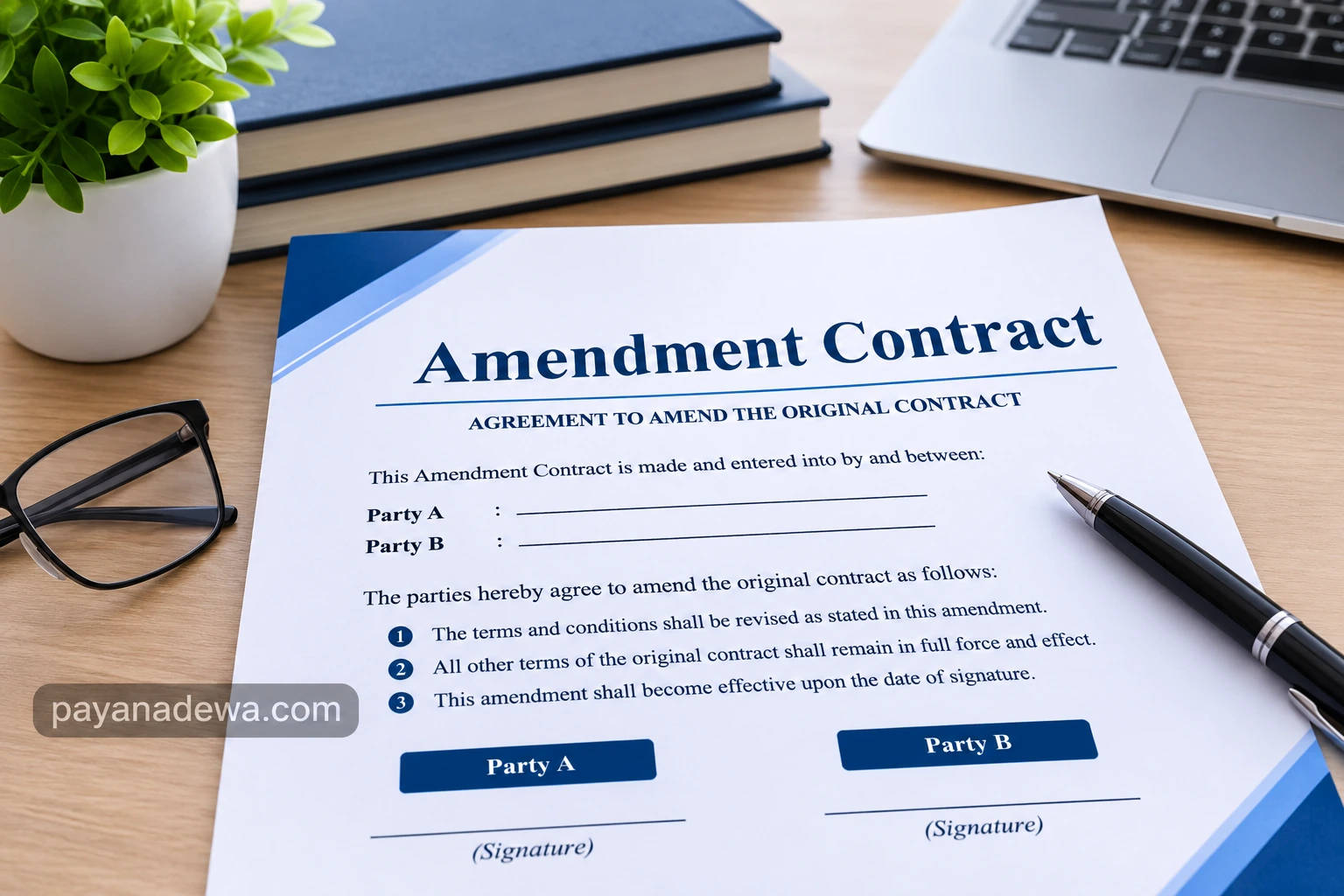
What Is an Amendment Contract?
An amendment contract is a written document used to change, add, or remove specific provisions in an existing legal agreement. It records the modifications accepted by the parties while generally keeping the remaining original terms unchanged.
For example, imagine a company signs a service agreement with a supplier for twelve months. After six months, both parties agree to extend the service period and adjust the monthly payment. Instead of replacing the entire agreement, they can prepare an amendment contract describing those changes.
The amendment becomes part of the original contractual arrangement when properly agreed upon and executed. Its legal effect depends on the original agreement, applicable law, and the circumstances surrounding the modification.
Why Is an Amendment Contract Important?
Written contract amendments help businesses and individuals manage changing circumstances. They create a clear record of agreed changes and reduce the risk of disagreements about what was originally promised.
Here are several important reasons to use a formal amendment:
- Clarifies new terms: Both parties can identify exactly which contractual provisions have changed.
- Protects legal interests: Written changes can help demonstrate what the parties agreed to.
- Prevents misunderstandings: A documented amendment reduces confusion caused by informal conversations.
- Maintains the original agreement: Unchanged provisions can continue to apply without rewriting the entire contract.
- Creates an official record: Signed amendments provide useful documentation for future reference.
Without proper documentation, even a mutually accepted change may create uncertainty. A clear amendment contract helps establish a shared understanding before the updated terms take effect.
When Should You Use an Amendment Contract?
An amendment contract is useful whenever the parties want to modify an existing agreement and the original contract permits the proposed changes.
1. Changing Payment Terms
Payment arrangements sometimes need to change because of new business conditions. For example, the parties may agree to a different payment amount, installment schedule, billing frequency, or payment deadline.
The amendment should clearly identify the previous payment provision and explain the replacement terms.
2. Extending or Changing Contract Duration
Some agreements require additional time to complete their obligations. An amendment can extend the expiration date, adjust important milestones, or revise the contract renewal period.
Always specify the revised dates to avoid confusion about when the original agreement ends.
3. Updating Services or Project Requirements
A business project may develop beyond its original scope. The parties might need to add services, remove certain responsibilities, change delivery requirements, or introduce new performance standards.
A written amendment helps ensure that both sides understand the updated scope of work.
4. Changing Contract Parties or Business Information
Business details may change during an ongoing contractual relationship. Examples include updated company addresses, legal business names, or other identifying information.
Changes involving the actual contracting parties, assignment, or transfer of obligations may require additional legal steps rather than a simple amendment.
5. Revising Specific Contract Conditions
Parties may also need to revise confidentiality requirements, delivery schedules, reporting procedures, responsibilities, or other contractual provisions.
The amendment should explain the exact provision being modified and provide its replacement wording.
Essential Elements of an Amendment Contract
A professional amendment contract should contain enough information to identify the original agreement and explain every approved modification.
Although requirements vary depending on the agreement and applicable law, the following elements are commonly important.
- Document title: Clearly identify the document as an Amendment to Contract or Contract Amendment Agreement.
- Original contract details: Include the original agreement’s title, signing date, and relevant reference number.
- Party information: Provide the full legal names and relevant details of all contracting parties.
- Effective date: State when the amendment becomes effective.
- Modified provisions: Identify each original clause that will be changed, deleted, or added.
- Replacement wording: Include the complete updated language to avoid uncertainty.
- Continuing provisions: Explain that all unaffected terms remain in effect, where appropriate.
- Signatures: Provide signature spaces for authorized representatives or the relevant parties.
These details make the document easier to understand, review, store, and enforce when legally valid.
How to Write an Amendment Contract Step by Step
Preparing a contract amendment does not have to be complicated. A structured approach can help you organize the changes and reduce drafting mistakes.
Step 1: Review the Original Agreement
Start by reading the existing contract carefully. Look for provisions explaining how amendments must be made, who has authority to approve them, and whether specific notice or approval procedures apply.
Check for restrictions that could affect the proposed changes. This step helps ensure that your amendment follows the original agreement’s requirements.
Step 2: Identify the Required Changes
Make a clear list of every provision that needs modification. Separate the proposed changes into categories such as payment, duration, responsibilities, and service requirements.
Be specific. Avoid vague statements that could lead to different interpretations.
Step 3: Draft the Updated Clauses
Write the replacement language in a simple and precise manner. Whenever possible, identify the original clause number and state whether the provision is being replaced, revised, or supplemented.
For example, instead of writing that payment terms will change, specify the new payment amount, due date, payment method, and any applicable conditions.
Step 4: Include the Effective Date
Clearly state when the updated provisions begin to apply. The effective date may be the date of the final signature or another date agreed upon by the parties, subject to applicable legal requirements.
Do not leave this detail ambiguous, especially when the amendment affects payments, deadlines, or ongoing services.
Step 5: Review and Obtain Approval
Share the draft with every relevant party. Give them enough time to review the proposed changes and request clarification when necessary.
Confirm that everyone understands and accepts the revised terms before signing the document.
Step 6: Sign and Keep Copies
Once approved, arrange for all required parties or authorized representatives to sign the amendment. Follow any applicable requirements for witnesses, notarization, electronic signatures, or formal delivery.
Keep a signed copy with the original contract. This makes it easier to review the complete contractual arrangement in the future.
Amendment Contract Template: What Should It Look Like?
A contract amendment template provides a convenient starting point for documenting changes. The following outline shows a simple structure that you can adapt to your circumstances.
AMENDMENT TO CONTRACT
This Amendment to Contract is made on [Date] between the following parties:
- Party A: [Full Legal Name and Address]
- Party B: [Full Legal Name and Address]
Original Agreement: [Contract Title and Original Signing Date]
The parties mutually agree to amend the original agreement as follows:
- Clause 1: [Describe the original provision and its replacement wording.]
- Clause 2: [Describe any additional modifications.]
- Clause 3: [Include any other agreed changes.]
Effective Date: [Insert the date when the amendment takes effect.]
All provisions of the original agreement that are not expressly modified by this amendment shall remain in full force and effect, to the extent permitted by applicable law.
IN WITNESS WHEREOF, the parties have executed this amendment through their duly authorized representatives.
Party A
Name: __________________________
Signature: _______________________
Date: ___________________________
Party B
Name: __________________________
Signature: _______________________
Date: ___________________________
This example is a general drafting guide, not a universal legal form. Adapt it to the original agreement, transaction, and applicable legal requirements.
Common Mistakes to Avoid When Amending a Contract
Even a simple contract amendment can create problems when important details are overlooked. Before signing, check for the following common mistakes.
- Using unclear language: Vague wording can make it difficult to determine what the parties actually agreed to.
- Failing to identify the original contract: Always provide enough information to connect the amendment to the correct agreement.
- Forgetting the effective date: Unclear timing can cause disputes about when the revised terms apply.
- Changing unrelated provisions: Avoid modifying terms that are not part of the agreed amendment.
- Ignoring amendment procedures: Check the original contract for specific requirements concerning written changes and approvals.
- Missing signatures: Ensure that all necessary parties or authorized representatives complete the required signing process.
- Failing to retain records: Keep the signed amendment together with the original agreement and previous amendments.
Taking a few extra minutes to review these details can help prevent unnecessary disputes and administrative problems.
Amendment Contract vs. Contract Addendum: What Is the Difference?
An amendment and an addendum are related legal documents, but they are commonly used for different purposes.
An amendment generally changes, replaces, or removes provisions that already exist in an agreement. An addendum typically adds new terms, information, or conditions without necessarily replacing existing provisions.
For example, changing an existing payment deadline is generally an amendment. Adding a new schedule of services to an agreement may be handled through an addendum.
However, legal terminology and usage can vary by jurisdiction and contract. The document’s actual purpose and wording are more important than its title.
Practical Tips for Creating a Professional Contract Amendment
A well-prepared amendment should be easy to read, consistent with the original agreement, and straightforward to verify.
- Use a clear and descriptive document title.
- Keep the original contract details accurate.
- Use the same terminology as the original agreement wherever appropriate.
- Number each modification for easier reference.
- Clearly distinguish deleted wording from replacement provisions.
- Check dates, names, amounts, and clause references carefully.
- Use a consistent document layout and readable formatting.
- Store the signed amendment securely with the original contract.
For complex business transactions, significant financial changes, or agreements involving substantial legal obligations, consider obtaining advice from a qualified legal professional before signing.
Frequently Asked Questions About Amendment Contracts
Is an amendment contract legally binding?
An amendment can be legally binding when it satisfies the applicable requirements for a valid contractual modification. These may include mutual agreement, proper authority, consideration where required, and compliance with the original contract and applicable law.
Does an amendment contract replace the original agreement?
Usually, no. An amendment generally changes specific provisions while leaving the remaining original terms in effect. However, the exact effect depends on the wording and circumstances of the amendment.
Do all parties need to sign an amendment contract?
The parties whose agreement is required under the original contract and applicable law must provide the necessary approval. In many situations, this means all contracting parties should sign the amendment.
Can an amendment contract be signed electronically?
Electronic signatures may be acceptable in many jurisdictions and transactions. However, certain agreements may require additional formalities. Check the applicable electronic signature laws and the original contract before choosing this method.
Can I amend a contract more than once?
Yes. An agreement may be amended multiple times when the parties follow the required procedures. Each amendment should identify the original agreement and any relevant earlier amendments to maintain a clear record.
Conclusion
An amendment contract provides a practical way to update an existing agreement while preserving the provisions that remain unchanged. It helps businesses and individuals document new arrangements, clarify responsibilities, and maintain a reliable record of mutually accepted changes.
To prepare an effective amendment, review the original agreement, identify the exact provisions that need modification, write clear replacement terms, specify the effective date, and obtain the necessary signatures.
Using a professional amendment contract template can make the process more organized and efficient. However, always adapt the document to your specific situation and applicable legal requirements. When the proposed changes involve significant obligations or legal risks, seek professional legal advice before finalizing the agreement.