Starting a band is an exciting journey. Musicians come together to share their passion, create music, perform live, and build something meaningful. However, even the strongest musical partnerships can face disagreements. Differences over money, creative decisions, responsibilities, and future opportunities can create unnecessary tension. This is why having a clear band contract is essential.
A band contract is a written agreement that explains the rights, responsibilities, and expectations of everyone involved in a musical group or performance arrangement. It helps prevent misunderstandings and provides a clear framework for handling important decisions. Whether you play in a small local band, manage a professional music group, or organize live performances, a written agreement can protect everyone involved.
In this guide, you will learn what a band agreement should include, why musicians need one, how to create one, and what to consider before signing. You will also find practical guidance for preparing a professional band contract template.
What Is a Band Contract?
A band contract is a legal or business document that records an agreement between musicians, band members, managers, promoters, event organizers, or other parties involved in a music project.
The exact content depends on the purpose of the agreement. For example, a band member agreement focuses on relationships within the group. In contrast, a live performance contract outlines the conditions under which a band agrees to perform at an event.
Generally, a band agreement helps everyone understand important matters such as:
- Each person’s role and responsibilities.
- Ownership of the band’s name and music.
- Payment arrangements and financial contributions.
- Rehearsal schedules and performance commitments.
- Equipment ownership and maintenance.
- Creative decisions and songwriting credits.
- Rules for handling disagreements.
- Procedures for leaving or replacing a band member.
Although a verbal agreement may seem convenient, written documentation provides a much clearer reference when disagreements occur.
Why Does Every Band Need a Written Agreement?
Many musicians start performing with friends and assume that everyone understands the arrangement. At first, this approach may work. However, problems can arise when the band begins earning money, recording original songs, or receiving professional opportunities.
A written band contract helps establish expectations before problems develop.
1. Prevents Misunderstandings
Clear written terms reduce confusion about responsibilities, schedules, and financial arrangements. Every member knows what is expected and what they have agreed to do.
2. Protects Financial Interests
Money is one of the most common sources of conflict in musical groups. A contract can explain how performance fees, merchandise revenue, recording income, and other earnings will be distributed.
3. Defines Creative Ownership
Songwriting and music ownership can become complicated when several people contribute to a project. An agreement can establish how songwriting credits, publishing rights, master recordings, and other intellectual property will be handled.
4. Establishes Professional Expectations
When working with event organizers, venues, or promoters, a written performance agreement demonstrates professionalism. It also helps both parties understand their obligations before the event takes place.
5. Provides a Dispute Resolution Process
Disagreements can happen in any creative partnership. A contract can establish a process for discussing problems, reaching decisions, and resolving disputes without immediately ending the musical relationship.
Different Types of Band Contracts
Not every musical arrangement requires the same document. Before creating an agreement, identify the type of relationship you want to establish.
1. Band Member Agreement
A band member agreement is designed for musicians who work together as a group. It explains the internal rules of the band, including membership, responsibilities, financial contributions, and decision-making procedures.
This document is particularly useful for bands that perform regularly, release original music, or share business expenses.
2. Live Performance Contract
A live performance contract is an agreement between a band and an event organizer, venue, promoter, or client. It describes the details of a specific performance.
Typical information includes the event date, venue, performance duration, payment amount, deposit requirements, and technical arrangements.
3. Band Management Agreement
A band management agreement establishes the working relationship between a music group and its manager. It may cover management responsibilities, commission arrangements, contract duration, and termination conditions.
4. Recording Agreement
A recording agreement covers arrangements involving studio sessions, music production, recording expenses, ownership, distribution, and royalty payments.
Musicians should pay particular attention to intellectual property rights because recording agreements can have long-term financial consequences.
Essential Elements of a Band Contract
A useful band contract should be detailed enough to prevent confusion while remaining easy to understand. The following sections are important when preparing a professional agreement.
1. Names and Contact Information
Start by identifying every party involved in the agreement. Include full legal names, addresses, contact information, and the band’s official name where applicable.
For a performance agreement, identify both the band representative and the event organizer or client.
2. Roles and Responsibilities
Explain what each member is expected to contribute. Responsibilities may include performing, songwriting, rehearsing, promoting events, managing finances, or maintaining equipment.
Clear responsibilities make collaboration easier and reduce the possibility of conflicting expectations.
3. Payment and Revenue Distribution
Financial terms should be specific and transparent. Explain how the band receives and distributes money from performances, merchandise, recordings, and other activities.
For performance agreements, include:
- Total performance fee.
- Deposit amount and payment deadline.
- Remaining balance and payment method.
- Additional expenses and reimbursements.
- Conditions for late payment.
If the band shares income internally, explain the agreed distribution method. Avoid vague statements that could create disagreements later.
4. Performance Details
When preparing a live performance contract, describe the event as accurately as possible. Include the event name, location, date, arrival time, soundcheck schedule, performance duration, and expected number of sets.
Also clarify whether the organizer provides sound equipment, lighting, microphones, instruments, and technical personnel.
5. Equipment and Property
List important equipment owned by individual members or the band. Explain who is responsible for transportation, maintenance, repairs, and replacement costs.
This section is especially important when several musicians share expensive instruments or professional audio equipment.
6. Songwriting and Intellectual Property
Specify how original songs, lyrics, compositions, recordings, and other creative materials will be owned and credited.
Do not assume that every band member automatically receives equal ownership of every song. Copyright ownership and songwriting credits should reflect the applicable agreements and legal requirements.
7. Cancellation and Termination
Every agreement should explain what happens if one party cannot fulfill its responsibilities.
Consider including provisions for:
- Event cancellation.
- Unexpected illness or emergencies.
- Failure to make agreed payments.
- Withdrawal of a band member.
- Termination of the agreement.
- Refunds and cancellation fees.
8. Signatures and Agreement Date
Finish the document with the date and signature fields for all relevant parties. Each person should receive a complete copy of the signed agreement.
How to Create a Band Contract Step by Step
Creating a band contract does not have to be complicated. With proper preparation, musicians can organize the most important terms in a clear and professional document.
Step 1: Identify the Purpose
Decide whether you need an internal band agreement, a performance contract, or another type of music business agreement. The purpose determines which terms should be included.
Step 2: Discuss Expectations
Talk openly with everyone involved. Discuss financial responsibilities, schedules, creative ownership, equipment, and other important issues before writing the document.
Step 3: Write Clear Terms
Use simple language and avoid unnecessary legal jargon. Each section should explain a specific responsibility, payment arrangement, or obligation.
Step 4: Review the Details
Check every name, date, payment amount, performance requirement, and deadline. Make sure the document reflects what everyone actually agreed to.
Step 5: Sign and Keep Copies
Once all parties approve the terms, sign the agreement and distribute copies. Digital signatures may also be appropriate where legally recognized.
Common Band Contract Mistakes to Avoid
Even experienced musicians can overlook important details when preparing agreements. Avoid these common mistakes to make your contract more effective.
- Using vague payment terms: Always specify amounts, deadlines, and payment methods.
- Ignoring intellectual property: Discuss ownership and songwriting credits before releasing music.
- Leaving out cancellation rules: Define what happens when a performance or project is canceled.
- Relying only on verbal promises: Put important decisions in writing.
- Failing to update the document: Review the agreement whenever membership or business arrangements change.
- Signing without understanding: Read every section carefully and ask questions about unclear provisions.
Taking time to review these details can save musicians considerable stress and expense in the future.
Free Band Contract Template: What Should You Include?
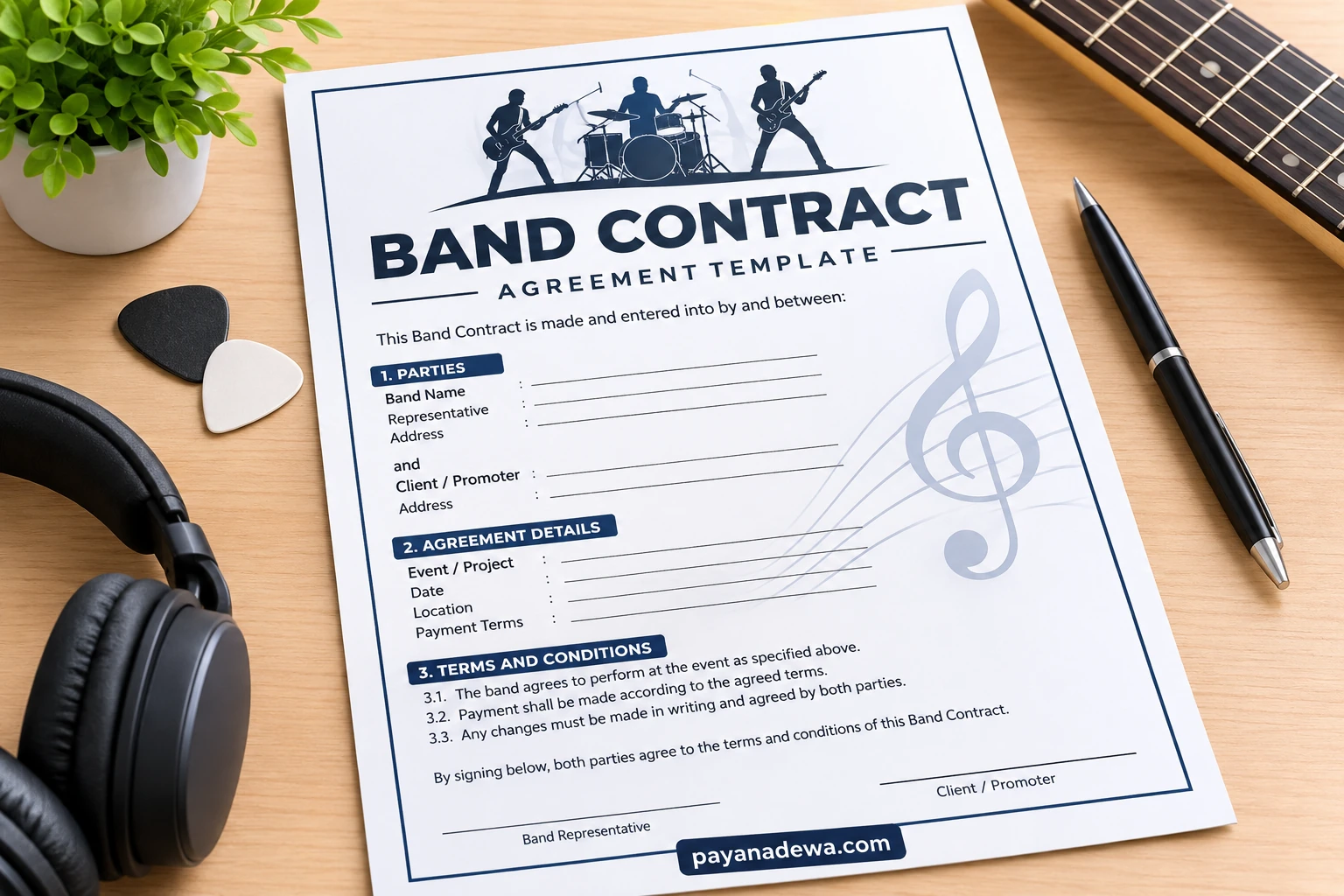
A printable band contract template provides a convenient starting point for musicians who want to organize their agreements. Instead of creating every section from scratch, you can use a structured document and customize it to match your needs.
A basic template should include the following information:
- Agreement Title: The name and purpose of the contract.
- Parties: Names and contact details of the people or organizations involved.
- Agreement Details: Event information, project description, and relevant dates.
- Payment Terms: Fees, deposits, payment schedules, and expenses.
- Terms and Conditions: Responsibilities, obligations, cancellation policies, and other relevant provisions.
- Signatures: Signature fields and the agreement date.
Before using a printable band agreement, customize it to reflect the actual arrangement. A simple performance template may not be sufficient for a long-term band partnership involving royalties, ownership, or management rights.
For more complicated arrangements, consider consulting an entertainment lawyer or qualified legal professional. Contract requirements can vary depending on the jurisdiction and the type of agreement.
Tips for Making Your Band Agreement More Professional
A professional contract should be organized, readable, and easy to reference. Fortunately, a few simple improvements can make a significant difference.
- Use clear section headings and consistent formatting.
- Keep paragraphs short and easy to understand.
- Use specific dates instead of general time references.
- Clearly identify payment amounts and responsibilities.
- Attach additional schedules when the agreement requires technical or financial details.
- Keep signed copies in a secure digital location.
- Review the document periodically to ensure it remains accurate.
Most importantly, make sure every party has an opportunity to review the agreement before signing. A contract should represent a mutual understanding, not simply protect one side of the arrangement.
Frequently Asked Questions About Band Contracts
Is a band contract legally binding?
A band contract may be legally binding when it meets the applicable legal requirements. These requirements can include a valid agreement, mutual consent, and other elements recognized by the relevant jurisdiction. The enforceability of individual clauses can vary.
Can a band write its own contract?
Yes. Musicians can prepare their own written agreements using a template or document. However, professional legal advice is recommended when dealing with complex financial arrangements, copyright ownership, management rights, or long-term obligations.
Should every band member sign the agreement?
For an internal band agreement, it is generally advisable for every member covered by the terms to review and sign the document. This helps establish shared expectations and provides a clear record of consent.
What happens if a band member leaves?
The outcome depends on the agreement. A well-prepared contract should explain notice requirements, financial obligations, ownership interests, access to recordings, and the process for replacing a departing member.
Can a band contract be changed later?
Yes. Parties can generally amend an agreement when they mutually agree to the changes and follow the applicable legal requirements. It is best to document amendments in writing and obtain the necessary signatures.
Do small local bands need a contract?
Yes. Even small bands can benefit from written agreements. A simple document can help clarify shared expenses, performance payments, responsibilities, and ownership arrangements before misunderstandings develop.
Conclusion
A well-prepared band contract is an important tool for building a successful and professional musical partnership. It establishes clear expectations, protects financial interests, defines responsibilities, and provides a framework for resolving disagreements.
Whether you are forming a new band, organizing live performances, or managing an established music group, taking the time to prepare a written agreement is a smart decision. Start with a suitable band contract template, customize the terms, and make sure every party understands the document before signing.
Remember, a strong musical partnership is built on creativity, communication, and trust. A clear written agreement helps protect all three while allowing everyone to focus on what matters most: making great music.