A well-written maintenance contract helps property owners, businesses, and service providers understand exactly what maintenance work will be done, when it will happen, and how much it will cost. Instead of relying on informal promises, both parties have a written plan they can refer to when questions arise.
Whether you manage commercial equipment, a building, an HVAC system, or business technology, a clear agreement can reduce unexpected downtime and prevent misunderstandings. It also sets expectations for response times, responsibilities, payment, and repairs. This guide explains what to include, how to choose the right arrangement, and how to prepare an agreement that works in practice.
What Is a Maintenance Contract?
A maintenance contract is a written agreement between a customer and a maintenance provider. It describes the services the provider will deliver for a defined period and explains the terms that apply to those services. The agreement may cover routine inspections, preventive maintenance, emergency support, repairs, replacement parts, or a combination of these tasks.
For example, a business might hire a contractor to inspect its air-conditioning equipment every quarter. The contract can state which units are covered, what each visit includes, how quickly urgent calls will receive a response, and whether replacement parts cost extra.
In short, the document turns a general service arrangement into a specific, measurable commitment. The exact terms should reflect the equipment, site, operating risks, and applicable local laws.
Why a Maintenance Agreement Matters
Maintenance is easier to manage when everyone understands the plan. A detailed agreement provides several practical benefits.
- More predictable costs: Scheduled service fees make it easier to plan a maintenance budget. The contract can also explain which expenses are excluded.
- Less unplanned downtime: Regular inspections can identify wear, leaks, or performance issues before they cause a major breakdown.
- Clear responsibilities: The customer and contractor know who supplies access, labor, tools, records, and replacement materials.
- Defined service standards: Response targets and reporting requirements help the customer evaluate service quality.
- Better maintenance records: Visit reports create a useful history of inspections, repairs, and recommendations.
- Fewer disputes: Written scope, pricing, and approval procedures reduce uncertainty when extra work is needed.
However, a contract cannot guarantee that equipment will never fail. Its value comes from setting a sensible maintenance process and making each party’s obligations clear.
Common Types of Maintenance Contracts
The right agreement depends on the asset and the level of support required. These are common arrangements to consider.
Preventive Maintenance Contract
This type focuses on planned work that helps prevent failures. Services may include cleaning, lubrication, calibration, testing, inspection, and scheduled component checks. It is often suitable for HVAC systems, generators, production equipment, elevators, and other assets that need regular attention.
Corrective Maintenance Contract
A corrective maintenance agreement covers work needed after a fault or defect is found. It may include diagnosis, troubleshooting, repair labor, and testing after the repair. Check whether the provider must respond within a set period and whether parts are included in the quoted price.
Full-Service Maintenance Contract
A full-service arrangement typically combines scheduled maintenance with repair support. Depending on the negotiated terms, it may include labor, selected spare parts, emergency callouts, and performance checks. Because the scope can be broad, review exclusions and usage limits carefully.
On-Call or Time-and-Materials Agreement
Under this model, the customer requests service when needed and pays for the time, labor, travel, and materials used. It can suit assets with low maintenance demand. Nevertheless, costs may be less predictable than they are under a fixed-fee plan.
What to Include in a Maintenance Contract
A useful agreement should be specific enough for both parties to follow. Before signing, check that it addresses the following points.
1. Parties and Covered Assets
List the legal names and contact details of the customer and service provider. Identify each covered asset by location, equipment type, model, serial number, or another clear reference. If the site has several units, attach an asset schedule rather than relying on a vague description.
2. Scope of Work and Service Schedule
Describe the work the provider must perform. State the inspection frequency, planned visit dates or intervals, operating hours, and required service reports. Where possible, define the expected outcome of each task. Also explain how the customer can request additional work.
3. Response Times and Emergency Support
Set out how customers report faults and how the provider acknowledges service requests. Distinguish between routine requests and urgent breakdowns. For example, the agreement may set a target response time for critical failures while allowing a longer window for non-urgent issues. Clarify whether response time means an initial reply, remote diagnosis, or arrival at the site.
4. Fees, Invoices, and Payment Terms
State the contract price, billing frequency, payment deadline, taxes, and accepted payment methods. Explain how the provider charges for overtime, travel, emergency visits, consumables, and work outside the agreed scope. If prices can change, describe when and how the provider must notify the customer.
5. Parts, Materials, and Exclusions
Identify which spare parts and consumables are included. List exclusions such as damage caused by misuse, unauthorized modifications, accidents, external utility failures, or work performed by another contractor. Avoid broad wording that could make the service promise difficult to understand.
6. Customer and Contractor Responsibilities
Explain the customer’s duties, such as providing safe access, sharing equipment records, and reporting faults promptly. The contractor may need to supply qualified technicians, follow site safety rules, protect customer property, and keep accurate service records.
7. Contract Period, Renewal, and Termination
Give the start date and end date. State whether renewal happens automatically or requires written approval. Include notice periods and explain how either party can end the agreement for serious breach, repeated service failures, non-payment, or other agreed reasons. Also cover outstanding invoices and the handover of records after termination.
8. Liability, Insurance, and Dispute Resolution
Set out any agreed liability limits, insurance requirements, warranties, and procedures for handling disputes. These clauses can have significant legal consequences. Have a qualified legal professional review them for the relevant jurisdiction before signing.
How to Choose the Right Maintenance Provider
A low quote is not always the best value. Compare providers using consistent criteria so you can judge the quality and risk of each offer.
- Relevant experience: Ask whether the provider has maintained the same equipment type or worked in a similar environment.
- Qualifications: Check licenses, certifications, training, and any specialist approvals required for the work.
- Service capacity: Confirm technician availability, geographic coverage, emergency support, and access to spare parts.
- References: Request examples of comparable projects and speak with existing customers where practical.
- Clear pricing: Compare inclusions, exclusions, callout charges, and likely extra costs—not just the headline fee.
- Reporting: Ask for sample inspection reports and find out how recommendations and recurring faults are tracked.
Before making a decision, give each provider the same asset list and service requirements. This makes proposals easier to compare and reduces the chance that a low bid simply excludes important tasks.
How to Create and Manage the Agreement
Start by listing the assets, their condition, service history, and operational importance. Next, decide which tasks should happen routinely and which events require urgent support. Use that information to prepare the scope, service schedule, response targets, and budget.
Then review the draft with the people who will use it. Operations staff can confirm whether the schedule is practical. Finance staff can check the payment terms. Legal or procurement teams can review risk, insurance, and termination clauses.
After signing, keep a copy where authorized staff can find it. Track planned visits, missed appointments, completed work, open recommendations, and contract costs. Schedule a review before renewal so you can adjust the scope based on actual equipment performance.
Practical Tips Before You Sign
- Attach an accurate equipment list and identify the site or service locations.
- Define measurable service tasks instead of using phrases such as “general maintenance” on their own.
- Separate included services from chargeable extra work.
- Agree on an approval process before the contractor performs work that may increase the cost.
- Specify how service reports, photographs, test results, and maintenance records will be delivered.
- Check whether the agreement remains suitable when equipment is added, removed, or replaced.
- Keep written records of changes, approvals, and important service discussions.
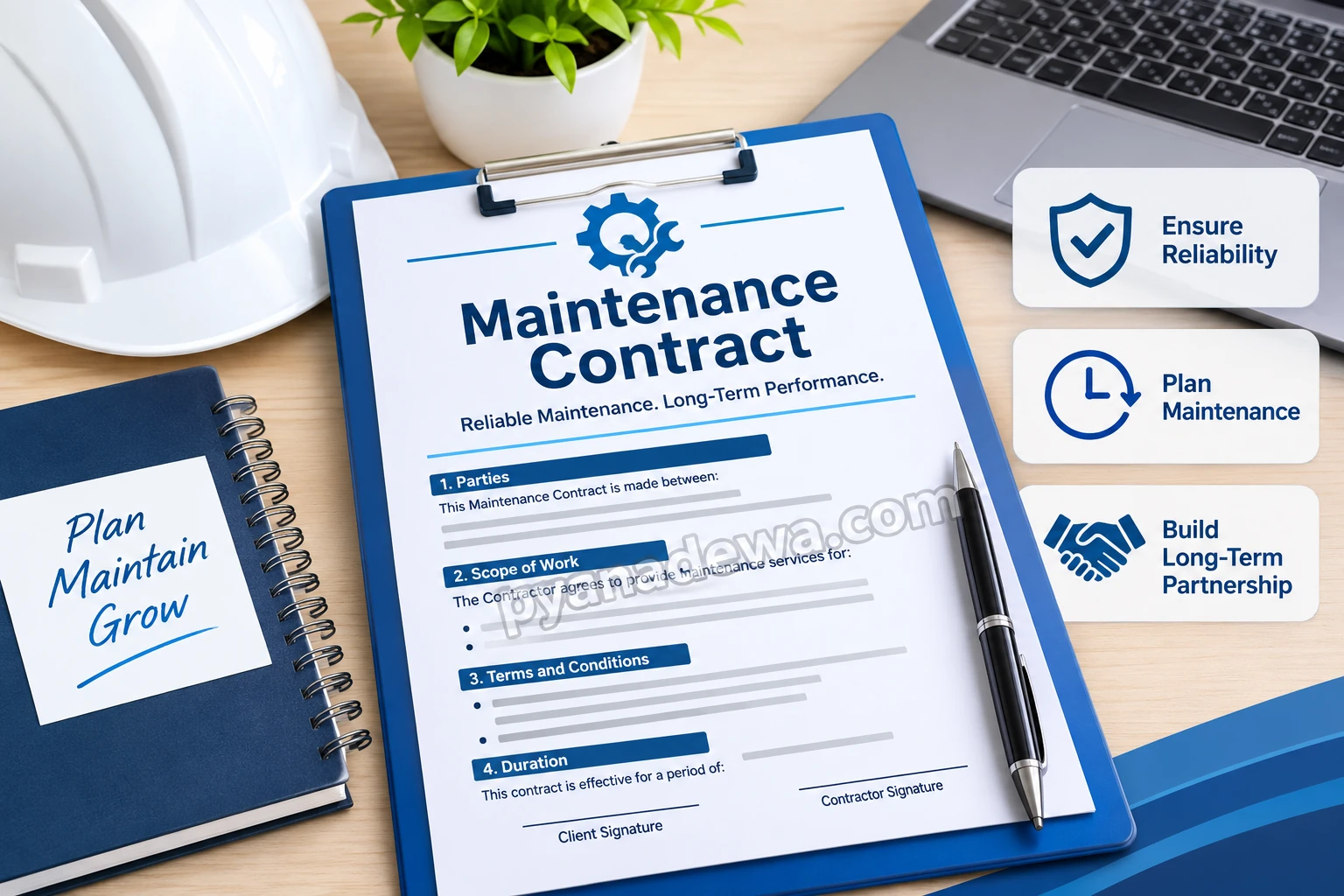
Maintenance Contract Template: A Useful Starting Point
A template can help organize the main terms, but it should never replace a careful review of the actual service arrangement. Use the template below as a visual planning reference, then adapt the wording to your equipment, business needs, and local legal requirements.
At a minimum, prepare sections for the parties, covered assets, scope of work, service frequency, response targets, fees, exclusions, responsibilities, contract duration, termination, and signatures. Add schedules or appendices when the asset list or maintenance tasks are too detailed for the main agreement.
Important: No single template is suitable for every industry or jurisdiction. Obtain legal advice where needed, especially for high-value assets, safety-critical systems, regulated facilities, or agreements with substantial liability exposure.
Conclusion
A well-planned maintenance contract gives customers and service providers a shared understanding of the work, costs, timing, and responsibilities involved. It can support preventive maintenance, improve communication, and make service performance easier to track.
Before signing, confirm that the covered assets, service scope, response targets, payment rules, exclusions, and exit terms are clear. Choose a provider with the right experience and review the agreement whenever your equipment or operational needs change. With careful preparation and regular follow-up, a maintenance agreement can become a practical tool for protecting assets and supporting reliable operations.
ib0gig