Planning a trip involves more than choosing a destination and booking a flight. You also need to organize accommodation, transportation, activities, travel documents, and your budget. Without a clear plan, important tasks can easily be forgotten. A Travel Gantt Chart helps you organize every stage of your journey on a visual timeline, making travel planning easier, more efficient, and less stressful.
Whether you are preparing for a weekend getaway, a family vacation, an international adventure, or a business trip, a travel planning Gantt chart allows you to see what needs to happen and when. You can track deadlines, coordinate activities, and monitor your progress before, during, and after your trip.
In this guide, you will learn what a travel Gantt chart is, how to use one, which tasks to include, and how to customize a printable template for your next adventure.
What Is a Travel Gantt Chart?
A Travel Gantt Chart is a visual planning tool that displays travel-related tasks along a timeline. Each task appears as a horizontal bar showing when it starts, how long it lasts, and when it should be completed. This format makes it easier to understand your entire travel schedule at a glance.
Originally used in project management, Gantt charts are also useful for organizing personal trips. Instead of managing multiple lists, calendar entries, and reminders separately, you can bring your travel preparation into one organized plan.
For example, you might schedule flight reservations two months before departure, book accommodation shortly afterward, prepare travel documents three weeks before leaving, and confirm transportation a few days before your journey. A timeline helps you see how these activities fit together.
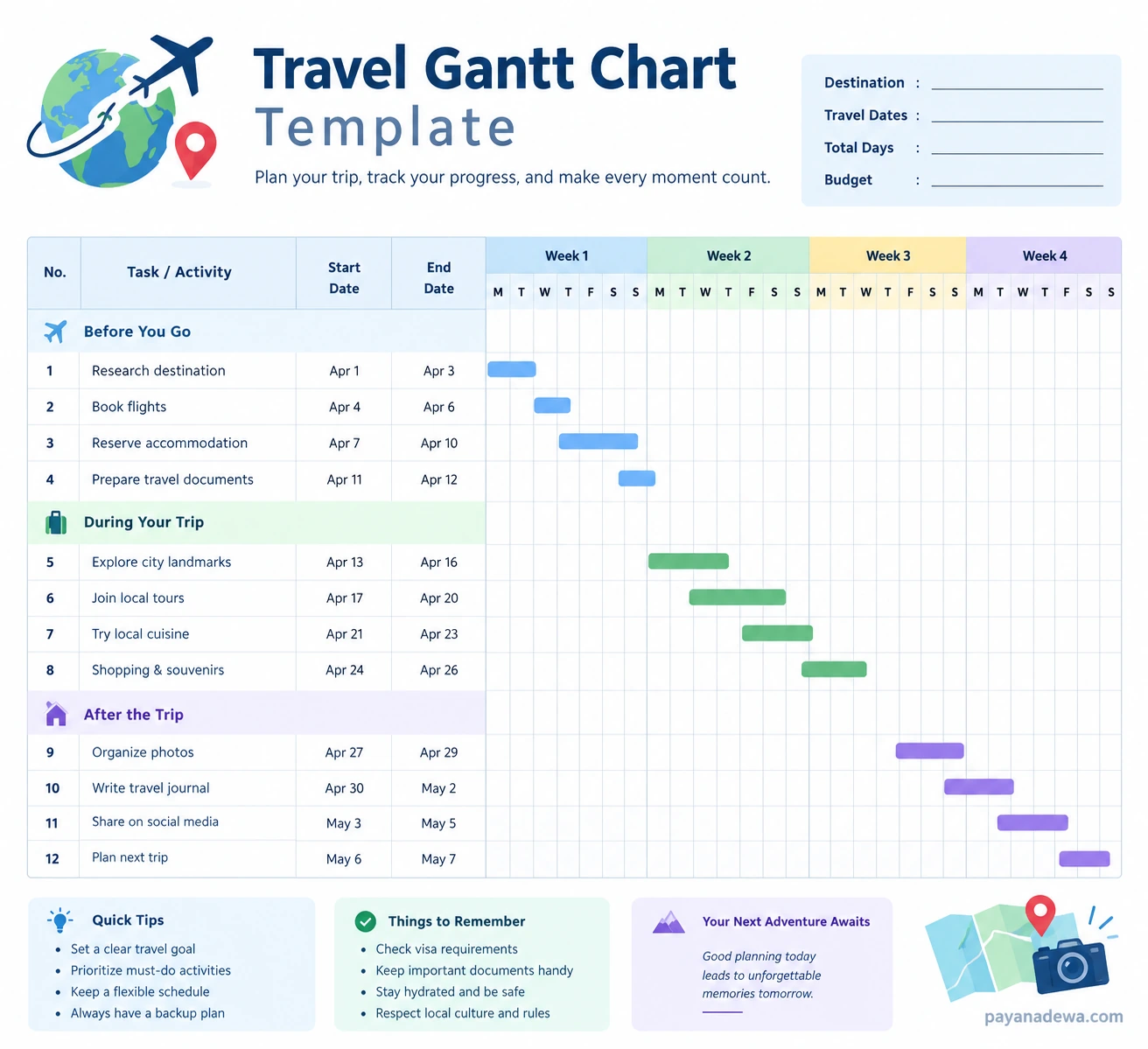
Use the printable template below to organize your itinerary, set deadlines, and keep important travel preparations in one place.
Benefits of Using a Travel Gantt Chart
A structured travel timeline provides several advantages, especially when your trip involves multiple destinations, reservations, or travelers. Here are the main reasons to use one.
1. Keep Every Travel Task Organized
Travel preparation involves many small responsibilities. You may need to renew a passport, arrange transportation, reserve hotels, purchase travel insurance, and prepare packing lists. A Gantt chart brings these tasks together in one place.
You can assign a start date, deadline, and completion status to each activity. As a result, you are less likely to overlook important details when departure day approaches.
2. Manage Your Time More Effectively
Some travel arrangements require advance planning. Popular accommodation, international flights, and guided tours may need to be booked well before your departure date. A visual timeline helps you identify these priorities and allocate enough time to complete them.
You can also schedule smaller activities around major deadlines, helping you avoid a last-minute rush.
3. Coordinate Group Travel
Traveling with friends, family, or colleagues requires communication and coordination. A shared travel project timeline lets everyone see upcoming tasks, responsibilities, and important dates.
For example, one person can handle hotel reservations while another researches attractions and a third organizes transportation. When responsibilities are clear, group planning becomes more manageable.
4. Reduce Travel Planning Stress
A clear plan provides a sense of control. Rather than remembering every detail, you can refer to your chart to check what is finished and what still needs attention.
It is also easier to identify scheduling conflicts early. If a tour overlaps with a transfer to another city, you can adjust your itinerary before the trip begins.
What to Include in Your Travel Gantt Chart
An effective travel planning template should contain enough information to guide your preparations without becoming unnecessarily complicated. Start with the following elements.
- Destination: Record the city, country, or region you plan to visit.
- Travel dates: Include departure and return dates, along with important intermediate dates.
- Task list: Add reservations, transportation arrangements, packing, activities, and other responsibilities.
- Start and end dates: Specify when each task should begin and finish.
- Timeline: Use days, weeks, or months depending on the length of your trip.
- Progress status: Mark each task as not started, in progress, or completed.
- Notes and reminders: Include confirmation numbers, booking references, or special instructions when appropriate.
- Budget: Track estimated expenses and actual spending in a separate section if needed.
For a simple vacation, a weekly timeline may be sufficient. For a long international journey, a daily schedule can provide more detailed control over transportation connections, accommodation changes, and planned activities.
How to Create a Travel Gantt Chart Step by Step
You do not need advanced project management skills to create a useful travel timeline. Follow these steps to build a practical chart that fits your trip.
Step 1: Define Your Travel Goals
Begin by identifying your destination, trip duration, travel companions, and primary activities. Decide whether the trip focuses on relaxation, sightseeing, outdoor adventures, cultural experiences, or business commitments.
These details determine how much preparation is required and which tasks deserve the highest priority.
Step 2: List All Necessary Tasks
Write down everything you need to complete before departure, during the trip, and after returning home. Divide larger responsibilities into smaller actions that are easier to schedule.
For example, instead of creating one task called “Prepare for vacation,” use separate tasks for booking flights, confirming accommodation, checking entry requirements, purchasing insurance, and packing essentials.
Step 3: Set Realistic Dates and Deadlines
Assign a start date and an expected completion date to each task. Consider external deadlines, such as reservation availability, passport processing times, and cancellation policies.
Prioritize tasks that affect other arrangements. Booking your flight first, for instance, may help you determine your accommodation dates and airport transfer schedule.
Step 4: Arrange Tasks on a Timeline
Place each activity on your chart according to its planned dates. Use horizontal bars to represent task duration, and choose different colors for preparation, travel activities, and follow-up tasks.
Overlapping bars are useful when tasks can happen simultaneously. However, make sure that activities requiring the same time or resources do not conflict.
Step 5: Track Progress and Make Adjustments
Update your chart whenever a reservation is confirmed, a deadline changes, or a new activity is added. Review your schedule regularly, especially during the final week before departure.
Keep some flexibility in your plan. Flight delays, weather changes, and unexpected opportunities can affect your itinerary, so avoid scheduling every hour too tightly.
Example of a Travel Gantt Chart Schedule
The following example illustrates how you could organize a four-week vacation preparation plan. Adjust the timing according to your destination, travel dates, and personal requirements.
- Four to six weeks before departure: Research destinations, compare transportation options, establish a budget, and book major travel arrangements.
- Three to four weeks before departure: Confirm accommodation, plan activities, check passport validity, and review entry requirements.
- One to two weeks before departure: Arrange airport transfers, purchase remaining essentials, confirm reservations, and prepare a packing list.
- Three to seven days before departure: Check the weather forecast, review your itinerary, prepare travel documents, and notify relevant contacts if necessary.
- During the trip: Follow your itinerary, monitor reservations, record expenses, and adjust activities when circumstances change.
- After returning home: Review spending, organize photographs, save useful travel notes, and resolve any outstanding bookings or claims.
This example is a general planning framework rather than a fixed rule. Some tasks, including visa applications and certain vaccinations, may require significantly more advance preparation. Always check the official requirements for your destination.
Travel Gantt Chart Best Practices
A well-designed chart should simplify your trip rather than create extra work. These practical tips will help you maintain an organized and useful travel schedule.
Use Color Coding Consistently
Assign a different color to each category of activity. For example, blue can represent bookings, green can indicate travel activities, and purple can identify post-trip tasks. Consistent colors make your chart easier to scan.
Prioritize Essential Tasks
Not every activity has the same importance. Completing entry requirements, securing essential transportation, and confirming accommodation should take priority over optional sightseeing or shopping.
Mark critical deadlines clearly so you can identify the tasks that need immediate attention.
Leave Room for Unexpected Changes
Travel rarely follows a perfect schedule. Weather disruptions, traffic, cancellations, and changes in personal preferences may require adjustments.
Include buffer time between major activities, especially when connecting flights, changing hotels, or traveling between cities. A flexible timeline is often more useful than a packed itinerary.
Choose a Format That Fits Your Needs
A printable travel Gantt chart is ideal for travelers who prefer writing notes by hand or keeping a paper copy with their documents. A digital spreadsheet or project management tool may work better for collaborative trips that require frequent updates.
You can also combine both approaches. Maintain a digital master schedule and print a simplified version for quick reference while traveling.
Printable Travel Gantt Chart vs Digital Planner
Both printable and digital travel planners can help you organize your itinerary. The best choice depends on how you plan to use your schedule.
When to Choose a Printable Template
A printable template is useful if you want a simple overview without relying on an internet connection or a particular application. You can write down reservations, highlight important deadlines, and keep the chart in a travel folder.
It is also easy to customize with handwritten notes, personal reminders, and color-coded markers.
When to Choose a Digital Gantt Chart
A digital travel planning chart is often better for complex itineraries, frequent schedule changes, and group travel. Spreadsheets and project management applications may support reminders, shared access, links, and automatic date adjustments.
If multiple people are coordinating the same trip, a shared digital version can reduce confusion and keep everyone informed. Remember to save important travel information securely and maintain offline copies of essential documents.
Common Travel Planning Mistakes to Avoid
Even a detailed travel timeline can become ineffective if it is difficult to maintain. Avoid these common mistakes when organizing your next trip.
- Starting too late: Research booking windows and official document requirements early enough to meet important deadlines.
- Overloading the itinerary: Allow enough time for meals, rest, transportation, and spontaneous activities.
- Ignoring dependencies: Confirm flights and accommodation dates before finalizing related transfers or tours.
- Forgetting budget tracking: Compare estimated expenses with actual spending to maintain financial control.
- Failing to update the chart: Revise your schedule when reservations, dates, or travel plans change.
- Keeping no backup information: Store copies of essential confirmations and documents securely, including offline access when practical.
By addressing these issues early, you can create a travel schedule that remains practical from the initial planning stage through your return home.
Conclusion
A Travel Gantt Chart is a practical way to turn a complicated itinerary into a clear, manageable timeline. By organizing reservations, travel documents, daily activities, and follow-up tasks, you can prepare more confidently and reduce the risk of missing important deadlines.
Start by listing your essential tasks, setting realistic dates, and arranging activities in chronological order. Then update your chart as your plans develop and leave enough flexibility for unexpected changes.
Use the printable Travel Gantt Chart template in this guide as a starting point, or adapt the structure to a spreadsheet or digital planner. With a well-organized travel timeline, you can spend less time worrying about logistics and more time enjoying the journey.