A thoughtful wedding seating chart helps guests find their places quickly and makes your reception feel organized from the moment they arrive. Whether you are planning an intimate garden wedding, a formal ballroom celebration, or a relaxed outdoor party, a clear seating plan can reduce confusion and help everyone feel welcome. With a little preparation, you can create a display that is both practical and beautiful.
This guide explains how to organize wedding reception seating, choose a chart style, arrange guests at tables, and avoid common planning mistakes. You will also find simple design tips to help you create a wedding seating chart that suits your venue, guest list, and overall wedding theme.
What Is a Wedding Seating Chart?
A wedding seating chart is a display that tells guests which table they have been assigned to at the reception. It is usually placed near the entrance to the dining area, where guests can check their names before taking their seats. Unlike individual place cards, which show the exact seat for each person, a seating chart generally directs guests to a table.
Couples often use a printed poster, framed board, mirror, acrylic panel, or digital display. The best option is one that is easy to read, fits the wedding style, and can be seen without creating a bottleneck at the entrance.
How to Create a Wedding Seating Chart Step by Step
1. Confirm Your Guest List
Start with the most accurate guest list possible. Confirm RSVPs, plus-ones, children, dietary requirements, and any accessibility needs before assigning seats. Keep the list in a spreadsheet so you can sort names, track responses, and make changes without rebuilding the entire chart.
- Use the spelling guests provided when they RSVP.
- Mark households and couples clearly.
- Identify guests who need wheelchair access or extra space.
- Keep a small amount of flexibility for last-minute changes.
2. Check the Venue Layout and Table Sizes
Ask your venue or wedding planner for a floor plan showing the dining area, entrances, exits, dance floor, stage, buffet, and accessible routes. Confirm how many guests can sit comfortably at each table. A table that technically fits ten people may feel crowded if it is small or surrounded by limited space.
Match the seating plan to the real room layout rather than planning from the guest list alone. Leave clear paths for guests and staff, and avoid placing guests where they block service areas or emergency exits.
3. Group Guests Thoughtfully
Consider how guests know one another and what might help them enjoy the celebration. Close family members may appreciate sitting together, while friends from different parts of your life can make a lively table when they share interests. You do not need to make every table a perfect social match, but aim for a comfortable balance.
- Family tables: Group relatives who get along and would enjoy catching up.
- Friend groups: Seat friends together when it makes conversation easier.
- Mixed tables: Introduce guests with shared hobbies, backgrounds, or interests.
- Children and parents: Consider age, supervision, and distance from loud speakers.
4. Handle Sensitive Relationships with Care
Some seating decisions require extra thought, especially when divorced relatives, separated couples, or family members with strained relationships will attend. Speak privately with the people involved when appropriate, and avoid arrangements that could create unnecessary tension. You do not need to explain every decision publicly; the goal is to make guests comfortable without drawing attention to personal matters.
5. Assign Tables and Review the Plan
Give each table a clear number or name, then assign guests to it. Review the full layout from the perspective of different guests: Can older relatives reach their seats easily? Are guests with hearing or mobility needs comfortably placed? Is anyone isolated at a table where they know nobody? A final review can catch problems before the chart is printed.
Popular Wedding Seating Chart Ideas
Your seating display can become part of the reception decor. Choose a style that complements your invitations, flowers, table numbers, and venue rather than competing with them.
- Classic framed chart: A printed paper design in a wooden, gold, or black frame works well for traditional weddings.
- Minimalist seating poster: Clean typography and plenty of white space create a modern, easy-to-read display.
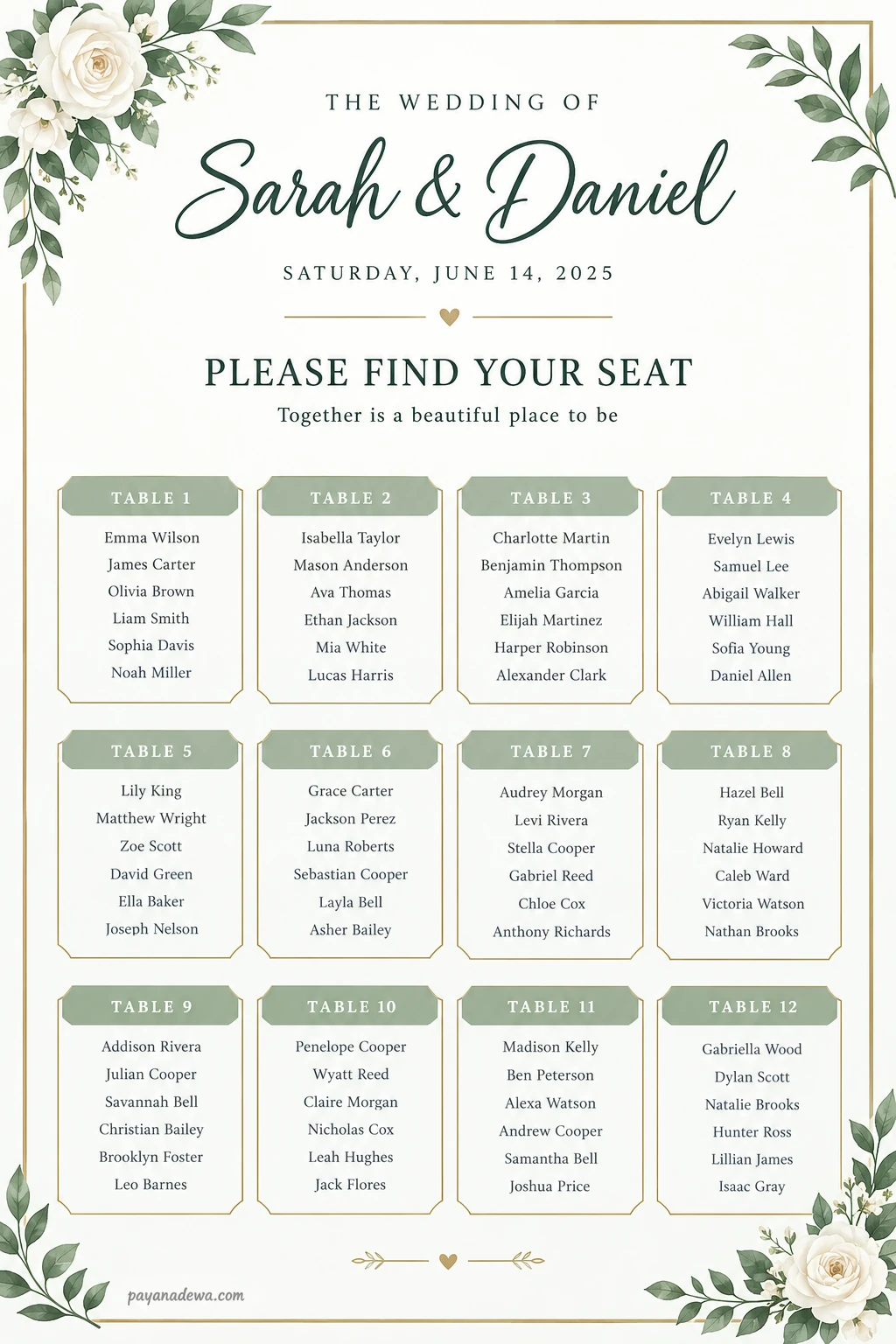
- Greenery and floral chart: Botanical details suit garden, rustic, and romantic celebrations.
- Acrylic or mirror chart: Transparent acrylic and mirror finishes add a contemporary touch, but make sure text remains readable in the venue lighting.
- Escort cards: Individual cards can be arranged alphabetically or displayed on a wall for a tactile alternative.
- Digital seating chart: A screen can be useful for large events, provided it is reliable and simple to navigate.
For a coordinated look, repeat one or two design elements from your wedding stationery. A restrained color palette, consistent fonts, and clear headings usually look more polished than too many decorative details.
Wedding Seating Chart Template: What to Include
A printable wedding seating chart template makes it easier to organize names and keep the design consistent. Before sending a design to print, make sure it includes the information guests actually need.
- A clear heading, such as “Find Your Seat” or “Wedding Seating Chart.”
- Table numbers or table names that match the reception layout.
- Guest names grouped under the correct table.
- Readable text with enough spacing between names.
- A design that fits the wedding theme and venue.
For a large guest list, an alphabetical layout can help guests find their names faster than searching through every table. You can list each guest with their assigned table number, then display table numbers separately around the room. For a smaller reception, grouping names by table may be simpler and more visually appealing.
Design Tips for a Clear, Readable Chart
Choose Legible Fonts
Decorative script can look lovely in the title, but it is harder to read when used for every guest name. Pair a stylish heading font with a simple serif or sans-serif font for names. Check the design from several feet away, since guests will often read it while standing in a busy reception space.
Use Contrast and Spacing
Dark text on a light background is usually easy to read. Avoid placing pale lettering over busy floral artwork, and leave enough space between names and table headings. If the chart is large, print a test section at the intended size before producing the final version.
Choose the Right Display Size and Placement
The chart should be large enough for the number of guests, but not so large that it obstructs the entrance. Place it where guests naturally pause before entering the reception room. For a long guest list, consider two identical charts or separate alphabetical sections to prevent crowding.
Common Wedding Seating Chart Mistakes to Avoid
- Printing too early: Wait until RSVPs are sufficiently final, and confirm the venue’s deadline for changes.
- Using tiny text: Names that look readable on a laptop may be difficult to read on a printed poster.
- Forgetting plus-ones: Double-check every confirmed guest and household before finalizing the layout.
- Changing table numbers late: Keep table numbers consistent across the chart, place cards, and floor plan.
- Ignoring accessibility: Plan convenient routes and suitable seating for guests who need additional space or assistance.
- Leaving no backup plan: Bring a digital copy and a few blank cards or labels in case a last-minute adjustment is needed.
When Should You Make and Print Your Seating Chart?
Begin a draft once you have a strong idea of the guest count and table layout. Make final assignments after most RSVPs are confirmed and your venue has provided its table plan. Ask your venue, caterer, or planner for their deadline, since meal choices and place settings may need to be finalized before the wedding day.
Before printing, proofread every name, table number, and heading. Ask another person to review the chart because a fresh pair of eyes can spot spelling errors or misplaced guests. Save the final file in more than one location and share the approved version with the person setting up the reception.
Frequently Asked Questions
Should a wedding seating chart list guests alphabetically or by table?
Both formats work. An alphabetical list with table assignments is often faster for large weddings, while a table-by-table chart can be attractive and easy to understand for smaller receptions. Choose the format that lets your guests find their names with the least effort.
Do I need both a seating chart and place cards?
Not always. A seating chart assigns guests to tables, while place cards identify specific seats. If guests can choose any seat at their assigned table, a chart may be enough. If each person has a designated seat, place cards can provide that extra level of detail.
Where should I put the wedding seating chart?
Place it near the reception entrance or another natural arrival point, but keep walkways clear. Make sure guests can gather to read it without blocking the doorway, bar, buffet, or service route.
Conclusion
A well-planned wedding seating chart makes the reception easier to navigate and helps guests settle in with confidence. Start with an accurate guest list, consider the venue layout, group people thoughtfully, and check every detail before printing. With readable typography and a design that matches your wedding style, your seating chart can serve as both a useful guide and a beautiful part of your reception decor.