A weight loss journey is easier to manage when you can see your progress clearly. A weight loss chart helps you record your weight, monitor healthy habits, and recognize improvements over time. Instead of relying on memory, you can use a simple chart to understand your progress and make informed decisions about your routine.
Whether you want to lose weight, improve your fitness, or develop healthier habits, a printable weight loss tracker can keep you organized. It gives you one convenient place to record weekly measurements, set realistic goals, and reflect on your achievements.
In this guide, you will learn how to use a weight loss chart, what information to track, and how to stay motivated throughout your journey. You will also find practical tips for building a sustainable routine without focusing only on the number on the scale.
What Is a Weight Loss Chart?
A weight loss chart is a tracking tool that helps you record changes in body weight over a specific period. You can use it daily, weekly, or monthly, depending on your preferences. Most charts include a starting weight, a goal weight, and spaces for recording measurements.
However, a useful chart can do more than track pounds or kilograms. It can also help you monitor habits that support your overall health. For example, you might record physical activity, water intake, sleep, and meal planning.
A printable weight loss chart is especially helpful if you prefer writing things down instead of using an app. You can place it in a planner, keep it on your desk, or attach it to your refrigerator as a visual reminder.
Benefits of Using a Weight Loss Tracker
Tracking your progress can make healthy lifestyle changes easier to maintain. Although a chart cannot guarantee weight loss, it can help you notice patterns and stay focused on your goals.
1. Set Clear and Realistic Goals
A chart gives you a clear starting point. You can record your current weight, choose a reasonable goal, and divide your journey into smaller milestones. These milestones make a long-term goal feel more manageable.
Remember that weight loss rates vary from person to person. Your age, health, medications, activity level, and other factors can affect your results. Therefore, focus on progress that is appropriate for your circumstances rather than comparing yourself with someone else.
2. Recognize Patterns Over Time
Body weight naturally changes from day to day. Fluid retention, digestion, hormonal changes, sodium intake, and exercise can all affect the number on the scale.
For this reason, weekly measurements often provide a more useful overview than individual daily readings. A chart helps you identify longer-term patterns without reacting to every small fluctuation.
3. Build Consistent Healthy Habits
Successful weight management involves more than eating less. Regular physical activity, balanced meals, adequate sleep, and stress management also play important roles.
By tracking these behaviors, you can see which routines are working well. You can then adjust your approach based on your needs and experience.
Free Printable Weight Loss Chart Template
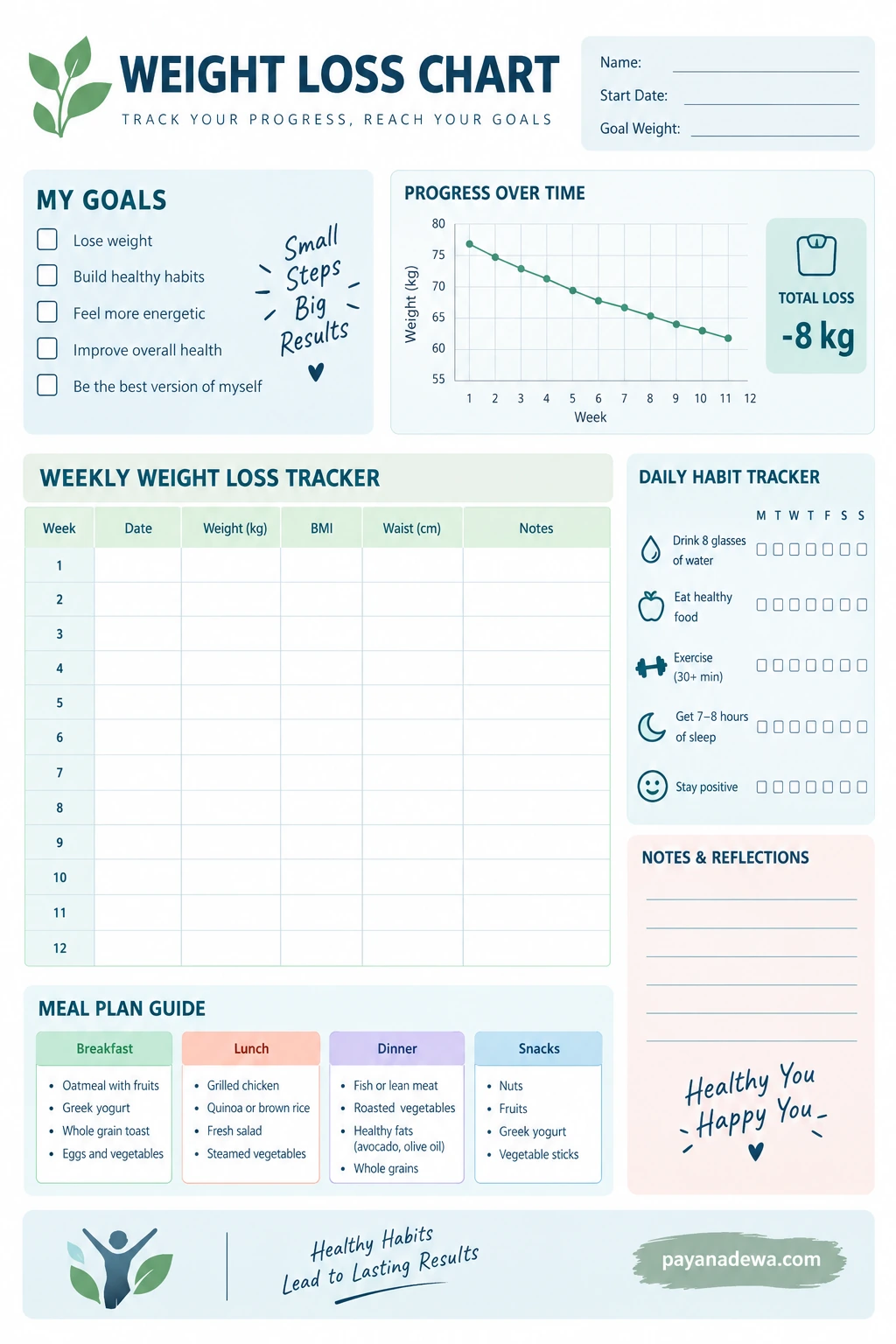
Use the printable weight loss chart below to organize your goals and monitor your progress. The template includes a weekly weight tracker, a progress chart, a daily habit checklist, reflection notes, and a simple meal planning guide.
Print the template and keep it somewhere easy to access. You can fill in each section by hand and review your progress at the end of every week.
What Should a Weight Loss Chart Include?
The best weight loss chart is simple enough to use consistently. Choose the information that supports your goals rather than trying to track everything at once.
Starting Weight and Goal Weight
Record your starting weight and, if appropriate, a realistic goal. Your goal should reflect your health needs and personal circumstances. A healthcare professional can help you determine whether weight loss is suitable for you and establish an appropriate target.
Weekly Weight Measurements
Choose a consistent day and time for weighing yourself. For a more comparable measurement, use the same scale and similar conditions each time. Many people prefer weighing in the morning after using the bathroom and before eating.
Weekly tracking is enough for many people. If weighing yourself causes anxiety or encourages unhealthy behaviors, consider tracking other indicators of progress instead.
Body Measurements
Body measurements can provide additional context when the scale does not change much. Depending on your goals, you may record waist circumference or other measurements at regular intervals.
Measure consistently and avoid expecting dramatic changes every week. Measurements are only one part of the picture and should not determine your self-worth.
Daily Habit Checklist
A habit checklist helps you focus on actions within your control. Consider tracking these activities:
- Eating balanced meals that include vegetables, fruit, protein, and fiber-rich foods.
- Drinking water regularly throughout the day according to your needs.
- Completing planned physical activity or taking regular movement breaks.
- Getting sufficient sleep and maintaining a consistent sleep schedule.
- Practicing stress management, relaxation, or mindfulness.
You do not need to achieve every habit perfectly. Instead, aim for consistency and make changes that fit your lifestyle.
How to Use a Weight Loss Chart Effectively
A chart works best when it becomes part of a simple weekly routine. Follow these steps to make tracking easier and more useful.
Step 1: Choose Your Starting Point
Begin by recording the information you feel comfortable tracking. Add your starting weight if appropriate, select a review date, and identify one or two habits you want to improve.
For example, you might aim to walk regularly or prepare balanced lunches during the workweek. Specific actions are easier to monitor than vague goals such as getting healthier.
Step 2: Record Your Progress Consistently
Update your chart on a regular schedule. If you track weight weekly, use the same day and similar conditions whenever possible. Record measurements accurately instead of changing numbers to match your expectations.
If you miss an entry, simply continue the following week. One missed measurement does not erase your progress.
Step 3: Review Your Habits and Results
At the end of each week, take a few minutes to review your chart. Look for useful patterns rather than judging yourself based on a single number.
Ask yourself these questions:
- Which healthy habits did I follow consistently?
- Did I have enough time for sleep, movement, and meal preparation?
- What challenges made my routine harder to maintain?
- What is one realistic improvement I can make next week?
Step 4: Adjust Your Routine When Needed
Your needs may change as your schedule, energy, and circumstances change. Therefore, use your chart as a guide rather than a strict set of rules.
If your progress stalls, avoid extreme dieting or excessive exercise. Review your routine, consider factors such as sleep and stress, and seek professional advice if you need individualized guidance.
Practical Tips for Healthy and Sustainable Weight Loss
A tracking chart is most useful when it supports healthy behaviors. These practical strategies can help you build a routine that is easier to maintain.
Eat Balanced, Satisfying Meals
Include a variety of vegetables, fruits, whole grains, protein sources, and healthy fats. Choose meals that satisfy your hunger and provide essential nutrients. There is no single diet that works for everyone, so consider your preferences, budget, culture, and health needs.
Choose Physical Activities You Enjoy
Walking, cycling, swimming, dancing, and strength training are examples of activities that can support overall health. Start at a comfortable level and increase your activity gradually. If you have a medical condition or have been inactive for a long time, ask a healthcare professional about suitable options.
Prioritize Sleep and Recovery
Sleep affects energy, appetite regulation, and your ability to maintain daily routines. Establish a regular bedtime and create a relaxing environment. Also, allow enough recovery time between demanding workouts.
Celebrate More Than Scale Changes
Weight is only one measure of progress. You may also notice better stamina, improved strength, more consistent sleep, or greater confidence in your routine.
Record these achievements in the notes section of your chart. Celebrating meaningful improvements can help you stay motivated even when your weight changes slowly.
Common Weight Loss Chart Mistakes to Avoid
Even a simple tracker can become frustrating if you use it in ways that create unnecessary pressure. Avoid these common mistakes to make your experience more positive.
- Expecting a straight downward trend: Body weight naturally fluctuates. Focus on longer-term patterns instead.
- Setting unrealistic deadlines: Rapid weight loss is not appropriate or sustainable for everyone. Choose goals that prioritize health.
- Ignoring healthy behaviors: A stable scale reading does not mean your efforts are worthless. Habit consistency matters too.
- Comparing your results with others: People have different bodies, health histories, and circumstances. Track your own progress.
- Tracking too many details: A complicated chart can be difficult to maintain. Start with a few useful measurements and habits.
- Using the chart to punish yourself: Missed goals are opportunities to learn, not reasons to skip meals or exercise excessively.
How Often Should You Update Your Weight Loss Chart?
The ideal tracking schedule depends on your preferences and how tracking affects your well-being. For many adults, a weekly weight entry provides a useful overview without creating too much pressure.
Daily habits can be checked each day, while body measurements may be recorded less frequently. You can also review your overall progress every four weeks to identify patterns and decide whether your routine needs adjustment.
Consistency matters more than filling in every box. If frequent weighing becomes stressful, reduce the frequency or focus on non-scale indicators. You can still use the chart to monitor activity, sleep, meal planning, and other healthy routines.
Frequently Asked Questions
Is a weight loss chart effective?
A weight loss chart can support self-monitoring, goal setting, and habit development. However, results depend on many factors, and a chart alone does not cause weight loss. It works best alongside sustainable lifestyle choices and appropriate healthcare guidance.
Should I track my weight every day or every week?
Weekly tracking works well for many people because it can reduce the focus on normal daily fluctuations. However, the right frequency depends on your preferences and health circumstances. Choose an approach that supports your well-being.
Can I use a weight loss chart without weighing myself?
Yes. You can track physical activity, sleep, meal planning, energy levels, and other personal goals instead. This approach may be more comfortable for people who find weighing themselves stressful.
Can I use the printable weight loss chart for 12 weeks?
Yes. The template includes a 12-week tracker that you can use to record weekly measurements and notes. You can also print additional copies if you want to continue tracking beyond the initial period.
What is the best way to stay motivated?
Set realistic goals, recognize small achievements, and focus on habits you can control. Review your chart regularly, adjust your routine when needed, and remember that sustainable progress may take time.
Conclusion
A weight loss chart is a practical way to organize your goals, track weekly measurements, and develop healthier daily habits. With a consistent routine, you can use your records to recognize patterns, celebrate improvements, and identify changes that may support your well-being.
Start with a simple printable weight loss tracker and choose a few meaningful habits to monitor. Be patient with normal fluctuations, avoid unrealistic expectations, and adjust your approach to fit your needs.
Most importantly, remember that lasting progress is about more than a number on the scale. Focus on building healthy habits that support your physical and mental well-being over time.