A celebration is more than just a party. It is an opportunity to bring people together, recognize important achievements, create meaningful memories, and appreciate life’s special moments. Whether you are organizing a birthday party, wedding anniversary, graduation gathering, holiday event, or company milestone, a well-planned celebration can turn an ordinary day into an unforgettable experience.
Planning a successful celebration does not have to be complicated or expensive. With a clear purpose, a realistic budget, thoughtful decorations, and engaging activities, you can create an event that reflects your personality and makes guests feel welcome. Using a celebration planning template can also help you organize essential details, manage your guest list, and keep everything on schedule.
In this guide, you will discover different types of celebrations, practical event planning tips, creative decoration ideas, budget-friendly solutions, and useful strategies for making every occasion special.
What Is a Celebration?
A celebration is an event or activity that marks a meaningful occasion, achievement, tradition, or happy moment. Celebrations can be large gatherings with hundreds of guests or small, intimate moments shared by family and friends. They may take place at home, in a restaurant, outdoors, or at a dedicated event venue.
People celebrate for many reasons, including personal milestones, cultural traditions, professional accomplishments, and seasonal holidays. Although the purpose and style may differ, most celebrations share a common goal: creating positive experiences and strengthening connections between people.
Common examples of celebrations include:
- Birthday parties and milestone birthday events.
- Weddings, engagement parties, and wedding anniversaries.
- Graduation ceremonies and academic achievements.
- Baby showers, family reunions, and housewarming parties.
- Religious holidays, cultural festivals, and seasonal gatherings.
- Corporate anniversaries, employee recognition events, and business achievements.
- Retirement parties, farewell gatherings, and personal accomplishments.
Understanding the purpose of your event is the first step toward planning a celebration that feels meaningful rather than simply following a party checklist.
Popular Types of Celebrations
Every celebration has its own atmosphere, traditions, and planning requirements. Choosing the right format helps you create an event that suits the occasion, your guests, and your available resources.
Birthday Celebrations
Birthday celebrations are among the most popular occasions for gathering with loved ones. Depending on the guest of honor’s preferences, a birthday party might include a themed dinner, outdoor picnic, surprise gathering, game night, or elegant evening event.
To make a birthday celebration memorable, consider the person’s favorite colors, hobbies, foods, and activities. Personalized decorations, a meaningful gift, a photo display, or a birthday message from friends can make the occasion feel more personal.
Family and Relationship Celebrations
Family celebrations create opportunities to reconnect, share stories, and strengthen relationships. Wedding anniversaries, engagement parties, family reunions, and housewarming gatherings are excellent examples.
These events do not need elaborate entertainment. A shared meal, a memory-sharing activity, a slideshow, or a group photograph may be enough to create a warm and memorable experience.
Professional and Corporate Celebrations
Businesses also organize celebrations to recognize achievements, welcome new employees, mark company anniversaries, and celebrate successful projects. A well-organized corporate event can encourage teamwork and help employees feel appreciated.
When planning a professional celebration, choose activities that match the workplace culture. Some teams prefer casual lunches and interactive games, while others may appreciate formal dinners, award presentations, or networking events.
Seasonal and Cultural Celebrations
Seasonal holidays and cultural festivals bring communities together through shared customs, food, music, decorations, and traditional activities. These celebrations may involve religious practices, family gatherings, public events, or community celebrations.
When organizing a culturally significant event, consider the traditions and preferences of everyone attending. Respectful planning, inclusive food options, and appropriate activities help create a welcoming atmosphere for all guests.
How to Plan a Celebration Step by Step
Successful event planning starts with a clear structure. Instead of trying to organize everything at once, divide the process into manageable tasks. A celebration planning checklist can help you track important details and reduce last-minute stress.
1. Define the Purpose and Theme
Begin by deciding what you are celebrating and what you want guests to experience. Is the event intended to recognize an achievement, strengthen relationships, honor someone special, or simply provide an opportunity to have fun?
Once you establish the purpose, choose a theme that supports it. A garden party, elegant dinner, tropical gathering, vintage celebration, or colorful birthday event can provide direction for decorations, invitations, food, and entertainment.
Keep the theme practical. It should enhance the experience rather than make planning unnecessarily expensive or complicated.
2. Set a Realistic Budget
Your budget influences nearly every planning decision, including the venue, guest count, catering, decorations, and entertainment. Determine how much you can comfortably spend before making major commitments.
Divide your celebration budget into categories such as:
- Venue rental and equipment.
- Food, beverages, and catering supplies.
- Invitations, printing, and stationery.
- Decorations, flowers, balloons, and lighting.
- Entertainment, music, and activities.
- Photography and special services.
- Transportation and miscellaneous expenses.
Reserve a small contingency amount for unexpected costs. Tracking estimated and actual expenses throughout the planning process will help you make informed decisions and avoid unnecessary spending.
3. Choose the Date, Time, and Venue
Select a date that works for the most important guests and consider whether the event is better suited to daytime or evening. Check for scheduling conflicts, travel requirements, weather conditions, and any seasonal factors that could affect attendance.
Choose a venue based on the number of guests, event style, accessibility, available facilities, and budget. Hosting a celebration at home may reduce costs, while a rented venue can provide additional space and professional services.
Before confirming a location, check its capacity, parking arrangements, seating options, restrooms, accessibility, and restrictions on decorations or music.
4. Prepare the Guest List and Invitations
Create a guest list that fits your venue and budget. Decide whether the celebration will be an intimate gathering, a family event, or a larger party involving colleagues and friends.
Send invitations early enough for guests to make arrangements. Include the event date, start time, location, dress code if applicable, and RSVP instructions. For larger celebrations, consider using a digital invitation to simplify communication and attendance tracking.
Ask guests to share relevant dietary requirements or accessibility needs in advance. This small step can make the event more comfortable and inclusive.
5. Plan Food, Drinks, and Entertainment
Food and entertainment often shape the overall guest experience. Select a menu that matches the event’s formality, duration, and budget. Finger foods and snacks may suit casual parties, while a seated dinner may be more appropriate for formal celebrations.
Provide suitable nonalcoholic beverages and consider vegetarian, vegan, and allergy-aware options where possible. Labeling dishes can help guests make informed choices.
For entertainment, consider music, party games, interactive activities, speeches, photo booths, or a slideshow. The best activities are appropriate for the audience and leave enough room for guests to socialize naturally.
6. Organize Decorations and Supplies
Decorations help establish the atmosphere and make a celebration feel distinctive. You can use balloons, flowers, banners, table centerpieces, candles where appropriate, and coordinated table settings to reinforce the event theme.
Focus on a few visual elements rather than purchasing decorations for every available surface. A decorated entrance, attractive focal point, and thoughtfully arranged tables can create a polished appearance without excessive spending.
Prepare a separate checklist for practical supplies, including serving utensils, plates, cups, napkins, trash bags, extension cords where appropriate, signage, and emergency supplies.
7. Create a Timeline and Delegate Tasks
A clear schedule keeps your celebration organized. Work backward from the event date and assign deadlines for booking the venue, sending invitations, confirming suppliers, buying supplies, and preparing food.
On the day of the celebration, establish a simple timeline for setup, guest arrival, meals, speeches, games, photographs, and cleanup.
If other people are helping, assign specific responsibilities. One person can coordinate food, another can manage decorations, and someone else can welcome guests. Clear responsibilities reduce confusion and help everything run smoothly.
Why Use a Celebration Planning Template?
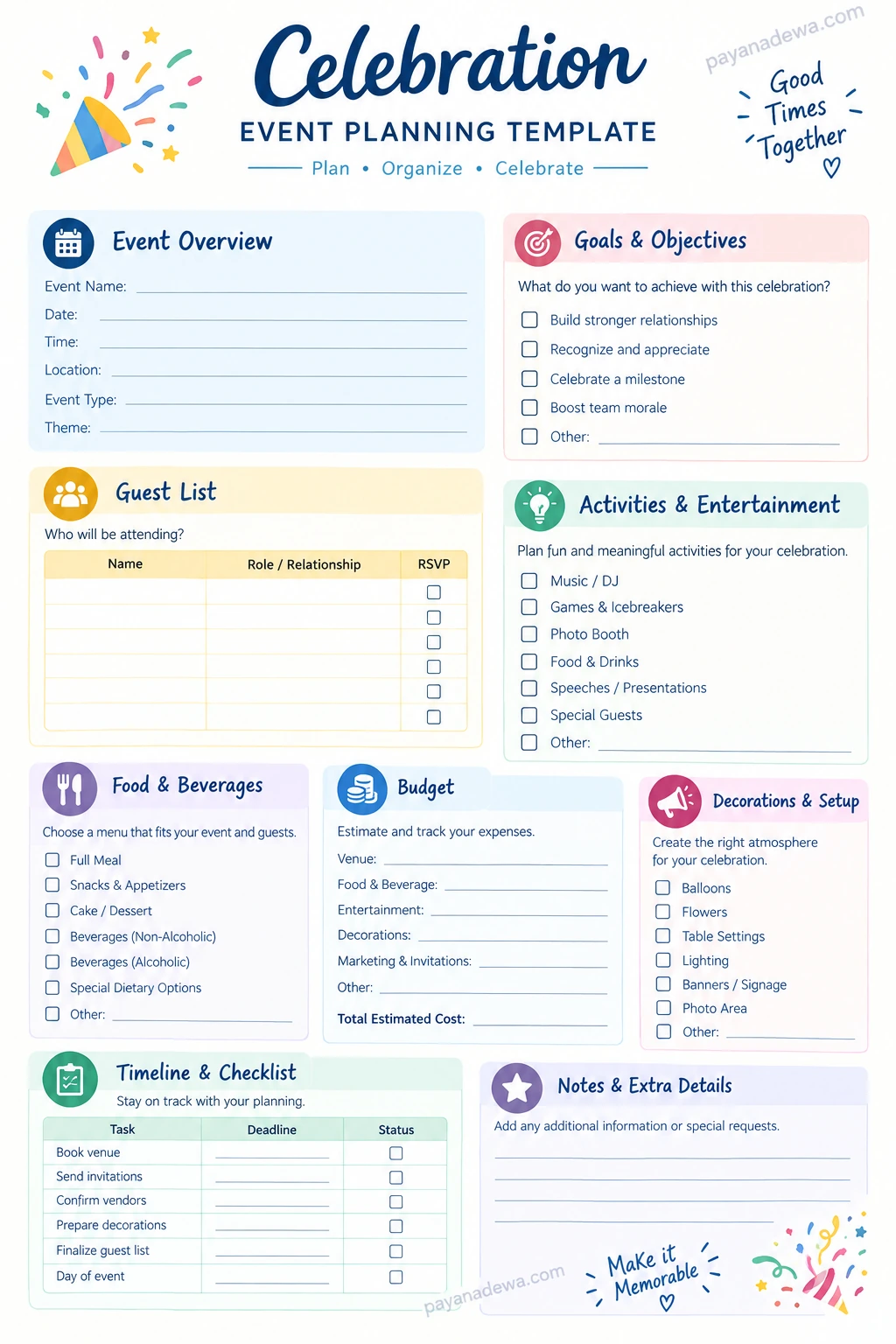
A celebration planning template is a practical tool for organizing the details of an event in one convenient place. Rather than relying on scattered notes or trying to remember every task, you can use a structured worksheet to record important information and monitor progress.
A printable celebration template is especially useful for people who prefer writing down their plans by hand. It can also be saved digitally, printed for a planning meeting, or shared with family members and event organizers.
A useful celebration planner may include the following sections:
- Event overview: Record the event name, date, time, location, and theme.
- Goals and objectives: Identify the purpose of the celebration and the experience you want to create.
- Guest list: Track invitations, contact details, and RSVP responses.
- Activities and entertainment: Organize music, games, speeches, and other planned activities.
- Food and beverages: Record menu choices, dietary considerations, and serving requirements.
- Budget: Estimate expenses and compare them with actual costs.
- Decorations and setup: List the materials and supplies needed to prepare the venue.
- Timeline and checklist: Track deadlines and mark completed tasks.
- Notes: Store special requests, reminders, and additional information.
The main advantage of using a planning worksheet is that it makes the process easier to manage. You can quickly identify unfinished tasks, review your budget, and communicate essential information to everyone involved.
For a simple event, one page may be enough. Larger celebrations may require additional guest lists, detailed schedules, vendor contacts, and expense records.
Creative Celebration Ideas for Different Budgets
A memorable celebration depends more on thoughtful planning than on how much money you spend. With a little creativity, you can create an enjoyable event that suits your resources and personal style.
Budget-Friendly Celebration Ideas
If you want to keep expenses low, focus on experiences that encourage people to connect. Consider hosting a potluck dinner, arranging a backyard picnic, organizing a board game night, or planning a movie evening with homemade snacks.
Digital invitations, reusable decorations, homemade desserts, and simple DIY centerpieces can also reduce costs. Ask friends or family members to contribute specific skills, such as photography, baking, or music, if they are comfortable helping.
Elegant Celebration Ideas
For a more formal occasion, choose a coordinated color palette, tasteful lighting, elegant table settings, and a carefully planned menu. A small number of high-quality decorative elements can create a sophisticated atmosphere without overwhelming the venue.
Consider adding personalized place cards, a welcome sign, a curated playlist, or a short program that guides guests through the event.
Fun and Interactive Celebration Ideas
Interactive activities help guests participate instead of simply observing. Depending on the occasion, you could organize trivia about the guest of honor, a memory-sharing session, a photo challenge, a themed costume contest, or a collaborative craft activity.
Choose activities that match the guests’ ages, interests, and comfort levels. Participation should feel enjoyable rather than compulsory.
Practical Tips for a Stress-Free Celebration
Even well-planned events can involve unexpected changes. The following strategies can help you stay organized and respond calmly when something does not go exactly as expected.
- Start early: Book popular venues and services as soon as your date and budget are confirmed.
- Keep plans realistic: Prioritize essential elements instead of trying to include every possible activity.
- Confirm important details: Recheck bookings, delivery times, guest numbers, and supplier arrangements before the event.
- Prepare a backup plan: Have an alternative for outdoor events, weather disruptions, or unexpected cancellations.
- Keep essential supplies together: Store tape, scissors, pens, spare batteries, and other useful items in one labeled box.
- Communicate clearly: Share schedules and responsibilities with anyone helping to organize the celebration.
- Allow extra time: Build flexibility into your schedule for setup, guest arrivals, and transitions between activities.
- Be present: Once the event begins, avoid spending the entire time checking tasks. Let trusted helpers handle routine responsibilities when possible.
Remember that a successful celebration does not require every detail to be perfect. Guests are more likely to remember how they felt, the conversations they enjoyed, and the meaningful moments they shared.
How to Make Your Celebration More Meaningful
Personal touches can transform a standard gathering into a memorable experience. Consider incorporating elements that reflect the people, achievements, or traditions being celebrated.
For example, you could display photographs from important moments, prepare a short tribute, invite guests to share encouraging messages, or create a memory book. For family gatherings, traditional recipes and familiar music can help preserve meaningful connections across generations.
Think about accessibility and inclusion when planning activities. Make sure guests can move comfortably through the venue, provide seating where needed, communicate essential information clearly, and offer food choices that accommodate known dietary requirements.
You can also reduce waste by choosing reusable tableware, borrowing decorations, planning food quantities carefully, and recycling materials when facilities are available.
Above all, make the event reflect its purpose. A quiet anniversary dinner does not need the same entertainment as a large graduation party, and a corporate recognition event may benefit from a different atmosphere than a casual family reunion.
Celebration Planning Checklist
Before the event begins, review this essential checklist to make sure the most important details have been covered.
- Define the purpose and theme of the celebration.
- Set a realistic budget and track estimated expenses.
- Confirm the event date, time, and venue.
- Prepare the guest list and send invitations.
- Track RSVPs and communicate important information.
- Arrange food, beverages, and dietary accommodations.
- Plan decorations, entertainment, and activities.
- Confirm bookings, deliveries, and supplier arrangements.
- Prepare a schedule for setup and event activities.
- Assign responsibilities to helpers or event coordinators.
- Check essential supplies and prepare a backup plan.
- Review the final arrangements and enjoy the occasion.
Keep your checklist somewhere accessible so you can update it as decisions are made. A printable planner can make this process especially convenient because you can check off completed tasks and add notes whenever necessary.
Conclusion: Make Every Celebration Count
A celebration is an opportunity to appreciate important milestones, strengthen relationships, and create memories that last. Whether you are organizing a small birthday gathering, a family reunion, a wedding anniversary, or a professional event, thoughtful preparation can make the experience more enjoyable for everyone involved.
Start by defining your purpose, establishing a realistic budget, choosing a suitable venue, and organizing the guest list. Then plan the food, decorations, activities, and schedule according to your event’s needs. Remember to keep your plans flexible and focus on the experiences that matter most.
A celebration planning template can simplify the entire process by bringing your event details, budget, guest list, and checklist together in one place. With a clear plan and a few personal touches, you can organize a meaningful celebration without unnecessary stress.
Start planning your next special occasion today, and turn an important moment into a celebration worth remembering.