A great catering business card can turn a brief introduction into a valuable business opportunity. Whether you provide wedding catering, corporate lunches, private chef services, or event food packages, a professional business card helps potential customers remember your brand and contact you when they need your services.
Your business card is more than a piece of paper with your phone number. It represents your catering business, communicates your style, and gives customers a quick way to learn about your food and event services. A well-designed card can also help you stand out at networking events, food fairs, wedding expos, and business meetings.
In this guide, you will learn how to create an effective catering business card, what information to include, which design elements work best, and how to prepare your card for professional printing. You will also find practical ideas for using a catering business card template to create a design that reflects your brand.
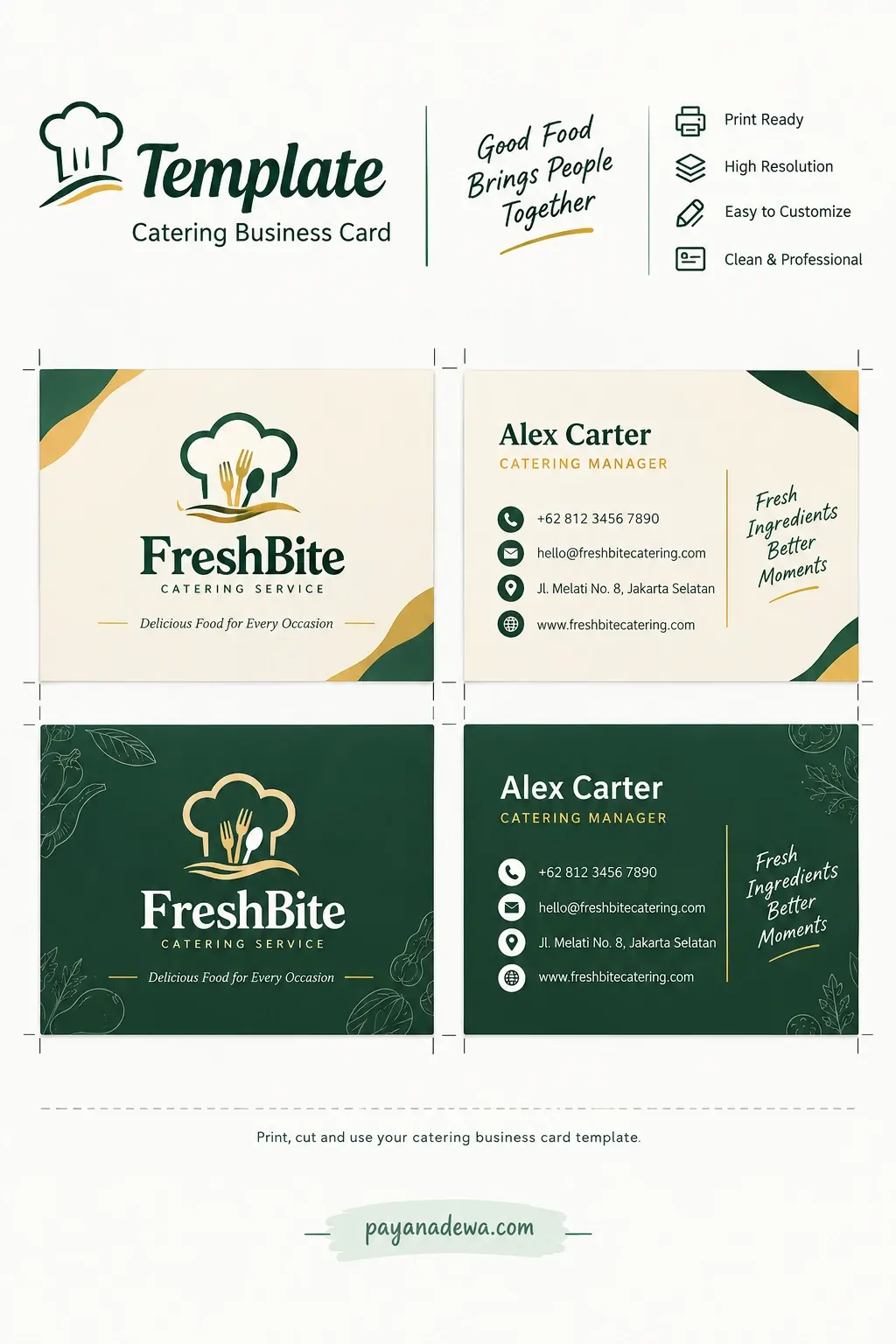
Why a Catering Business Card Matters
Personal recommendations and professional relationships are important sources of new customers for catering companies. A business card makes it easy for someone to share your contact information with a colleague, friend, or event organizer.
Unlike a social media post that may disappear in a busy feed, a printed catering business card can stay in a customer’s wallet, office drawer, or event planning folder. It provides a convenient reminder of your services when someone starts planning an occasion.
A professional catering card can help you:
- Build credibility with potential customers and event planners.
- Make your catering company easier to recognize and remember.
- Share your phone number, website, and email without searching for a profile.
- Promote your catering services at weddings, corporate events, and private parties.
- Encourage customers to request a menu, quote, or consultation.
The best business cards communicate your brand clearly. Customers should understand who you are, what you offer, and how to contact you within a few seconds.
Essential Information to Include on a Catering Business Card
Space is limited on a business card, so choose information that helps customers take the next step. Avoid filling every available area with text. A simple layout with clear contact details is often more effective than a crowded design.
1. Catering Business Name and Logo
Your business name should be one of the most noticeable elements. Use your existing logo whenever possible to maintain a consistent brand identity across your website, menus, invoices, and promotional materials.
If you do not have a logo yet, consider a simple wordmark with a small food-related symbol. A chef’s hat, serving tray, fork, or subtle culinary illustration can work well when it fits your brand style.
2. Your Name and Professional Title
Include the name of the person customers should contact. A professional title such as Catering Manager, Event Catering Specialist, Executive Chef, or Owner can help explain your role.
For a small catering business, using the owner’s name can make the brand feel personal and approachable. For a larger company, a sales or event coordinator’s details may be more useful.
3. Phone Number and Email Address
Make your primary phone number easy to read. Customers often want to ask about availability, menu options, guest counts, and pricing before booking an event.
Use a professional email address that matches your business domain when possible. For example, an address such as [email protected] can look more established than a personal email account.
4. Website and Social Media
Your website can provide information that does not fit on the card, including menus, event packages, customer reviews, and photographs of previous catering projects.
If your business receives inquiries through social media, you may also include one relevant account. Choose the platform where customers can see your food presentation and recent work. Avoid adding too many social media icons because they can make the design feel cluttered.
5. A Short Catering Tagline
A brief tagline can help customers understand your specialty. Keep it specific, memorable, and easy to read.
- Fresh Ingredients, Memorable Events
- Exceptional Food for Every Occasion
- Thoughtful Catering, Beautifully Served
- Making Every Celebration Delicious
- Corporate Catering Made Simple
Choose a tagline that accurately describes your services. If you specialize in wedding catering or corporate meals, a focused message can help attract the right customers.
How to Design an Attractive Catering Business Card
A successful catering business card combines attractive visuals with practical information. Your design should reflect the quality and personality of your food while remaining readable at a small size.
Choose Colors That Match Your Brand
Color influences how people perceive your catering company. Earthy tones can suggest fresh ingredients and natural food, while darker colors with metallic accents may communicate an elegant event experience.
Some popular color combinations include:
- Forest green and cream: Suitable for fresh, organic, or premium catering brands.
- Black and gold: A sophisticated option for wedding catering and formal events.
- White and soft beige: A clean, minimal choice for modern catering businesses.
- Terracotta and olive: A warm palette for rustic celebrations and outdoor events.
- Navy blue and white: A professional look for corporate catering services.
Use one or two primary colors and a contrasting accent. Consistency is more important than using every color associated with food.
Use High-Quality Food Photography Carefully
Food photographs can make a catering brand look appealing, especially when your business is known for visually impressive dishes or dessert tables. However, a small business card has limited space.
If you use an image, choose a high-resolution photograph of your own food or event setup. A single attractive image is usually better than several small photographs. Make sure the image does not compete with your business name or contact information.
For a more minimal design, use a simple culinary icon or decorative illustration instead of photography.
Select Readable Fonts
Use fonts that remain clear when printed at a small size. A bold, elegant typeface can work well for your business name, while a straightforward sans-serif font is often suitable for phone numbers and addresses.
Limit your design to two font families. Avoid extremely thin lettering, complicated scripts, and excessive capitalization in the contact information. Before printing, check that every line can be read comfortably without magnification.
Using a Catering Business Card Template
A catering business card template is a practical starting point for creating a professional design without building the entire layout from scratch. Templates can help you organize your logo, contact information, brand colors, and tagline while keeping the card balanced.
When selecting a template, look for a design that includes:
- A clear space for your business name and logo.
- A simple, organized contact information section.
- Enough room for a short description of your catering services.
- Consistent typography and a balanced color palette.
- Print-friendly dimensions and sufficient margins.
You can customize a template using graphic design software or a suitable online design editor. Replace the sample text with your own information, adjust the colors to match your branding, and remove any decorative elements that do not support your message.
Before printing, double-check every phone number, email address, website URL, and social media handle. A beautiful business card will not help your business if customers cannot reach you.
Practical Tips for Printing Your Catering Business Card
Good printing can improve the appearance and durability of your business cards. A few simple checks can prevent common problems and help your design look professional.
Choose a Standard Business Card Size
A common horizontal business card size is 3.5 × 2 inches in the United States, while many printers in other countries use approximately 85 × 55 millimeters. Confirm the required dimensions with your local printing provider before preparing the final artwork.
For a design that includes background colors or photographs extending to the edges, ask your printer about bleed requirements and safe margins. Keep essential text and logos away from the cutting edges.
Select Suitable Paper and Finishing
Thick, quality cardstock can make a catering business card feel more substantial. Matte finishes offer a clean, understated appearance, while gloss finishes can make photographs and colors appear more vibrant.
Consider these options:
- Matte cardstock: A professional, low-glare finish suitable for most catering brands.
- Gloss cardstock: Useful for designs featuring colorful food photography.
- Textured paper: A distinctive option for premium or artisan catering businesses.
- Rounded corners: A subtle design detail that can create a softer appearance.
Request a proof or sample before ordering a large quantity. Check the colors, text alignment, image quality, and overall readability under normal lighting.
Creative Catering Business Card Ideas
Your business card does not have to follow a traditional layout. A thoughtful design detail can make it memorable while keeping the essential information easy to find.
Minimalist Catering Business Card
A minimalist card uses a simple logo, a limited color palette, and carefully arranged contact details. This approach works especially well for catering businesses that want a modern, polished appearance.
Luxury Wedding Catering Card
For a wedding catering company, consider elegant typography, subtle gold accents, and a cream or dark background. Include a short message about personalized menus or event catering, but avoid overcrowding the design with decorative flourishes.
Corporate Catering Business Card
Corporate catering cards should communicate reliability and convenience. Use a clean layout, a professional logo, and a clear phone number or website. A short phrase such as Business Lunches and Office Events can help potential clients identify your specialty.
Eco-Friendly Catering Business Card
If sustainability is a genuine part of your business, consider recycled paper and a natural color palette. Use simple printing techniques and avoid unnecessary finishes. Make sure any environmental claims on the card accurately reflect your business practices.
Common Catering Business Card Mistakes to Avoid
Even a well-designed card can lose its effectiveness when important details are overlooked. Avoid these common mistakes:
- Too much information: Include only details that help customers identify your services or contact you.
- Small text: Keep phone numbers, email addresses, and websites readable at actual print size.
- Low-resolution images: Use high-quality artwork to prevent blurry logos and photographs.
- Inconsistent branding: Match your business card to your website, menus, and other marketing materials.
- Unclear service descriptions: Tell customers whether you provide wedding catering, corporate meals, private events, or another specialty.
- Incorrect contact details: Review every detail before sending the design to a printer.
It is also worth considering how customers will use the card. If most of your inquiries come from mobile devices, a QR code linking to your catering menu or inquiry page can be helpful. Test the code on multiple phones and make sure the destination page works correctly.
Conclusion
A catering business card is a simple but valuable marketing tool for building relationships and attracting new customers. The strongest designs combine a recognizable brand, readable contact information, and a clear description of your catering services.
Start with a suitable catering business card template, customize it to match your business identity, and choose colors, fonts, and images that support your message. Before printing, verify the dimensions, contact details, and artwork quality.
Whether you run a small catering service, a wedding catering company, or a corporate food business, a thoughtfully designed card can help customers remember your brand and make it easier for them to get in touch when their next event needs great food.