Carpets make a home feel warm, comfortable, and inviting. However, they also collect dust, dirt, pet hair, and everyday spills. Over time, these particles can make carpet fibers look dull and feel less pleasant underfoot. Regular carpet cleaning helps maintain the appearance of your flooring while creating a fresher indoor environment.
Whether you want to clean a small stain, remove unpleasant odors, or give an entire room a deep clean, the right approach can make a significant difference. This guide explains how to clean carpets effectively, choose suitable cleaning methods, prevent common mistakes, and maintain your carpet between professional cleanings.
Why Regular Carpet Cleaning Matters
Carpet fibers trap particles that ordinary vacuuming may not completely remove. Dust, soil, food crumbs, and other debris can settle deep into the pile. When people walk across the carpet, these particles may work their way farther into the fibers.
Routine carpet maintenance offers several important benefits:
- Improves appearance: Removing accumulated dirt helps carpets maintain their original color and texture.
- Reduces unpleasant odors: Cleaning spills and organic residue can help prevent lingering smells.
- Supports a cleaner indoor environment: Vacuuming and periodic deep cleaning remove many particles trapped in carpet fibers.
- Helps preserve carpet quality: Removing abrasive soil reduces unnecessary wear caused by foot traffic.
- Protects your investment: Proper maintenance may help extend the useful life of your flooring.
The ideal cleaning frequency depends on household activity, carpet material, pets, and manufacturer recommendations. Busy households may need more frequent attention than rooms used occasionally.
How to Clean Carpet at Home
Cleaning carpet at home does not always require expensive equipment. For everyday maintenance, a vacuum cleaner, clean microfiber cloths, and a suitable carpet cleaning solution may be enough. Deep cleaning requires more preparation and careful moisture control.
1. Remove Furniture and Loose Items
Begin by removing small furniture, toys, shoes, and other objects from the carpet. Move larger furniture only when it is safe to do so. Clearing the area allows you to clean more evenly and prevents missed sections.
Before moving heavy furniture, check whether its legs could scratch the flooring or damage the carpet. Use suitable furniture sliders or ask for assistance when necessary.
2. Vacuum the Carpet Thoroughly
Vacuuming is one of the most important steps in carpet care. It removes loose soil, dust, and debris before they become mixed with water or cleaning products.
- Vacuum slowly to give the machine time to collect dirt.
- Make overlapping passes in different directions.
- Pay attention to corners, edges, and areas beneath furniture.
- Use an appropriate attachment for stairs and upholstery.
For heavily used rooms, vacuuming several times a week may be beneficial. Less frequently used spaces can usually be maintained with a lighter schedule.
3. Treat Stains Before Deep Cleaning
Spot treatment helps remove visible marks before cleaning the entire carpet. Different stains require different approaches, so identify the substance whenever possible.
For a fresh liquid spill, follow these steps:
- Blot the spill with a clean, absorbent cloth.
- Work from the outside toward the center to prevent spreading.
- Apply a carpet-safe cleaning solution according to its label.
- Blot gently with a clean cloth rather than scrubbing aggressively.
- Remove cleaning residue as directed and allow the area to dry.
Always test cleaning products on a small, hidden area first. Some chemicals can discolor carpet fibers or damage the backing. Avoid mixing cleaning products, especially bleach and ammonia-based products.
4. Deep Clean the Carpet
When vacuuming and spot treatment are no longer enough, consider deep cleaning. Common carpet cleaning methods include hot water extraction, low-moisture cleaning, and dry compound cleaning.
Hot water extraction uses a machine to apply cleaning solution and extract moisture along with loosened dirt. It is often called steam cleaning, although many machines do not produce actual steam.
For home carpet cleaning, use equipment and products that are suitable for your carpet type. Follow the manufacturer’s instructions carefully. Apply only the recommended amount of solution and make additional extraction passes when appropriate to remove excess moisture.
Dry or low-moisture carpet cleaning may be a better option for carpets that cannot tolerate extensive wet cleaning. However, the suitability of any method depends on the fiber, backing, and manufacturer’s care instructions.
Choosing the Right Carpet Cleaning Method
Different carpets respond differently to cleaning methods. Choosing an unsuitable process can cause shrinkage, color bleeding, or damage to delicate fibers.
- Hot water extraction: Useful for many synthetic carpets and deeper soil removal when the carpet manufacturer permits it.
- Low-moisture cleaning: Suitable for certain carpets and situations where faster drying is desirable.
- Dry compound cleaning: Uses an absorbent cleaning compound that is worked into the carpet and removed with a vacuum.
- Professional carpet cleaning: Helpful for extensive staining, delicate materials, persistent odors, or carpets that require specialized equipment.
Wool, silk, and other delicate carpet materials may require specialist care. If you are unsure about the correct cleaning method, consult the carpet manufacturer’s instructions or a qualified carpet cleaning professional.
Common Carpet Cleaning Mistakes to Avoid
Even well-intentioned cleaning can damage carpets when the wrong techniques are used. Avoid these common mistakes to achieve better results.
Using Too Much Cleaning Solution
Excessive detergent can leave a sticky residue that attracts dirt. Use the recommended concentration and rinse or extract the solution as directed. More cleaner does not necessarily mean a cleaner carpet.
Scrubbing Stains Too Hard
Aggressive scrubbing may damage fibers and spread stains into a larger area. Gentle blotting and appropriate spot treatment are usually safer. Use a clean cloth and work patiently.
Leaving the Carpet Too Wet
Excess moisture can create unpleasant odors and increase the risk of problems with the carpet backing or underlying flooring. Avoid soaking the carpet. Use proper extraction, improve airflow, and allow the carpet to dry fully before replacing furniture or walking on it extensively.
Ignoring Manufacturer Instructions
Some carpets have specific cleaning requirements. Always check the care label and warranty information before using a new product or machine. Professional advice is particularly important for valuable or delicate carpets.
How to Keep Your Carpet Clean for Longer
Preventive care reduces the amount of dirt that reaches carpet fibers. A few simple habits can make regular carpet maintenance easier.
- Place doormats at entrances to capture dirt before it reaches the carpet.
- Remove shoes indoors when practical.
- Vacuum regularly, especially in hallways and other high-traffic areas.
- Clean spills promptly before they dry or become embedded.
- Use suitable furniture protectors to reduce crushing and wear.
- Keep pets’ paws clean and groom them regularly to reduce loose hair.
- Schedule periodic deep cleaning based on carpet condition and manufacturer guidance.
These habits help prevent dirt buildup and reduce the need for intensive cleaning. They also make it easier to identify stains before they become difficult to remove.
When to Hire a Professional Carpet Cleaning Service
Home carpet cleaning works well for routine maintenance, but some situations require professional attention. Experienced cleaners may have specialized equipment, suitable cleaning solutions, and techniques for dealing with difficult materials.
Consider professional carpet cleaning when:
- Large areas have accumulated heavy dirt or stains.
- Persistent odors remain after appropriate cleaning.
- The carpet is made from delicate or unfamiliar fibers.
- Previous cleaning attempts have caused discoloration or damage.
- You need deep cleaning for a large home or commercial space.
Before booking a service, ask about the cleaning method, estimated drying time, included treatments, and any additional charges. A reliable provider should explain how the process suits your carpet and what results you can reasonably expect.
Carpet Cleaning Checklist
Use this simple checklist to organize your next carpet cleaning session. It helps ensure that preparation, cleaning, and drying are completed in the correct order.
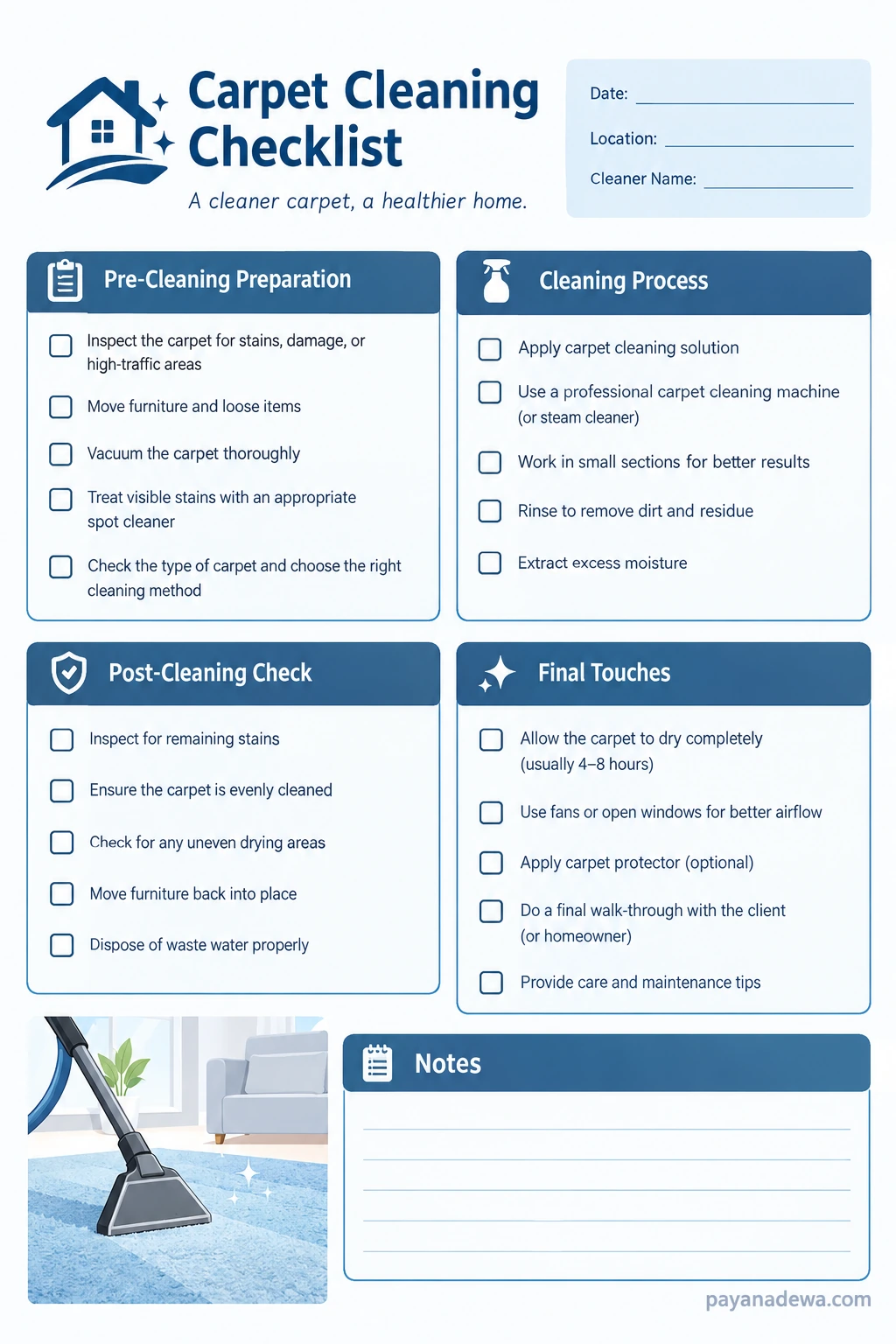
Before finishing, confirm that you have:
- Inspected the carpet and identified visible stains.
- Removed loose items and vacuumed thoroughly.
- Selected a suitable cleaning method and tested the product.
- Cleaned the carpet without excessive moisture.
- Checked for remaining stains and cleaning residue.
- Improved airflow and allowed the carpet to dry completely.
Conclusion
Effective carpet cleaning starts with regular vacuuming, prompt stain treatment, and the right deep cleaning method. By understanding your carpet’s material and following its care instructions, you can remove everyday dirt, reduce unpleasant odors, and maintain a fresher appearance.
Whether you clean your carpet yourself or hire a professional, consistent maintenance is the key to better results. Use the carpet cleaning checklist to stay organized, avoid common mistakes, and keep your flooring looking its best for years to come.