Today, call centers do much more than answer phone calls. They help businesses manage customer inquiries, solve problems, handle sales opportunities, and deliver consistent service across multiple communication channels. With the right technology, trained agents, and clear procedures, companies can improve the customer experience while making their operations more efficient.
This guide explains what a call center is, how it works, the different types of call centers, and the best practices businesses can use to deliver excellent customer service.
What Is a Call Center?
A call center is a business department or service provider that handles incoming and outgoing customer telephone calls. Its primary purpose is to help customers, provide information, resolve complaints, and support business activities. Depending on the organization, a call center may focus on customer service, technical support, sales, or appointment scheduling.
Call centers can operate within a company or as outsourced services. Some use traditional telephone systems, while others rely on cloud-based platforms that allow agents to work from different locations.
Many modern call centers also integrate email, live chat, and messaging applications. This approach helps businesses manage customer communication more efficiently and provide support through the channels customers prefer.
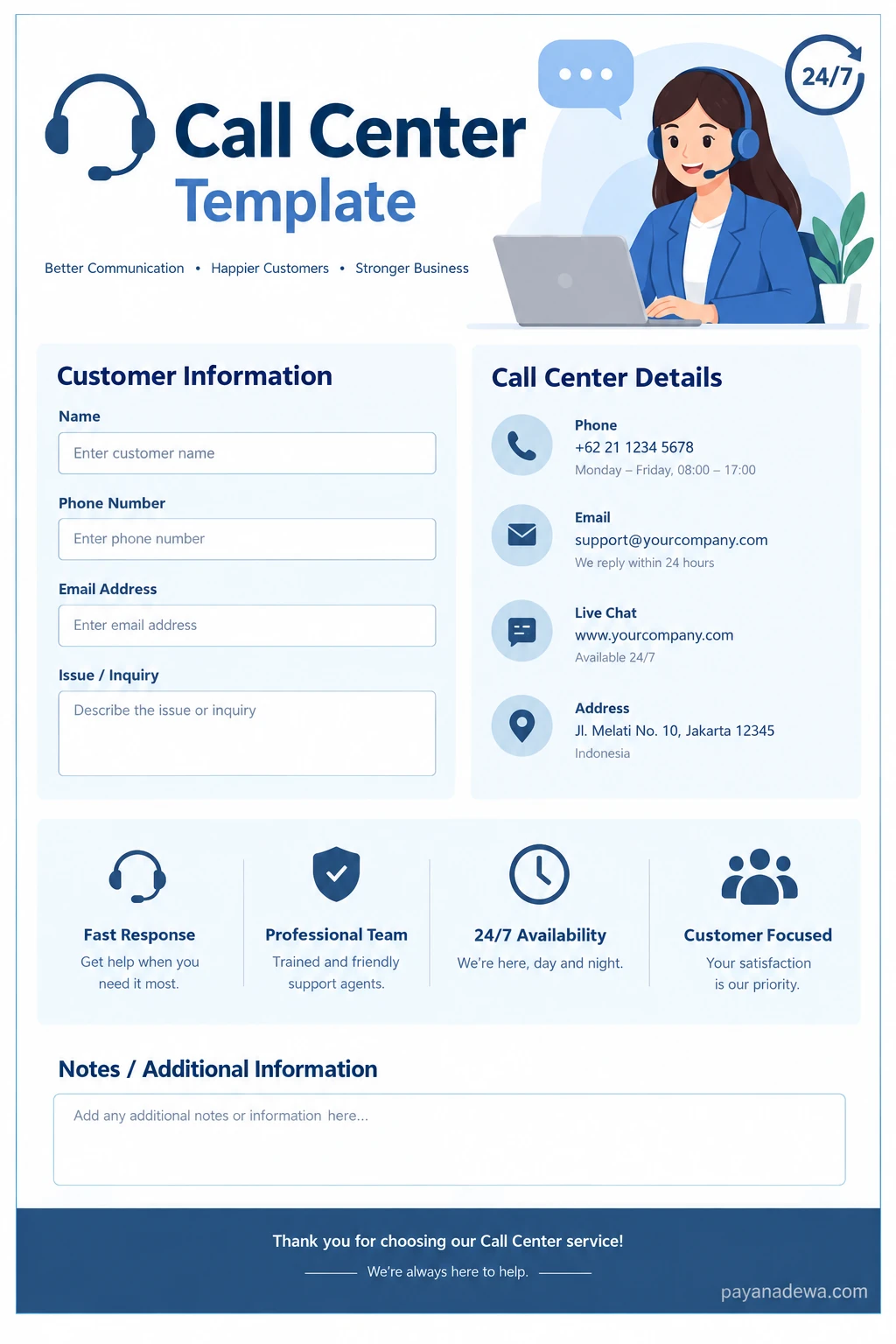
How Does a Call Center Work?
A call center follows a structured process to connect customers with the right support team. Although the exact workflow varies by organization, most call centers use several common steps.
1. Receiving Customer Calls
When a customer contacts a business, the call enters its telephone system. An interactive voice response system, commonly known as IVR, may offer menu options so callers can select the department they need. The system can then direct the call to an appropriate agent.
2. Identifying Customer Needs
After answering, the agent greets the customer and asks questions to understand the issue. Depending on the situation, the agent may verify account details, review previous interactions, or check an order status.
3. Providing Assistance
The agent uses available resources, product knowledge, and company procedures to resolve the inquiry. If the issue requires specialized assistance, the agent may transfer the call or escalate it to another team.
4. Recording the Interaction
Agents typically record relevant information in a customer relationship management (CRM) system. These notes help the company track recurring issues, maintain accurate records, and provide better follow-up service.
5. Following Up and Measuring Results
Some inquiries require additional investigation or a later response. In these cases, the team follows up according to its service commitments. Managers also review performance metrics to identify opportunities for improvement.
Types of Call Centers
Not every call center performs the same tasks. Businesses choose a model based on their goals, customer needs, and available resources.
Inbound Call Center
An inbound call center primarily receives calls from customers. Agents answer questions, troubleshoot problems, process orders, and provide product or service information. This model is common in retail, banking, telecommunications, healthcare administration, and online businesses.
Outbound Call Center
An outbound call center makes calls to customers or prospective clients. Common activities include sales outreach, appointment reminders, customer surveys, and follow-up calls. Businesses should follow applicable privacy rules, consent requirements, and telemarketing regulations when conducting outbound campaigns.
Blended Call Center
A blended call center handles both incoming and outgoing calls. This flexible model allows businesses to allocate staff according to demand. For example, agents may answer customer inquiries during busy periods and make follow-up calls when inbound traffic decreases.
Virtual Call Center
A virtual call center allows agents to work remotely using internet-based communication systems. It can reduce the need for a centralized office and make it easier to recruit employees from different locations. However, successful remote operations require reliable technology, secure access, and effective team management.
Omnichannel Contact Center
An omnichannel contact center connects telephone support with other communication channels, including email, live chat, and messaging platforms. Unlike disconnected systems, an integrated platform can help agents understand previous interactions and provide a more consistent customer experience.
Key Benefits of a Call Center
A well-managed call center offers several advantages for businesses of different sizes. When its processes align with customer expectations, it can support both service quality and business growth.
- Improved customer satisfaction: Customers can receive assistance, answers, and guidance when they need them.
- Faster problem resolution: Clear workflows and effective call routing help connect customers with suitable agents.
- Stronger customer relationships: Helpful communication builds trust and encourages long-term loyalty.
- Better business insights: Call records and customer feedback reveal common complaints, service gaps, and improvement opportunities.
- Increased operational efficiency: Automation and standardized procedures reduce repetitive work and improve resource allocation.
- Sales and retention support: Skilled agents can explain product benefits, identify customer needs, and provide appropriate retention assistance.
However, these benefits do not happen automatically. Businesses need suitable technology, realistic performance targets, effective training, and regular quality reviews.
Essential Features of a Modern Call Center
The right tools help agents manage customer conversations and give supervisors a clearer view of team performance. Although requirements vary, several features are particularly useful.
Automatic Call Distribution
Automatic call distribution, or ACD, routes incoming calls to available agents based on predefined rules. These rules may consider department, language, agent skills, or workload. As a result, customers are more likely to reach the appropriate team.
Interactive Voice Response
IVR allows callers to navigate a menu using spoken responses or keypad selections. A well-designed menu reduces unnecessary transfers. Keep the options simple, and provide a clear way to reach a human agent when needed.
Customer Relationship Management Integration
CRM integration gives agents access to relevant customer information, interaction history, and support records. Therefore, customers may spend less time repeating information. Access should be limited to authorized employees and follow appropriate data protection practices.
Call Recording and Quality Monitoring
Call recording and monitoring can help supervisors evaluate communication quality, identify training needs, and investigate service issues. Businesses should establish clear retention policies and follow applicable recording, privacy, and consent requirements.
Real-Time Analytics and Reporting
Reporting tools help managers monitor call volumes, waiting times, resolution rates, and agent performance. These insights support better staffing decisions and help identify problems before they affect large numbers of customers.
Best Practices for Excellent Call Center Customer Service
Technology is only one part of a successful customer service operation. Agents also need practical communication skills, consistent procedures, and support from management.
Listen Actively
Allow customers to explain their concerns without unnecessary interruptions. Ask relevant questions and summarize the issue to confirm your understanding. Active listening reduces misunderstandings and helps agents identify the real problem.
Communicate Clearly and Politely
Use simple language, a professional tone, and clear explanations. Avoid excessive jargon, especially when assisting customers who are unfamiliar with a product or service. If a solution involves several steps, explain them one at a time.
Personalize Each Interaction
When appropriate, use available customer information to make the conversation more relevant. Acknowledge previous interactions and avoid asking customers to repeat details already recorded in the system.
Provide Accurate Information
Agents should understand company policies, products, and escalation procedures. If they do not know an answer, they should explain that they will verify the information rather than provide an uncertain response.
Resolve Problems Efficiently
Focus on finding a suitable solution instead of simply ending the call quickly. Give agents clear guidelines for resolving common issues, along with a straightforward process for handling complex cases.
Deliver Consistent Follow-Up
When a problem cannot be resolved immediately, explain the next steps and set realistic expectations. Record any commitments and ensure that the responsible team completes the follow-up.
Important Call Center Performance Metrics
Measuring performance helps businesses understand whether their service processes are working. However, no single metric can fully describe the customer experience. Managers should consider several indicators together.
- Average handling time (AHT): The average time spent handling an interaction, including relevant after-call work.
- First call resolution (FCR): The percentage of inquiries resolved during the first interaction, based on the organization’s measurement method.
- Average speed of answer (ASA): The average time customers wait before an agent answers.
- Abandonment rate: The percentage of callers who disconnect before reaching an agent, subject to the organization’s calculation rules.
- Customer satisfaction (CSAT): A measure of how satisfied customers are with their support experience.
- Service level: The percentage of calls answered within a defined target time.
Use these metrics to identify trends and improve service, not merely to pressure employees. For example, a low average handling time may look positive, but it can indicate rushed conversations if customer satisfaction and resolution rates are also poor.
How to Choose the Right Call Center Solution
Selecting a call center system requires a clear understanding of your business needs. A small company may need a straightforward cloud-based phone system, while a large organization may require advanced routing, extensive reporting, and multiple communication channels.
Before making a decision, consider the following factors:
- Business requirements: Identify your expected call volume, support hours, customer groups, and service goals.
- Scalability: Choose a solution that can accommodate additional agents and changing workloads.
- Ease of use: Look for an intuitive interface that reduces training time and simplifies everyday tasks.
- Integration: Confirm that the platform works with your CRM, help desk, and other essential business applications.
- Security: Review access controls, data protection features, and compliance requirements relevant to your industry.
- Total cost: Compare subscription fees, implementation expenses, training, maintenance, and potential usage charges.
- Technical support: Evaluate the provider’s support availability, service commitments, and troubleshooting process.
Whenever possible, test the platform before committing to a long-term agreement. A trial or demonstration can reveal usability problems that may not be obvious during a sales presentation.
Common Call Center Challenges and Solutions
Even experienced teams encounter operational difficulties. Fortunately, many problems can be reduced through better planning and continuous improvement.
Long Waiting Times
Long queues often result from mismatched staffing, unexpected demand, or inefficient routing. Review call patterns, adjust schedules, and improve self-service options where appropriate. Always retain an accessible path to human assistance for complex problems.
High Agent Turnover
Repetitive tasks, demanding interactions, and unrealistic targets can contribute to employee dissatisfaction. Provide practical coaching, reasonable workloads, supportive supervision, and opportunities for career development.
Inconsistent Service Quality
Different agents may provide different answers when procedures are unclear. Maintain updated knowledge resources, standardize essential workflows, and conduct regular coaching sessions based on actual customer interactions.
Difficult Customer Interactions
Frustrated customers may express anger when a problem remains unresolved. Train agents to remain calm, acknowledge concerns, and explain available solutions. Clear escalation procedures also help agents handle situations beyond their authority.
The Future of Call Centers
Call center technology continues to evolve. Artificial intelligence can support agents by suggesting responses, summarizing conversations, and helping customers find answers to common questions. Voice analytics can also reveal patterns in customer feedback and service quality.
Cloud-based systems make remote operations easier, while omnichannel platforms help businesses maintain a more connected view of customer interactions. These developments can improve efficiency when implemented carefully.
Nevertheless, automation should complement human judgment rather than replace it in every situation. Customers still need empathy, flexibility, and knowledgeable assistance when facing complicated or sensitive problems. Businesses should also evaluate accuracy, privacy, security, and accessibility before adopting new tools.
Conclusion
A call center is an essential part of modern customer service. It helps businesses answer inquiries, resolve problems, strengthen customer relationships, and support sales and retention activities. With the right combination of trained agents, effective processes, and reliable technology, organizations can deliver more consistent and helpful experiences.
To build a successful call center, start by understanding customer needs, choosing appropriate tools, and establishing clear service standards. Then, monitor meaningful performance metrics, support employee development, and improve processes based on customer feedback. By making service quality a priority, businesses can turn everyday customer interactions into opportunities to build trust and long-term loyalty.