Cancer is not just one disease. Instead, it describes a group of diseases that cause abnormal cells to grow without control. Some cancers grow slowly, while others spread quickly. Fortunately, modern medicine offers many treatment options. Early detection can also improve outcomes for certain cancers.
This guide explains cancer symptoms, common types, causes, diagnosis, and treatment. Furthermore, it shares practical tips for prevention and daily care. Whether you are researching your own health or helping someone you love, this article can help you get started.
What Is Cancer?
Cancer develops when abnormal cells grow and divide uncontrollably. Normally, healthy cells follow specific instructions. They grow, repair damage, and die when necessary. However, changes in DNA can disrupt this natural process. As a result, abnormal cells may multiply and form cancer.
Some cancers form solid tumors. Others, such as leukemia, affect blood-forming tissues. Importantly, not every tumor is cancerous. Benign tumors do not invade nearby tissues or spread to distant organs. In contrast, malignant tumors can invade surrounding tissues and sometimes spread throughout the body.
How Does Cancer Spread?
Cancer can spread through the bloodstream or lymphatic system. Doctors call this process metastasis. For example, breast cancer may spread to the lungs. Even then, doctors still classify it as metastatic breast cancer. Therefore, identifying the original cancer remains important for treatment.
Common Types of Cancer
Cancer can develop in almost any part of the body. However, some types occur more frequently than others. Each type has different characteristics, risk factors, and treatment options.
- Breast cancer: This cancer develops in breast tissue. Early evaluation of unusual lumps or changes can help identify potential problems.
- Lung cancer: This disease affects lung tissue. Tobacco smoke is a major risk factor, although nonsmokers can develop it too.
- Prostate cancer: This cancer develops in the prostate gland. It occurs mainly in older adults with a prostate.
- Colorectal cancer: This disease affects the colon or rectum. In some cases, it develops from growths called polyps.
- Skin cancer: This group includes melanoma and other skin cancers. Therefore, protecting your skin from ultraviolet radiation matters.
- Leukemia: This cancer affects blood-forming tissues. Consequently, it can disrupt the production of healthy blood cells.
- Lymphoma: This disease affects the lymphatic system. That system helps the body fight infections.
- Liver cancer: This cancer develops in the liver. Certain chronic liver diseases can increase the risk.
Although these descriptions provide a useful overview, they cannot confirm a diagnosis. A healthcare professional can recommend the right tests for your situation.
Common Cancer Symptoms and Warning Signs
Cancer symptoms depend on the cancer type and its location. Some people notice changes early. Others experience few symptoms at first. Therefore, knowing your usual health patterns can help you recognize unusual changes.
Possible warning signs include the following:
- A new lump, swelling, or thickened area.
- Unexplained weight loss or reduced appetite.
- Persistent tiredness that does not improve with rest.
- Unusual bleeding or bruising.
- A cough or hoarse voice that persists.
- Changes in bowel habits or bladder function.
- Difficulty swallowing or ongoing digestive discomfort.
- A mole that changes in size, shape, or color.
- A sore that does not heal.
- Persistent pain without a clear explanation.
When Should You See a Doctor?
Many of these symptoms have causes other than cancer. Nevertheless, you should discuss persistent or worsening symptoms with a healthcare professional. Seek prompt medical advice if you notice unusual bleeding or a growing lump. In addition, follow recommended screening schedules even when you feel healthy.
Screening can detect certain cancers before symptoms appear. However, the right tests depend on your age, medical history, and personal risk factors. Your healthcare provider can explain which options suit you.
Causes and Risk Factors of Cancer
Cancer develops through changes in the body’s cells. Some changes occur naturally as cells divide. Others result from inherited genes, environmental exposures, or certain infections. In many cases, several factors contribute to cancer development.
Important Cancer Risk Factors
- Tobacco: Smoking increases the risk of several cancers. Therefore, avoiding tobacco is an important prevention step.
- Alcohol: Alcohol consumption increases the risk of certain cancers. Reducing consumption or avoiding alcohol can lower this risk.
- Age: Many cancers become more common as people grow older. However, cancer can affect younger people too.
- Family history: Some inherited gene changes increase cancer risk. Therefore, tell your doctor about cancer in close relatives.
- Sun exposure: Ultraviolet radiation can damage skin cells. Consequently, sun protection helps reduce the risk of skin cancer.
- Infections: HPV and hepatitis B and C can contribute to certain cancers. Fortunately, vaccination can prevent some cancer-related infections.
- Environmental exposures: Some chemicals and workplace hazards increase cancer risk. Appropriate protective measures can reduce exposure.
- Daily habits: Physical inactivity and excess body weight are linked to some cancers. A balanced lifestyle can support better overall health.
However, having a risk factor does not mean you will develop cancer. Likewise, people without known risk factors can receive a diagnosis. Cancer is not a personal failure, and prevention cannot eliminate every risk.
How Is Cancer Diagnosed?
Doctors use several methods to investigate possible cancer. First, they review your symptoms and medical history. Next, they may perform a physical examination. Depending on their findings, they can recommend additional tests.
Common Cancer Diagnostic Tests
- Imaging tests: CT scans, MRI scans, ultrasound, and X-rays help doctors examine the body. In addition, some scans help assess whether cancer has spread.
- Blood tests: These tests provide information about blood cells and organ function. However, routine blood tests alone cannot rule out most cancers.
- Biopsy: A doctor collects a tissue or cell sample. A specialist then examines the sample to look for cancer.
- Molecular tests: These tests identify certain changes in cancer cells. As a result, doctors may find treatments suited to specific tumor features.
After confirming cancer, doctors may determine its stage. Staging describes the extent of the disease. It helps the medical team choose an appropriate treatment plan. Your doctor can explain what your results mean and what happens next.
Cancer Treatment Options
Cancer treatment depends on several factors. These include the cancer type, its stage, and your overall health. Your preferences and treatment goals also matter. Therefore, doctors create treatment plans for individual needs.
Surgery
Surgery removes a tumor or affected tissue. Doctors may recommend it when cancer remains in a suitable area. In addition, surgery can help diagnose cancer or relieve certain symptoms. However, it is not the best option for every cancer.
Chemotherapy
Chemotherapy uses medicines to kill cancer cells or slow their growth. Doctors may use it alone or with other treatments. For example, a patient may receive chemotherapy before or after surgery. Side effects vary according to the medicines and the person.
Radiation Therapy
Radiation therapy uses high-energy radiation to damage cancer cells. Doctors may use it to treat cancer or ease symptoms. Treatment focuses on the affected area. As a result, the medical team can limit exposure to nearby healthy tissue.
Immunotherapy and Targeted Therapy
Immunotherapy helps the immune system recognize and attack cancer cells. Meanwhile, targeted therapy acts on specific changes that help cancer grow. Some cancers also respond to hormone therapy. In these cases, treatment blocks hormones or reduces their effects.
Sometimes, doctors combine several approaches. Eligible patients may also consider clinical trials. Before choosing a treatment, discuss the expected benefits, risks, and alternatives with your oncology team.
How to Reduce Your Cancer Risk
You cannot prevent every type of cancer. Nevertheless, certain lifestyle choices can lower the risk of some cancers. Small, consistent changes can also improve your general health.
- Avoid tobacco: Do not smoke, and seek help if you want to quit.
- Protect your skin: Use sunscreen, wear protective clothing, and seek shade when possible.
- Stay active: Choose physical activities that fit your abilities and health needs.
- Eat balanced meals: Include vegetables, fruits, whole grains, and a variety of nutritious foods.
- Limit alcohol: Avoiding alcohol removes the cancer risks associated with drinking.
- Consider vaccination: HPV and hepatitis B vaccines help prevent infections linked to certain cancers.
- Follow screening advice: Ask your healthcare provider about appropriate cancer screening tests.
- Know your family history: Share relevant family health information with your doctor.
Additionally, be careful with products that promise a cancer cure. No special diet or supplement can replace proven cancer treatment. Always discuss supplements and alternative therapies with your medical team.
Living With Cancer: Care and Support
A cancer diagnosis can affect your body, emotions, relationships, and finances. Therefore, good care includes more than medical treatment. Practical planning and emotional support can also make daily life easier.
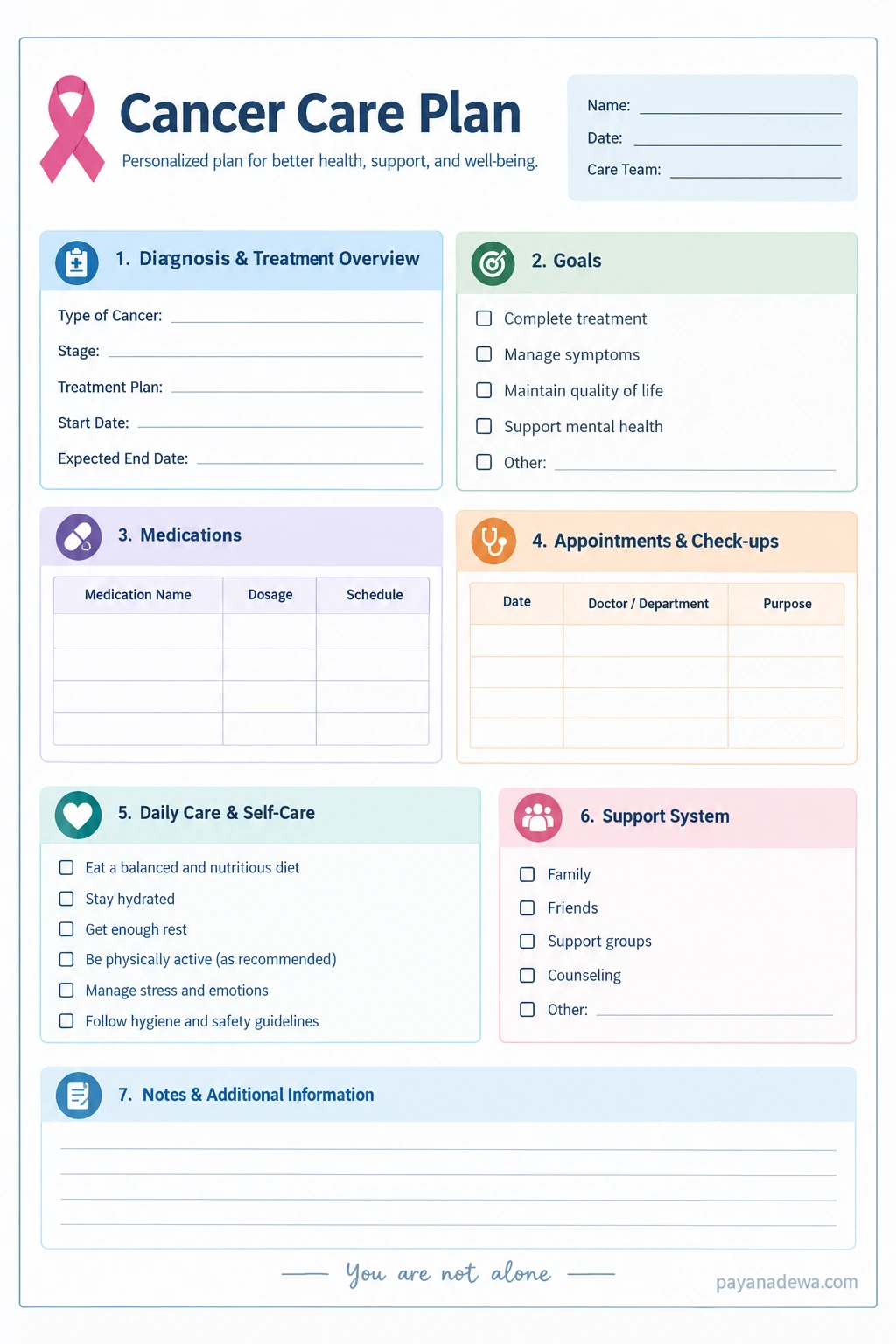
Create a Cancer Care Plan
A written care plan helps you keep important information in one place. For example, you can use a printable cancer care plan template to organize the following details:
- Your diagnosis and treatment goals.
- Medication names, doses, and schedules.
- Upcoming appointments and medical tests.
- Questions for your doctors and nurses.
- Symptoms and possible treatment side effects.
- Emergency contacts and support resources.
Bring your questions to every appointment. Also, ask your care team which symptoms need urgent attention. Keep your medication list updated. Never stop or change prescribed cancer treatment without speaking to your clinician.
Take Care of Your Well-Being
Follow your medical team’s advice about food, fluids, rest, and activity. If needed, ask for help from a registered dietitian or physical therapist. These professionals can suggest options that suit your condition.
Emotional support matters too. Cancer can bring fear, sadness, and uncertainty. However, you do not have to manage these feelings alone. Talk with trusted friends, family members, or a mental health professional. Support groups can also connect you with people who understand your experience.
Frequently Asked Questions About Cancer
Can cancer be cured?
Some cancers can be cured, especially when doctors detect and treat them successfully. However, outcomes vary by cancer type, stage, and individual circumstances. Your oncology team can explain your prognosis and treatment goals.
Does every lump mean cancer?
No. Many lumps develop from benign conditions, infections, or cysts. Nevertheless, a new or growing lump deserves medical evaluation. A healthcare professional can determine whether further tests are necessary.
Can healthy habits prevent all cancers?
No. Healthy habits can reduce the risk of certain cancers, but they cannot eliminate every risk. Genetics, age, and other factors also influence cancer development. Therefore, prevention and appropriate screening both matter.
What should I do after a cancer diagnosis?
First, ask your healthcare team to explain the diagnosis and treatment options. Next, write down questions and bring someone you trust to appointments. In addition, seek reliable information and emotional support. These steps can help you make informed decisions.
Conclusion
Cancer includes many diseases with different symptoms, causes, and treatments. However, understanding the warning signs and risk factors can help you take informed action. Appropriate screening, healthy habits, and timely medical advice also play important roles.
If you or someone you love has cancer, work closely with qualified healthcare professionals. Ask questions, explore available support, and keep important medical information organized. Most importantly, remember that every person’s experience is different. Reliable information and personalized care can help you navigate the next steps.
Medical disclaimer: This article provides general educational information only. It does not replace professional medical advice, diagnosis, or treatment. Always consult a qualified healthcare professional about symptoms, screening, or treatment decisions.