A busy schedule can quickly become overwhelming when appointments, work deadlines, family responsibilities, and personal goals compete for your attention. A weekly calendar provides a simple way to organize your time, prioritize important tasks, and see everything you need to accomplish in one place. Instead of relying on memory or switching between multiple apps, you can use a weekly planner to create a clear plan for the days ahead.
Whether you are a student, a working professional, a parent, or someone who wants to build better daily habits, a weekly calendar can make your routine easier to manage. It helps you understand how your time is spent, identify potential scheduling conflicts, and leave room for rest and unexpected changes.
In this guide, you will learn what a weekly calendar is, why it is useful, how to create an effective schedule, and how to choose the right printable or digital weekly planner for your lifestyle.
What Is a Weekly Calendar?
A weekly calendar is a planning tool that displays the days of a week in an organized format. It allows you to record appointments, deadlines, errands, meetings, personal activities, and other commitments so you can manage your time more effectively.
Unlike a monthly calendar, which provides a broader overview, a weekly schedule gives you enough space to plan individual tasks and daily priorities. You can use it to organize your working hours, track habits, prepare for upcoming events, and balance professional responsibilities with personal activities.
A typical weekly calendar includes:
- Days of the week: Sections for Monday through Sunday.
- Appointments: Meetings, classes, medical visits, and scheduled events.
- Task lists: Activities you need to complete each day.
- Weekly priorities: The most important goals to focus on.
- Notes section: Reminders, ideas, and information you do not want to forget.
Weekly calendars are available in several formats, including printable PDF planners, paper notebooks, spreadsheet templates, and digital calendar applications. The best option is one that fits your routine and is easy to update consistently.
Benefits of Using a Weekly Calendar
Creating a weekly schedule may take only a few minutes, but the benefits can extend throughout the week. A clear plan helps you make intentional decisions about how to spend your time instead of reacting to every new task.
1. Improve Time Management
A weekly calendar helps you understand how much time is available for your responsibilities. By assigning tasks to specific days or time blocks, you can avoid overloading your schedule and set more realistic expectations.
For example, you might reserve Monday for planning and administrative work, Tuesday for important projects, and Friday for reviewing completed tasks. This structure makes it easier to approach your workload with purpose.
2. Reduce Stress and Mental Clutter
Remembering every appointment, deadline, and household responsibility can consume valuable mental energy. Writing these details in a weekly planner creates a reliable place to check what needs your attention.
Although a calendar cannot eliminate every unexpected challenge, it can reduce uncertainty and help you feel more prepared. You can also leave open spaces in your schedule to accommodate changes without disrupting your entire week.
3. Stay Focused on Your Goals
Long-term goals often become neglected when daily responsibilities take priority. A weekly calendar bridges the gap between big ambitions and practical action by turning goals into manageable tasks.
If your goal is to learn a new skill, for instance, schedule three short practice sessions during the week. If you want to improve your fitness, add realistic workout times to your calendar. Small, consistent actions can help you maintain progress.
4. Create a Healthier Work-Life Balance
Effective planning is not only about productivity. Your calendar should also include activities that support your well-being, such as exercise, hobbies, family time, and relaxation.
When personal activities appear alongside work commitments, it becomes easier to recognize whether your schedule is balanced. Treating rest as a planned activity can help prevent you from filling every available hour with work.
How to Plan Your Week With a Weekly Calendar
You do not need a complicated system to build an effective weekly schedule. A straightforward planning routine can help you organize your responsibilities and prepare for the days ahead.
Step 1: Choose Your Weekly Calendar Format
Start by selecting a calendar that matches your preferences. A printable weekly calendar is ideal if you enjoy writing by hand, while a digital calendar may be more convenient if you frequently change appointments or work across multiple devices.
Consider whether you need hourly scheduling, daily task lists, habit tracking, or a simple overview of your commitments. Choose a layout that gives you enough space without making planning unnecessarily complicated.
Step 2: List Your Existing Commitments
Before adding new goals, record everything that already has a fixed date or time. Include work shifts, classes, appointments, family activities, and important deadlines.
These commitments form the foundation of your weekly schedule. Once they are visible, you can identify available time and avoid scheduling two activities at once.
Step 3: Identify Your Top Priorities
Choose two or three important outcomes you want to achieve during the week. These priorities should reflect what matters most rather than simply listing every task on your mind.
For example, your weekly priorities might include finishing a project proposal, preparing for an exam, and organizing your home office. Break each priority into smaller actions that can be completed on specific days.
Step 4: Assign Tasks to Individual Days
Distribute your tasks according to their urgency, importance, and the amount of time they require. Place demanding activities during the hours when you typically have the most energy, and group similar tasks together when practical.
Avoid filling every available space. Leave some flexibility for unexpected requests, longer-than-expected assignments, and necessary breaks. A realistic weekly calendar is more useful than a perfect-looking schedule that is impossible to follow.
Step 5: Review and Adjust Your Plan
Spend a few minutes reviewing your calendar each morning. Confirm your appointments, select the most important task for the day, and adjust your plan if something has changed.
At the end of the week, review what went well and what needs improvement. Use these observations to create a more realistic schedule for the following week.
Free Printable Weekly Calendar Template
A printable weekly calendar template is a practical option for anyone who prefers a simple, paper-based planning system. You can keep it on your desk, attach it to a noticeboard, place it inside a planner, or carry it in a folder.
The template below features a clean layout with dedicated sections for daily tasks, weekly priorities, and additional notes. Its color-coded headings make the days easy to distinguish, while the writing lines provide space for appointments, reminders, and personal goals.
Use this weekly calendar to organize your work schedule, manage household responsibilities, plan study sessions, or keep track of personal projects. You can reuse the same layout each week by printing a fresh copy.
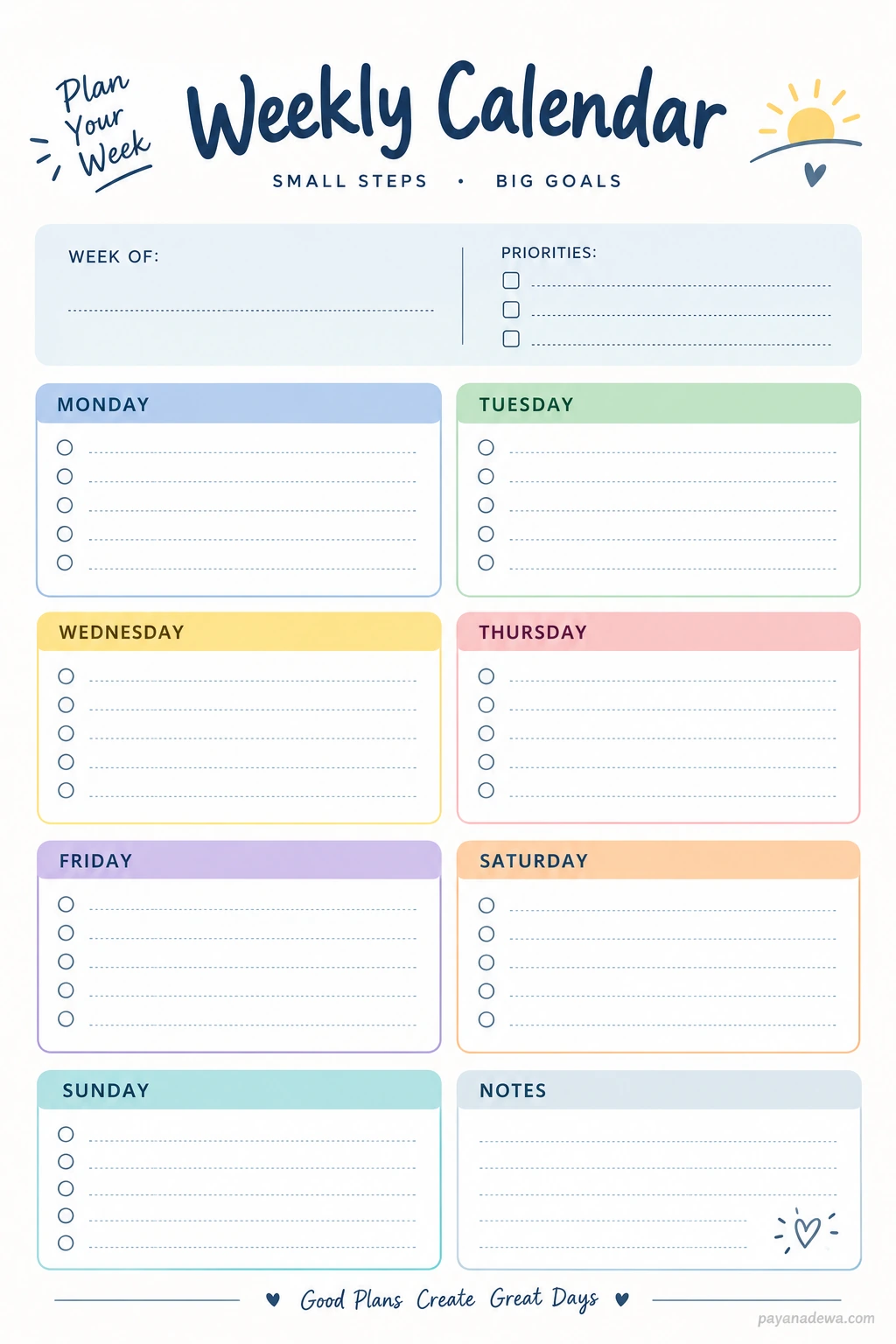
How to Use the Printable Template
- Write the week: Enter the starting date in the Week Of section.
- Set priorities: List up to three important goals for the week.
- Plan daily tasks: Add appointments, errands, and activities under the appropriate day.
- Track progress: Check off completed items as you finish them.
- Use the notes area: Record reminders, ideas, or tasks that need to be scheduled later.
For the best printing results, use standard paper and check the print preview before printing. Select a page size that matches your printer, such as A4 or US Letter, and choose a suitable scaling option to keep the entire layout visible. If you plan to write frequently on the page, ordinary paper may be sufficient, while slightly thicker paper can provide a sturdier planning sheet.
Weekly Calendar vs. Monthly Calendar
Both weekly and monthly calendars are useful, but they serve different purposes. Understanding the difference can help you decide which format to use for your planning needs.
When to Use a Weekly Calendar
A weekly calendar is best for detailed planning. Use it when you need to coordinate daily activities, organize work assignments, schedule study periods, or manage a busy household routine.
Its main advantage is visibility. You can see the tasks and appointments competing for your time during the next seven days and adjust your schedule before problems arise.
When to Use a Monthly Calendar
A monthly calendar is more suitable for long-term planning. It helps you track birthdays, holidays, project deadlines, travel dates, bill payments, and other events that may occur several weeks away.
For a more complete system, combine both formats. Use a monthly calendar to identify upcoming commitments, then transfer the relevant details to your weekly planner when you are ready to organize the specific tasks involved.
Tips for Maintaining an Organized Weekly Schedule
Consistency matters more than complexity when it comes to planning. These practical habits can help you maintain a weekly calendar without turning it into another source of stress.
- Plan at the same time each week: Choose a convenient time, such as Sunday evening or Monday morning, to review your upcoming commitments.
- Keep your calendar accessible: Place your printable planner somewhere visible or keep your digital calendar easy to open.
- Use simple categories: Assign colors to work, personal activities, appointments, and household tasks if doing so makes your schedule easier to scan.
- Break large projects into smaller tasks: Replace vague goals with clear actions that you can complete within a reasonable period.
- Estimate task duration realistically: Allow enough time for each activity and include breaks between demanding tasks.
- Leave room for flexibility: Avoid planning every minute so that unexpected changes do not derail your entire week.
- Celebrate completed tasks: Acknowledge your progress instead of focusing only on unfinished items.
Remember that your calendar is a tool, not a strict set of rules. If a plan no longer reflects your priorities, update it. The purpose is to help you make better decisions about your time, not to make you feel guilty when circumstances change.
Common Weekly Planning Mistakes to Avoid
Even a well-designed weekly planner can become ineffective if it is difficult to maintain. One common mistake is adding too many tasks to each day. An overloaded schedule creates unrealistic expectations and leaves little room for unexpected responsibilities.
Another mistake is recording activities without assigning priorities. When every task appears equally important, it becomes difficult to decide what deserves attention first. Identify your essential tasks and complete them before spending too much time on minor activities.
Some people also create a weekly calendar but rarely review it afterward. A calendar works best when it is part of an ongoing routine. Check it regularly, mark completed activities, and move unfinished tasks to an appropriate time instead of repeatedly carrying them forward without a plan.
Finally, avoid copying someone else’s planning method simply because it looks attractive. Your ideal weekly calendar should reflect your actual working hours, energy levels, personal commitments, and preferred way of organizing information.
Conclusion
A weekly calendar is a simple yet effective tool for improving time management, organizing daily responsibilities, and making steady progress toward personal and professional goals. By recording commitments, setting weekly priorities, and reviewing your schedule regularly, you can approach each day with greater clarity and confidence.
Whether you choose a printable weekly planner or a digital scheduling tool, start with a system that is easy to use and realistic for your lifestyle. Add your essential appointments, choose a few meaningful priorities, and leave room for flexibility.
Use the free printable weekly calendar template in this guide to begin planning your next seven days. With a consistent routine and a practical schedule, you can stay organized, protect your personal time, and make every week more purposeful.