A well-designed nursing brochure is more than a simple collection of healthcare information. It is a practical communication tool that helps nursing professionals, healthcare organizations, home care providers, clinics, and educational institutions explain their services clearly and professionally. When created thoughtfully, a nursing brochure can build trust, communicate important information, and help patients and families understand the care available to them.
Whether you need a brochure for a nursing service, home healthcare agency, nursing school, hospital department, or community health program, the right layout and content can make a significant difference. A professional brochure should be easy to read, visually appealing, informative, and designed around the needs of its target audience.
In this guide, you will learn what makes an effective nursing brochure, what information to include, how to organize the content, and practical design tips for creating a professional healthcare brochure that communicates with clarity.
What Is a Nursing Brochure?
A nursing brochure is a printed or digital marketing and informational document designed to communicate nursing-related services, programs, resources, or educational information. It may be used by hospitals, private nurses, home care agencies, nursing schools, healthcare organizations, and community programs.
Depending on its purpose, a brochure may introduce nursing services, explain patient care options, promote a healthcare organization, provide information about a nursing program, or educate readers about specific health topics.
Common types of nursing brochures include:
- Home nursing service brochures
- Private nursing care brochures
- Hospital nursing department brochures
- Nursing school and education brochures
- Elderly care and senior nursing brochures
- Post-surgical nursing care brochures
- Community health nursing brochures
- Specialized patient care brochures
- Healthcare and wellness program brochures
The most effective brochure combines concise information with a professional visual presentation. Readers should be able to understand the main message within seconds while still having access to useful details when they continue reading.
Why Is a Nursing Brochure Important?
Healthcare decisions often involve trust. Patients and families want to know who will provide care, what services are available, and why they should choose one provider over another. A professional nursing brochure can answer these questions in a convenient format.
Builds Professional Credibility
A polished brochure creates a stronger first impression. Consistent typography, organized information, high-quality imagery, and clear contact details can make a nursing organization appear more established and trustworthy.
Explains Services Clearly
Nursing services can involve many different forms of care. A brochure allows providers to present services such as home nursing, elderly care, wound care, medication assistance, chronic disease support, and post-operative care in a simple and organized way.
Supports Patient and Family Decisions
Families may compare several healthcare providers before selecting a service. A brochure gives them something easy to review and share with other family members. It can also serve as a useful reminder after an initial consultation.
Works in Both Print and Digital Formats
A well-designed nursing brochure can be printed for clinics, hospitals, community events, and reception areas. It can also be converted into a PDF or digital image for websites, email campaigns, and social media.
Essential Elements of a Nursing Brochure
A successful brochure should contain information that answers the reader’s most important questions without overwhelming them. The exact content will depend on the organization and purpose, but several elements are useful in most nursing brochures.
1. A Clear Main Headline
The headline should immediately communicate the purpose of the brochure. Instead of using a vague title, choose a direct message such as “Professional Nursing Services,” “Compassionate Home Nursing Care,” or “Quality Nursing Care for a Healthier Tomorrow.”
A strong headline gives readers an immediate reason to continue reading.
2. Brief Introduction
Include a short introduction that explains who you are and what you provide. Keep this section focused on the reader’s needs rather than filling it with lengthy organizational history.
3. Nursing Services
Clearly list the services offered. Depending on the organization, these may include:
- Home healthcare and nursing visits
- Medication support and monitoring
- Post-surgical care
- Chronic illness management
- Wound care
- Elderly and senior care
- Patient monitoring
- Mobility and daily living assistance
- Family and caregiver support
Each service should have a short explanation. Avoid long paragraphs because brochure readers typically scan content rather than reading every sentence.
4. Benefits and Reasons to Choose the Provider
Explain what makes the nursing service valuable. Possible benefits include personalized care, experienced professionals, flexible scheduling, compassionate support, safety-focused procedures, and individualized care planning.
5. Contact Information
Make it easy for readers to take the next step. Include the organization’s phone number, email address, website, physical location when relevant, and social media information if appropriate.
Contact details should be easy to find rather than hidden in a crowded footer.
How to Design a Professional Nursing Brochure
Good brochure design is about more than decoration. Every visual element should help readers understand the information quickly and comfortably.
Use a Clean Healthcare Color Palette
Blue, white, soft green, and neutral tones are commonly associated with healthcare because they can create a clean and reassuring appearance. Choose a limited color palette and use it consistently throughout the brochure.
Avoid using too many bright colors because excessive visual variation can make an important healthcare document difficult to read.
Choose Readable Typography
Use simple sans-serif fonts for most brochure content. Headings can be larger and more distinctive, while body text should remain comfortable to read in both printed and digital formats.
Maintain clear differences between headings, subheadings, body text, and supporting information. Good typography creates visual hierarchy and helps readers find information quickly.
Use Relevant Healthcare Images
Images can make a nursing brochure more engaging, but they should support the message rather than simply fill empty space. Consider using original or properly licensed photographs showing nurses, patients, caregivers, medical environments, or healthcare interactions.
For a professional result, avoid overly staged images that do not match the actual services being offered. Authentic and relevant imagery can help create a stronger connection with prospective patients and families.
Leave Enough White Space
One common brochure design mistake is trying to fit too much information onto every panel. White space gives content room to breathe and makes important information easier to identify.
A brochure should feel organized rather than crowded. If a section looks too dense, shorten the copy or divide the information into smaller sections.
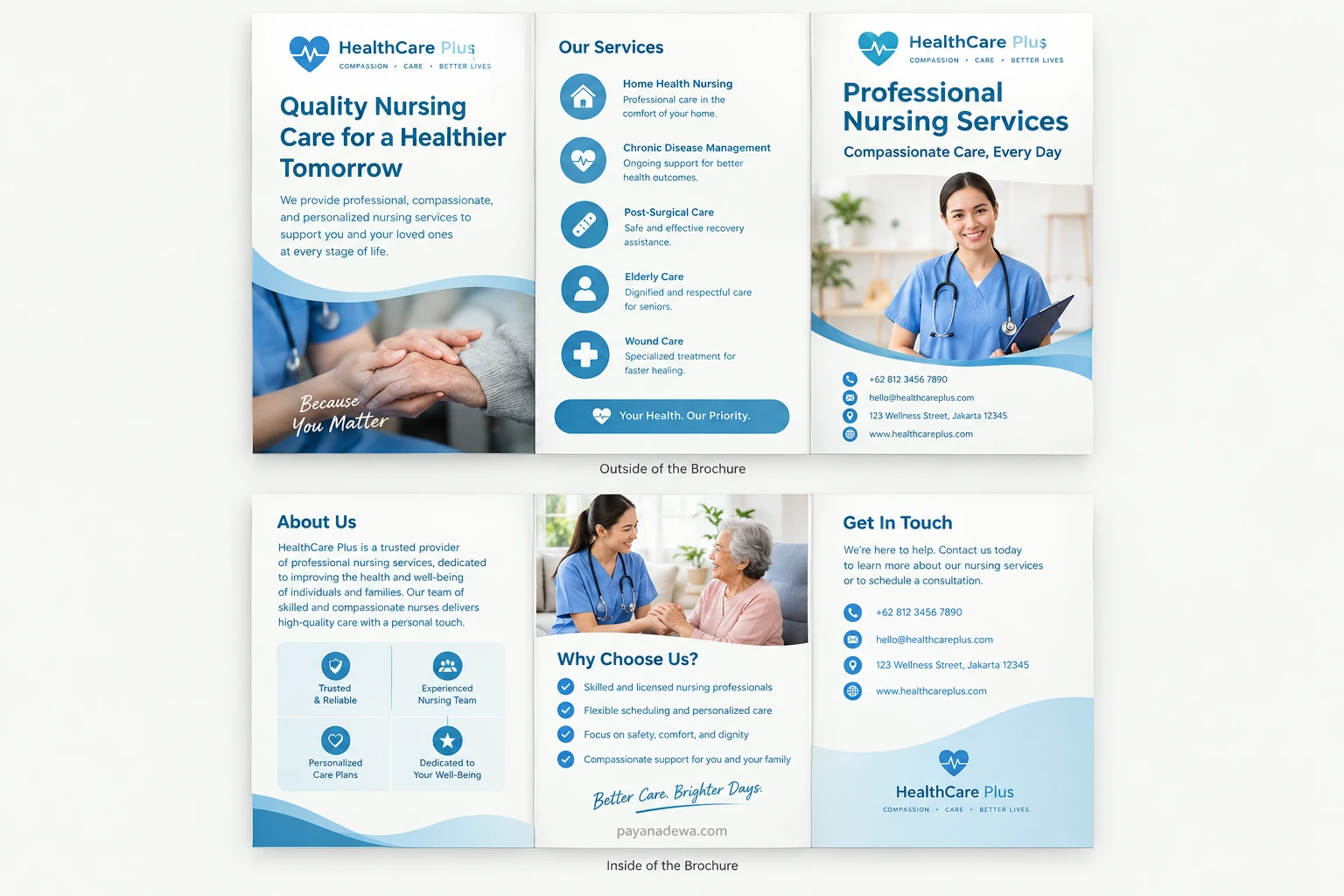
How to Structure a Tri-Fold Nursing Brochure
A tri-fold layout is one of the most practical formats for a nursing brochure because it provides several panels for organizing information.
Front Cover
The front cover should contain the organization name or logo, a strong headline, a short supporting statement, and an attractive healthcare image. The goal is to create immediate interest without overwhelming the reader.
Services Panel
Use one panel to introduce the primary nursing services. Short descriptions and icons can make this section easier to scan.
About the Organization
Explain the organization’s mission, experience, and approach to patient care. Focus on information that helps establish trust and credibility.
Why Choose Us?
Highlight your strongest differentiators. This may include qualified nursing professionals, personalized care plans, flexible appointments, compassionate service, or a commitment to patient safety.
Contact Panel
The final panel should make contacting the provider simple. Include a clear call to action such as “Contact Us Today,” “Schedule a Consultation,” or “Learn More About Our Nursing Services.”
Practical Tips for Writing Nursing Brochure Content
Writing for a healthcare brochure requires a balance between professionalism and accessibility. Readers may have different levels of medical knowledge, so the language should be clear and approachable.
- Keep sentences concise: Short sentences are easier to scan in a brochure.
- Use patient-friendly language: Explain technical terms when they are necessary.
- Focus on benefits: Tell readers how the service can help them.
- Use active language: Direct statements usually feel clearer and more confident.
- Organize information with headings: Sections make longer content easier to navigate.
- Include a clear call to action: Tell readers what they should do next.
- Proofread carefully: Errors in healthcare materials can reduce credibility.
Nursing Brochure Ideas for Different Healthcare Providers
The content of a nursing brochure should match the organization using it. A home healthcare provider, for example, may focus on in-home services and family support, while a nursing school may emphasize academic programs and career opportunities.
Home Nursing Brochure
Highlight home visits, personalized care, elderly support, recovery assistance, medication management, and family communication.
Nursing School Brochure
Include nursing programs, admission information, clinical training, facilities, faculty, career preparation, and student support services.
Hospital Nursing Brochure
Explain nursing departments, specialized care, patient safety practices, clinical expertise, and available patient resources.
Senior Care Brochure
Focus on dignity, comfort, daily assistance, medication support, mobility, companionship, and communication with family caregivers.
Common Mistakes to Avoid
Even a visually attractive brochure can be ineffective if it contains unclear or excessive information. Avoid these common problems:
- Using too much text on every panel
- Choosing decorative fonts that are difficult to read
- Using low-quality or irrelevant images
- Leaving out essential contact information
- Making the main message difficult to identify
- Using medical jargon without explanation
- Including outdated service or contact information
- Using inconsistent colors, fonts, or branding
- Failing to include a clear call to action
The best nursing brochure is not necessarily the one with the most information. It is the one that presents the most important information in the clearest and most useful way.
How to Make a Nursing Brochure More Effective
Before publishing or printing your brochure, review it from the perspective of a patient or family member who knows very little about your organization.
Ask yourself whether the reader can quickly answer these questions:
- What organization or service is this?
- What nursing services are available?
- Who can receive the services?
- What are the main benefits?
- Why should I trust this provider?
- How can I contact the organization?
- What should I do next?
If the answers are easy to find, the brochure is likely to communicate effectively. If readers have to search through long paragraphs to find basic information, simplify the layout and content.
Final Thoughts
A professional nursing brochure can be an effective way to introduce healthcare services, educate patients, build credibility, and encourage prospective clients to make contact. The strongest brochures combine clear writing, organized sections, professional imagery, readable typography, and a simple call to action.
Whether you are creating a home nursing brochure, hospital brochure, nursing school brochure, or senior care brochure, start by identifying your audience and the most important information they need. Then build the design around those priorities.
With a clean layout, patient-focused messaging, and consistent visual branding, your nursing brochure can become a valuable communication tool both in print and online.