Unlike a sales message that focuses on one offer, a mortgage brochure can explain the full borrowing journey. It can introduce your company, outline available mortgage products, explain key benefits, list required documents, and provide contact details. When the content is clear and the design is professional, the brochure can also build trust before a borrower ever speaks with your team.
This guide explains what to include, how to structure the content, and how to create a mortgage brochure that is informative, readable, and useful for prospective homebuyers.
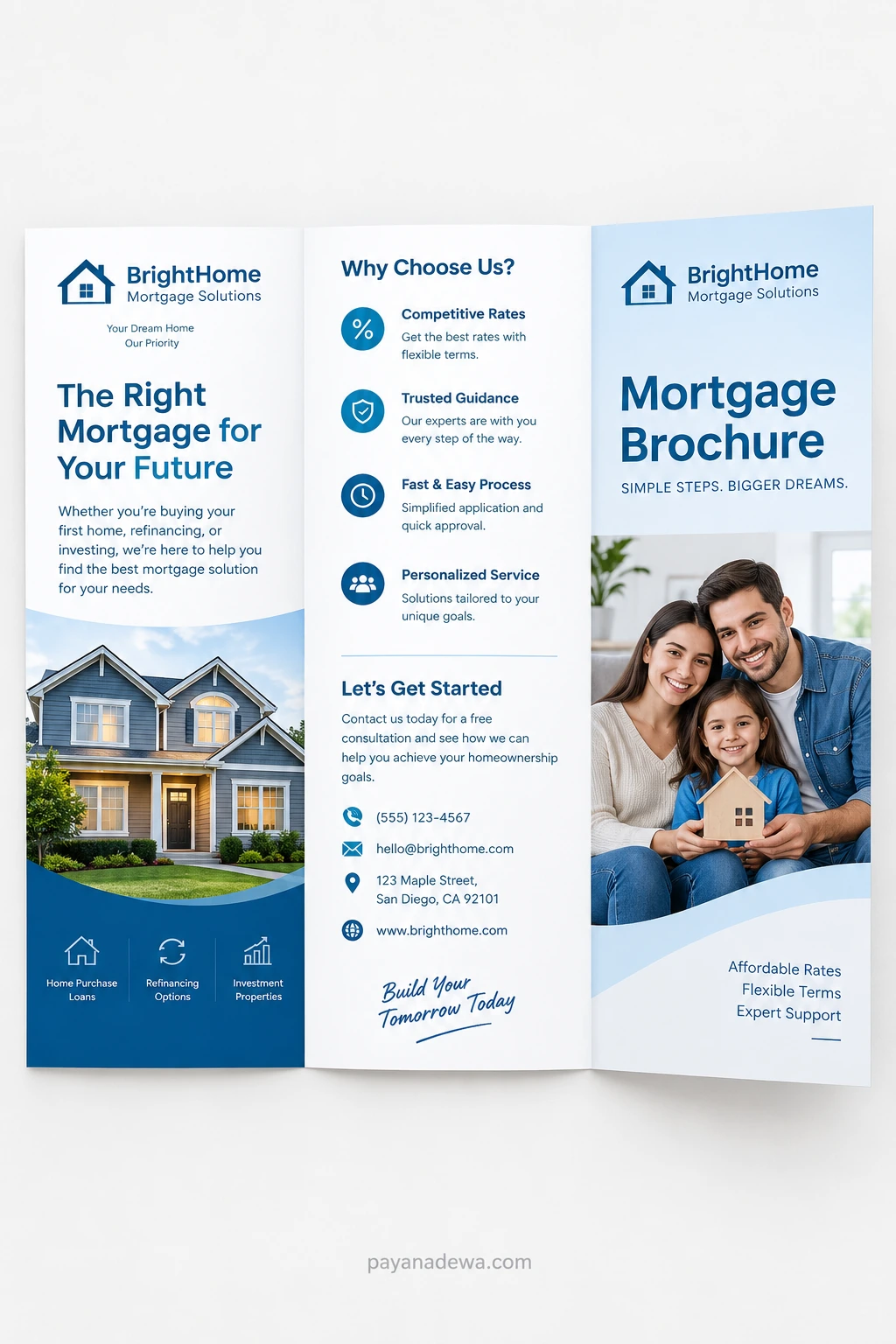
What Is a Mortgage Brochure?
A mortgage brochure is a printed or digital marketing document that explains mortgage services and loan options to potential borrowers. It is commonly used by lenders, mortgage brokers, banks, credit unions, and loan officers.
The goal is not simply to promote a mortgage product. A strong brochure helps readers understand their choices. It should answer common questions in plain language and make it easy for someone to contact the mortgage professional for personalized guidance.
A typical brochure may include:
- Company or lender information
- Mortgage loan programs and financing options
- Benefits and key features of each loan type
- Basic eligibility information
- Common mortgage terms explained simply
- Application steps
- Documents borrowers may need
- Contact information and a clear call to action
Why Use a Mortgage Brochure?
Buying a home is a major financial decision. Many borrowers feel overwhelmed by interest rates, loan terms, down payments, closing costs, and qualification requirements. A brochure can organize this information into a format that is easier to scan and understand.
Build Trust and Credibility
Professional presentation matters. A clear brochure can show that your mortgage business is organized, transparent, and prepared to help borrowers. Useful information is often more persuasive than aggressive sales language.
Explain Mortgage Options Clearly
Borrowers may encounter fixed-rate mortgages, adjustable-rate mortgages, FHA loans, VA loans, conventional financing, refinancing options, and other programs. A brochure can provide a brief overview of each option without overwhelming the reader with technical details.
Support Marketing and Follow-Up
A mortgage brochure works well at open houses, real estate offices, networking events, branch locations, and client meetings. It can also be converted into a PDF for email campaigns and website downloads.
What Should a Mortgage Brochure Include?
The best brochure balances useful information with a clean visual structure. Every section should have a clear purpose and guide the reader toward the next step.
1. A Strong Cover
The cover should immediately communicate what the brochure is about. Use a concise headline such as “Find the Right Mortgage for Your Future” or “Home Financing Made Simple.” Include your company name, logo, and a relevant homeownership image.
A strong cover should avoid excessive text. The reader should understand the main message within a few seconds.
2. Mortgage Loan Options
Explain the main financing options your business offers. Keep each description short and focus on the type of borrower or situation it may suit.
- Conventional loans: Often used by borrowers who meet standard lending requirements.
- FHA loans: Government-backed financing that may offer flexible qualification features for eligible borrowers.
- VA loans: Financing available to eligible veterans, service members, and certain surviving spouses.
- Refinancing: A potential option for homeowners who want to review their existing mortgage and financial goals.
- Investment property financing: Loans designed for eligible borrowers purchasing certain income-producing properties.
Loan availability, eligibility, rates, fees, and terms vary by lender and borrower. The brochure should encourage readers to speak with a qualified professional for current details.
3. Key Benefits
Use a short benefits section to explain why borrowers should consider working with your company. Possible points include personalized guidance, flexible loan solutions, a streamlined application process, responsive communication, and educational support.
Avoid making promises that cannot be guaranteed. Statements about approval, rates, savings, or closing times should be accurate and supported by your actual lending practices.
4. The Mortgage Process
A simple process overview can make the home financing journey feel less intimidating. For example:
- Step 1: Discuss your goals and financing needs.
- Step 2: Review income, credit, assets, and other relevant information.
- Step 3: Explore suitable mortgage options.
- Step 4: Submit an application and required documentation.
- Step 5: Complete underwriting and any requested conditions.
- Step 6: Review final loan details and prepare for closing.
This section is especially valuable for first-time homebuyers because it provides a basic roadmap without requiring them to understand every lending term in advance.
How to Design a Professional Mortgage Brochure
Good mortgage brochure design should make information easier to understand. It should not distract from the message.
Use a Clear Visual Hierarchy
Give each section a noticeable heading and keep related information together. Use short paragraphs, bullet points, icons, and enough white space to prevent the page from looking crowded.
Choose Trustworthy Colors and Fonts
Blue, white, gray, and other professional neutral tones are common choices for financial marketing materials. However, your brochure should also match your existing brand identity.
Choose easy-to-read fonts and maintain consistent sizing. Decorative fonts may work for a small accent, but important loan information should always be highly legible.
Use Relevant Images
Home exteriors, welcoming families, keys, neighborhood scenes, and professional mortgage consultations can reinforce the homeownership message. Images should support the content rather than fill empty space.
Mortgage Brochure Content Tips for Better Readability
Readers often scan financial content instead of reading every sentence. Make important information easy to find.
- Keep paragraphs short and focused on one idea.
- Use descriptive headings that tell readers what comes next.
- Prefer plain English over unnecessary financial jargon.
- Use bullet lists for features, requirements, and steps.
- Highlight important terms with bold text when appropriate.
- Leave enough white space around major sections.
- Use a clear call to action near the end.
These principles are useful for both printed brochures and digital mortgage brochures. A readable document is more likely to keep attention and encourage the reader to continue.
Include a Clear Call to Action
Every mortgage brochure should tell readers what to do next. A call to action can invite them to schedule a consultation, request a quote, start an application, call a loan officer, or visit your website.
For example, you could use a message such as “Talk With a Mortgage Specialist Today” or “Explore Your Home Financing Options.” Keep the wording direct and make the contact details easy to locate.
Common Mistakes to Avoid
A brochure can lose its effectiveness when it contains too much information or makes the wrong type of promise.
- Too much text: Large blocks of copy can discourage readers from continuing.
- Unclear pricing or terms: Avoid vague claims that could confuse borrowers.
- Weak contact information: Make phone, email, website, and other relevant details easy to find.
- Outdated information: Review rates, programs, eligibility details, and regulatory disclosures regularly.
- Overly aggressive claims: Avoid guaranteed approval or savings claims unless they are legally and factually supportable.
- Poor mobile readability: Digital brochures should remain easy to read on phones and tablets.
How to Make a Mortgage Brochure More Useful
Think about the questions a prospective borrower is likely to ask. A useful brochure should help readers understand what your company does, what options may be available, and how they can begin.
Consider adding a short FAQ section covering questions such as minimum down payment requirements, the role of credit history, common closing costs, preapproval, refinancing, and the documents commonly requested during an application.
You can also include a QR code that directs readers to an application page, mortgage calculator, appointment scheduler, or educational resource. This connects the printed brochure to your digital marketing funnel.
Mortgage Brochure Template: A Simple Structure
If you are creating a brochure from scratch, a tri-fold layout is a practical starting point. Organize the panels so that the information flows naturally.
- Front cover: Brand, headline, home image, and short value proposition.
- Inside panel one: Mortgage products and financing options.
- Inside panel two: Benefits and reasons to choose your service.
- Inside panel three: Mortgage process and borrower tips.
- Back panel: Contact details, website, social profiles, and call to action.
This structure can be adapted for a bank mortgage brochure, mortgage broker brochure, first-time homebuyer brochure, refinancing brochure, or general home loan marketing material.
Final Tips Before Publishing
Before printing or publishing your mortgage brochure, proofread every section. Confirm that names, phone numbers, email addresses, websites, loan descriptions, disclosures, and other business information are correct.
Ask someone unfamiliar with mortgage terminology to read the brochure. If they cannot quickly understand the main message, simplify the wording. A brochure should educate without making the reader feel like they need a finance degree to understand it.
For regulated mortgage advertising, also review the content against the applicable laws, lender requirements, licensing rules, and required disclosures in your market. A professional design never replaces accurate and compliant financial information.
Conclusion
A mortgage brochure is more than a promotional handout. It is a practical communication tool that can help borrowers understand mortgage options, learn about the application process, and decide how to contact a lending professional.
The most effective brochure combines useful information, clean design, clear headings, concise explanations, relevant imagery, and a strong call to action. Whether you are creating a printable mortgage brochure or a digital PDF, focus on the questions your audience needs answered and make the next step obvious.
With the right structure and content, a mortgage brochure can strengthen your brand, support your marketing strategy, and give prospective homebuyers a clearer path toward informed financing decisions.