A well-designed Pet Care Brochure can be a powerful way to introduce pet care services, educate pet owners, and build trust with a local community. Whether it is created for a veterinary clinic, pet grooming business, animal shelter, pet sitter, boarding facility, or pet wellness center, a brochure gives readers useful information in a convenient and visually appealing format.
Unlike a simple advertisement, a professional pet care brochure can combine helpful advice with information about services, contact details, business values, and practical tips for keeping pets healthy. When the content is organized clearly, pet owners can quickly understand what a business offers and why they should consider its services.
Creating an effective brochure requires more than adding attractive pet photographs. The layout, wording, color scheme, service information, calls to action, and educational content should work together to create a professional experience. The following guide explains what to include in a pet care brochure and how to make it useful, engaging, and easy to read.
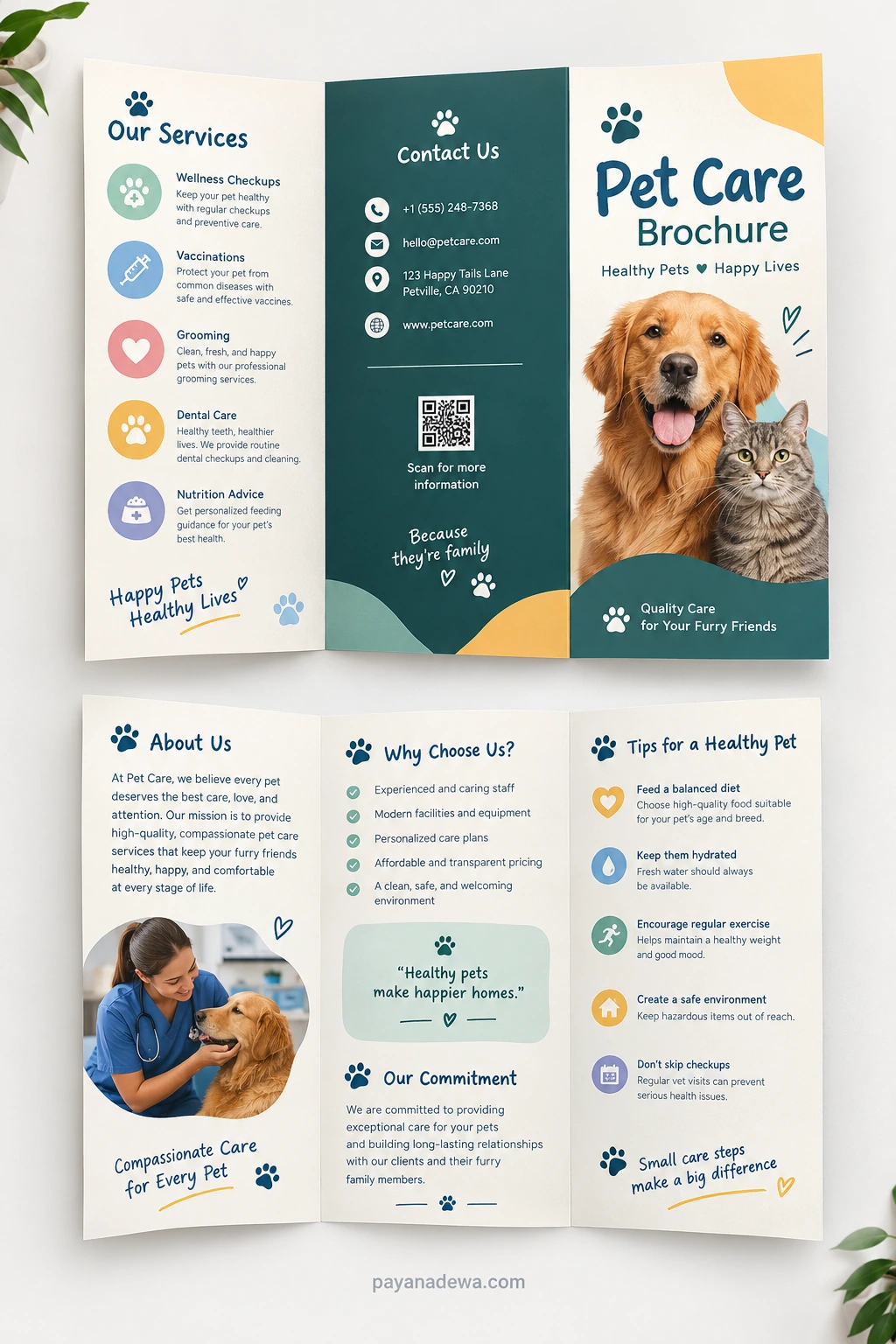
What Is a Pet Care Brochure?
A pet care brochure is a printed or digital marketing document that provides information about pet-related services, products, advice, or organizations. It may be designed as a tri-fold brochure, bi-fold brochure, flyer-style handout, or digital PDF.
The primary goal is to communicate important information quickly. A reader should be able to identify the business, understand its services, learn something useful about pet care, and find a simple way to make contact.
Common businesses and organizations that use pet care brochures include:
- Veterinary clinics and animal hospitals
- Pet grooming salons
- Dog walking and pet sitting services
- Pet boarding and daycare facilities
- Animal shelters and rescue organizations
- Pet trainers and behavior specialists
- Pet nutrition and wellness businesses
- Pet supply stores
Why a Pet Care Brochure Is Important
Pet owners want to feel confident that their animals are receiving safe, compassionate, and professional care. A brochure can help establish that confidence before a customer makes an appointment or purchases a service.
Builds Trust With Pet Owners
Clear information about staff, services, experience, facilities, and pet wellness can make a business appear more approachable and trustworthy. Including a short introduction about the organization can also help create a personal connection with potential customers.
Explains Services Clearly
A brochure gives businesses enough space to explain services without overwhelming visitors. Instead of listing services without context, each service can include a short description that explains its benefit.
For example, a veterinary brochure could include wellness examinations, vaccinations, dental care, nutrition consultations, preventive care, and senior pet services. A grooming brochure could highlight bathing, brushing, nail trimming, coat care, and specialized grooming packages.
Provides Useful Pet Care Information
Educational content makes a brochure more valuable. Simple recommendations about hydration, nutrition, exercise, preventive checkups, grooming, and home safety can give pet owners practical information they can use immediately.
Essential Elements of a Professional Pet Care Brochure
A successful brochure should balance attractive design with useful information. Each section should have a clear purpose and guide the reader naturally through the content.
1. An Attention-Grabbing Cover
The front cover is usually the first thing people see, so it should communicate the brochure’s purpose immediately. Use a clear title such as Pet Care Brochure, supported by a short message that reflects the business’s values.
A high-quality image of a happy dog, cat, or professional pet care interaction can create an emotional connection. The cover should remain uncluttered so that the main message is easy to recognize.
2. A Clear Introduction
Introduce the organization in a warm and professional tone. Explain who you are, what you do, and how your services help pets and their owners.
Keep this section concise. Readers should not need to read a long company history before understanding the value of the service.
3. A Detailed Services Section
List the most important services using short descriptions. Helpful categories may include:
- Routine wellness examinations
- Vaccinations and preventive care
- Pet grooming and hygiene
- Dental care
- Nutrition guidance
- Pet boarding and daycare
- Training and behavior support
- Senior pet care
- Emergency or urgent care information
Prioritize the services that are most relevant to your target audience. A brochure should inform readers rather than overwhelm them with every possible detail.
4. Pet Wellness Tips
Adding a short pet wellness section can make the brochure more educational. Consider including practical reminders such as providing fresh water, maintaining an appropriate diet, encouraging regular activity, keeping vaccinations current, and scheduling routine veterinary examinations.
Safety information can also be useful. Pet owners can be reminded to keep harmful substances, medications, unsafe foods, and dangerous household objects away from animals.
5. Contact Information and Call to Action
Make it easy for readers to take the next step. Include the business phone number, email address, website, physical address, social media information, or appointment instructions where appropriate.
A strong call to action can be simple and direct, such as Schedule a Pet Wellness Visit, Book a Grooming Appointment, or Contact Our Pet Care Team.
How to Design a Pet Care Brochure
Good brochure design should make information easy to scan. Readers often look at brochures quickly, so visual organization is just as important as the written content.
Choose a Friendly Color Palette
Soft, welcoming colors can create a calm and caring impression. Shades of blue, green, cream, warm yellow, or gentle pastel colors can work well for pet-related materials.
Choose colors that provide sufficient contrast between text and background. Avoid using too many colors because excessive visual variety can make the brochure look unprofessional.
Use High-Quality Pet Images
Images of healthy, happy pets can immediately communicate warmth and trust. Use photographs that match the services and audience. For example, a veterinary brochure may feature a veterinarian examining a dog, while a grooming brochure could show a clean and well-groomed pet.
Images should support the content rather than dominate the entire layout. Maintain enough white space around photographs, headings, and important information.
Create a Clear Information Hierarchy
Use larger headings for major sections and smaller subheadings for supporting information. Short paragraphs and bullet points make important details easier to scan.
A well-structured tri-fold brochure can separate information into logical panels, such as services, company information, wellness tips, testimonials, contact details, and a call to action.
Tips for Writing Pet Care Brochure Content
The wording of a brochure should feel helpful, trustworthy, and approachable. Avoid excessive technical terminology unless the target audience is already familiar with veterinary or animal-care terminology.
- Write short and informative paragraphs.
- Use simple language whenever possible.
- Focus on benefits instead of only listing features.
- Use bullet points for services and quick tips.
- Include clear calls to action.
- Proofread all names, phone numbers, addresses, and website details.
- Keep the tone warm without making unsupported medical claims.
For example, instead of simply writing “Dental Services,” a brochure could say that routine dental care helps support healthier teeth and gums. This explains the value of the service while keeping the wording accessible to pet owners.
Pet Care Brochure Ideas for Different Businesses
Veterinary Clinic Brochure
Focus on preventive healthcare, wellness examinations, vaccinations, dental services, nutrition advice, and information about scheduling appointments. Include staff credentials or clinic values when appropriate.
Pet Grooming Brochure
Highlight grooming packages, bathing, brushing, nail care, coat maintenance, breed-specific grooming, and appointment information. Before-and-after photographs can also help demonstrate the quality of the service.
Pet Boarding Brochure
Explain accommodation options, daily routines, exercise opportunities, feeding procedures, safety policies, and booking requirements. Owners often want reassurance that their pets will be comfortable and supervised.
Animal Shelter Brochure
Use the brochure to introduce adoption procedures, responsible pet ownership, available support programs, donation opportunities, volunteer information, and ways to help animals in need.
Common Mistakes to Avoid
Even a visually attractive brochure can be ineffective if important information is difficult to find.
- Using too much text on every panel
- Choosing fonts that are difficult to read
- Using low-resolution or unrelated images
- Hiding contact information in small text
- Using too many decorative elements
- Making exaggerated claims about pet health
- Forgetting to include a clear call to action
- Failing to proofread before printing or publishing
The best brochure design gives every element enough space to breathe. A clean layout can make even a small amount of content feel professional and easy to understand.
How to Make Your Pet Care Brochure More Effective
Start by identifying the primary audience. A brochure for new puppy owners will have different content from one designed for senior pet care clients. Once the audience is clear, select information that directly answers its needs and concerns.
Next, organize the content before designing the visual layout. Decide which information belongs on the cover, inside panels, and back panel. This approach prevents overcrowding and creates a more logical reading experience.
Finally, review the brochure from a customer’s perspective. Ask whether a first-time reader can understand the service, identify the main benefits, find contact information, and know what action to take next.
Conclusion
A professional Pet Care Brochure can do much more than promote a business. It can educate pet owners, communicate services, establish trust, and encourage customers to take action. By combining helpful pet wellness information with a clean layout, engaging imagery, clear service descriptions, and accessible contact details, businesses can create a brochure that people are more likely to read and remember.
Whether you are designing a veterinary clinic brochure, grooming brochure, pet sitting flyer, boarding brochure, or animal shelter handout, focus on clarity and usefulness first. A thoughtful design and well-written content can turn a simple brochure into a valuable resource for pet owners and an effective marketing tool for your pet care business.