A well-designed Conference Brochure helps attendees understand an event before it begins. It can present the conference schedule, speakers, venue, key sessions, and registration details in one clear document. More importantly, a professional brochure creates a strong first impression and makes important information easy to find.
Whether you are organizing a business conference, academic event, industry summit, networking event, or professional workshop, a brochure can improve the attendee experience. It also gives organizers a practical way to promote the event and communicate its value.
A good conference brochure should look professional, provide useful information, and guide readers toward the next step. This article explains what to include, how to structure the design, and how to create a brochure that works for both printed and digital audiences.
What Is a Conference Brochure?
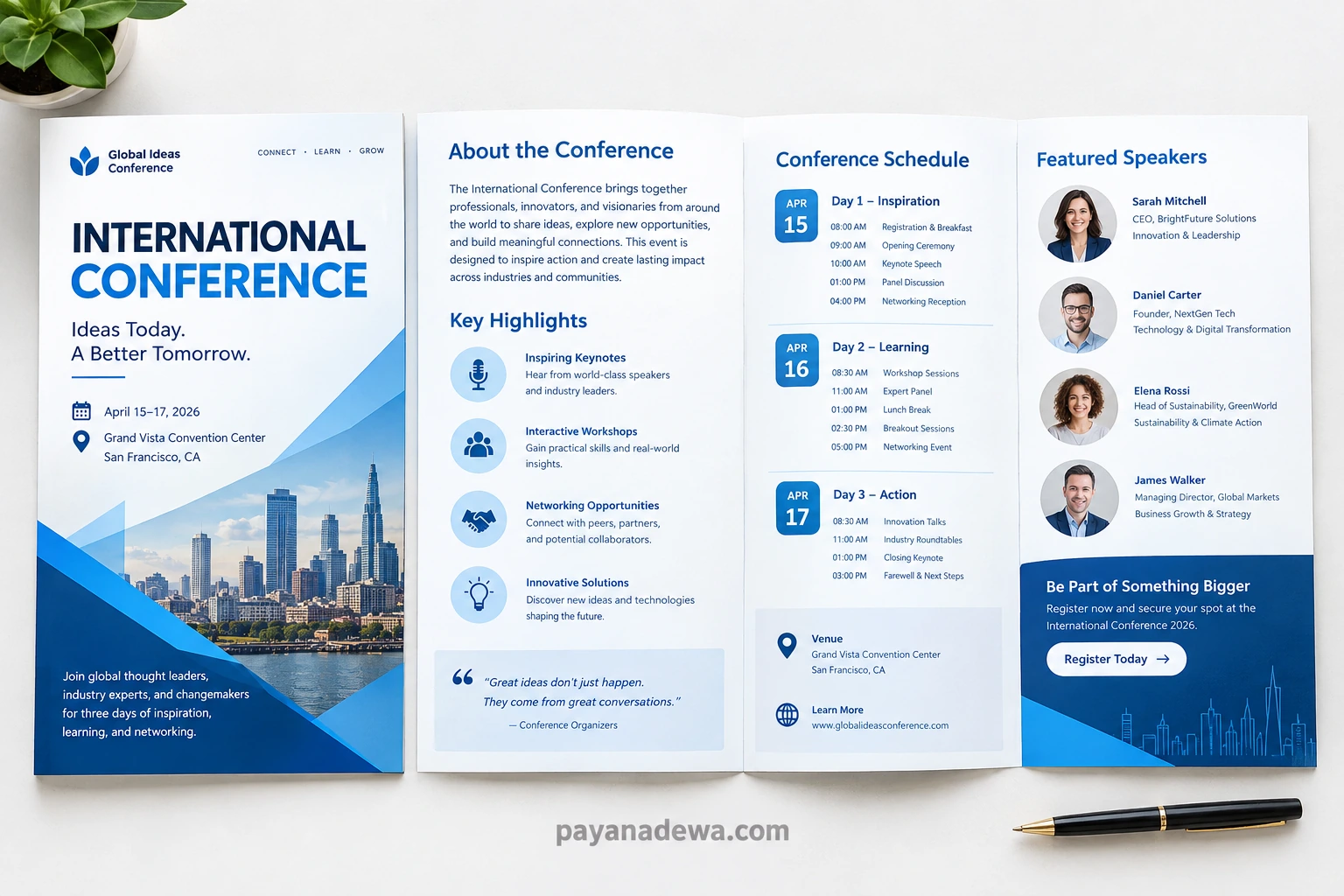
A conference brochure is a promotional and informational document created for a conference or professional event. It usually contains the most important details attendees need before deciding to register or participate.
Unlike a simple event flyer, a brochure can provide more space for detailed information. It can explain the purpose of the conference, introduce speakers, display the agenda, and highlight important activities.
A conference brochure may be printed as a folded document or distributed as a digital PDF. Many organizers also use brochure content on event websites, email campaigns, and social media promotions.
Why Is a Conference Brochure Important?
A conference brochure does more than display event information. It helps potential attendees understand why the event is worth their time and money.
First, a brochure organizes information in a logical format. Attendees can quickly find the date, location, schedule, and registration details.
Second, it supports event marketing. Strong headlines, attractive images, and clear benefits can encourage people to learn more about the conference.
Finally, a professional brochure can improve credibility. A polished document suggests that the organizers are prepared and serious about delivering a quality event.
Key Benefits of Using a Conference Brochure
- Provides essential event information in one place.
- Introduces speakers, presenters, and special guests.
- Highlights sessions, workshops, and networking opportunities.
- Supports conference marketing and promotion.
- Creates a professional first impression.
- Works well in both print and digital formats.
- Gives attendees a convenient event reference.
What to Include in a Conference Brochure
The best brochure includes enough information to answer common attendee questions without becoming difficult to read. Focus on useful details and present them in a clear order.
Conference Name and Event Theme
Start with a strong conference title. You can also include a short tagline that explains the main theme or purpose of the event.
For example, a technology conference might use a theme such as Innovating Tomorrow Through Technology. A clear theme helps readers understand the focus of the event immediately.
Date, Time, and Location
Display the event date and location prominently. If the conference lasts several days, list the dates clearly so attendees can plan their schedules.
Include the venue name, city, and relevant location information. You can also add parking instructions, transportation details, or a QR code linking to a digital map.
Conference Schedule
The schedule is one of the most important parts of a conference brochure. Organize sessions by day and time so readers can scan the information quickly.
A useful schedule may include:
- Registration and check-in times.
- Opening and closing sessions.
- Keynote presentations.
- Workshops and panel discussions.
- Breaks and meal periods.
- Networking activities.
- Special presentations and demonstrations.
Speaker Information
Introduce the main speakers and presenters. Include their names, professional titles, organizations, and short biographies when space allows.
Speaker information can also become a powerful promotional element. Well-known experts may increase interest in the event and help attendees decide which sessions to attend.
Registration Details
Make registration information easy to find. Include the registration website, deadline, ticket options, and any important pricing information.
A strong call to action can also improve response rates. Examples include Register Today, Reserve Your Seat, or Join the Conference.
How to Design a Professional Conference Brochure
A successful brochure combines useful content with an attractive visual structure. The design should support the information instead of making it harder to understand.
Use a Clear Visual Hierarchy
Readers should immediately recognize the most important information. Use larger headings for major sections and smaller text for supporting details.
Keep related information together. For example, place the conference date, venue, and registration information in an easy-to-find area.
Choose a Consistent Color Scheme
Select two or three main colors that match the conference brand. Use them consistently throughout the brochure.
For a corporate event, neutral colors with one strong accent color can create a professional appearance. Creative conferences may use brighter combinations. However, readability should always come first.
Use High-Quality Images
Images can make a brochure more engaging. Consider using photographs of the venue, speakers, previous events, or relevant industry activities.
However, avoid filling every section with images. White space is also important because it gives the content room to breathe.
Make the Brochure Easy to Scan
Most readers do not read an event brochure from beginning to end. Instead, they scan it for specific information.
Therefore, use short paragraphs, bullet lists, clear headings, icons, and highlighted details. This structure allows readers to find important information quickly.
Conference Brochure Content Ideas
If you are not sure what to write, focus on the questions your attendees are most likely to ask. Your brochure should provide practical answers.
- What is the conference about?
- Who should attend?
- When and where will it take place?
- Who are the featured speakers?
- What sessions are available?
- What will attendees learn?
- Are networking opportunities available?
- How much does registration cost?
- How can attendees register?
- Where can attendees find additional information?
Answering these questions makes the brochure more useful. It can also reduce the number of basic questions sent to the event team.
Tips for Creating an Effective Conference Brochure
Creating a professional brochure does not require complicated design. A few practical decisions can make a significant difference.
Keep the Message Focused
Choose the most important information and remove unnecessary details. A brochure should inform readers without overwhelming them.
Highlight the Main Benefits
Tell attendees what they can gain from participating. Mention valuable sessions, expert speakers, networking opportunities, training, certifications, or other benefits.
Use Action-Oriented Language
Encourage readers to take the next step. Simple phrases can guide them toward registration or additional information.
Check Every Detail
Review dates, times, names, addresses, prices, website addresses, and contact information before publishing the brochure. A small error can create confusion for attendees.
Create Both Print and Digital Versions
A printable conference brochure can be useful at registration desks, business meetings, and promotional events. A digital version is convenient for websites, email campaigns, and social media.
When creating a digital brochure, make sure the text remains readable on mobile devices. Also, test every QR code and link before sharing the final file.
Conference Brochure Template: A Practical Starting Point
Using a Conference Brochure Template can save time during the design process. Instead of creating every section from scratch, organizers can start with a structured layout and customize it with their own content.
A useful template may include areas for the event title, introduction, conference highlights, schedule, speakers, venue, registration information, and contact details.
Templates are especially helpful when an event team needs to create promotional materials quickly. They provide a consistent structure while still allowing organizers to change colors, images, text, and branding.
Common Mistakes to Avoid
Even a visually attractive brochure can fail if it contains too much information or lacks a clear purpose. Avoid these common problems:
- Using paragraphs that are too long.
- Making important information difficult to find.
- Using too many fonts or colors.
- Adding low-quality images.
- Forgetting registration instructions.
- Leaving out the venue or event date.
- Using small text that is difficult to read.
- Publishing the brochure without checking for errors.
Keep the reader’s needs in mind throughout the design process. Every section should have a clear purpose.
How to Make Your Conference Brochure More Engaging
A brochure becomes more effective when it gives readers a reason to participate. Instead of listing information alone, connect the event details with attendee benefits.
For example, rather than simply writing “Panel Discussion,” explain what attendees will discover during the discussion. A short benefit-focused description can make the session sound more valuable.
You can also use testimonials, statistics, event highlights, speaker quotes, or previous conference achievements. These elements can add credibility without requiring large amounts of text.
Final Thoughts on Conference Brochures
A professional Conference Brochure is a valuable tool for both event marketing and attendee communication. It brings essential information together while presenting the conference in a polished and organized way.
Start with the event purpose, then add the date, venue, schedule, speakers, highlights, and registration details. After that, improve the design with clear headings, readable typography, consistent branding, and useful visuals.
Whether you create a brochure from scratch or customize a Conference Brochure Template, always prioritize clarity and usability. A well-planned brochure can help attract attendees, build trust, and make the entire conference experience easier to navigate.