Strategic agreement templates help businesses and organizations structure important partnerships with clearer goals, responsibilities, timelines, financial terms, and decision-making rules. Instead of starting a complex agreement from a blank page, a well-designed template provides a practical framework that can be adapted to the specific relationship.
Strategic agreements can support joint marketing campaigns, business alliances, nonprofit initiatives, research projects, technology partnerships, co-branding programs, and many other forms of collaboration. The key is not simply finding a document that looks professional. The agreement should accurately describe what each party expects, contributes, owns, manages, and receives.
What Are Strategic Agreement Templates?
Strategic agreement templates are structured document frameworks designed to help two or more parties establish the terms of a planned collaboration. They commonly include sections for the parties, purpose, scope, objectives, responsibilities, resources, intellectual property, confidentiality, financial arrangements, performance measures, dispute resolution, amendments, and termination.
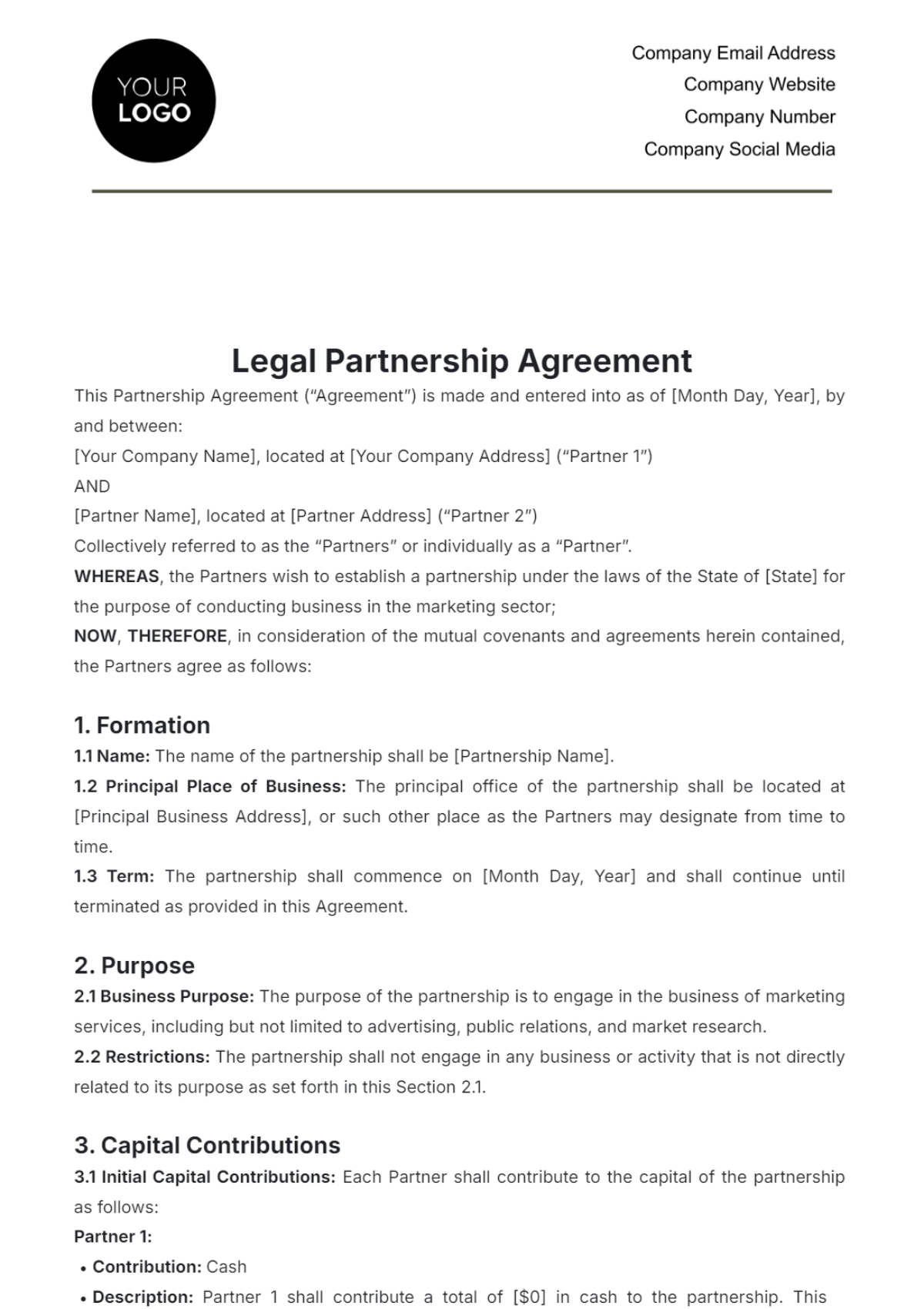
The value of a template is its structure. A strong structure encourages the parties to discuss important subjects before the relationship becomes operational. This can reduce ambiguity and make later discussions easier because responsibilities and expectations are written down.
A strategic agreement is different from a simple informal arrangement. It should connect the legal relationship with the practical objectives of the collaboration. For example, two companies may agree to promote each other’s products, share customer insights, create joint content, or enter a new market together. Each activity needs clear boundaries so that both parties understand what they are committing to.
Why Strategic Agreement Templates Matter for Business
Businesses often enter partnerships because each party brings something valuable to the relationship. One company may have distribution channels, while another has technology, specialist knowledge, brand recognition, or access to a particular audience. Without a written framework, however, the partnership can quickly become difficult to manage.
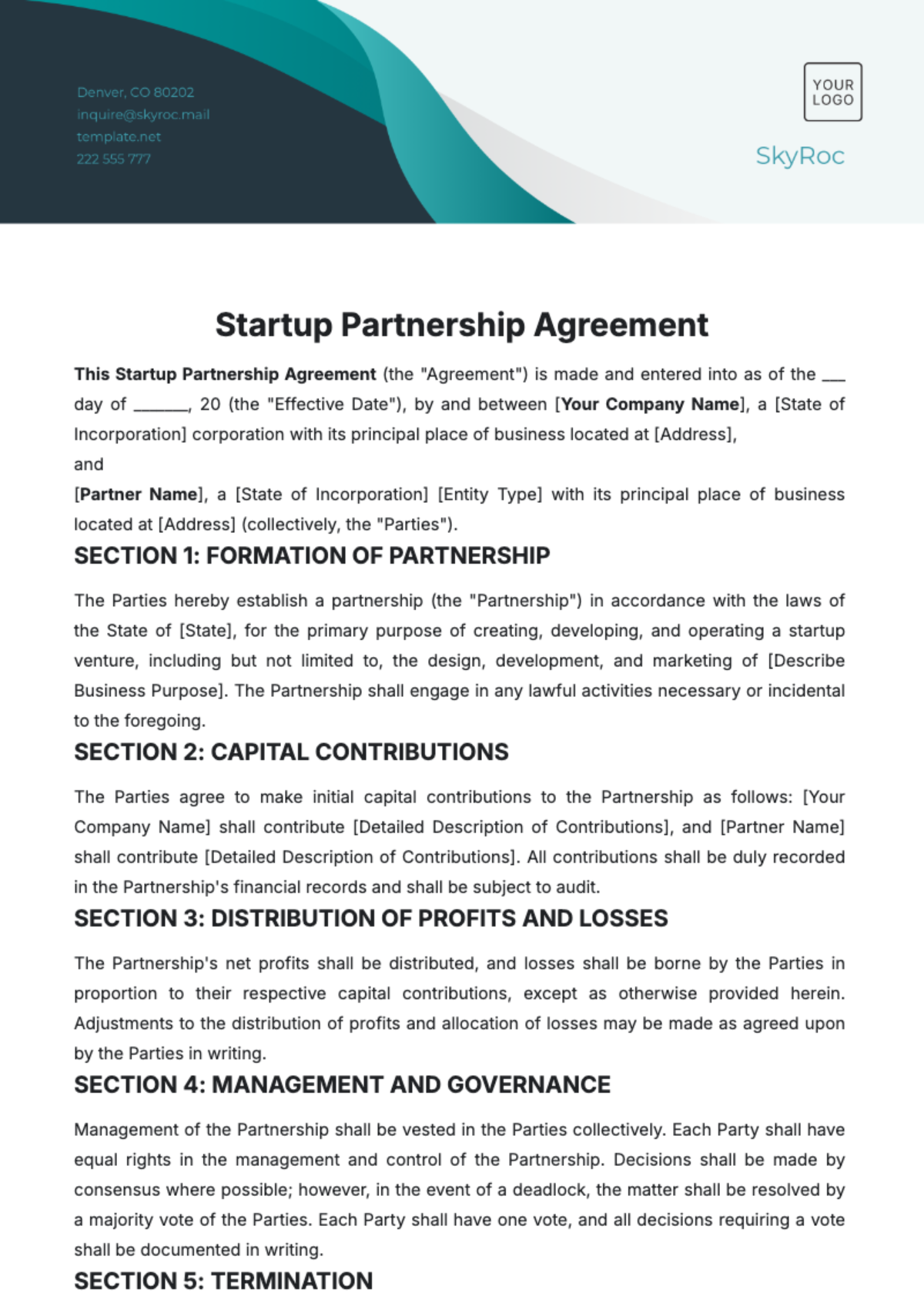
Strategic agreement templates for business provide a starting point for defining those contributions. They can help management teams identify what should be negotiated before resources are committed.
- Define the strategic purpose of the relationship.
- Clarify the role of every participating party.
- Set measurable objectives and milestones.
- Document financial responsibilities and contribution methods.
- Establish ownership rules for intellectual property.
- Protect confidential business information.
- Explain how changes to the relationship will be approved.
- Establish procedures for resolving disagreements.
- Define renewal and termination conditions.

A useful agreement also creates accountability. When responsibilities are written clearly, each party can evaluate progress against agreed expectations instead of relying on informal assumptions.
Key Sections to Include in a Strategic Agreement
A professional agreement should be tailored to the relationship, but several sections are commonly important. The purpose is not to make every agreement unnecessarily long. The goal is to address the issues that could affect performance, money, ownership, risk, or the future of the partnership.

1. Parties and Authority
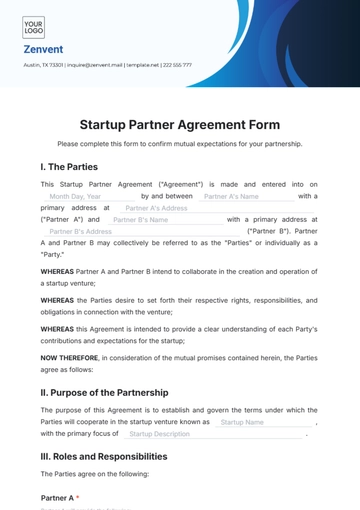
Start by identifying every party correctly. Include the legal name of each organization, relevant business address, authorized representatives, and any other information required by the applicable jurisdiction. Confirm that the people signing have authority to bind their organizations.
2. Purpose and Strategic Objectives
The purpose section should explain why the collaboration exists. Avoid vague statements such as “the parties wish to cooperate.” A stronger provision identifies the intended outcome, such as entering a market, developing a product, increasing distribution, launching a campaign, or delivering a community program.
3. Scope of Collaboration
The scope defines what the parties will actually do. It may cover services, products, geographic areas, marketing channels, technology, staffing, events, research, or customer support. Clearly defining exclusions can be just as important as defining included activities.

4. Roles and Responsibilities
Responsibilities should be assigned rather than implied. A useful agreement explains who supplies resources, who approves materials, who manages communications, who handles customer interactions, and who monitors performance.
5. Financial Arrangements
Financial terms should cover contributions, expenses, payment schedules, revenue sharing, reimbursement procedures, and approval requirements where relevant. Even when no money changes hands, the agreement should explain how non-cash contributions are handled.

6. Intellectual Property and Confidentiality
Strategic collaborations frequently involve trademarks, designs, customer information, research, software, marketing materials, or proprietary processes. The agreement should distinguish between intellectual property that existed before the relationship and material created during the collaboration.
Strategic Agreement Templates for Marketing
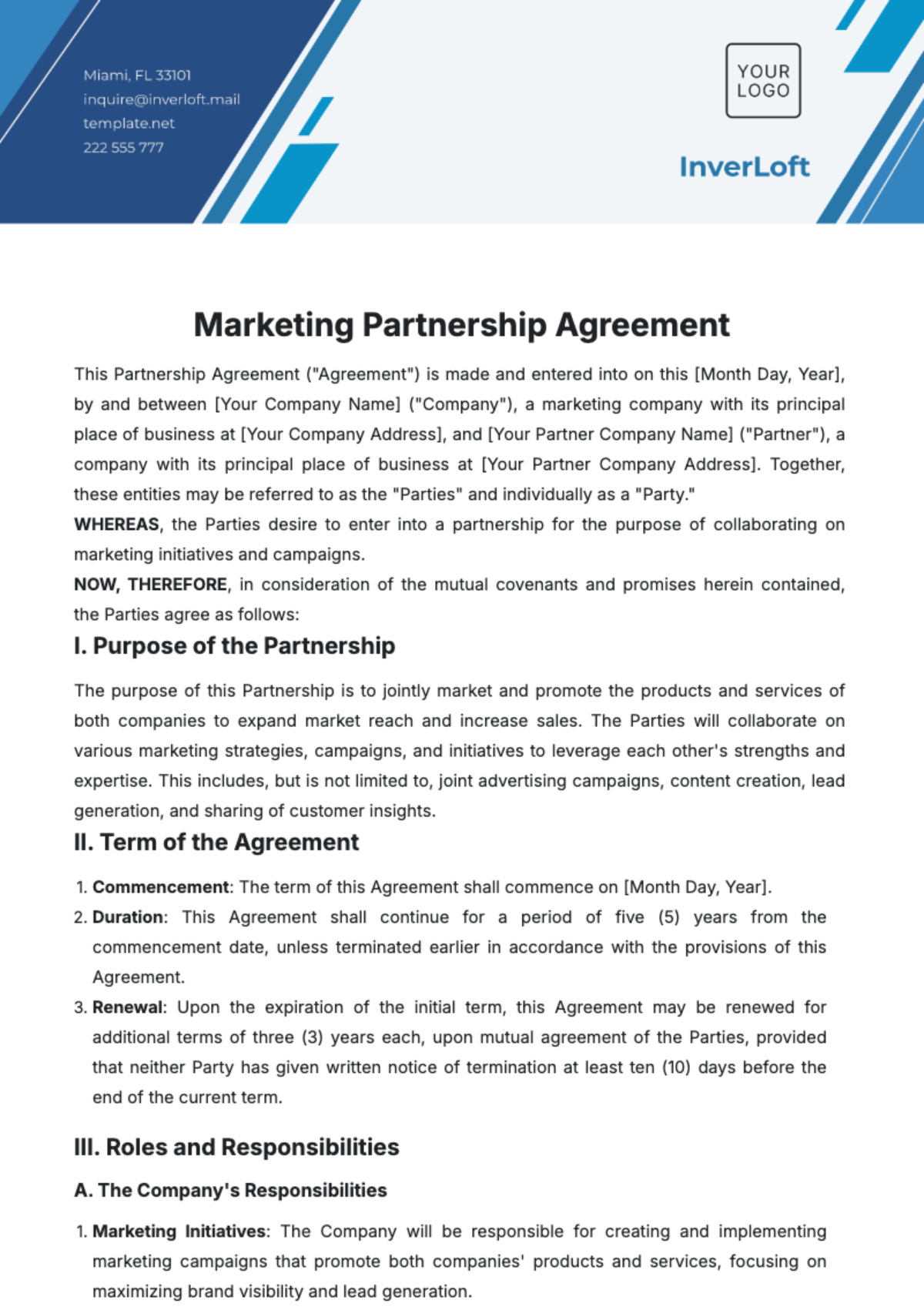
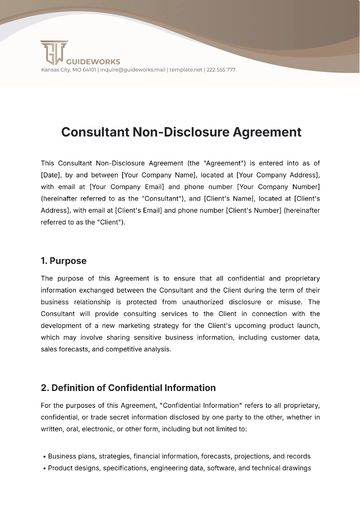
Strategic agreement templates for marketing are particularly useful when two organizations coordinate campaigns, content, advertising, events, influencer programs, customer promotions, or brand partnerships.
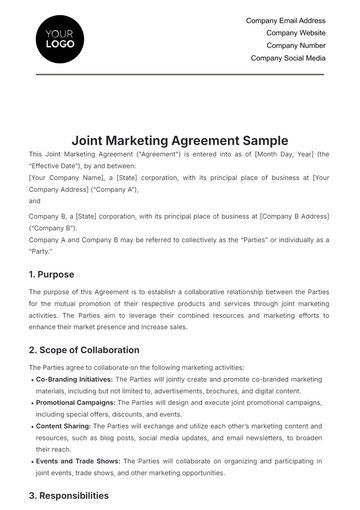
A strategic marketing agreement template should explain the marketing objective, target audience, campaign scope, responsibilities, approval process, budget, content ownership, brand guidelines, reporting requirements, and performance indicators.

For example, a software company and a consulting firm might agree to run a joint webinar series. The software company could provide technical demonstrations, while the consulting firm handles promotion and registration. The agreement should specify who owns the recordings, how each brand can be displayed, who pays campaign expenses, and how leads are handled.

Marketing partnerships can also involve shared customer data. In that situation, privacy obligations and data handling procedures should be addressed carefully rather than treated as a minor administrative detail.

Strategic Alliance Agreement Template for Long-Term Partnerships
A strategic alliance agreement template is suitable when organizations plan a broader relationship that extends beyond a single campaign or project. Strategic alliances may involve technology, distribution, product development, research, market expansion, or shared resources.
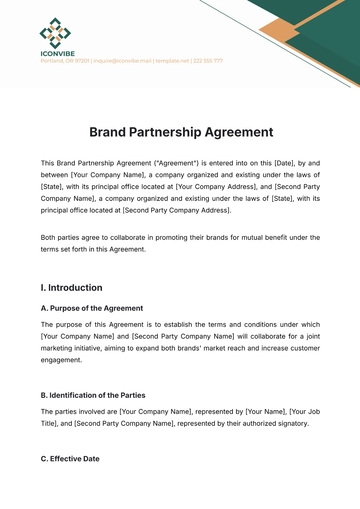
A strong alliance agreement should explain how decisions are made. For example, routine operational decisions might be delegated to project managers, while major changes to budgets, ownership, geographic scope, or strategic direction may require written approval from senior representatives.
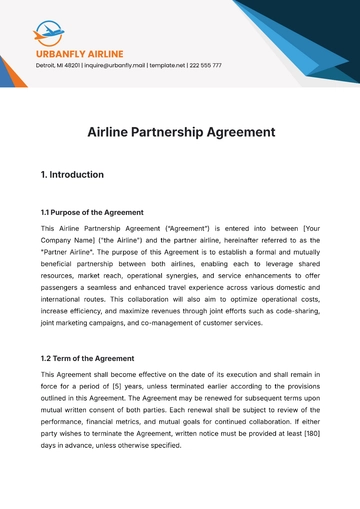
The agreement should also consider what happens when circumstances change. Markets shift, leadership teams change, technology evolves, and business priorities can move in a different direction. A clear amendment process allows the parties to adapt without creating uncertainty about which version of the agreement applies.
Strategic Agreement Templates for Nonprofits and Organizations
Strategic agreement templates for nonprofits can support collaborations involving community programs, grants, fundraising, education, public initiatives, sponsorships, and shared resources.
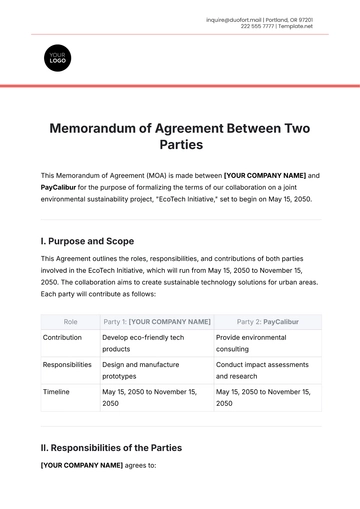
Nonprofit partnerships may require additional attention to mission alignment, donor restrictions, reporting obligations, public communications, beneficiary protection, and the use of funds. A clear document can help prevent disagreements about which organization is responsible for specific program activities.
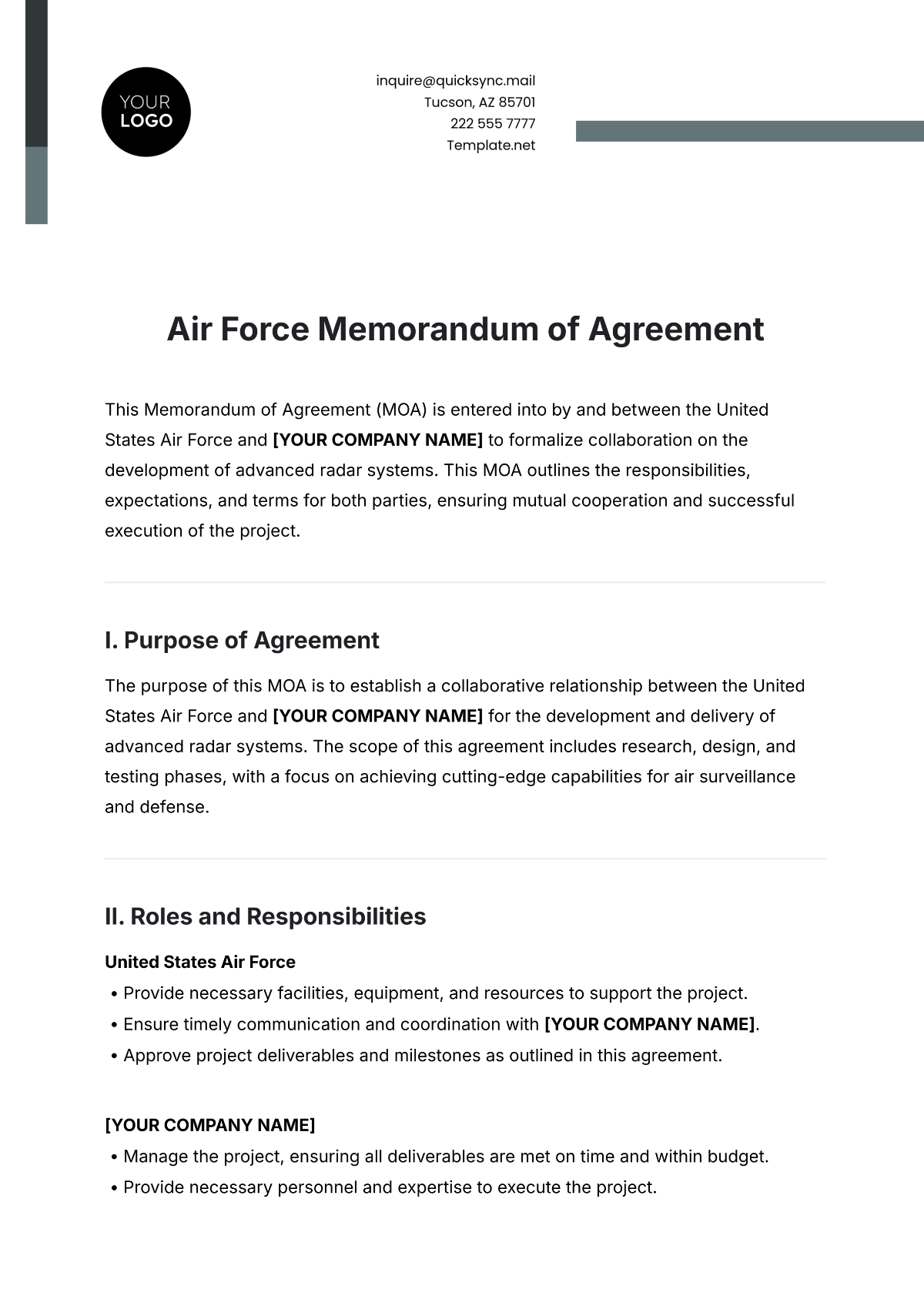
Strategic agreement templates for organizations can also be adapted for universities, professional associations, community groups, research institutions, and other entities that collaborate without forming a conventional commercial partnership.
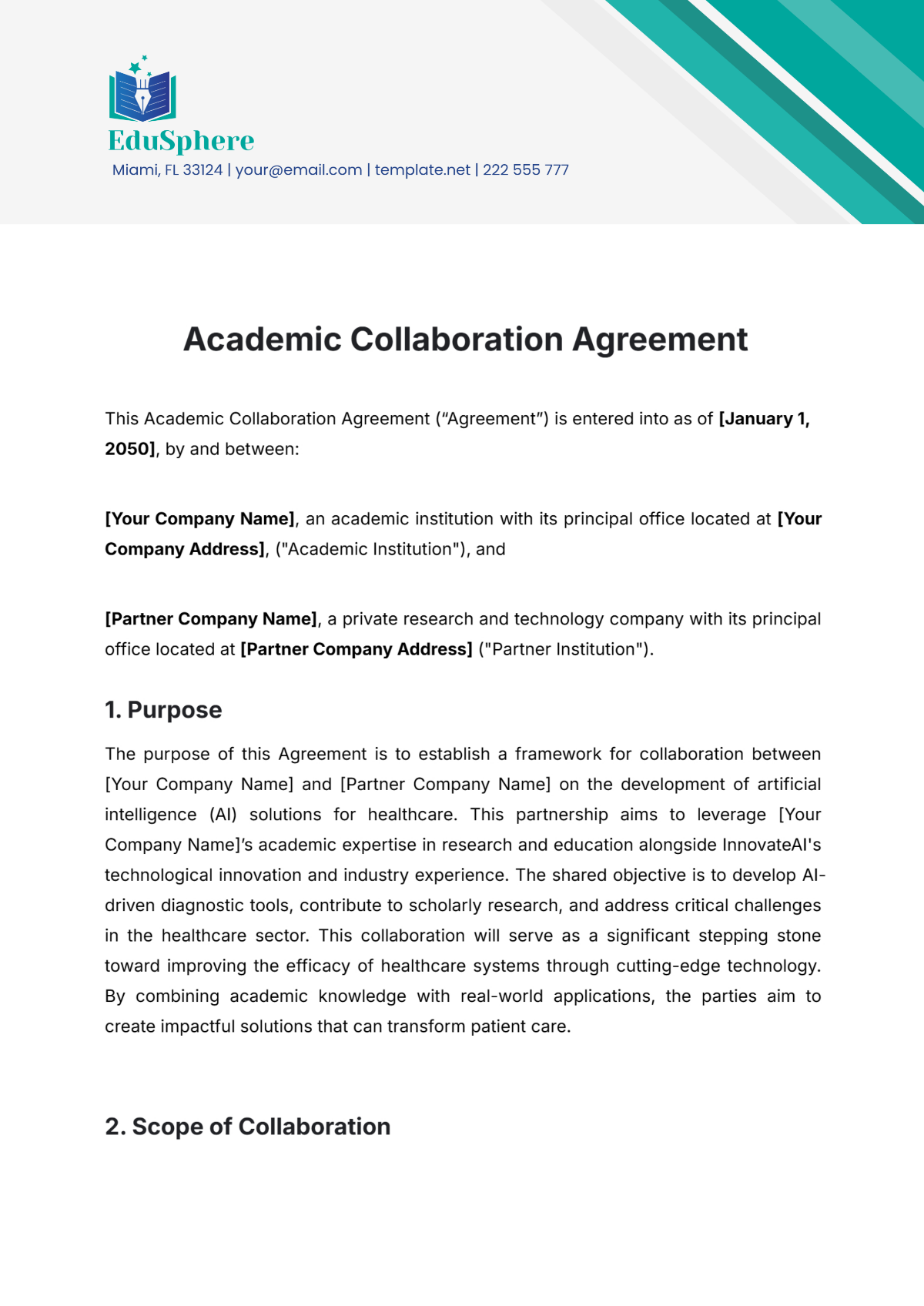
Strategic Agreement Templates Word and PDF Formats
Organizations often need agreements in familiar document formats. Strategic agreement templates word documents can be useful when several people need to review and edit clauses before approval. A structured Word document also makes it easier to track revisions during negotiations.
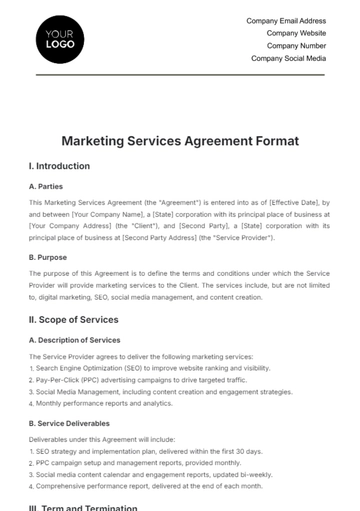
Strategic agreement templates word document files are especially practical for internal review because legal, finance, marketing, and management teams can comment on different sections. After the language is finalized, the approved version can be converted into a fixed document for signing and record keeping.
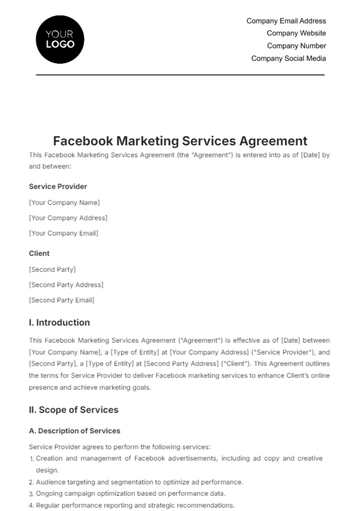
For readers specifically searching for strategic agreement templates pdf, the important consideration is not simply the file extension. The content should be complete, readable, properly formatted, and suitable for the intended signing process.
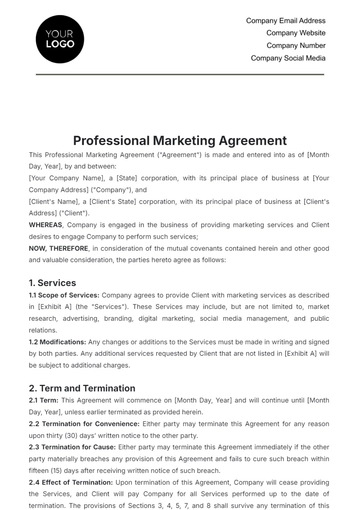
Strategic agreement templates word format can therefore work well during negotiation, while a finalized PDF-style document can provide a stable reference version after all parties approve the wording.
How to Create a Strategic Agreement
How do I create a strategic agreement? Begin by identifying the business relationship and the result both parties want to achieve. Then build the agreement around that objective rather than copying unrelated clauses from another document.
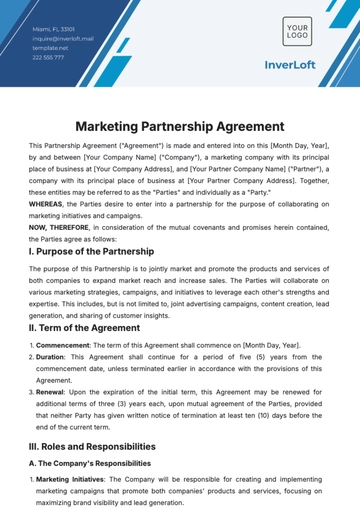
- Identify the legal parties and authorized representatives.
- Describe the strategic purpose and expected outcomes.
- Define the scope and specific activities.
- Assign responsibilities and decision-making authority.
- Document contributions, expenses, and financial arrangements.
- Address intellectual property, confidentiality, and data handling.
- Establish milestones and performance measures.
- Set communication, reporting, and review procedures.
- Define amendment, renewal, dispute resolution, and termination rules.
- Have the final agreement reviewed by an appropriate professional before signing when the relationship involves significant legal or financial risk.
This process creates a document that reflects the actual partnership rather than merely filling blank spaces in a generic form.
Strategic Agreement Examples You Can Adapt
Strategic agreement examples can vary significantly depending on the parties and objectives. A technology partnership may focus on licensing and product integration, while a marketing alliance may emphasize campaigns and customer acquisition.
Consider a regional retailer partnering with a manufacturer. The retailer may provide shelf space and local promotion, while the manufacturer supplies products, marketing assets, training, and promotional funding. Their agreement should specify delivery responsibilities, campaign approvals, pricing responsibilities, intellectual property, and performance reviews.
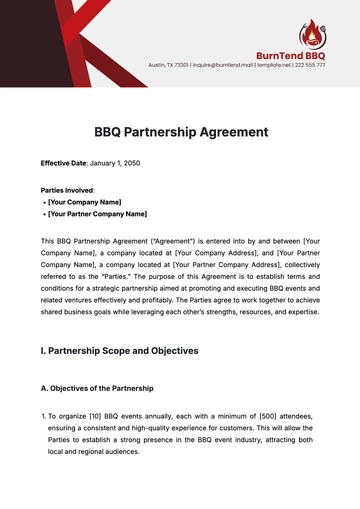
Another example involves two professional service firms that want to refer clients to each other. Their agreement could establish referral procedures, communication standards, confidentiality requirements, payment rules, and restrictions on representing the other party.

Common Mistakes When Using Agreement Templates
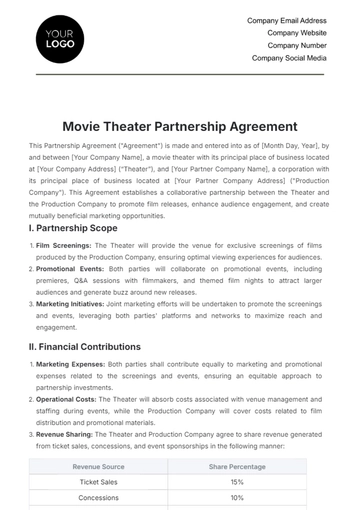
A template can save drafting time, but it should never replace careful review. One of the most common mistakes is accepting every clause without checking whether it matches the actual relationship.
- Leaving placeholder information in the final document.
- Using vague descriptions of responsibilities.
- Failing to define ownership of newly created materials.
- Ignoring data protection or confidentiality concerns.
- Leaving payment responsibilities unclear.
- Using unrealistic performance measures.
- Failing to explain who can approve major changes.
- Neglecting renewal and termination procedures.
- Using a template designed for a different type of relationship.
- Signing before all material business terms have been reviewed.
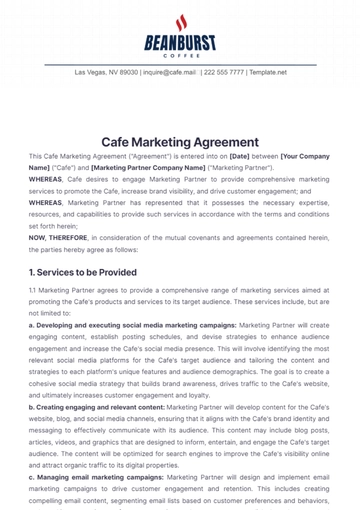
The best approach is to treat the template as a framework. Remove irrelevant clauses, add provisions required by the relationship, and make every important obligation specific enough to understand and evaluate.
How to Choose the Right Strategic Agreement Template
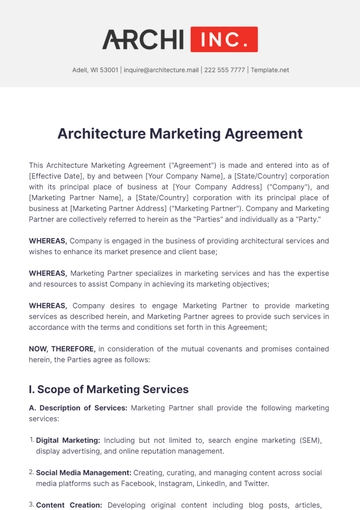
When comparing templates, look beyond visual design. The strongest option is the one that closely matches the structure of the planned collaboration.
- Purpose: Choose a structure that reflects the actual strategic objective.
- Parties: Confirm that the template can accommodate the number and types of participants.
- Scope: Check whether the document provides enough room to describe activities clearly.
- Financial terms: Make sure contribution and payment provisions can be adapted.
- Ownership: Look for appropriate intellectual property provisions.
- Governance: Confirm that decision-making procedures can be documented.
- Exit provisions: Make sure the relationship can be ended or changed in an orderly way.
Frequently Asked Questions
What is a strategic agreement sample?
A strategic agreement sample is an example document showing how parties can structure a collaboration. It usually demonstrates sections such as purpose, scope, responsibilities, financial terms, confidentiality, intellectual property, performance measures, and termination.
Where can I find strategic agreement templates?
Look for professional document-template libraries, business document platforms, legal resources, and established template providers. Choose a source that clearly identifies the document type and allows you to inspect the structure before adapting it.
How do I create a strategic agreement?
Start with the parties, purpose, scope, responsibilities, financial arrangements, ownership rules, confidentiality, performance measures, dispute procedures, and termination terms. Then adapt every provision to the actual collaboration and obtain appropriate legal review when necessary.
What should a strategic agreement sample word document contain?
A useful strategic agreement sample word document should contain clearly organized sections for party information, strategic objectives, scope, duties, resources, financial terms, intellectual property, confidentiality, reporting, amendments, dispute resolution, and termination.
What is the difference between a strategic alliance and a standard partnership?
A strategic alliance often focuses on collaboration between separate organizations while allowing each organization to remain independently operated. A conventional partnership may involve a more integrated business structure and different legal consequences. The exact distinction depends on the agreement and applicable law.
Final Recommendations for Using Strategic Agreement Templates
Strategic agreement templates are most valuable when they help people discuss the practical details of a partnership before those details become sources of conflict. The strongest document is not necessarily the longest one. It is the one that clearly explains the purpose, scope, responsibilities, resources, ownership, financial arrangements, decision-making process, performance expectations, and exit strategy.

For business collaborations, strategic agreement templates for business can provide a strong starting framework. Marketing teams can adapt a strategic marketing agreement template, while organizations involved in broader cooperation may benefit from a strategic alliance agreement template. Nonprofits and institutions can also tailor the structure to their governance, funding, mission, and reporting requirements.
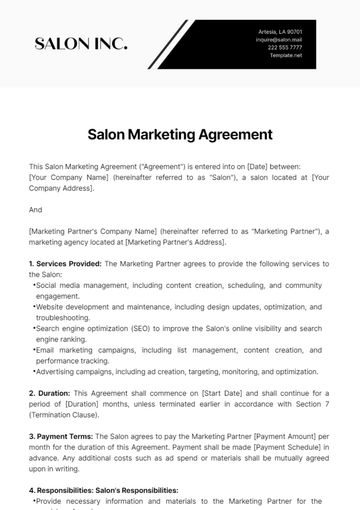
Before signing, review every important clause, replace placeholders, confirm that responsibilities are realistic, and make sure the document reflects the actual commercial or organizational relationship. When significant assets, intellectual property, regulated activities, or financial commitments are involved, professional legal review is a sensible final step.