You do not need to be a professional athlete to benefit from a sports training plan. Beginners can use one to establish healthy habits, while experienced athletes can organize workouts and monitor performance. The key is to choose realistic goals, balance exercise with recovery, and adjust your routine as your needs change.
In this guide, you will learn how to create a practical sports plan, organize a weekly workout schedule, track your progress, and maintain motivation. You will also discover how a printable sports plan template can simplify your fitness routine.
What Is a Sports Plan?
A sports plan is a structured outline of your physical activities, training sessions, fitness goals, and recovery periods. It helps you decide what to do, when to do it, and how to measure your progress over time.
A good plan considers your current fitness level, available time, preferred activities, and personal objectives. For example, someone preparing for a 5K race will need a different routine from someone who wants to improve strength or maintain general health.
Most effective sports plans include several essential elements:
- Fitness goals: Clear targets that give your training direction.
- Weekly schedule: Planned exercise sessions and rest days.
- Workout details: Activities, duration, intensity, sets, or repetitions.
- Health habits: Hydration, balanced nutrition, and sufficient sleep.
- Progress tracking: A simple way to record achievements and identify areas for improvement.
When these elements work together, your sports plan becomes a practical tool rather than another task on your to-do list.
Why Do You Need a Sports Plan?
Regular physical activity offers important benefits for physical and mental well-being. However, staying consistent can be difficult when your workouts have no clear structure. A sports plan provides direction and helps you make exercise part of your everyday routine.
Build Consistent Exercise Habits
Scheduling your workouts in advance reduces the need to decide what to do each day. You can set aside time for exercise just as you would for work, study, or other responsibilities. Even short sessions can contribute to a more active lifestyle when practiced consistently.
Work Toward Measurable Goals
A specific target makes it easier to evaluate your efforts. You might aim to walk for 30 minutes, complete three strength sessions each week, or gradually increase your running distance. Tracking these achievements helps you recognize progress and adjust your training when necessary.
Balance Training and Recovery
Exercising too frequently without enough recovery can lead to excessive fatigue and increase the risk of injury. A thoughtful sports training schedule includes rest days, varied activities, and manageable increases in intensity. This balance helps you train more sustainably.
How to Create a Sports Plan Step by Step
Creating an effective sports plan does not have to be complicated. Start with a few basic decisions, then develop a routine that you can realistically maintain.
1. Define Your Fitness Goals
Begin by identifying what you want to achieve. Your goal might involve improving cardiovascular endurance, building strength, developing flexibility, learning a sport, or preparing for a competition.
Make your goals specific and realistic. Instead of writing “get fitter,” try “walk briskly for 25 minutes on four days each week.” A clear target gives you something measurable to work toward.
Consider setting both short-term and long-term goals. Short-term targets help you stay motivated, while long-term objectives provide an overall direction for your training.
2. Assess Your Current Fitness Level
Before choosing your workouts, consider your current activity level, experience, mobility, and available time. Beginners should start with manageable sessions and gradually increase the challenge. Experienced athletes may require more detailed training blocks and performance measurements.
If you have a chronic health condition, significant joint pain, or concerns about exercising safely, seek guidance from a qualified healthcare professional before beginning a demanding routine.
3. Choose Activities You Enjoy
The best sports plan is one you are willing to follow. Choose activities that match your interests and resources. Walking, jogging, cycling, swimming, dancing, resistance training, and recreational team sports are all options to consider.
Combining different activities can make your routine more enjoyable. It can also help develop several aspects of fitness instead of focusing on only one type of exercise.
4. Build a Weekly Workout Schedule
Assign activities to specific days and include realistic session lengths. Leave enough time for warm-ups, cool-downs, and recovery. If your schedule is busy, begin with shorter workouts rather than creating a demanding routine that is difficult to maintain.
For general health, adults can work toward the World Health Organization’s recommendation of 150 to 300 minutes of moderate-intensity aerobic activity per week, or an equivalent amount of vigorous activity. Adults should also include muscle-strengthening activities on at least two days per week, as appropriate for their abilities.
These recommendations are useful targets, not a requirement to begin at full volume. If you are inactive, start at a comfortable level and increase gradually.
5. Include Warm-Ups and Cool-Downs
Prepare your body before exercise with a warm-up suited to the activity. This might include brisk walking, gentle movement, or sport-specific drills. After training, slow down and allow your breathing and heart rate to recover. Gentle mobility exercises may also help you finish your session comfortably.
6. Plan Rest and Recovery
Recovery is an important part of a balanced sports schedule. Alternate demanding sessions with lighter activities or rest days when needed. Pay attention to persistent soreness, unusual fatigue, declining performance, and changes in sleep.
Progress does not come from pushing yourself as hard as possible every day. It comes from combining suitable training with enough recovery to adapt.
Sports Plan Template: Organize Your Routine
A printable sports plan template makes it easier to turn your goals into a clear, repeatable routine. You can keep it on your desk, place it on a wall, or store it in your workout folder. Use it to plan activities, record important details, and review your progress at the end of each week.
The template below is designed to organize fitness goals, weekly activities, workout details, healthy habits, and progress measurements in one convenient document.
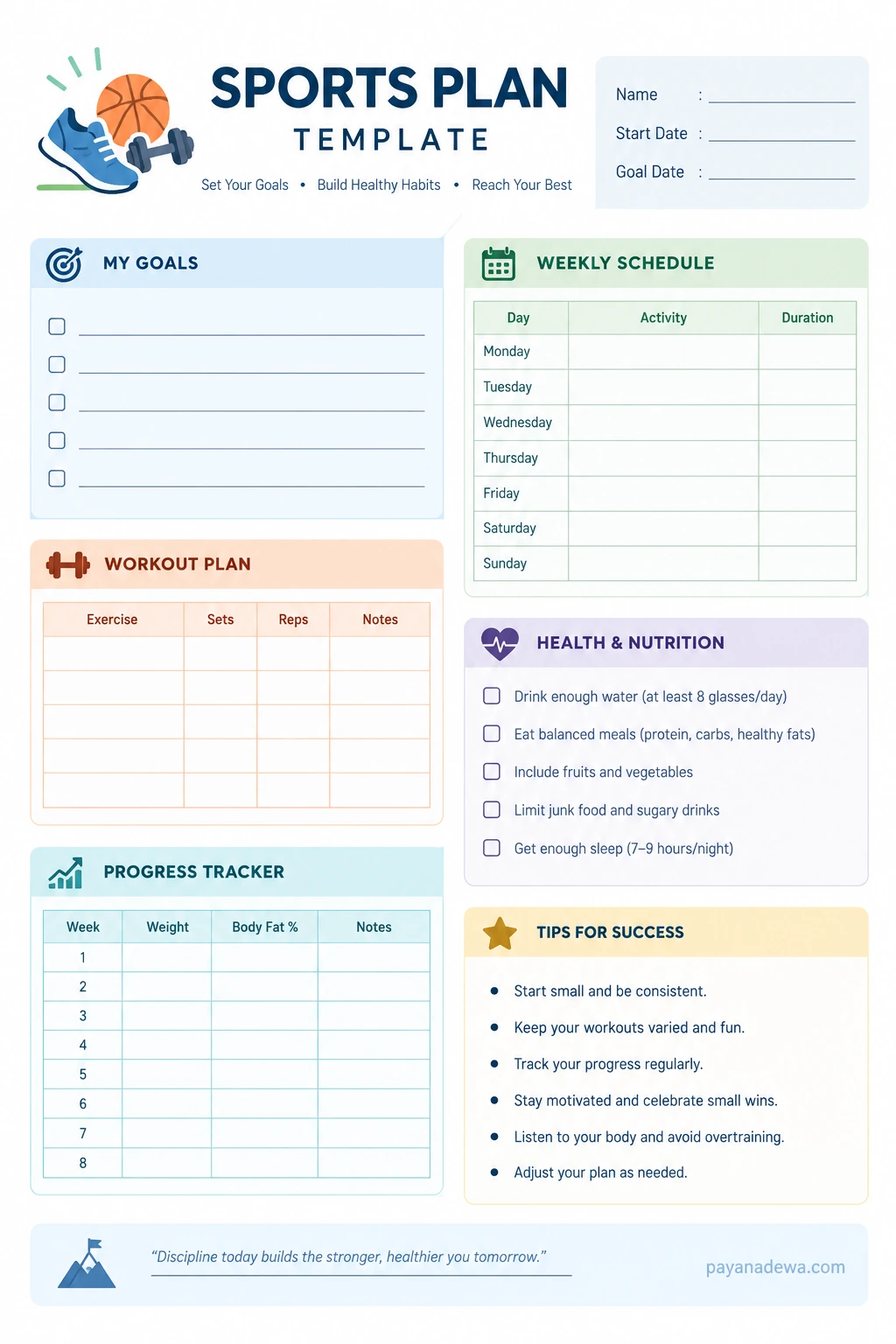
To use the template, write down your main goal first. Next, assign activities to each day and specify the duration or workout details. Use the health checklist to monitor habits such as drinking enough water and getting sufficient sleep. Finally, update your progress tracker regularly.
Example of a Weekly Sports Plan
The following example demonstrates how a beginner might organize a balanced week. Adjust the activities, duration, and intensity to your current fitness level, preferences, and recovery needs.
Monday: Cardio and Mobility
Begin with a comfortable 20-minute brisk walk or another accessible aerobic activity. Finish with gentle mobility exercises. Focus on establishing a manageable pace rather than exercising as intensely as possible.
Tuesday: Strength Training
Perform a short, full-body strength session using appropriate bodyweight exercises or resistance equipment. Choose movements that match your abilities, and maintain proper technique. Beginners can benefit from guidance from a qualified fitness professional.
Wednesday: Active Recovery
Choose an easy walk, gentle cycling, or another low-intensity activity. If you feel particularly tired, take a rest day instead. The purpose is to support recovery rather than add unnecessary training stress.
Thursday: Cardio Training
Repeat your preferred aerobic activity. You can gradually extend the duration as your fitness improves, provided you recover well between sessions. Keep the intensity appropriate for your experience.
Friday: Strength and Flexibility
Complete another suitable strength session, allowing enough recovery between challenging workouts for the same muscle groups. Finish with comfortable flexibility or mobility work if it suits your needs.
Saturday: Recreational Sports
Enjoy an activity that keeps you moving, such as swimming, cycling, badminton, basketball, or a casual game with friends. Recreational exercise can make your routine more engaging and easier to sustain.
Sunday: Rest and Review
Take a rest day or enjoy gentle movement. Review your workouts, note any challenges, and plan the next week. If the previous week felt too demanding, reduce the workload before adding more activity.
Important: This is a general example, not an individualized training prescription. You do not need to follow every session. Adapt the schedule to your abilities, commitments, and recovery needs.
Nutrition and Healthy Habits for Better Sports Performance
Exercise is only one part of an effective fitness routine. Daily habits also influence your energy, recovery, and ability to train consistently.
Eat Balanced Meals
Include a variety of vegetables, fruits, whole grains, protein sources, and healthy fats. Carbohydrates help fuel physical activity, while protein supports muscle repair and maintenance. Your individual needs depend on your activity level, training goals, and overall health.
Stay Hydrated
Drink water regularly throughout the day and pay attention to your fluid needs during exercise. Heat, humidity, workout duration, and sweating can affect how much fluid you need. Longer or more intense sessions may require additional hydration planning.
Get Enough Sleep
Sleep supports recovery, concentration, and everyday performance. Most adults should aim for seven to nine hours per night, although individual needs vary. Maintaining a consistent bedtime can help support your training routine.
How to Track Your Sports Plan Progress
Tracking progress helps you understand whether your routine is working. You do not need expensive equipment or complicated software. A simple printable workout planner can provide enough information to guide your next steps.
Consider recording the following details:
- Workout frequency: Record how many planned sessions you complete each week.
- Duration: Note how long each activity lasts.
- Performance: Track relevant measures, such as walking distance, running time, or strength-training repetitions.
- Energy and recovery: Record how you feel before and after workouts.
- Consistency: Identify which habits are becoming easier to maintain.
Review your records weekly or monthly. Look for gradual improvements rather than expecting dramatic changes in a short period. If you consistently struggle to complete your workouts, simplify the plan or reconsider the timing.
Choose measurements that match your goals. Body weight and body fat percentage are not necessary for everyone, and neither measurement tells the whole story about fitness or health.
Common Sports Planning Mistakes to Avoid
A sports plan should support your lifestyle, not create unnecessary pressure. Avoid these common mistakes when organizing your routine.
- Setting unrealistic goals: Begin with achievable targets and increase the challenge gradually.
- Doing too much too soon: Increase training volume and intensity carefully to allow your body to adapt.
- Ignoring recovery: Schedule rest and respond to persistent pain or unusual fatigue.
- Repeating the same workout constantly: Consider varying activities to develop different fitness qualities and maintain interest.
- Skipping progress reviews: Use your workout records to identify what works and what needs adjustment.
- Following someone else’s routine blindly: Choose a plan that suits your own fitness level, goals, and circumstances.
Consistency matters more than perfection. Missing a session does not mean you have failed. Return to your routine when possible and make adjustments that help you continue safely.
Tips for Staying Motivated With Your Sports Plan
Motivation naturally changes from day to day. A few practical strategies can help you maintain momentum even when life becomes busy.
- Keep your plan visible: Place your printable sports planner somewhere you will see it regularly.
- Prepare in advance: Set out your workout clothes and equipment before a scheduled session.
- Make workouts enjoyable: Choose activities you genuinely like and listen to music when appropriate.
- Celebrate small wins: Recognize consistency, improved technique, and increased confidence.
- Find an exercise partner: A friend or sports group can provide encouragement and accountability.
- Review and adapt: Update your schedule when your goals, commitments, or fitness level change.
Remember that a successful routine is one you can maintain over time. Build gradually, focus on healthy habits, and give yourself room to learn as you go.
Conclusion
A well-designed sports plan provides a clear path toward better fitness, healthier habits, and more consistent physical activity. By setting realistic goals, creating a weekly workout schedule, balancing exercise with recovery, and tracking your progress, you can make training more organized and rewarding.
Start with a simple routine that fits your current lifestyle. Use a printable sports plan template to organize your activities, record achievements, and identify opportunities for improvement. As your confidence and fitness develop, adjust your plan to reflect your progress.
The most effective sports plan is not necessarily the most complicated. It is the one that helps you stay active, recover well, and keep moving toward your goals one week at a time.