A service certificate is an important document that recognizes a person’s service, confirms a period of employment, or verifies the completion of a particular service. Businesses, organizations, educational institutions, and service providers use these certificates to document achievements, acknowledge contributions, and maintain professional records.
Whether you need a service certificate for an employee, a contractor, a volunteer, or a completed project, choosing the right format makes the document more useful and professional. A well-prepared certificate clearly identifies the recipient, explains the service provided, and includes the information needed for verification.
However, not every service certificate serves the same purpose. Some confirm employment history, while others recognize dedication, document completed work, or acknowledge a professional contribution. Understanding these differences helps you create a certificate that meets your specific needs.
In this guide, you will learn what a service certificate means, when it is used, which details to include, and how to create a polished document. You will also discover practical design tips and common mistakes to avoid when preparing a service certificate template.
What Is a Service Certificate?
A service certificate is a formal document issued by an employer, organization, institution, or service provider to confirm or recognize a person’s service. Depending on its purpose, it may describe the duration of service, responsibilities performed, work completed, or contributions made during a specific period.
For example, an employer may issue an employee service certificate when a staff member leaves the company. A business may also provide a service completion certificate after a contractor finishes an assignment. In a community organization, the same document can recognize a volunteer’s contribution.
The exact wording depends on the situation. A certificate intended to verify employment should focus on accurate employment details. A certificate designed to recognize an achievement may place greater emphasis on dedication, performance, or successful completion.
Service Certificate vs. Certificate of Service
The terms service certificate and certificate of service are sometimes used interchangeably. Both can describe documents that confirm a person’s service or acknowledge work performed. However, their meanings may vary by country, industry, and organization.
An employment-related certificate typically identifies the employee, job title, organization, and service period. A project-related certificate may instead identify the service provider, project, completion date, and relevant deliverables.
Before preparing the document, clarify its intended purpose. This simple step helps ensure that the wording, required information, and overall design match the recipient’s needs.
Why Is a Service Certificate Important?
A professional service certificate provides more than a decorative acknowledgment. It can serve as a useful record, support professional communication, and recognize the value of a person’s contribution.
1. It Provides a Formal Record
A service certificate can document a period of employment, participation in an organization, or completion of an agreed service. The information may help recipients maintain personal records or provide supporting documentation when requested.
2. It Recognizes Contributions
Receiving a certificate can make employees, volunteers, and service providers feel appreciated. When the document specifically acknowledges their efforts, it communicates recognition in a tangible and professional way.
3. It Supports Professional Credibility
A clearly written certificate can help confirm relevant experience or completed work. Recipients may use it as supporting evidence when applying for opportunities or organizing professional documents, although acceptance depends on the requirements of the receiving organization.
4. It Improves Business Documentation
Organizations benefit from maintaining consistent certificate formats. Standardized documents make records easier to prepare, review, archive, and verify. They also help businesses maintain a consistent visual identity across departments.
Common Types of Service Certificates
The best service certificate format depends on the situation. Identifying the correct type before designing the document helps prevent confusion and ensures that the information remains relevant.
Employee Service Certificate
An employee service certificate confirms an individual’s employment or period of service with an organization. It may include the employee’s full name, position, employment dates, and company details. Depending on local requirements, it may be used alongside other employment documents rather than as a replacement for them.
Service Completion Certificate
A service completion certificate confirms that a specific assignment, contract, maintenance task, or project has been completed. It commonly includes the project name, service provider, completion date, and an authorized signature.
Long-Service Recognition Certificate
Organizations use long-service certificates to recognize employees who have contributed over an extended period. These certificates often highlight years of service, commitment, reliability, and professional dedication.
Volunteer Service Certificate
A volunteer service certificate acknowledges participation in community programs, nonprofit activities, social initiatives, or charitable events. It may include the organization name, volunteer role, service dates, and a brief description of the contribution.
Professional or Customer Service Certificate
A professional service certificate may recognize successful service delivery, customer support, or participation in a relevant program. When it relates to training or professional qualifications, the issuer should clearly distinguish participation or completion from formal accreditation.
What to Include in a Service Certificate
A strong service certificate is clear, accurate, and easy to verify. Although the exact requirements differ, most certificates benefit from including the following details.
- Organization name and logo: Identify the company, institution, or organization issuing the certificate.
- Certificate title: Use a clear heading, such as Service Certificate or Service Completion Certificate.
- Certificate number: Add a unique reference number when the organization uses a tracking system.
- Recipient’s full name: Check spelling carefully to avoid errors in official records.
- Service description: Explain the employment, activity, assignment, or contribution being confirmed.
- Service period or completion date: Include the relevant dates and make sure they match the available records.
- Recognition statement: Add a concise message when the certificate is intended to acknowledge effort or achievement.
- Authorized signature: Include the name and title of the person responsible for issuing the document.
- Issue date: State when the certificate was prepared or formally issued.
- Verification details: Include official contact information or a verification method when appropriate.
Not every certificate requires every item. For example, a simple volunteer recognition certificate may not need a certificate number. An employment-related document may require more precise dates and role information. Include only details that support the certificate’s purpose.
How to Create a Professional Service Certificate
You do not need advanced graphic design skills to create an effective service certificate. A structured process can help you produce a document that looks polished and communicates the necessary information.
Step 1: Define the Purpose
Decide whether the certificate will confirm employment, recognize long service, verify project completion, or acknowledge volunteering. The purpose determines the appropriate title, wording, and required details.
Step 2: Gather Accurate Information
Collect the recipient’s name, service dates, role, project details, and issuing organization’s information. Confirm the facts against reliable records before adding them to the document.
Step 3: Choose a Suitable Template
Use a service certificate template that matches your organization and the formality of the occasion. A traditional certificate may suit corporate recognition, while a simpler layout can work well for project completion or volunteer activities.
Step 4: Organize the Layout
Place the organization name near the top, followed by the certificate title and recipient’s name. Position the service statement in the center and place the issue date and signature details near the bottom. Keep sufficient white space so the document remains easy to read.
Step 5: Use Professional Typography and Colors
Choose readable fonts and a restrained color palette. Navy, black, white, and gold can create a formal appearance, while colors from the organization’s branding can make the certificate more recognizable. Avoid excessive decorative elements that distract from the main information.
Step 6: Review and Authorize the Document
Check spelling, dates, job titles, and service descriptions. Make sure the authorized person approves the content before issuing the certificate. If the document has an official or legal purpose, confirm any additional requirements that apply in your jurisdiction.
Step 7: Export and Store the Certificate
Save a final PDF copy for consistent printing and digital sharing. Keep an appropriately secured record of issued certificates, particularly when they contain personal information. If you need an editable version for future use, retain the original document separately.
Service Certificate Template: Design Inspiration
A printable service certificate template provides a convenient starting point for creating a professional document. The example below uses a clean layout, balanced spacing, and a navy-and-gold color scheme to create a formal appearance without overwhelming the text.
The sample includes a certificate heading, recipient name, service statement, service period, signature areas, and a decorative emblem. These elements can be adapted for employee recognition, service completion, or other appropriate purposes.
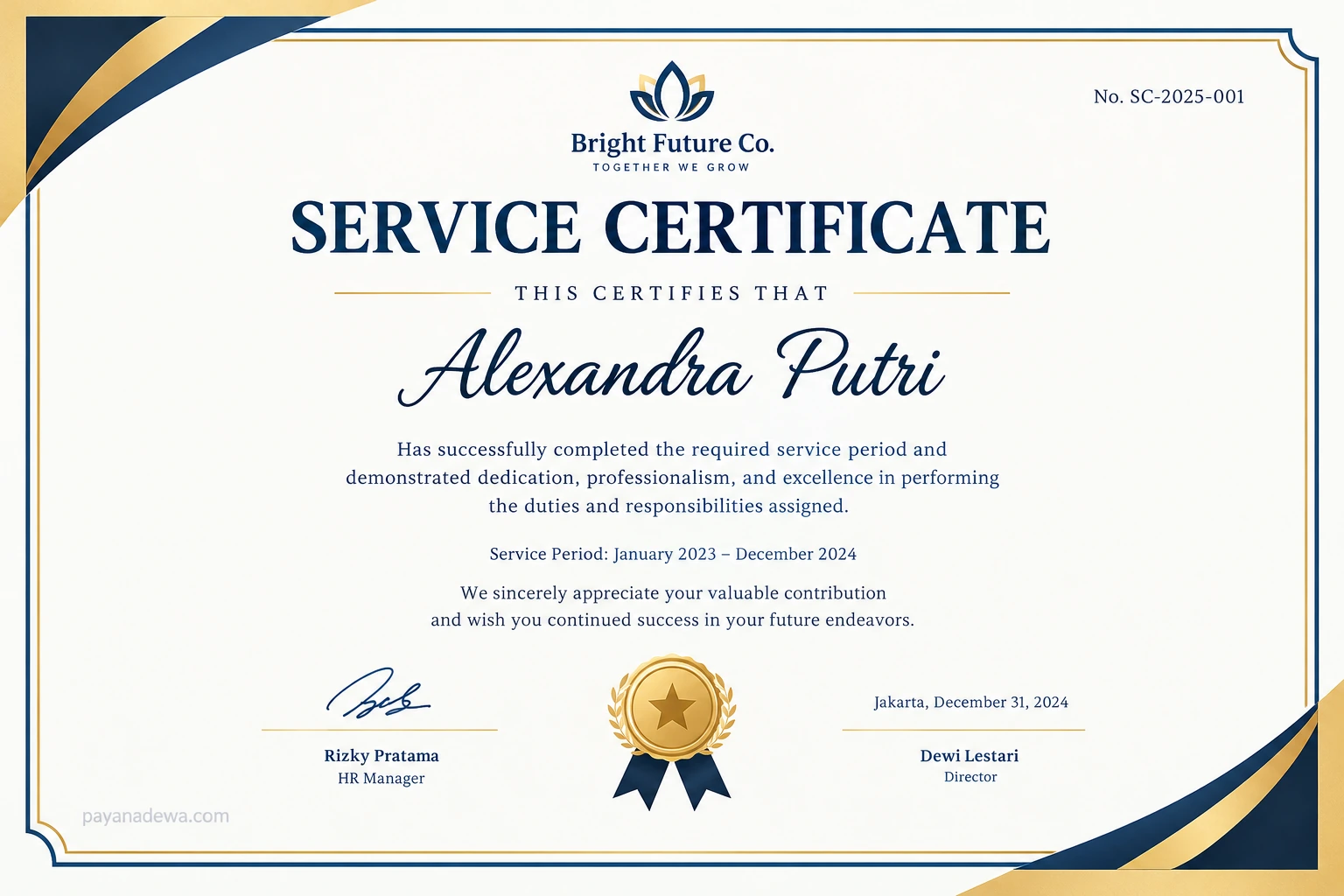
When customizing the template, replace the sample organization, recipient, dates, and signatures with accurate information. Remove any sample details that do not apply, and ensure that the final certificate reflects the actual service being confirmed.
Practical Tips for a Better Service Certificate
A few thoughtful decisions can improve both the appearance and usefulness of your certificate. Focus on readability and accuracy before adding decorative details.
- Keep the wording concise: Use direct language to explain the service or achievement.
- Make the recipient’s name prominent: The name should be easy to find at a glance.
- Use consistent spacing: Align text and signature areas to create a balanced layout.
- Check print quality: Make sure borders, logos, and text remain clear when printed.
- Choose an appropriate paper size: Landscape layouts are common for certificates, but follow the recipient’s or organization’s requirements.
- Protect personal information: Share only the details necessary for the certificate’s intended use.
- Keep a consistent record: Use a repeatable naming system or certificate numbering process if issuing documents regularly.
For digital distribution, review the exported file on a computer and a mobile device. For printed copies, check the margins and make sure no text or decorative borders are cut off.
Common Service Certificate Mistakes to Avoid
Even an attractive certificate can lose its value when the information is incomplete or misleading. Avoid these common problems when preparing your document.
- Incorrect dates: Confirm the service period and issue date before approval.
- Unclear wording: State exactly what the certificate confirms instead of relying on vague praise.
- Missing authorization: Include the required signature or approval details for the document’s purpose.
- Overly decorative design: Too many fonts, colors, or ornaments can make the certificate difficult to read.
- Unverified claims: Do not describe someone as licensed, accredited, or formally qualified unless the claim is accurate and supported.
- Confusing document types: A service certificate may not replace an employment reference, experience letter, completion report, or legally required document.
Taking a few minutes to review these details can prevent unnecessary corrections and help the certificate serve its intended purpose.
Frequently Asked Questions About Service Certificates
What is the main purpose of a service certificate?
The main purpose is to confirm or recognize a person’s service, employment period, contribution, or completed assignment. Its specific function depends on the issuing organization and the type of certificate.
Is a service certificate the same as an experience letter?
Not necessarily. A service certificate may confirm a person’s service period or recognize a contribution, while an experience letter commonly describes employment history, job responsibilities, or professional experience. Terminology and requirements vary between organizations and jurisdictions.
Can I create a service certificate using a free template?
Yes. A free, editable service certificate template can help you prepare a professional document quickly. Customize the wording, recipient information, branding, and signature fields to suit the intended purpose.
Which file format is best for a service certificate?
PDF is generally suitable for sharing and printing because it helps preserve the layout across devices. An editable document format is useful when you need to update recipient details or reuse the design.
Who can issue a service certificate?
Depending on the certificate’s purpose, it may be issued by an employer, organization, authorized manager, project owner, or service provider. For official employment or legal documentation, check the relevant rules and authorization requirements.
Conclusion
A service certificate is a useful way to document employment, confirm completed work, and recognize meaningful contributions. When prepared correctly, it communicates important information clearly and provides the recipient with a professional record of their service.
To create an effective certificate, start by defining its purpose, verifying the details, selecting an appropriate template, and organizing the information in a readable layout. Use professional typography, include the necessary authorization, and review the final document before printing or sharing it.
Whether you are preparing an employee service certificate, a service completion certificate, or a volunteer recognition document, a well-designed template can save time while maintaining a consistent professional appearance. Choose a format that suits your needs, personalize it carefully, and make accuracy your top priority.
Have you created or used a service certificate template before? Share your experience or suggestions to help others prepare clearer and more professional certificates.