Maintaining healthy eating habits can feel challenging when you are busy with work, family, and daily responsibilities. It is easy to forget what you ate during the day, overlook frequent snacks, or lose track of portion sizes. A Food Log Template To Track Your Diet provides a simple and practical way to record meals, snacks, drinks, and other eating habits in one organized place.
By consistently tracking what you eat, you can gain a clearer understanding of your daily nutrition. A food diary does not need to be complicated. Whether you use a printable food journal, a digital spreadsheet, or a simple daily meal tracker, the goal is to collect useful information that helps you make more informed decisions about your diet.
What Is a Food Log Template?
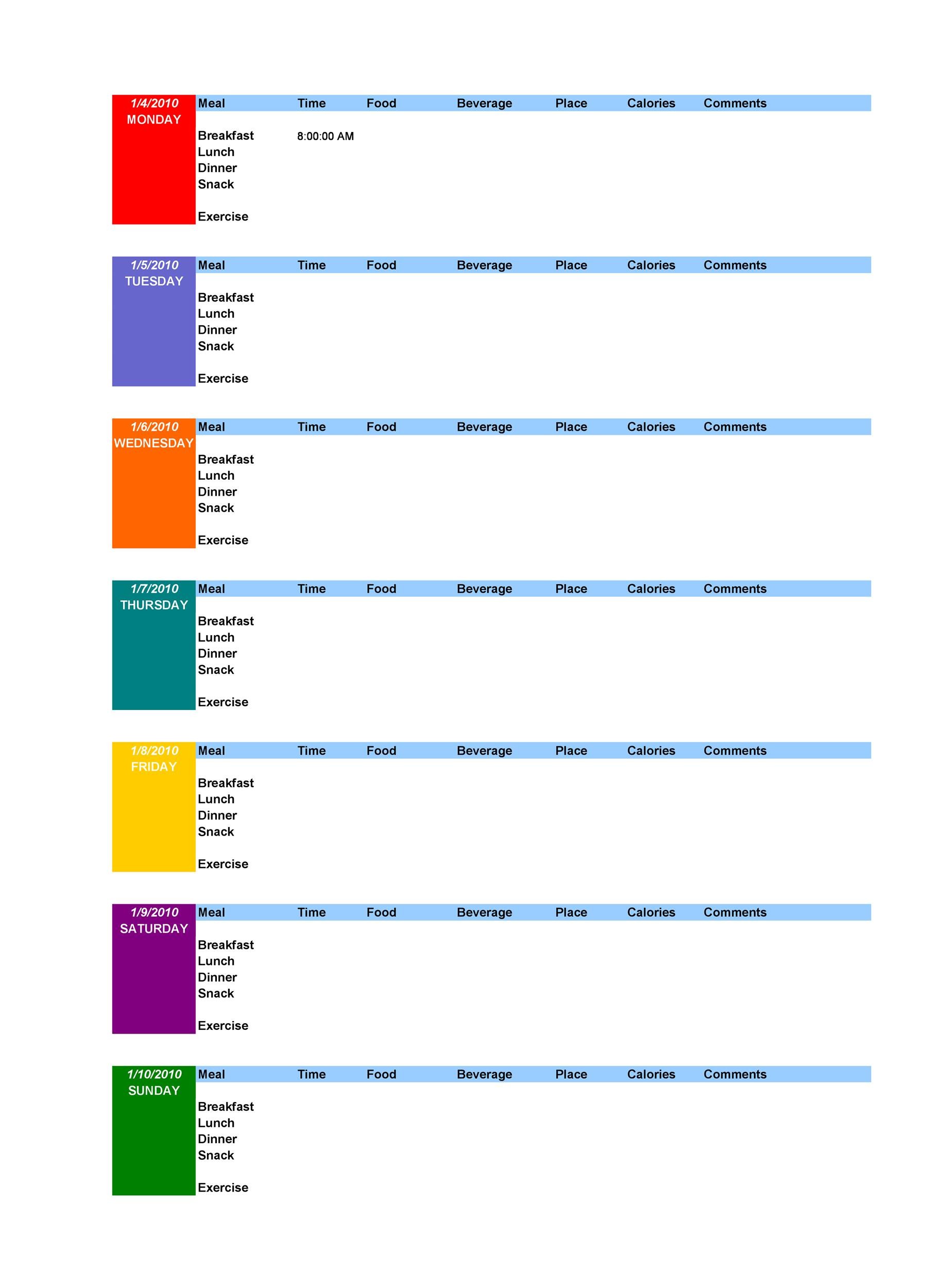
A food log template is a structured document used to record everything you consume throughout the day. Depending on your needs, it may include meal times, food descriptions, portion sizes, calories, beverages, and personal notes. Some people also use a diet tracking template to record hunger levels, moods, exercise, or how certain foods make them feel.
The main advantage of using a Food Log Template To Track Your Diet is consistency. Instead of trying to remember everything at the end of the day, you can record information shortly after eating. Over time, these records can reveal useful patterns that may otherwise go unnoticed.

Why Use a Food Log Template To Track Your Diet?
A well-designed meal tracking system can make your eating habits easier to understand. You may discover that you skip breakfast regularly, snack more often than expected, or consume certain foods at particular times of the day. This awareness can help you make realistic changes without relying on guesswork.
Using a daily food log may also help you stay organized when working toward specific nutrition goals. For example, you might want to plan balanced meals, monitor your water intake, reduce unnecessary snacking, or simply create a more consistent eating routine.
Improves Awareness of Eating Habits
One of the most valuable benefits of a food diary template is increased awareness. Writing down meals encourages you to pay attention to what and when you eat. Even a basic record can provide a more complete picture of your routine.
Supports Better Meal Planning
When you review previous entries, you can identify which meals are convenient, satisfying, and easy to prepare. This information can help you build a more effective weekly meal plan and reduce last-minute food decisions.
What Should Be Included in a Food Log?
The best Food Log Template To Track Your Diet should be simple enough to use consistently while including the information that matters most to you. Avoid adding unnecessary fields that make the template difficult to maintain.
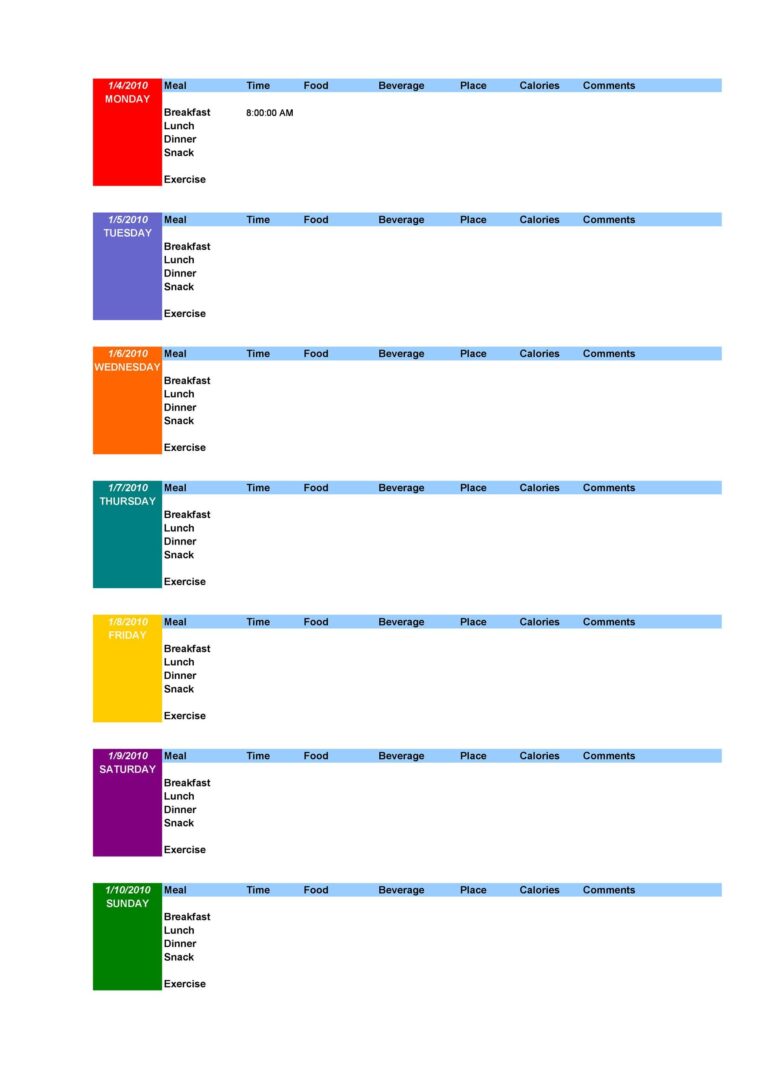
- Date: Record the day for each food log entry.
- Meal or snack: Identify whether the entry is breakfast, lunch, dinner, or a snack.
- Time: Note when you ate or drank something.
- Food and beverages: Write a clear description of what you consumed.
- Portion size: Record the approximate amount when useful.
- Notes: Add observations about hunger, mood, cravings, or meal satisfaction.
- Water intake: Include hydration tracking if it supports your routine.
You can customize a printable food log according to your lifestyle. Someone who wants a simple meal journal may only need a few columns, while another person may prefer a more detailed nutrition tracker.
Different Types of Food Log Templates
Basic Daily Food Log
A basic daily food log focuses on simplicity. It usually includes the time, meal type, food consumed, and portion size. This format is useful for beginners because it encourages consistent tracking without requiring extensive calculations.
Weekly Food Journal
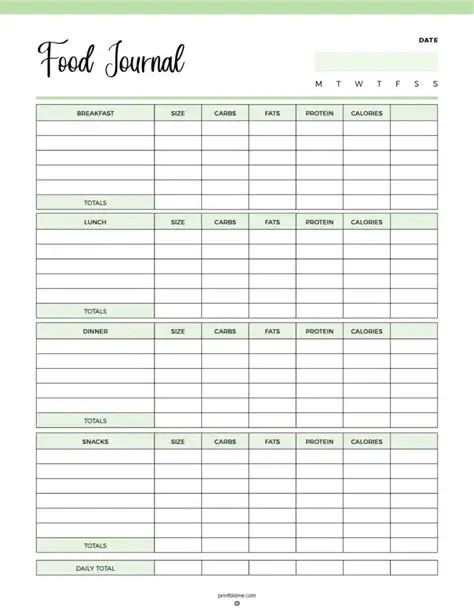
A weekly food journal allows you to compare eating patterns across several days. This can make recurring habits easier to identify. For example, you may notice differences between weekday and weekend meals or discover that certain times of the week make healthy meal planning more difficult.
Meal and Water Tracker
Some templates combine food records with hydration tracking. This format can be useful for people who want one organized document for monitoring daily meals and water consumption.
Detailed Nutrition Log
A more detailed diet log may include nutritional information, estimated calories, protein, carbohydrates, fats, fiber, or other personal tracking categories. This type of template requires more time, so it works best when the additional information serves a clear purpose.
How to Use a Food Log Effectively
Creating a food journal is easy, but using it consistently requires a practical approach. The most effective system is usually the one that fits naturally into your daily routine.
- Record meals soon after eating instead of relying on memory.
- Be honest about snacks, drinks, and small portions.
- Use simple descriptions that you can understand later.
- Choose a format that is convenient, whether printable or digital.
- Review your entries regularly to identify patterns.
- Focus on useful observations instead of trying to create a perfect record.
Practical Tips for Reviewing Your Food Log
Tracking information is only the first step. The real value comes from reviewing your food records and identifying patterns. Set aside a few minutes at the end of the week to look at your entries.
Look for Repeating Patterns
Ask yourself whether certain habits appear repeatedly. Do you eat meals at regular times? Are you frequently hungry during the afternoon? Do busy days lead to more convenience foods? These observations can help you understand your routine more clearly.
Identify What Works Well
Do not use a Food Log Template To Track Your Diet only to search for problems. It is equally important to identify successful habits. If certain meals help you feel satisfied and fit comfortably into your schedule, consider repeating or adapting them.
Make Small, Realistic Changes
A food journal should support gradual improvement rather than extreme changes. If you notice an eating pattern you want to adjust, focus on one manageable action at a time. Small changes are often easier to maintain over the long term.
Printable vs Digital Food Log Templates
Both printable and digital templates can be effective. A printable food log is convenient for people who prefer writing by hand and want a physical record. It can also be useful when you want to keep the template visible in a kitchen, office, or planning area.
A digital food tracker, on the other hand, may be easier to update from a computer or mobile device. Spreadsheets can also make it easier to organize information over longer periods. The best choice depends on which format you are most likely to use consistently.
Common Mistakes to Avoid When Tracking Food
Many people stop using a diet tracking template because they make the process unnecessarily difficult. Keeping the system simple can improve consistency and make the information more useful.
- Trying to record too many details from the beginning.
- Waiting until the end of the day to remember every meal.
- Ignoring snacks, drinks, or small portions.
- Using the food log as a reason to judge yourself.
- Failing to review the information you collect.
- Choosing a complicated template that does not fit your routine.
The purpose of a food tracking sheet is to provide useful information. It should help you understand your habits and support practical decisions rather than create unnecessary stress.
Conclusion
A Food Log Template To Track Your Diet can be a simple but valuable tool for improving awareness of your daily eating habits. By recording meals, snacks, drinks, portion sizes, and personal observations, you can build a clearer picture of your routine and identify opportunities for positive change.
The key is to choose a food diary template that is easy to use and review it regularly. Whether you prefer a printable meal tracker or a digital food journal, consistency matters more than complexity. Start with a simple format, record your meals honestly, and use the information to make small, practical adjustments that support a balanced and sustainable approach to eating.