A well-designed fitness banner can do more than simply make a website, social media page, or promotional campaign look attractive. It can communicate a fitness message quickly, highlight an offer, encourage people to take action, and create a strong visual identity for a gym, personal trainer, fitness brand, or wellness business.
Whether you need a gym banner for a new membership campaign, a workout promotion, a personal training service, or an online fitness program, the right design should combine clear messaging with an energetic and professional appearance. A good banner helps visitors understand what you offer within seconds while also making your brand easier to remember.
This guide explains what makes an effective fitness banner, what information to include, how to choose the right visual elements, and how to create a design that works across different platforms and audiences.
What Is a Fitness Banner?
A fitness banner is a visual promotional design created for a fitness-related business, event, service, website, social media profile, or marketing campaign. It may be used by gyms, fitness studios, personal trainers, sports coaches, wellness brands, and online fitness communities.
A fitness banner can contain a combination of headlines, photographs, illustrations, fitness icons, promotional offers, calls to action, and brand information. The goal is to communicate the most important message in a visually appealing format.
Common uses include:
- Gym membership promotions
- Personal trainer advertising
- Workout program promotions
- Fitness class announcements
- Sports and wellness events
- Social media marketing
- Website hero sections
- Fitness challenges and campaigns
- Health and wellness promotions
Why a Good Fitness Banner Matters
People often decide whether to pay attention to a visual message within just a few moments. Because of this, a banner needs to communicate its purpose quickly. A cluttered design can make an important message difficult to understand, while a clean design can guide the viewer toward the information that matters most.
A professional fitness banner can help establish credibility and create a consistent visual identity. For example, a gym that uses consistent typography, colors, imagery, and messaging across its website and social channels can appear more recognizable and organized.
A strong banner can also support marketing goals by directing visitors toward a specific action. This could include joining a gym, booking a consultation, registering for a fitness class, downloading a workout plan, or learning more about a service.
Essential Elements of an Effective Fitness Banner
1. A Clear Main Headline
The headline should communicate the main idea immediately. Instead of filling the banner with long paragraphs, use a short and memorable message that tells the viewer what the promotion or service is about.
Examples include phrases such as Build Strength. Feel Better., Start Your Fitness Journey, or Train Stronger Every Day.
The headline should be large enough to read easily, especially when the banner is viewed on a mobile device.
2. Strong Fitness Imagery
Images can instantly establish the mood of a fitness campaign. Depending on the target audience, you might use photographs or illustrations of strength training, running, yoga, group classes, athletic movement, or healthy lifestyle activities.
Choose visuals that support the message instead of competing with it. The most important text should remain easy to read even when the design contains energetic imagery.
3. A Focused Color Palette
Fitness designs often benefit from energetic yet professional colors. Blue, teal, green, orange, black, white, and neutral tones can all work effectively when they are used consistently.
However, using too many colors can make a banner look confusing. Choose a primary color, a secondary color, and one or two supporting tones. Make sure there is enough contrast between the background and the text.
4. A Strong Call to Action
A call to action tells the viewer what to do next. This is especially important for promotional banners.
Useful calls to action include:
- Join Today
- Start Training
- Book a Session
- Get Started
- View Workout Plans
- Register Now
- Learn More
A short call to action is usually more effective than a long instruction. Make it visually noticeable without overwhelming the main headline.
5. Brand Identity
Include important branding elements such as a logo, brand colors, website address, or social media handle when appropriate. Consistent branding helps viewers connect the banner with your business or online presence.
Fitness Banner Template for Planning Your Goals
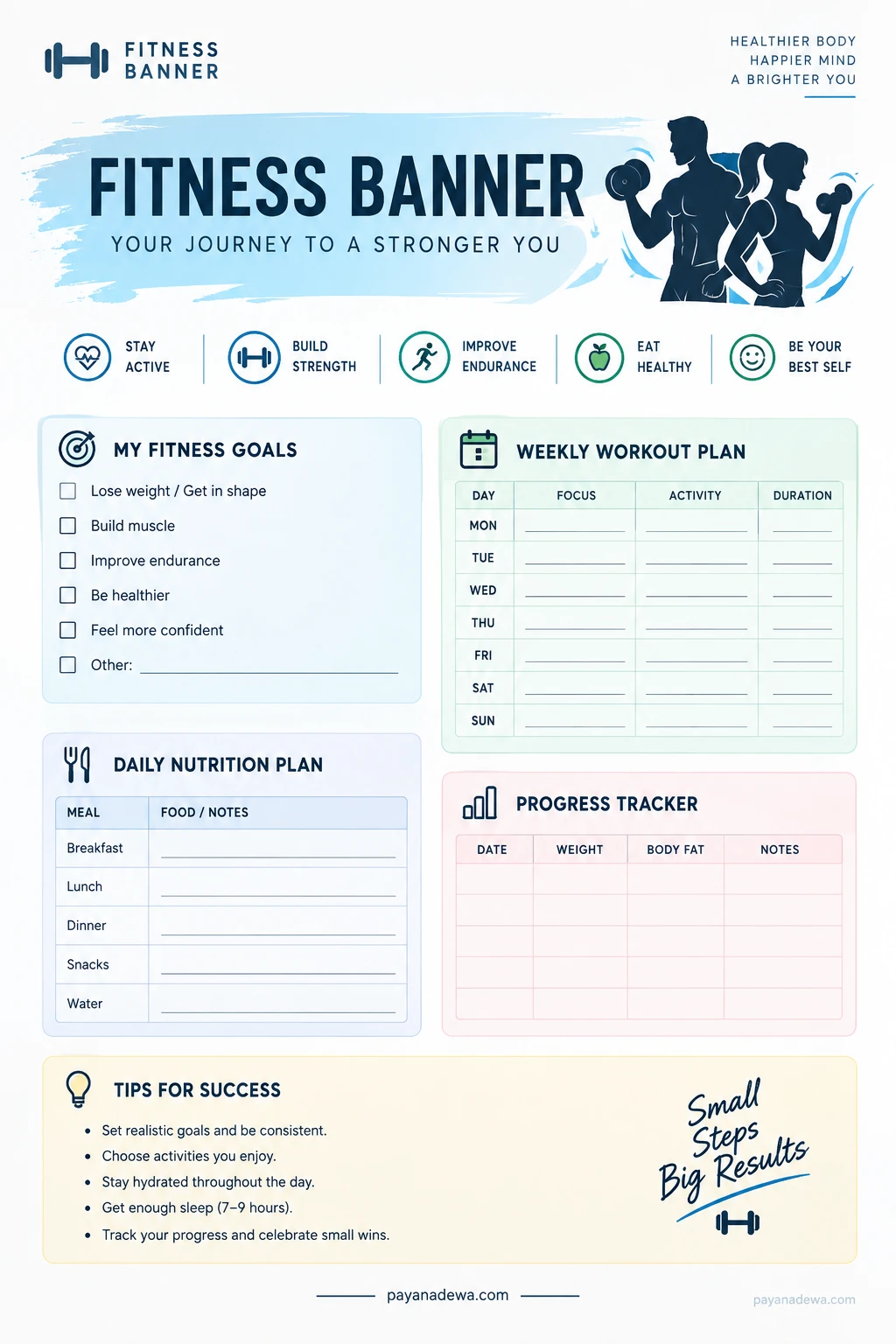
A fitness banner does not always have to function as a traditional advertisement. It can also be designed as a useful printable template that helps people organize their fitness goals and daily routines.
The following original template combines a fitness headline with practical planning sections. It includes areas for fitness goals, weekly workouts, nutrition notes, and progress tracking. This type of design can be useful for personal fitness planning, gym challenges, coaching programs, or wellness content.
How to Design a Fitness Banner Step by Step
Step 1: Define the Purpose
Before designing anything, determine what the banner needs to achieve. A promotional gym banner may require a membership offer and call to action. A fitness event banner may need a date, location, and registration information. A printable workout template may require tables and spaces for notes.
Defining the purpose first prevents unnecessary design elements from taking attention away from the main message.
Step 2: Identify Your Audience
Consider who will see the banner. A design for beginners may use welcoming and encouraging language, while a banner for experienced athletes may focus on performance, strength, or training intensity.
The visual style should also match the audience. A wellness-focused audience may respond well to clean and calming designs, while a high-intensity training campaign may use stronger typography and dynamic imagery.
Step 3: Create a Visual Hierarchy
Visual hierarchy determines what viewers notice first, second, and third. Your main headline should normally receive the strongest visual emphasis. Supporting information should be smaller, while the call to action should remain easy to locate.
Use font size, spacing, weight, alignment, and contrast to guide the viewer through the design.
Step 4: Keep the Layout Clean
A professional banner does not need to contain every possible detail. Leave enough white space around important elements so the design feels organized.
Use grids, alignment, and consistent spacing to create structure. Avoid placing too many different fonts, icons, or decorative elements in one area.
Step 5: Optimize for Different Devices
A banner may appear on a desktop monitor, tablet, smartphone, website, or social media feed. Therefore, important information should remain readable at smaller sizes.
Before publishing, check the design on both large and small screens. If the headline becomes difficult to read on a phone, simplify the layout or increase the text size.
Tips for Creating a Professional Gym Banner
When designing a gym banner, focus on clarity and relevance. Your audience should understand the offer or message without having to study the entire design.
- Use one primary message: Avoid competing headlines that make the purpose unclear.
- Choose readable fonts: Clean sans-serif fonts are often effective for fitness marketing.
- Use high-quality visuals: Blurry or poorly cropped images can reduce the professional appearance.
- Maintain contrast: Make sure text remains visible against the background.
- Highlight important information: Prices, dates, offers, and calls to action should be easy to find.
- Keep branding consistent: Match the banner with your website, logo, and other marketing materials.
- Test the design: Review the banner at different screen sizes before publishing.
Fitness Banner Ideas for Different Purposes
Gym Membership Banner
A gym membership banner can promote a new membership package, limited-time offer, free trial, or introductory session. Keep the offer prominent and provide a simple next step.
Personal Trainer Banner
A personal trainer banner can focus on expertise, training programs, coaching services, and client goals. A professional photograph combined with concise service information can create a strong first impression.
Workout Challenge Banner
Fitness challenges can benefit from energetic typography and motivating messages. Include the challenge name, duration, start date, and registration information when necessary.
Online Fitness Program Banner
For an online fitness program, explain the main benefit clearly. You might highlight home workouts, flexible schedules, beginner-friendly programs, strength training, or guided workout sessions.
Printable Fitness Planner
A printable fitness banner can combine inspirational messaging with practical sections. Workout schedules, nutrition notes, fitness goals, and progress trackers can make the design useful rather than purely decorative.
Common Fitness Banner Design Mistakes
Even a visually attractive design can become ineffective when important information is difficult to find. One common mistake is using too much text. A banner should communicate a focused message rather than trying to explain an entire service.
Another problem is poor contrast. Text placed over a complicated photograph can become difficult to read. Adding a subtle background panel or choosing a simpler image can improve readability.
Inconsistent branding is another issue. If every banner uses different colors, fonts, and visual styles, audiences may have difficulty recognizing the brand.
Finally, avoid designing only for desktop screens. Mobile viewing is an important consideration, so always test the final design at smaller dimensions.
How to Make Your Fitness Banner More Engaging
Start with a clear benefit. Instead of focusing only on what the business provides, communicate what the audience can gain from taking action.
Use active and encouraging language. Words such as build, move, train, improve, and start can create a sense of momentum when used naturally.
Next, make the most important information visually dominant. A viewer should be able to identify the main message without reading every detail.
Finally, make the design consistent with the overall brand. A banner should feel like part of the same visual system as the website, social media content, brochures, and other promotional materials.
Conclusion
A well-planned fitness banner can be a powerful visual communication tool for gyms, personal trainers, fitness brands, wellness businesses, and individual fitness enthusiasts. The most effective designs combine a clear message, strong imagery, readable typography, consistent branding, and a simple call to action.
Whether you are creating a gym promotion, personal training advertisement, workout challenge graphic, or printable fitness planner, start by defining your purpose and audience. Then build a clean visual hierarchy and remove anything that does not support the main message.
With thoughtful design and useful content, a fitness banner can become more than an attractive graphic. It can help motivate people, communicate information, support marketing goals, and make your fitness brand easier to recognize.