Eviction is a legal process that allows a landlord to regain possession of a rental property under specific circumstances. It can happen when a tenant fails to pay rent, violates a lease agreement, damages a property, or remains in a rental unit after the tenancy has legally ended. However, eviction is not simply a matter of asking someone to leave. It involves legal procedures, formal notices, and specific rights and responsibilities for both landlords and tenants.
Whether you are a property owner dealing with a difficult rental situation or a tenant who has received an eviction notice, understanding how eviction works can help you make informed decisions. This guide explains the eviction process, common reasons for eviction, tenant protections, and practical steps to handle the situation.
What Is Eviction?
Eviction is the legal removal of a tenant from a rental property. It generally occurs when a landlord establishes a valid legal reason to end a tenancy and follows the procedures required by applicable law.
In many jurisdictions, a landlord cannot legally remove a tenant simply because they want the property back. They must provide the required notice and, when necessary, obtain a court order before taking possession of the property.
The exact rules depend on the country, state, province, or local jurisdiction. Therefore, landlords and tenants should always check the laws that apply to their rental agreement.
Common Reasons for Eviction
There are several reasons why a landlord may begin an eviction process. Some involve financial problems, while others relate to violations of the rental agreement.
1. Nonpayment of Rent
Failure to pay rent is one of the most common reasons for eviction. When a tenant misses a payment, the landlord may issue a formal notice requesting payment or requiring the tenant to leave, depending on local law.
Before taking legal action, landlords should review payment records, confirm the amount owed, and follow the notice requirements in their jurisdiction.
2. Violation of the Lease Agreement
Tenants are generally expected to follow the conditions stated in their rental agreement. Serious or repeated violations may provide grounds for eviction.
Examples include:
- Keeping unauthorized pets when the lease prohibits them.
- Subletting the property without required permission.
- Causing significant property damage.
- Repeatedly disturbing neighbors.
- Using the rental property for prohibited activities.
3. Property Damage
Normal wear and tear is different from substantial property damage. A tenant who intentionally damages the property or causes serious damage through negligence may violate the rental agreement.
Landlords should document the condition of the property with photographs, inspection reports, and written records before pursuing legal remedies.
4. Illegal Activities
Some rental agreements and local laws allow landlords to pursue eviction when tenants use the property for illegal activities. However, allegations should be supported by reliable evidence, and the landlord must follow the applicable legal process.
5. Expiration of the Rental Agreement
In certain circumstances, a landlord may legally end a tenancy when a fixed-term lease expires or when a periodic tenancy is terminated with proper notice. Local tenant protection laws may impose additional requirements or restrictions.
How Does the Eviction Process Work?
The eviction process typically involves several stages. Although the exact procedure varies by location, the following steps provide a general overview of how a lawful eviction may happen.
Step 1: Identify the Legal Reason
The landlord should first identify a legally recognized reason for ending the tenancy. This could include unpaid rent, a serious lease violation, or another ground permitted by local law.
It is important to review the rental agreement and collect relevant documentation before proceeding.
Step 2: Deliver a Formal Eviction Notice
In many jurisdictions, landlords must provide written notice before filing an eviction case. The notice should contain the information required by local law, such as the tenant’s name, rental property address, reason for the notice, and applicable deadline.
Different situations may require different types of notices. For example, a notice for unpaid rent may provide an opportunity to pay the outstanding balance, while another notice may address a lease violation.
Landlords should verify the required notice period and approved delivery method before serving the document.
Step 3: Allow the Tenant to Respond
After receiving the notice, the tenant may have several options depending on the circumstances and local regulations.
- Pay overdue rent when the law provides an opportunity to do so.
- Correct a lease violation if the notice allows it.
- Communicate with the landlord to negotiate a possible resolution.
- Seek legal assistance if the eviction appears unlawful.
- Prepare a response if the landlord files a court case.
Step 4: File an Eviction Case When Required
If the tenant does not resolve the issue or leave the property within the applicable period, the landlord may need to file an eviction case with the appropriate court or housing authority.
The landlord generally needs to provide supporting documents, such as the lease agreement, payment history, notices, and relevant evidence.
Step 5: Attend the Court Hearing
If the case proceeds to court, both parties may have an opportunity to present their arguments and supporting evidence.
The tenant can explain why they believe the eviction is invalid, while the landlord must establish that the legal requirements have been satisfied. The judge or authorized decision-maker will consider the evidence and applicable law.
Step 6: Obtain and Enforce a Legal Order
If the court rules in favor of the landlord, it may issue an order requiring the tenant to leave the property. The enforcement process must follow local law.
Landlords should never attempt to bypass the legal process by changing locks, removing belongings, shutting off essential utilities, or using threats and physical force.
What Rights Do Tenants Have During Eviction?
Receiving an eviction notice does not automatically mean that a tenant has lost all legal rights. Tenants may have important protections throughout the process.
Depending on local law, these protections may include:
- Proper notice: Tenants may be entitled to receive written notice that meets legal requirements.
- Legal proceedings: A landlord may need a court order before physically removing a tenant.
- Opportunity to respond: Tenants may challenge an eviction or present evidence in court.
- Protection from harassment: Landlords generally cannot use threats, intimidation, or unlawful self-help eviction methods.
- Privacy rights: Tenants may retain certain privacy protections during the rental period.
- Access to legal assistance: Depending on the location, tenants may qualify for free legal aid or housing support services.
Tenants should not ignore official notices or court documents. Acting quickly can help protect important legal rights.
What Should Landlords Do Before Starting an Eviction?
Eviction can be expensive and time-consuming. For this reason, landlords should prepare carefully before taking legal action.
Consider these practical steps:
- Review the lease: Confirm the tenant’s obligations and identify the relevant lease provisions.
- Maintain accurate records: Keep payment histories, communication records, inspection reports, and other supporting documents.
- Communicate professionally: Explain the issue clearly and give the tenant an opportunity to respond when appropriate.
- Check local regulations: Confirm notice periods, required forms, filing procedures, and tenant protections.
- Use the correct notice: Make sure the document contains all legally required information.
- Seek professional advice: Consult a qualified attorney or housing professional when the situation is complicated.
Good documentation and compliance with legal requirements can reduce unnecessary disputes and help landlords manage rental properties responsibly.
What Is an Eviction Notice Template?
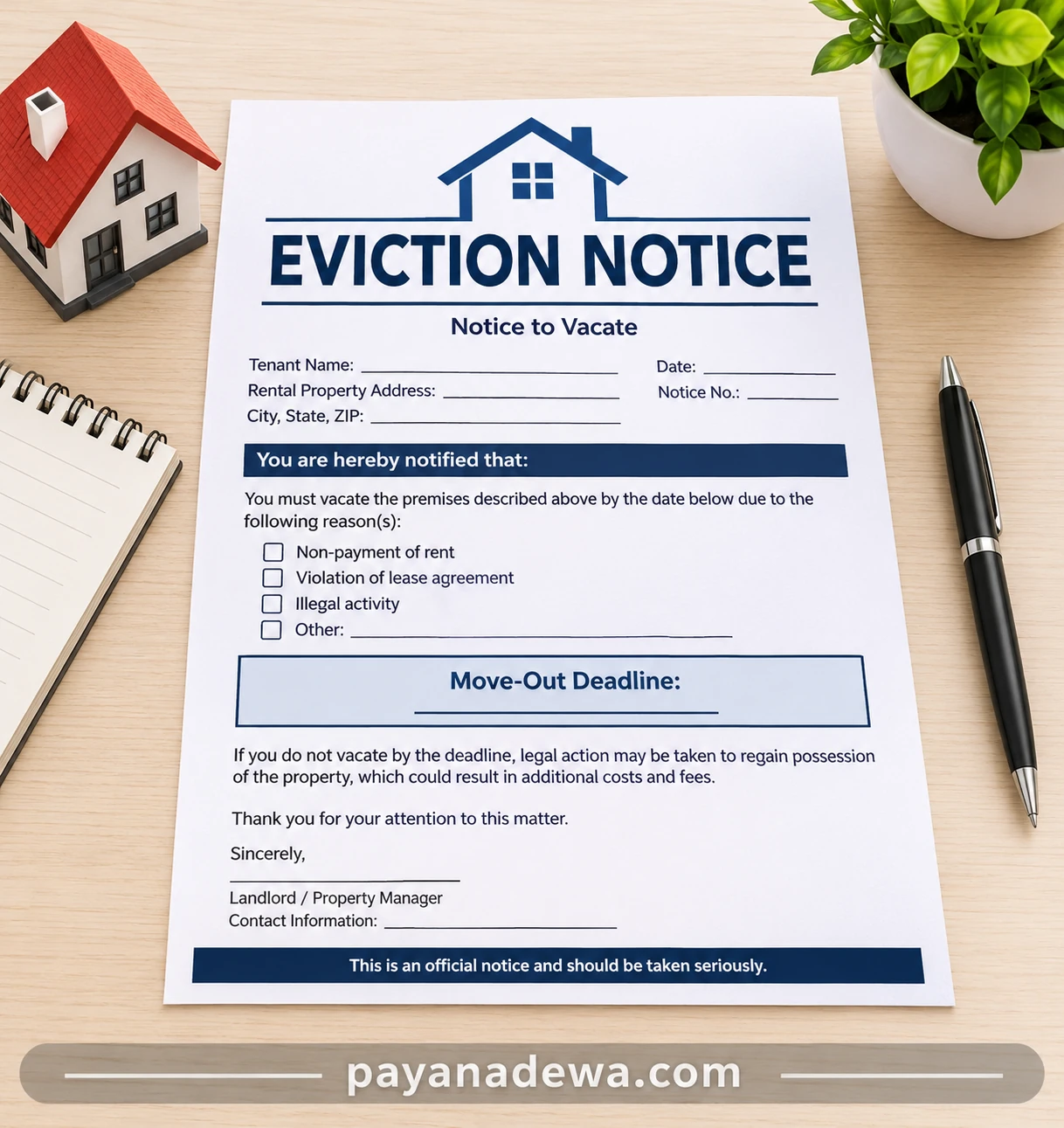
An eviction notice template is a document that landlords can use as a starting point when preparing a written notice concerning a tenancy. It helps organize important information and makes communication more structured.
A typical eviction notice template may contain the following details:
- Landlord or property manager’s name and contact information.
- Tenant’s full legal name.
- Complete rental property address.
- Date the notice is issued.
- Reason for the notice.
- Required action or applicable deadline.
- Relevant payment information, when applicable.
- Landlord’s signature or authorized representative’s signature.
Important: A general eviction notice template is not automatically a legally valid notice. Different jurisdictions require specific forms, wording, notice periods, and delivery procedures. Always verify local requirements before using a template for an actual eviction.
For general reference, see the printable document below.
How Can Tenants Respond to an Eviction Notice?
Tenants who receive an eviction notice should avoid making rushed decisions. Instead, they should carefully review the document and determine what action is appropriate.
Read the Notice Carefully
Check the date, stated reason, rental property information, and response deadline. Look for mistakes or missing information that may be relevant under local law.
Keep Copies of Important Documents
Save the rental agreement, rent receipts, bank statements, emails, text messages, and any notices received from the landlord. These documents may help explain the situation if a dispute arises.
Contact the Landlord
When appropriate, communicate with the landlord in writing. A payment arrangement or agreement to correct a lease violation may resolve the issue without court proceedings.
Seek Legal or Housing Assistance
If the notice seems unlawful or the tenant faces immediate removal, contacting a qualified lawyer, tenant advocacy organization, or local housing authority can be helpful.
How Long Does an Eviction Take?
There is no universal eviction timeline. The length of the process depends on the jurisdiction, reason for eviction, required notice period, court availability, and whether the tenant contests the case.
Some cases may be resolved relatively quickly, while others can take several weeks or months. Appeals, procedural disputes, and delays in enforcement may extend the timeline.
Landlords should avoid promising a specific move-out date unless it is supported by the applicable legal process. Tenants should also respond promptly to notices and court documents to avoid missing important deadlines.
How to Avoid Eviction Problems
Prevention is often easier than dealing with a formal eviction. Both landlords and tenants can take practical steps to reduce rental disputes.
Tips for Tenants
- Pay rent on time and keep proof of payment.
- Understand all terms of the rental agreement.
- Report maintenance issues promptly.
- Communicate with the landlord about financial difficulties.
- Obtain written permission for activities requiring landlord approval.
Tips for Landlords
- Screen prospective tenants fairly and lawfully.
- Use clear and legally compliant rental agreements.
- Maintain accurate financial and property records.
- Respond to maintenance requests promptly.
- Address rental problems early through professional communication.
- Follow applicable housing and eviction regulations.
Conclusion
Eviction is a legal process that requires careful attention to rental agreements, written notices, tenant protections, and applicable housing laws. Understanding each stage can help landlords avoid procedural mistakes while allowing tenants to recognize and protect their rights.
Whether you are preparing an eviction notice, responding to a landlord’s request, or learning about rental property management, accurate information is essential. Always verify local legal requirements before taking action, and consider professional legal advice when necessary.
With proper communication, reliable documentation, and respect for the law, many rental disputes can be handled more effectively and responsibly.