An emergency can happen unexpectedly, and having the right information available at the right time can make a significant difference. Whether you are at work, traveling, attending school, or participating in outdoor activities, carrying an Emergency ID Card can help others identify you and contact the right people when you cannot communicate effectively.
An emergency identification card is a simple but valuable document that contains essential personal information, emergency contact details, and other important information that may help first responders, medical professionals, or people nearby provide appropriate assistance.
Creating an emergency ID card does not have to be complicated. With a printable template, you can organize important details into a clear, easy-to-read format that fits inside your wallet, attaches to a lanyard, or stays with your everyday belongings.
In this guide, you will discover what an emergency ID card is, what information to include, how to create one, and practical tips for keeping your information accurate and accessible.
What Is an Emergency ID Card?
An Emergency ID Card is a compact identification document designed to provide essential personal information during unexpected situations. It helps other people identify the cardholder and find important contact information when assistance is needed.
Unlike a standard identification card that primarily establishes identity, an emergency identification card focuses on information that may be useful during an urgent situation.
Depending on your needs, an emergency card may include:
- Full name and a recent photograph.
- Date of birth, when appropriate.
- Emergency contact names and phone numbers.
- Important medical information, if relevant.
- Known allergies or critical medication information.
- Blood type, if verified and useful.
- Special assistance requirements.
- Employee, student, or membership identification details, if applicable.
The purpose is to make essential information easier to find and understand. A well-designed card should be simple, readable, and practical rather than crowded with unnecessary details.
Why Is an Emergency ID Card Important?
During an accident or medical emergency, someone may be unconscious, confused, injured, or unable to explain who they are. An emergency identification card can provide useful information to people trying to help.
1. Helps Others Identify You
A photograph, full name, and other basic identification details can help establish who the card belongs to. This can be particularly useful when someone cannot communicate clearly.
2. Provides Emergency Contact Information
One of the most valuable features is the ability to identify someone who should be contacted during an emergency. This may be a family member, spouse, trusted friend, or legal guardian.
Including more than one emergency contact can be helpful if the first person cannot be reached.
3. Highlights Important Medical Information
For people with significant allergies, medical conditions, or other relevant health considerations, an emergency card can provide information that may help medical professionals ask the right questions.
However, an emergency ID card is not a substitute for medical records, professional assessment, or a medical alert device. Medical information should be accurate, current, and presented without suggesting that the card alone determines treatment.
4. Useful in Different Environments
An emergency identification card can be useful in many everyday situations, including:
- Schools, colleges, and universities.
- Offices and industrial workplaces.
- Travel, vacations, and business trips.
- Sports events and outdoor activities.
- Senior care and assisted living environments.
- Community events and group activities.
What Information Should an Emergency ID Card Include?
The information you include depends on who will use the card and where it will be carried. The most effective emergency ID cards prioritize essential information and avoid unnecessary personal details.
Personal Identification Details
Start with the basic information needed to identify the cardholder.
- Full name: Use the person’s commonly recognized legal or preferred name.
- Photograph: Add a recent, recognizable photo when appropriate.
- Date of birth: Include it only when useful for identification.
- ID number: Add an employee or student number if relevant.
Emergency Contact Details
Provide at least one reliable contact who can be reached when assistance is needed.
- Emergency contact’s full name.
- Relationship to the cardholder.
- Primary phone number, including the country code when traveling internationally.
- Alternative contact number, if available.
Important Medical Information
For a personal medical emergency card, consider including information that could be important to communicate quickly.
- Severe allergies.
- Relevant medical conditions.
- Critical medication information.
- Verified blood type, if appropriate.
- Communication or accessibility requirements.
Only include information that is accurate and necessary. Avoid listing outdated medications or unverified medical details.
Additional Information
Depending on the card’s purpose, you may also include an organization name, workplace department, school information, or a note explaining how to contact the cardholder’s representative.
How to Create an Emergency ID Card
Creating an emergency ID card is straightforward. You can design one using a printable template, a document editor, or a graphic design application.
Step 1: Choose an Appropriate Template
Start with a clean, professional emergency ID card template. Look for a layout with clearly separated sections for personal details, emergency contacts, and important information.
A printable design is particularly useful because you can customize it and produce a physical copy whenever necessary.
Step 2: Enter Accurate Personal Information
Fill in the cardholder’s name and other relevant identification details. Double-check spelling, phone numbers, and any medical information before printing.
Accuracy is more important than adding a large amount of information.
Step 3: Add Emergency Contacts
Choose people who are likely to respond when contacted. Ask their permission before listing their phone numbers, and make sure they understand that they may receive emergency calls.
Step 4: Organize Important Information
Place the most important details where they can be found quickly. Use clear headings, readable fonts, and sufficient contrast between the text and background.
Step 5: Review and Print the Card
Check the entire design before printing. Choose durable cardstock or a professional printing option, and consider laminating the card to protect it from moisture and everyday wear.
Step 6: Keep It Accessible
Store the card somewhere easy to locate, such as a wallet, ID holder, travel pouch, or lanyard. Make sure it is not hidden behind several unrelated cards.
Free Emergency ID Card Template: Design and Printing Tips
A printable Emergency ID Card template can save time while helping you create a consistent and professional-looking document.
When choosing or customizing a template, consider the following design recommendations:
- Use a simple layout: Avoid unnecessary graphics and decorative elements that make important information harder to read.
- Choose readable fonts: Use clear typefaces and an appropriate font size.
- Apply contrasting colors: Dark text on a light background usually provides good readability.
- Highlight urgent details: Use headings or subtle color accents to distinguish emergency contacts and critical information.
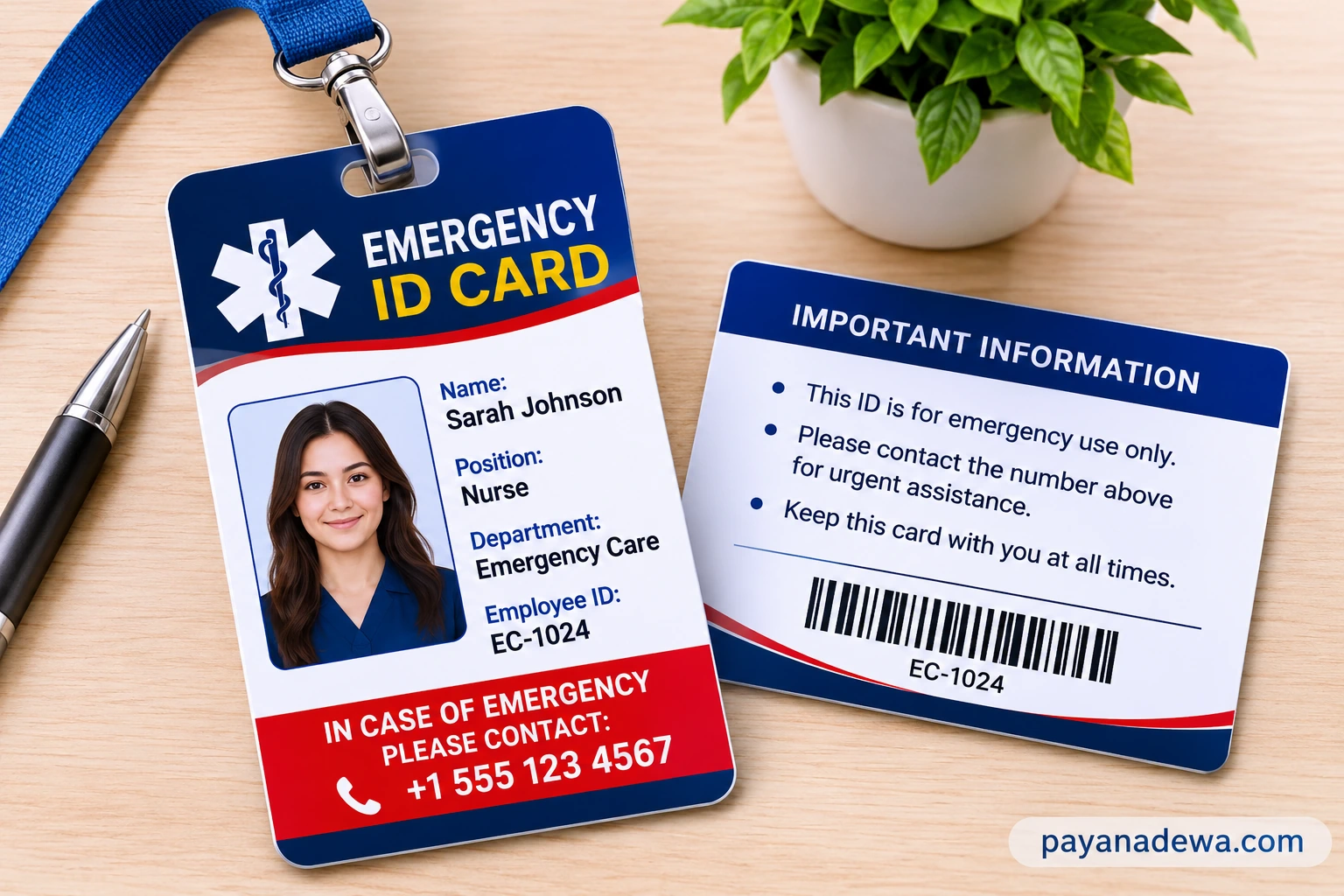
- Include both sides when useful: Place basic identification details on the front and additional information on the back.
- Use durable materials: Consider thicker paper, protective sleeves, or lamination.
A standard wallet-sized format can be convenient, but the dimensions should be selected according to the amount of information and the intended use. Always check the final print size before producing multiple copies.
Here is an example of an emergency identification card layout you can use as a visual reference:
Who Should Carry an Emergency ID Card?
An emergency ID card can benefit people with different lifestyles, occupations, and daily responsibilities.
Students and Children
Parents and guardians may prepare identification cards for children attending school trips, extracurricular activities, or large public events. The card can include a guardian’s contact information and any relevant assistance instructions.
Employees and Workplace Staff
Organizations may use emergency identification cards to help identify employees and provide relevant contact details during workplace incidents. Depending on the environment, additional safety or access credentials may be necessary.
Travelers
Travelers can benefit from carrying an emergency contact card, especially when visiting unfamiliar destinations. Including international dialing codes can make contacting family members easier.
Older Adults
Older adults may find emergency identification cards useful when participating in community activities or traveling independently. The card can include contact details for trusted family members or caregivers.
People With Specific Medical Needs
Individuals with severe allergies, communication difficulties, or other relevant medical considerations may use a medical emergency ID card to communicate essential information when they cannot explain it themselves.
Important Safety and Privacy Tips
Although an emergency ID card can be useful, it is important to protect personal information and use the card responsibly.
- Limit sensitive information: Avoid including unnecessary financial details, passwords, national identification numbers, or other information that could be misused.
- Keep information updated: Replace the card when phone numbers, medical information, or emergency contacts change.
- Verify medical details: Check important health information with an appropriate healthcare professional.
- Protect the physical card: Use a sleeve or laminate to reduce damage from moisture and frequent handling.
- Inform emergency contacts: Make sure the people listed know they are included.
- Consider accessibility: Use readable text and an easy-to-find design.
Remember that an emergency ID card does not guarantee that responders will find it or that every detail will be used. In an immediate emergency, contact local emergency services whenever possible.
Digital Emergency ID Card vs. Printed Emergency ID Card
Both digital and printed emergency identification cards have advantages. Choosing the right option depends on your habits and the situations in which you may need the information.
Printed Emergency ID Card
A printed card is easy to carry in a wallet or attach to a lanyard. It does not require a battery, internet connection, or smartphone access.
However, it must be physically available and should be replaced whenever information changes.
Digital Emergency ID Card
A digital emergency ID card can be stored on a smartphone or within a supported emergency information feature. Depending on the device, certain details may be accessible from the lock screen.
Digital storage can make updating information easier, but access may depend on device settings, battery availability, and compatibility.
For additional convenience, you can maintain both versions. A printed card provides a physical backup, while a digital version makes information easier to update.
How Often Should You Update Your Emergency ID Card?
An emergency identification card is only useful when its information remains accurate. Reviewing it regularly helps prevent problems caused by outdated contact details or incorrect information.
Consider reviewing your card:
- Whenever an emergency contact changes their phone number.
- When relevant medical information changes.
- After moving to a new location.
- Before international travel or major trips.
- When workplace or school details change.
- At least once or twice a year as a general reminder.
For medical information, update the card whenever a significant change occurs rather than waiting for a scheduled review.
Conclusion
An Emergency ID Card is a practical way to keep essential identification and emergency contact information accessible when unexpected situations occur. Whether you are a student, employee, traveler, older adult, or someone with specific medical needs, having a well-organized card can help others understand who you are and whom they should contact.
Creating one is simple: choose a suitable template, enter accurate information, organize important details, and print it in a durable format. Remember to protect your privacy and review the information regularly.
A small card may take only a few minutes to prepare, but it can provide valuable information when communication becomes difficult. Start creating your personalized emergency identification card today and make it part of your everyday preparedness routine.