Compliance Agreement Templates give organizations a clear structure for documenting compliance duties. They help define responsibilities, required standards, reporting steps, records, review procedures, and corrective actions.
A strong template should make the agreement easy to understand. It should also match the relationship between the parties. For example, a vendor agreement needs different details from an employee acknowledgment.
The best approach is simple. Start with a suitable structure. Then adapt each section to the actual business situation.
This guide explains how to choose, customize, and maintain compliance documents. It also shows practical template formats for different business needs.
What Are Compliance Agreement Templates?
Compliance agreement templates are structured documents that help parties record agreed compliance duties. They normally contain placeholders for names, dates, responsibilities, requirements, records, and signatures.
The template does not replace careful review. Instead, it gives the writer an organized starting point.
For example, a template may include sections for scope, compliance obligations, reporting, monitoring, confidentiality, corrective action, and termination.
This structure helps prevent important subjects from being overlooked. It also makes later reviews easier.
Why Use a Compliance Agreement?
A written agreement creates a shared understanding of responsibilities. Each party can see what it must do and what information it must provide.
Moreover, written terms can support consistent business processes. Teams can use the same structure when they manage several similar relationships.
A compliance agreement can also clarify reporting duties. It can explain who receives a report and what details the report should contain.
In addition, it can define review procedures. That may include document checks, certifications, assessments, or periodic confirmations.
- Clarifies responsibilities
- Defines compliance expectations
- Organizes reporting duties
- Supports consistent recordkeeping
- Creates a clear review structure
- Helps identify corrective actions
Key Sections in a Compliance Agreement
A useful agreement starts with a clear structure. Each section should have a specific purpose.
Parties and Effective Date
Identify every party correctly. Include the legal business name and relevant contact details.
Next, state the effective date. This date helps establish when the agreed duties begin.
Purpose and Scope
The purpose section should explain why the agreement exists. The scope should define the activities covered by the document.
Clear scope language reduces confusion. It also helps teams decide whether a specific activity falls within the agreement.
Compliance Duties
This section should describe the actual duties. Avoid relying only on broad phrases such as “follow all requirements.”
Instead, describe practical actions. For example, a supplier may need to maintain records, protect confidential information, report incidents, and cooperate with reviews.
Reporting Requirements
Reporting terms should explain what must be reported. They should also identify the correct contact or department.
When a specific reporting period matters, state it clearly. Use language that readers can understand without additional interpretation.
Records and Evidence
A compliance commitment becomes easier to manage when the parties know what evidence they should retain.
Possible records include training acknowledgments, certifications, assessment results, incident records, review notes, and corrective action records.
Monitoring and Review
Some relationships need periodic reviews. The agreement can describe how those reviews work.
For example, a company may request documentation once a year. Another relationship may need more frequent checks.
Corrective Action
A useful document should explain what happens after a compliance issue appears.
Possible actions include investigation, remediation, additional training, process changes, or a follow-up review.
Compliance Agreement Templates for Business
Compliance agreement templates for business can support many relationships. They may cover vendors, contractors, service providers, partners, consultants, or internal teams.
The right structure depends on the risks involved. A company should not use the same wording for every relationship.
For example, a technology provider may need stronger information security terms. A supplier may need quality and inspection terms. A consultant may need confidentiality and reporting duties.
Therefore, begin with the business relationship. Then identify the compliance duties that matter most.
Compliance Agreement Templates for Small Business
Compliance agreement templates for small business should remain practical. Small teams often need clear documents without unnecessary complexity.
Start by listing the activities that create meaningful compliance concerns. Consider customer information, employee records, financial processes, suppliers, contractors, safety, and confidential information.
Next, assign responsibility for each important duty. Make the responsible party clear.
Finally, decide what evidence the business will retain. Keep the record requirements realistic and useful.
- Identify the parties
- Define the business relationship
- List relevant compliance duties
- Assign responsibility
- Define reporting procedures
- Set review intervals
- Record corrective actions
Compliance Agreement Templates for Employees
Compliance agreement templates for employees often focus on internal policies and workplace responsibilities.
Common topics include confidentiality, information security, ethical conduct, conflicts of interest, records, reporting, and policy acknowledgment.
The document should match the employer’s actual policies. It should not create requirements that employees cannot locate or understand.
For example, an acknowledgment can identify the policies reviewed by the employee. It can also explain where employees should raise compliance questions.
Keep employee agreements concise. Use short sections and direct language.
Compliance Agreement Templates for Healthcare
Compliance agreement templates for healthcare require careful customization. Healthcare relationships can involve sensitive information, privacy duties, security controls, and sector-specific requirements.
A healthcare document should identify the exact relationship. A provider, contractor, supplier, and business associate may have different responsibilities.
Data handling deserves particular attention. The agreement should state which information the other party may access and how that information should be protected.
Reporting terms also matter. The parties should understand how they will communicate suspected incidents or compliance concerns.
Healthcare organizations should also review the document against current sector requirements. A general template cannot automatically satisfy every healthcare relationship.
Compliance Agreement Sample Structure
A useful compliance agreement sample should demonstrate a logical document flow. Readers should understand the relationship from the first page.
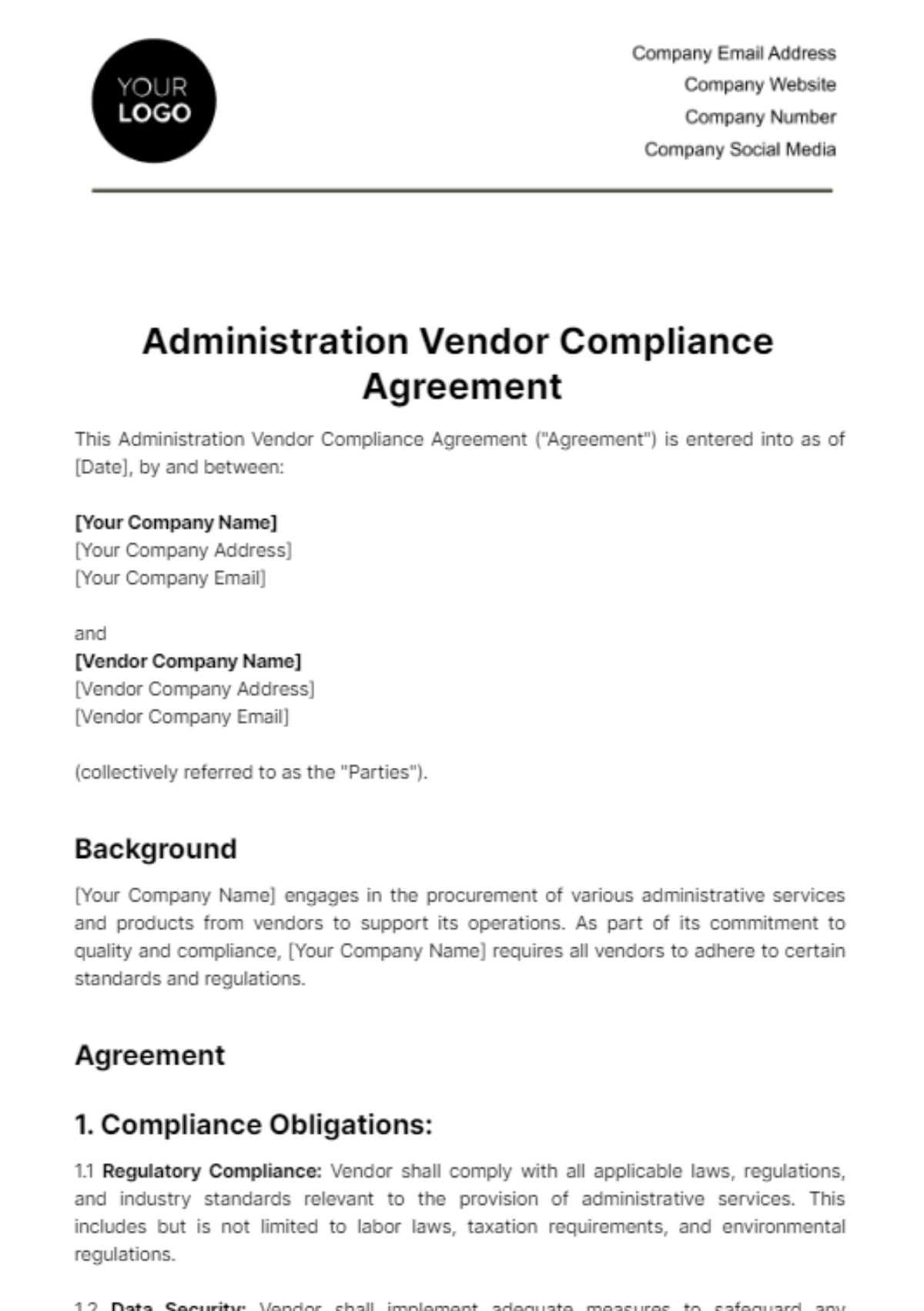
A simple structure can include the following sections:
- Agreement title
- Parties
- Effective date
- Purpose
- Scope
- Definitions
- Compliance responsibilities
- Reporting
- Records
- Monitoring
- Corrective action
- Term and termination
- Signatures
This structure works as a starting point. However, each section should reflect the actual relationship.
Compliance Agreement Form Design
A compliance agreement form should make completion simple. Use clear labels for names, dates, roles, and signatures.
Keep the visual hierarchy consistent. Use headings for major sections and numbered clauses for detailed obligations.
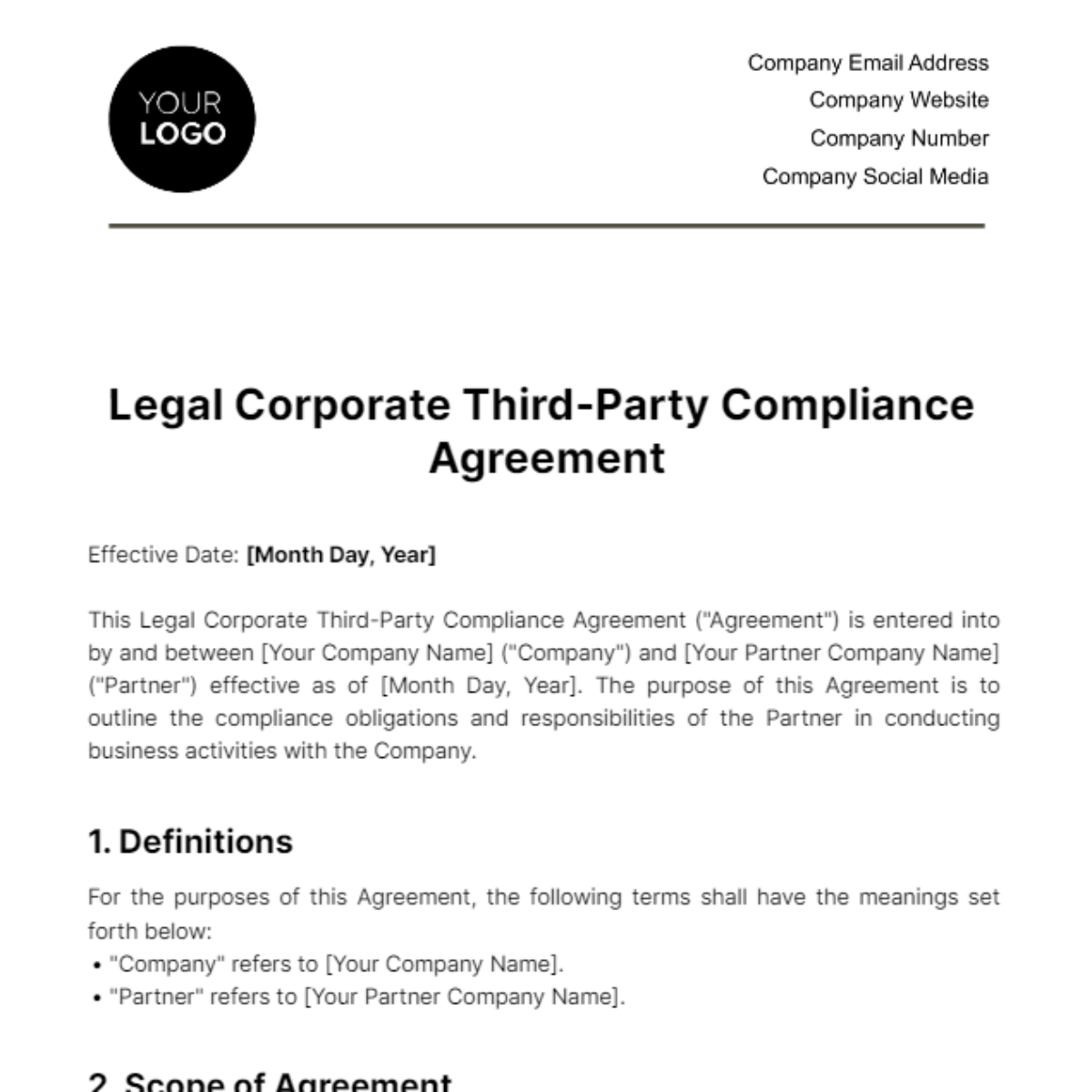
Leave enough space for information that users must enter. Crowded fields can lead to mistakes.
Also, keep related information together. For example, party information should appear near the beginning.
Compliance Agreement Templates Word and PDF Formats
Many organizations search for compliance agreement templates word because editable documents make customization easier.
An editable format can support changes to headings, fields, clauses, and signature sections. However, every change should receive the proper review.
Organizations also search for compliance agreement templates pdf when they need a fixed document layout.
A PDF can preserve the appearance of the final document. It can also support consistent recordkeeping after the wording receives approval.
The phrase compliance agreement pdf often refers to a completed document or a template saved in PDF form. Always check whether the document is a draft, a sample, or an approved organizational form.
How to Customize a Template
Customization should begin with the actual purpose. Do not edit random fields first.
Define the Relationship
Identify the parties and describe their roles. Then explain the services, activities, or responsibilities covered by the agreement.
Identify Relevant Requirements
List the requirements that actually affect the relationship. Separate legal duties from internal rules and contractual expectations.
This distinction improves clarity. It also helps reviewers understand why each requirement appears.
Assign Responsibilities
Each major duty should have an owner. Avoid vague language when a specific responsibility can be assigned.
For example, identify who maintains records. Then identify who receives incident reports.
Define Evidence
Decide how the organization will confirm compliance. The evidence should relate directly to the obligation.
For instance, training duties may require acknowledgment records. Supplier controls may require assessment records.
Review the Final Document
Read the document from the user’s perspective. Can each party identify what it must do?
Next, compare the document with internal policies and the main contract. Remove conflicts before approval.
Common Mistakes With Compliance Templates
Using the Same Template for Every Relationship
Different relationships create different risks. A single document rarely fits every situation.
Writing Vague Obligations
Broad language may sound strong. However, it can create uncertainty during daily operations.
Instead, describe the action, responsible party, evidence, and reporting path.
Ignoring Updates
Business relationships change over time. Internal policies can change too.
Therefore, schedule periodic reviews. Also review the agreement after major changes to services, systems, suppliers, or responsibilities.
Adding Unnecessary Clauses
More clauses do not always create a better document. Unrelated requirements can make the agreement harder to use.
Keep the document focused. Every major clause should support the purpose of the agreement.
Practical Solution
The most practical workflow starts with risk and ends with a controlled document.
First, identify the relationship. Then list the activities covered by the agreement.
Next, identify the compliance duties linked to those activities. Separate mandatory requirements from internal preferences.
- Identify the parties.
- Define the purpose.
- Set the scope.
- List the relevant duties.
- Assign responsibility.
- Define reporting steps.
- Identify evidence.
- Set review procedures.
- Define corrective actions.
- Complete approval and signatures.
After approval, keep one authoritative version. Limit uncontrolled copies.
Next, give relevant staff clear instructions. Explain where they can find the agreement and related policies.
Finally, schedule a review. A review can confirm that the document still matches the business relationship.
How to Keep Compliance Agreements Useful
A template should support an ongoing process. It should not become a forgotten document after signing.
Assign an owner for the agreement. That person can coordinate reviews and track changes.
Keep related policies easy to locate. The agreement should point readers toward the correct internal requirements.
Use consistent naming and version control. This approach helps teams identify the current document.
Also, record important changes. A short change history can explain why the agreement changed.
For larger organizations, separate document ownership from operational ownership. One team may maintain the document. Another team may perform the daily controls.
This separation can improve accountability. It also makes review responsibilities clearer.
Final Checks Before Using a Template
Before using any compliance document, review the names, dates, scope, duties, and signature fields.
Check every placeholder. Remove examples that do not apply.
Next, confirm that the wording matches the actual relationship. Do not promise controls that the organization does not operate.
Then, check related policies. The agreement should not contradict them.
Finally, consider professional review for complex or high-risk relationships. A template provides structure, but the final wording should fit the specific legal and operational context.
Reference Examples
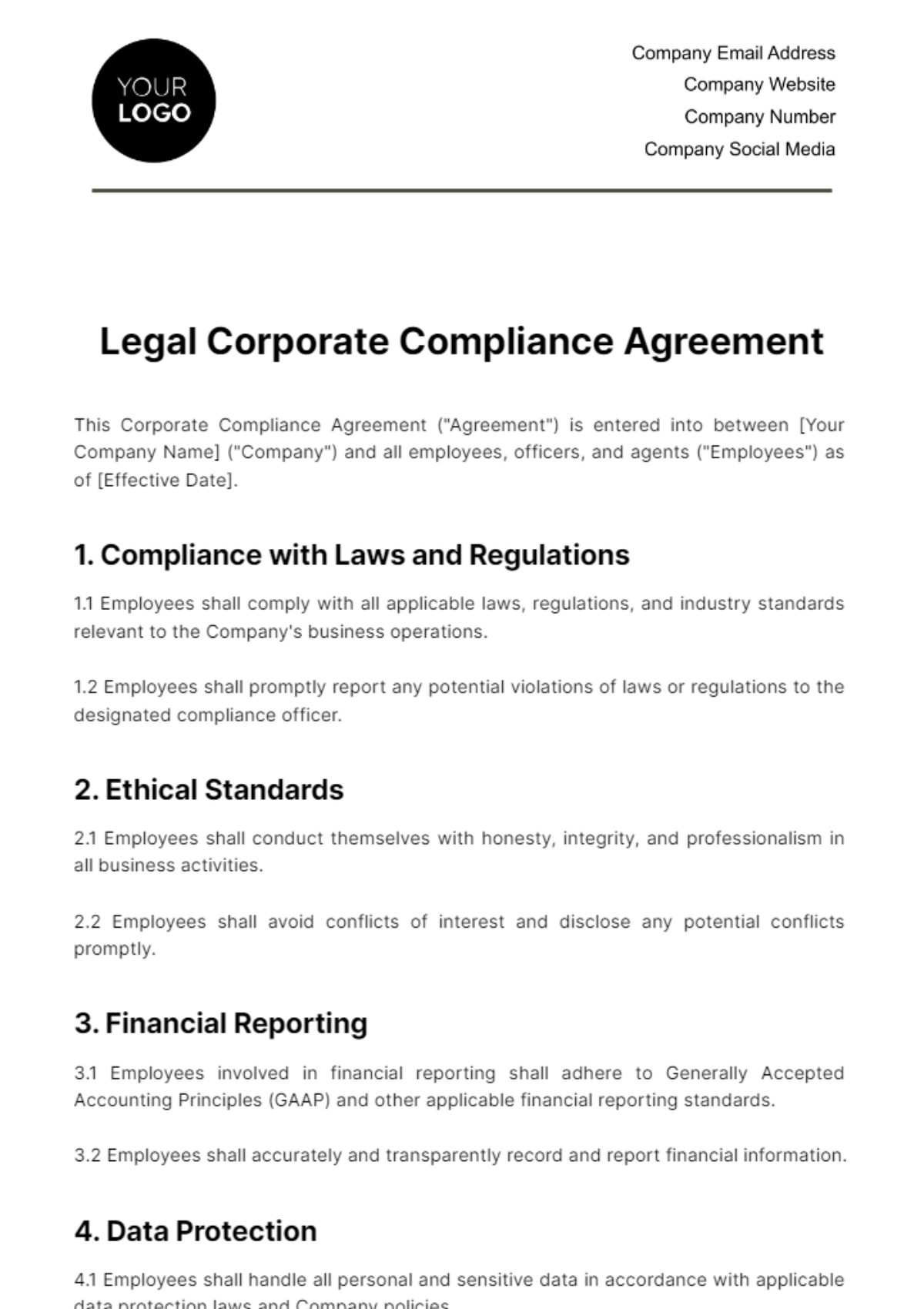
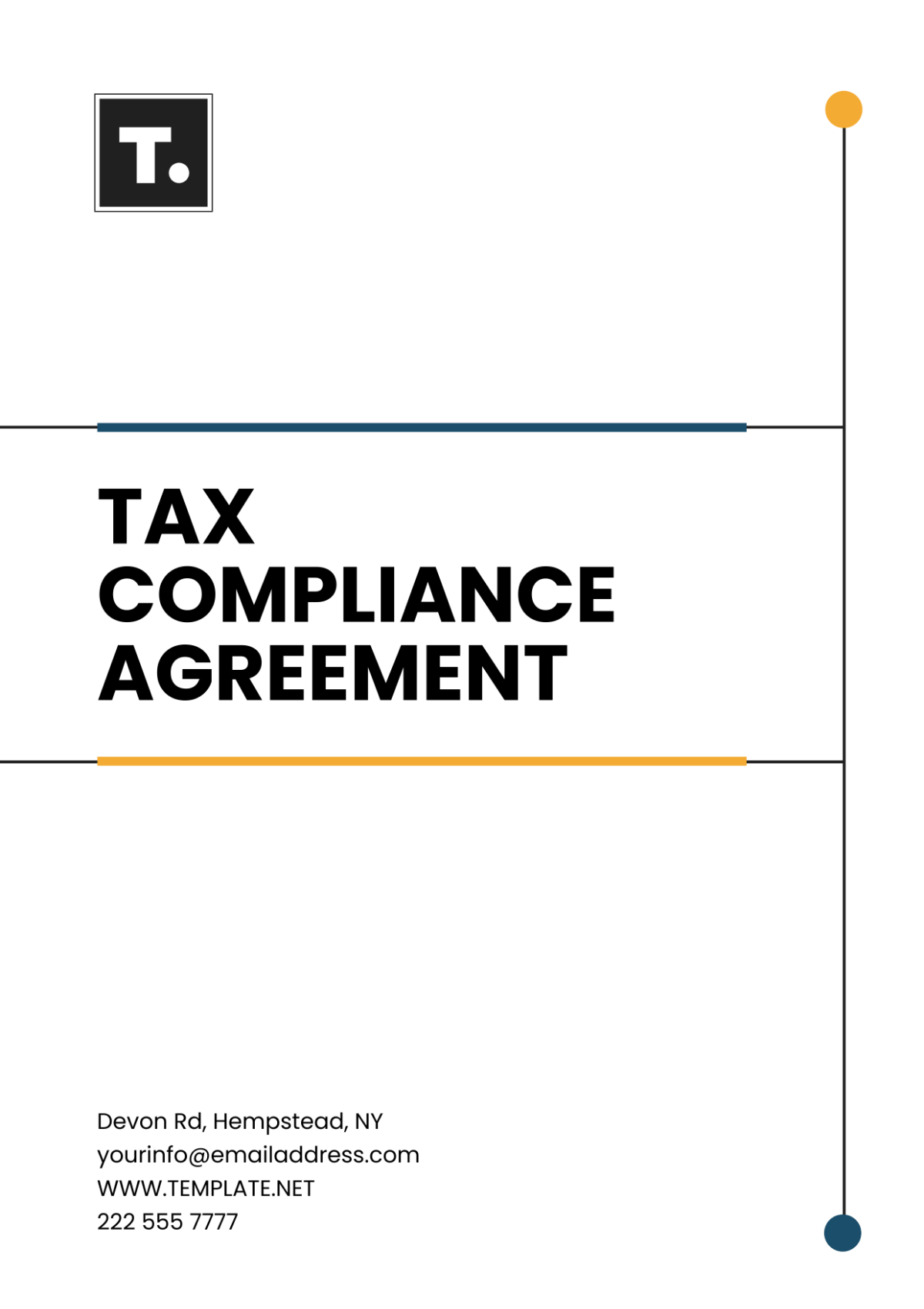
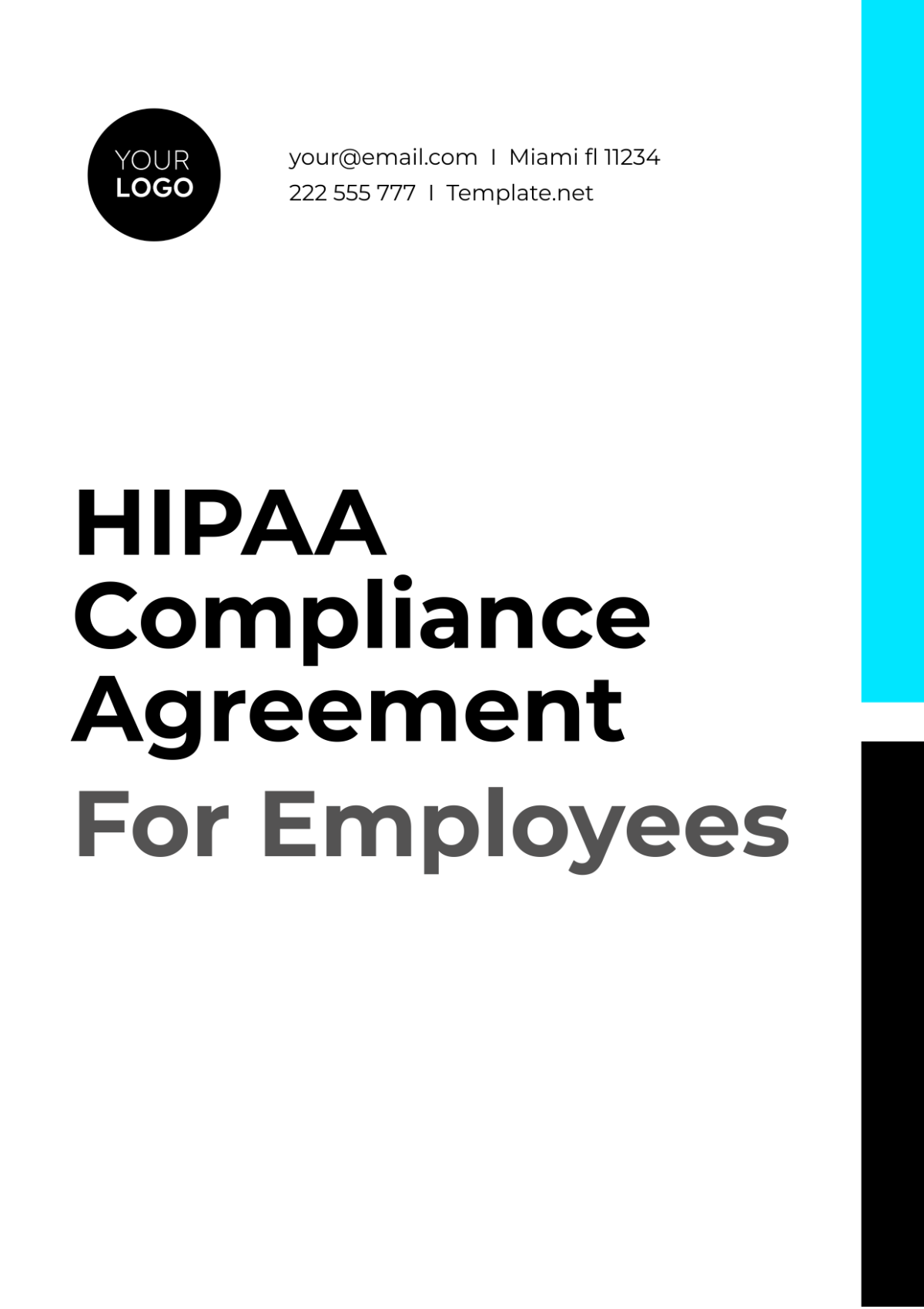
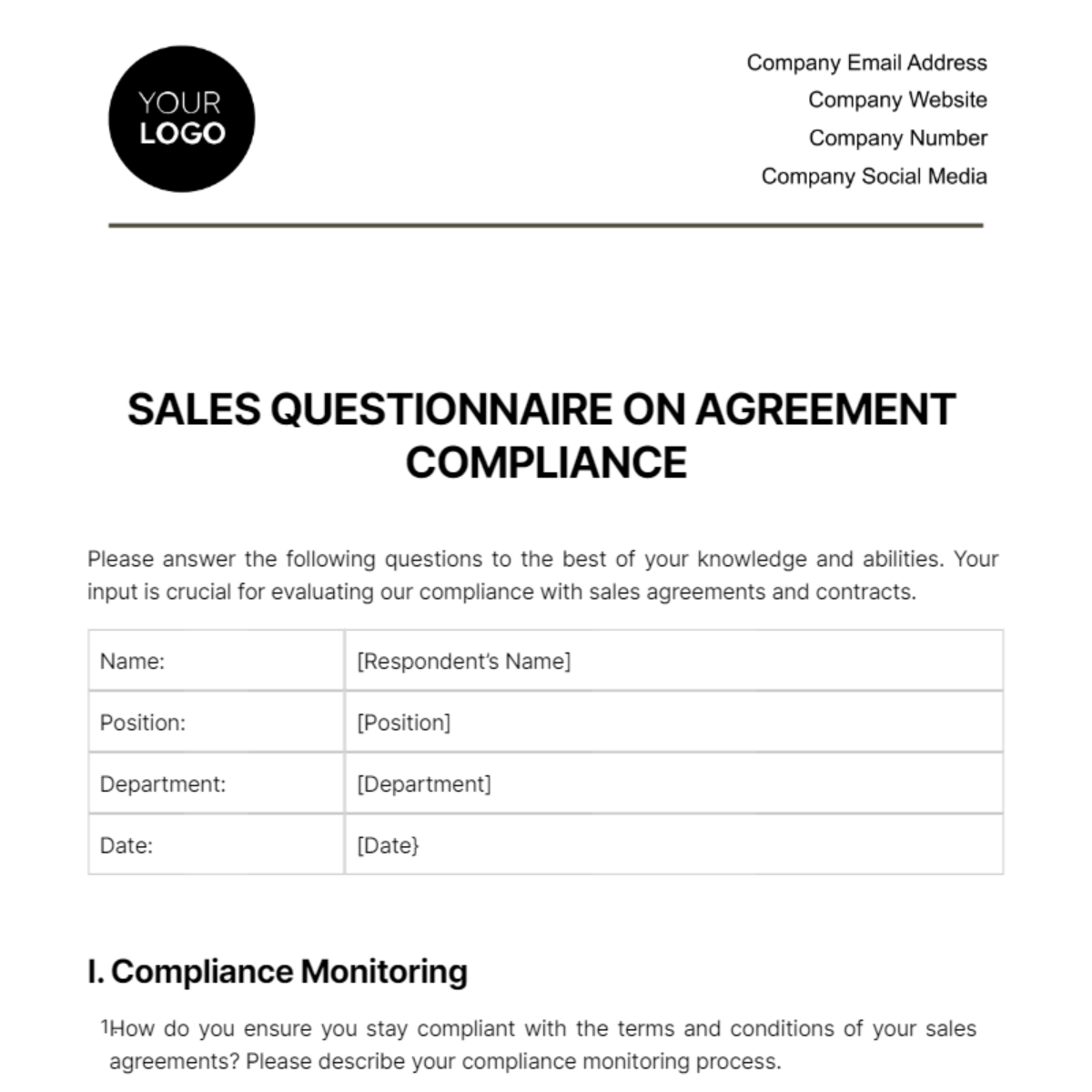
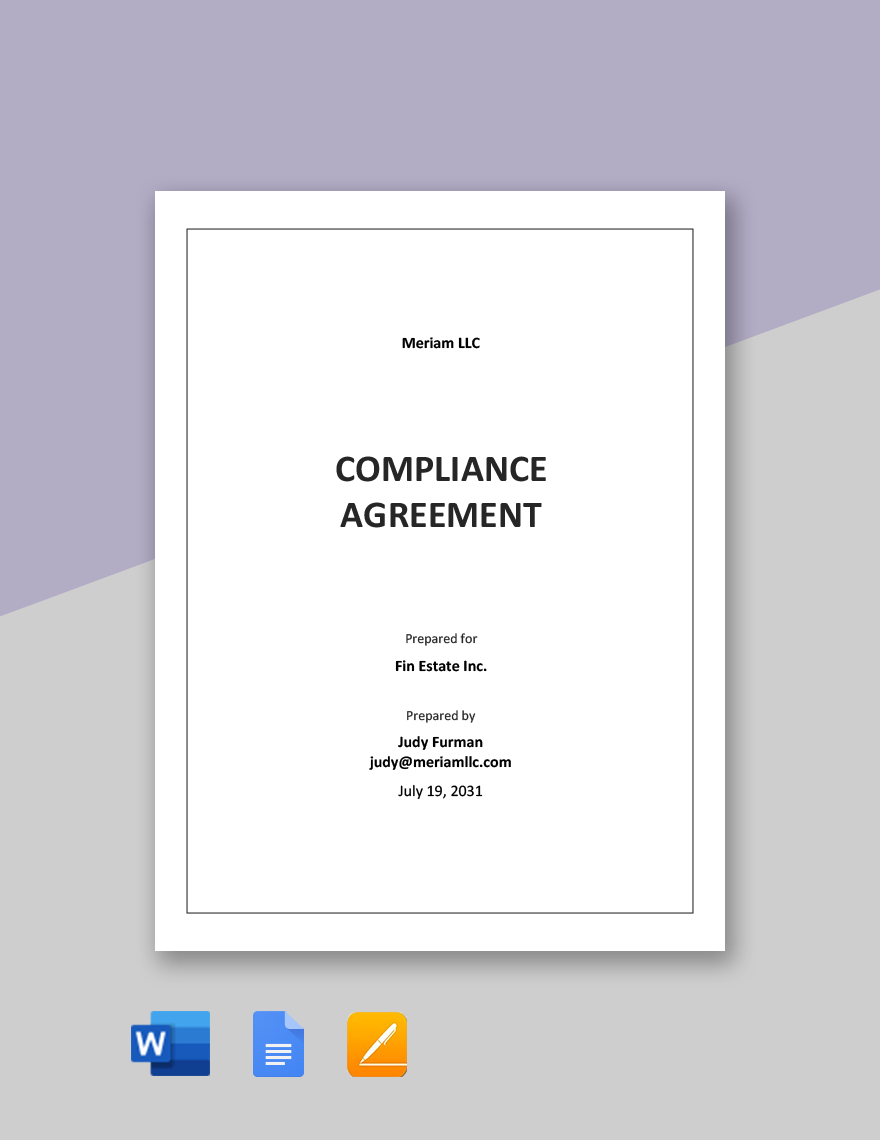
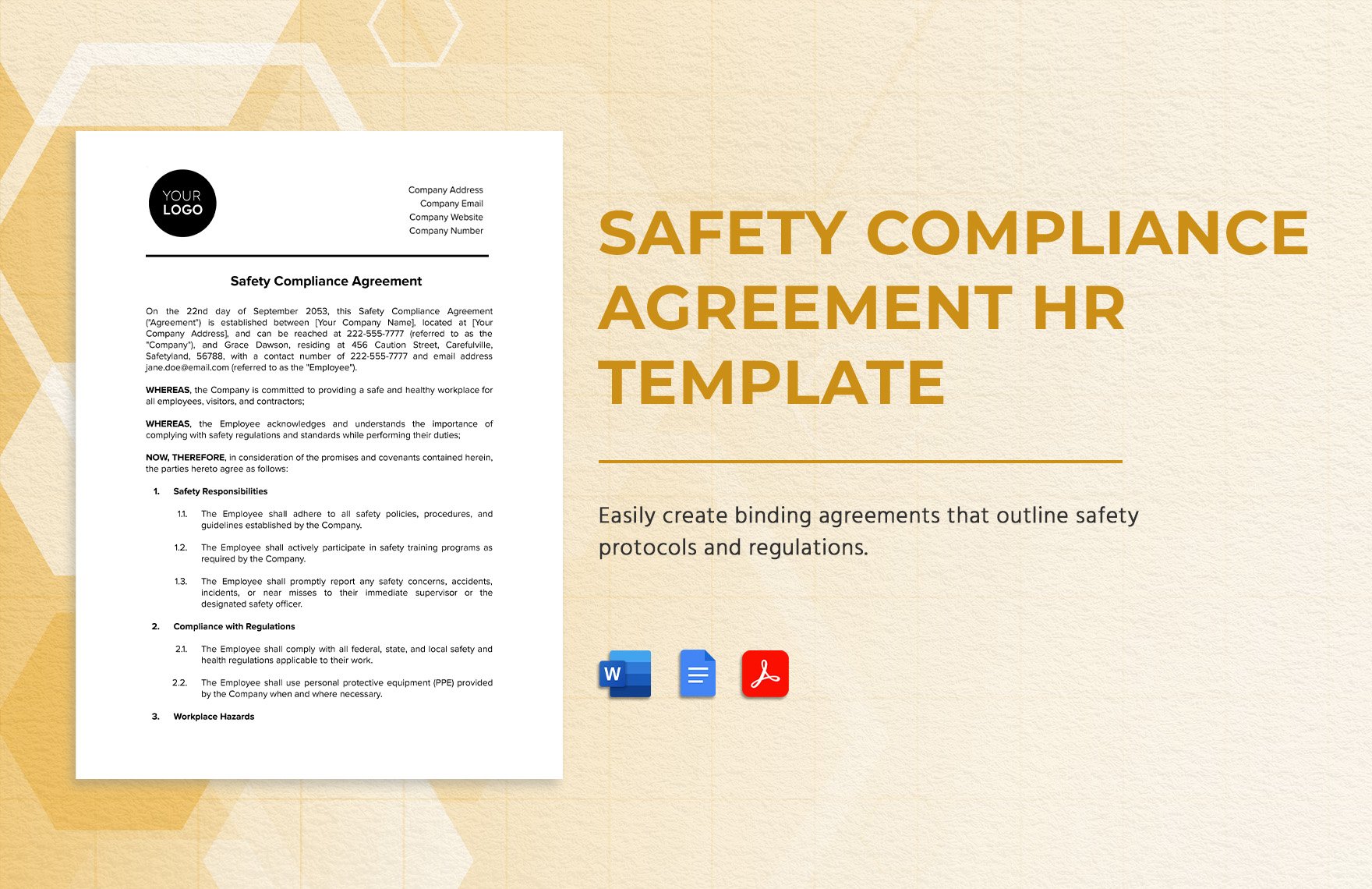
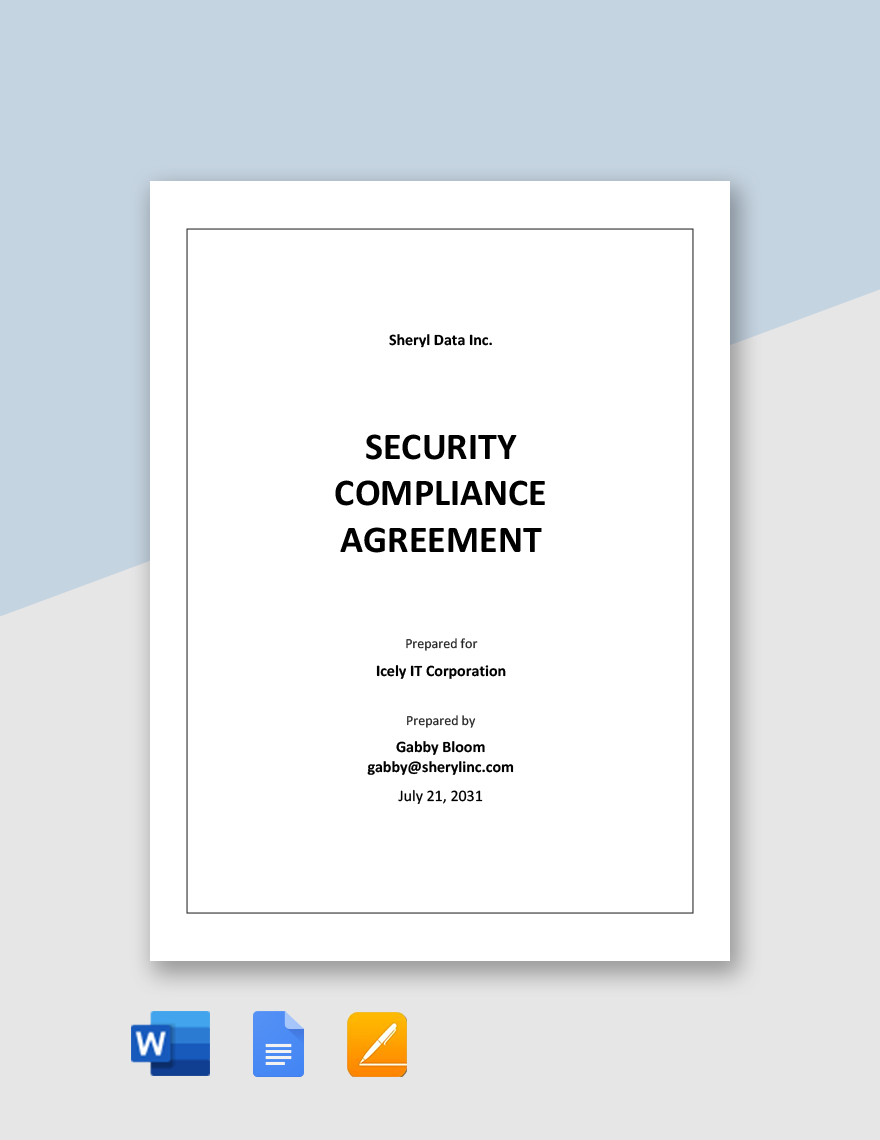
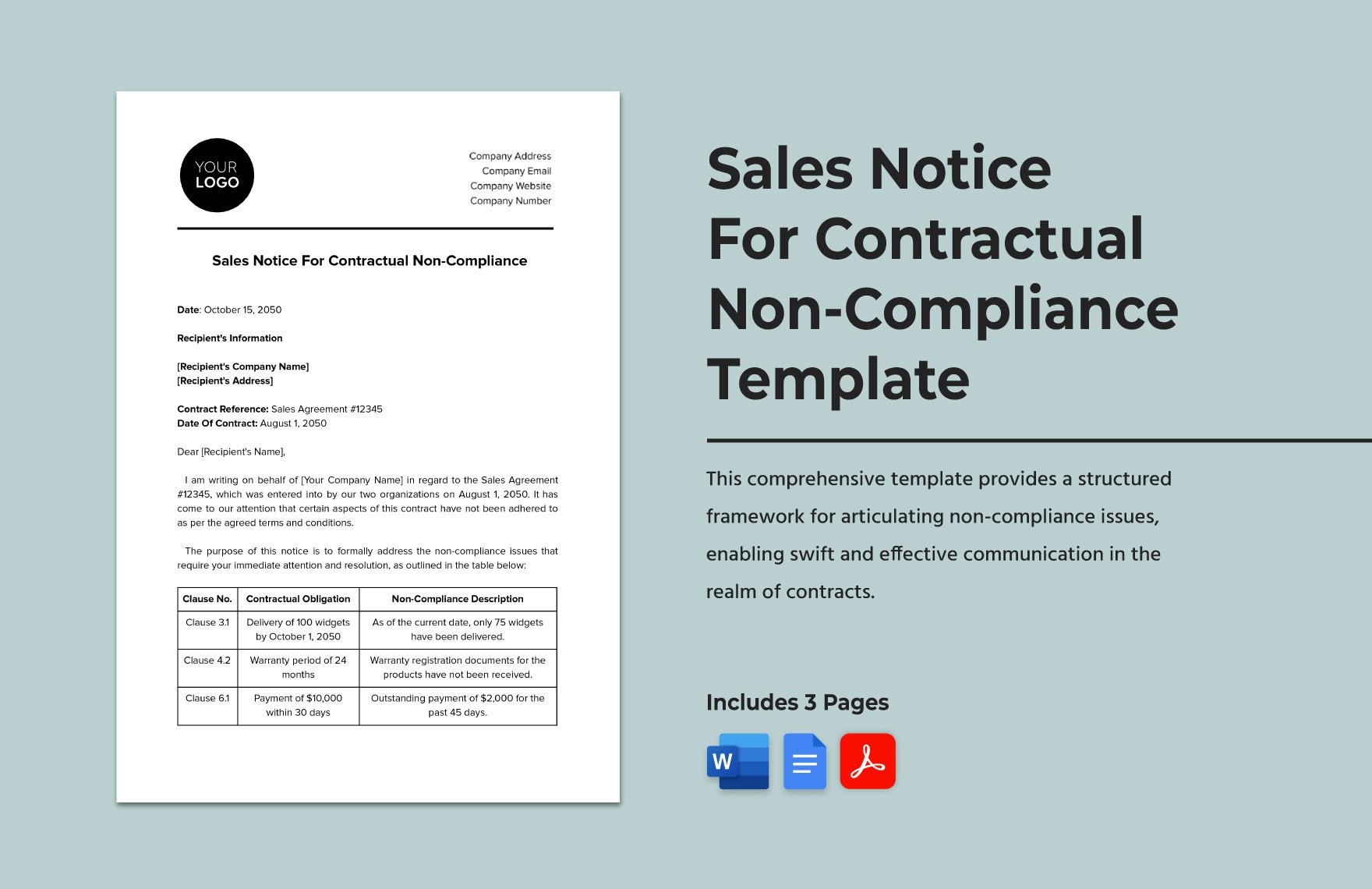
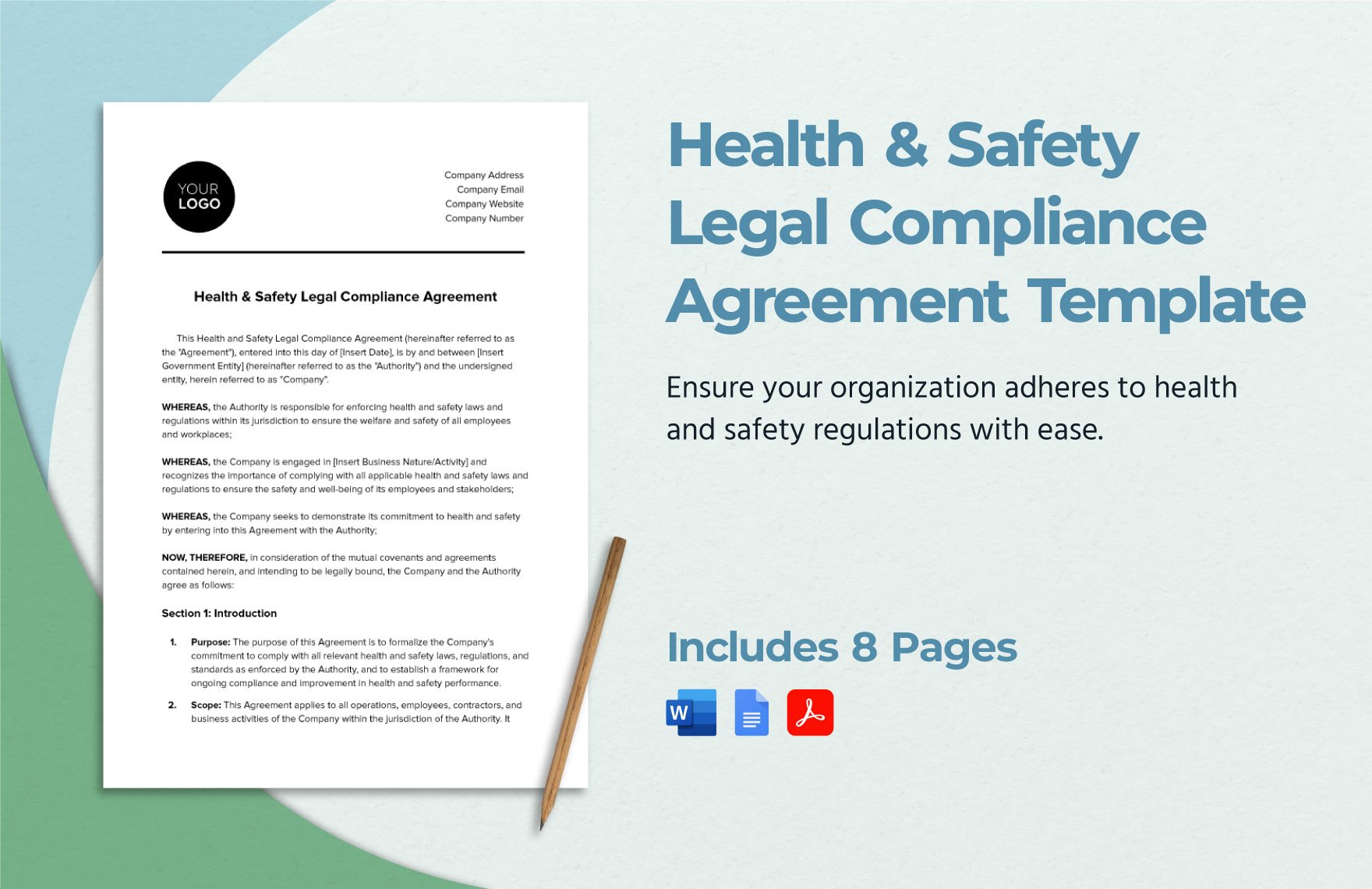
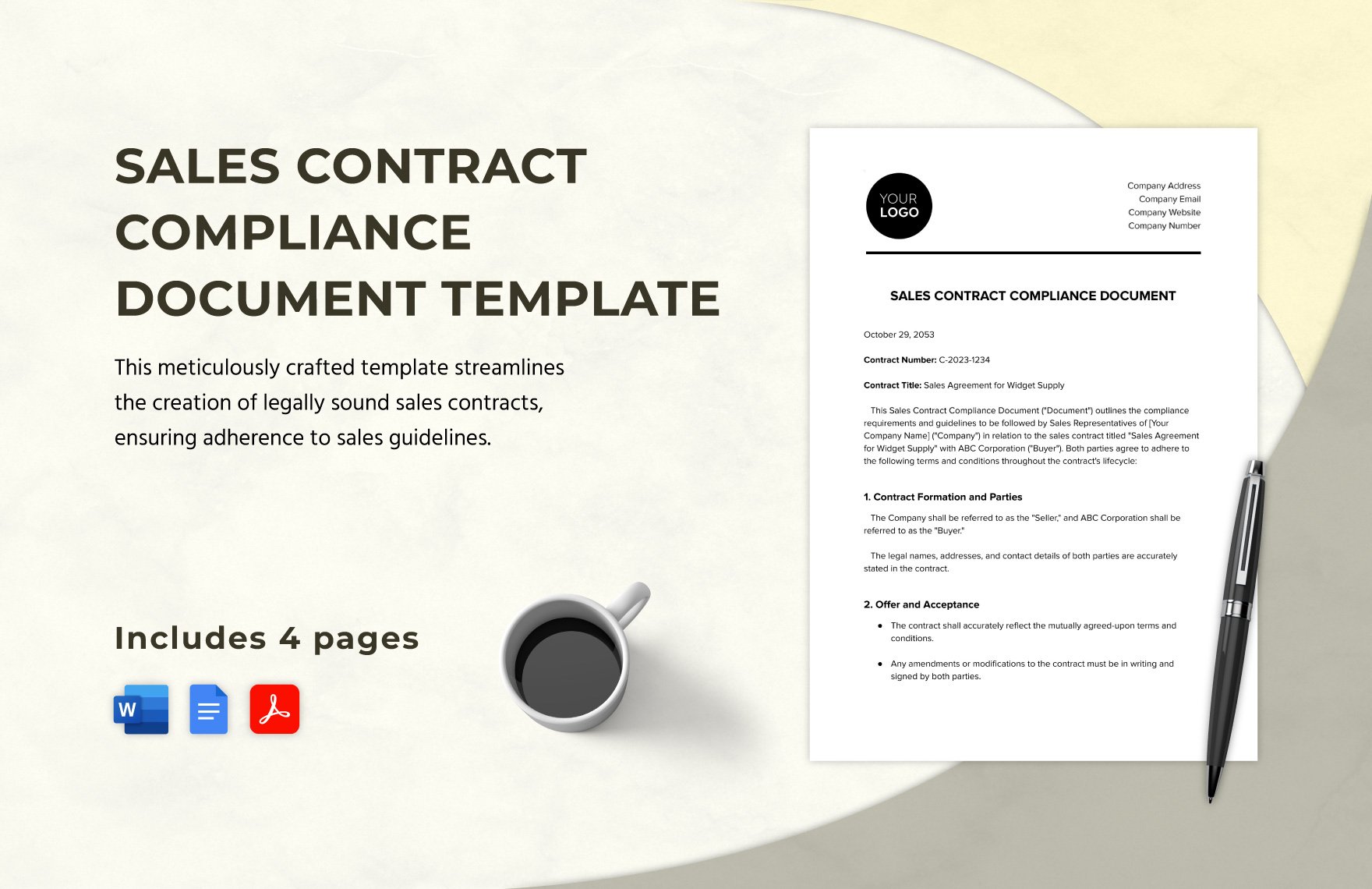
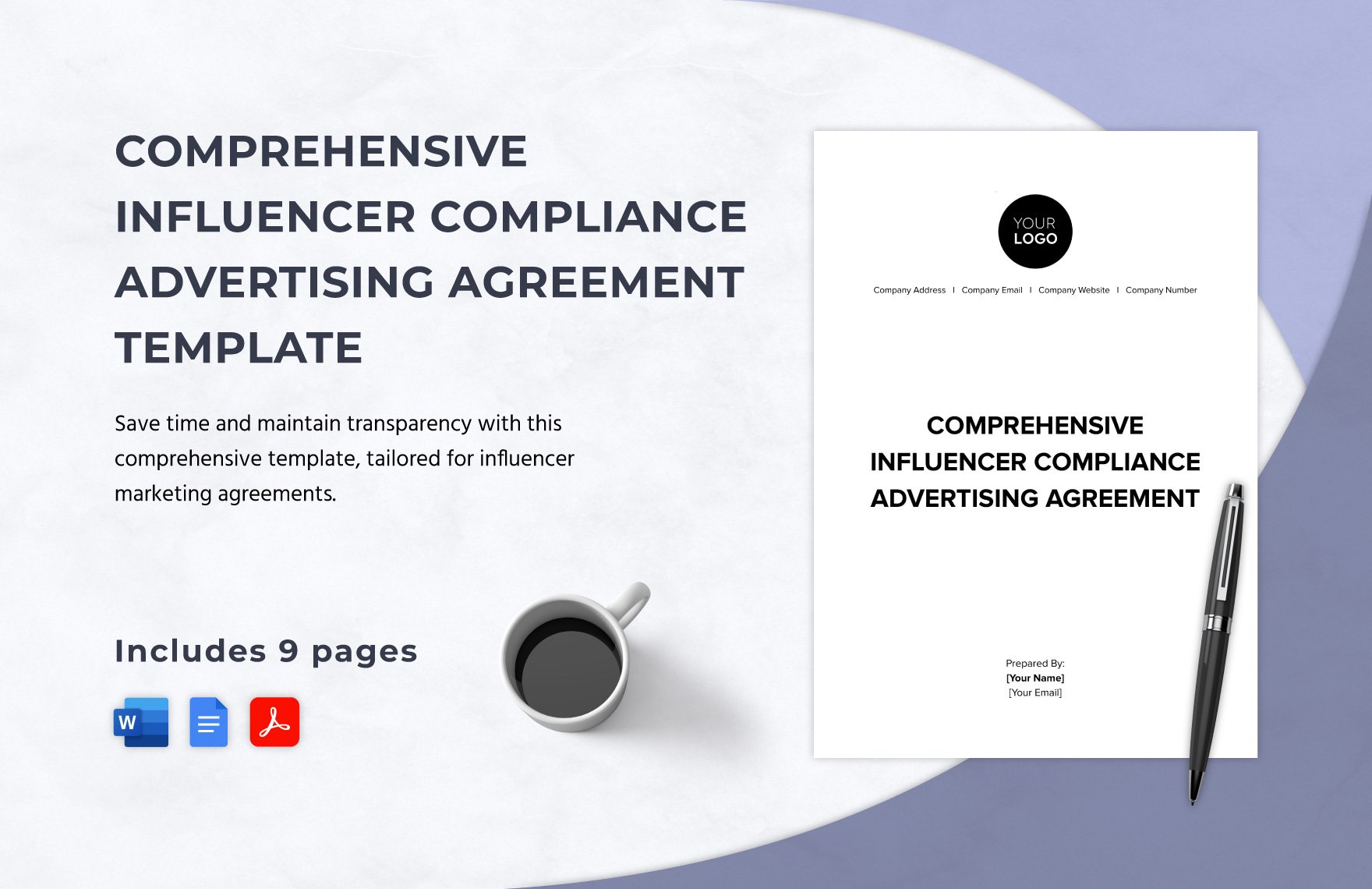
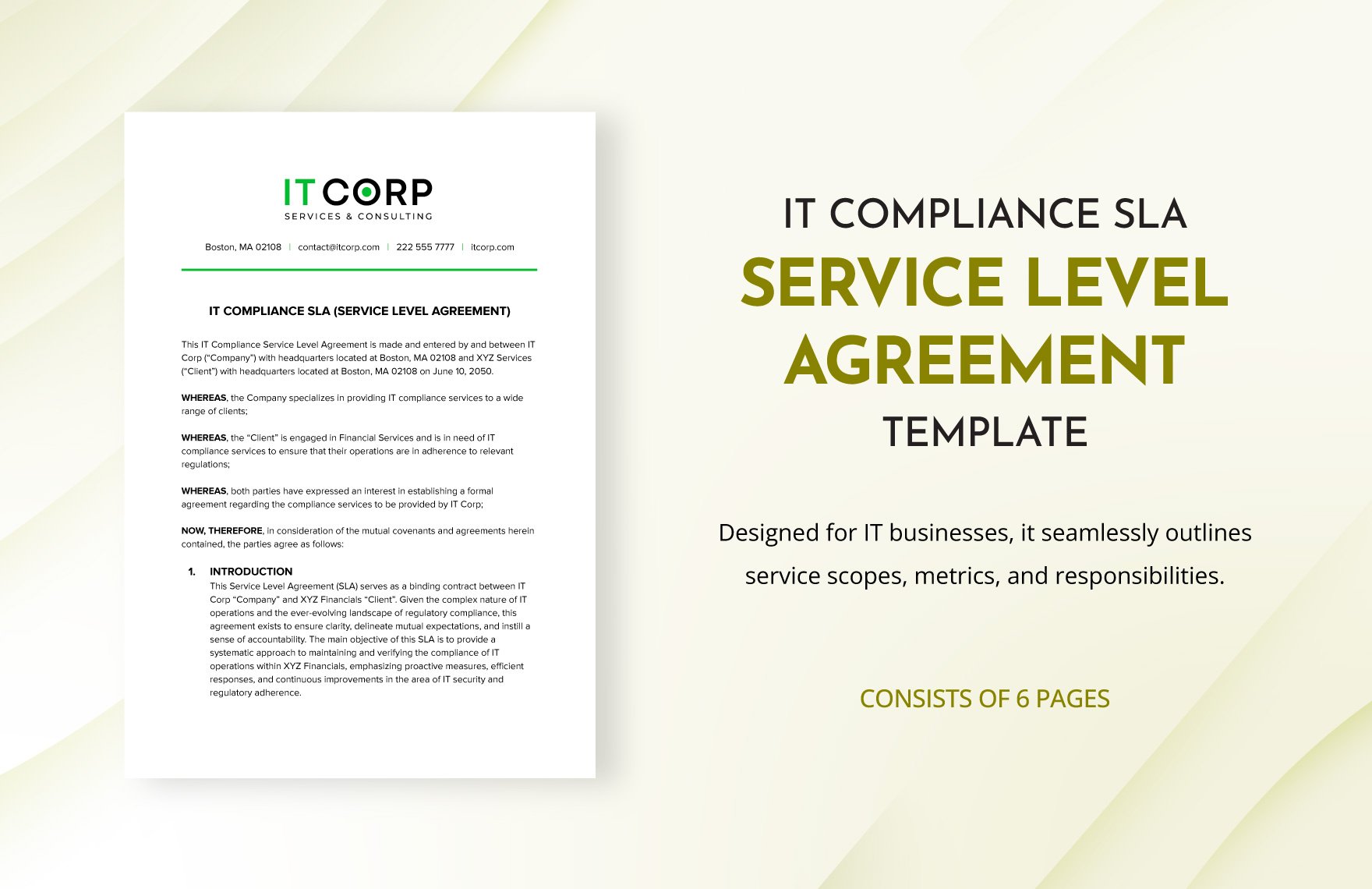
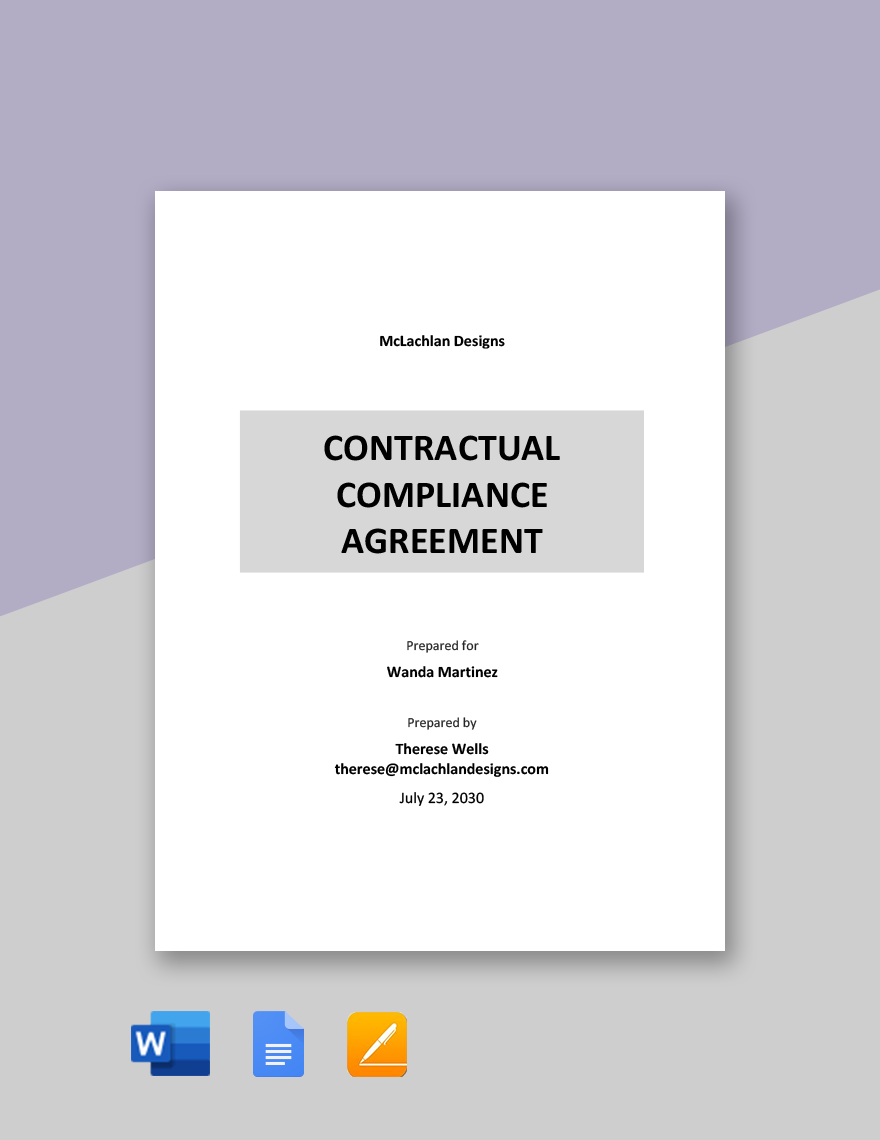
Compliance Agreement Templates can take many visual forms. Some use a simple cover page and numbered clauses. Others place the agreement directly on the first page. The examples below focus on template layouts, headings, fields, clause organization, and document hierarchy. They show how different compliance documents can present responsibilities in a clear format. These visuals work as design references. They do not represent one universal structure for every organization, industry, or jurisdiction.
The references also show why layout matters. A good template makes key information easy to find. It separates the parties, scope, duties, reporting terms, and signature details. Some examples use formal layouts. Others use modern cover designs. Reviewing several formats can help you choose a structure that matches your organization. The goal is not to copy a design exactly. Instead, use the visual structure to create a document that remains clear, focused, and practical.
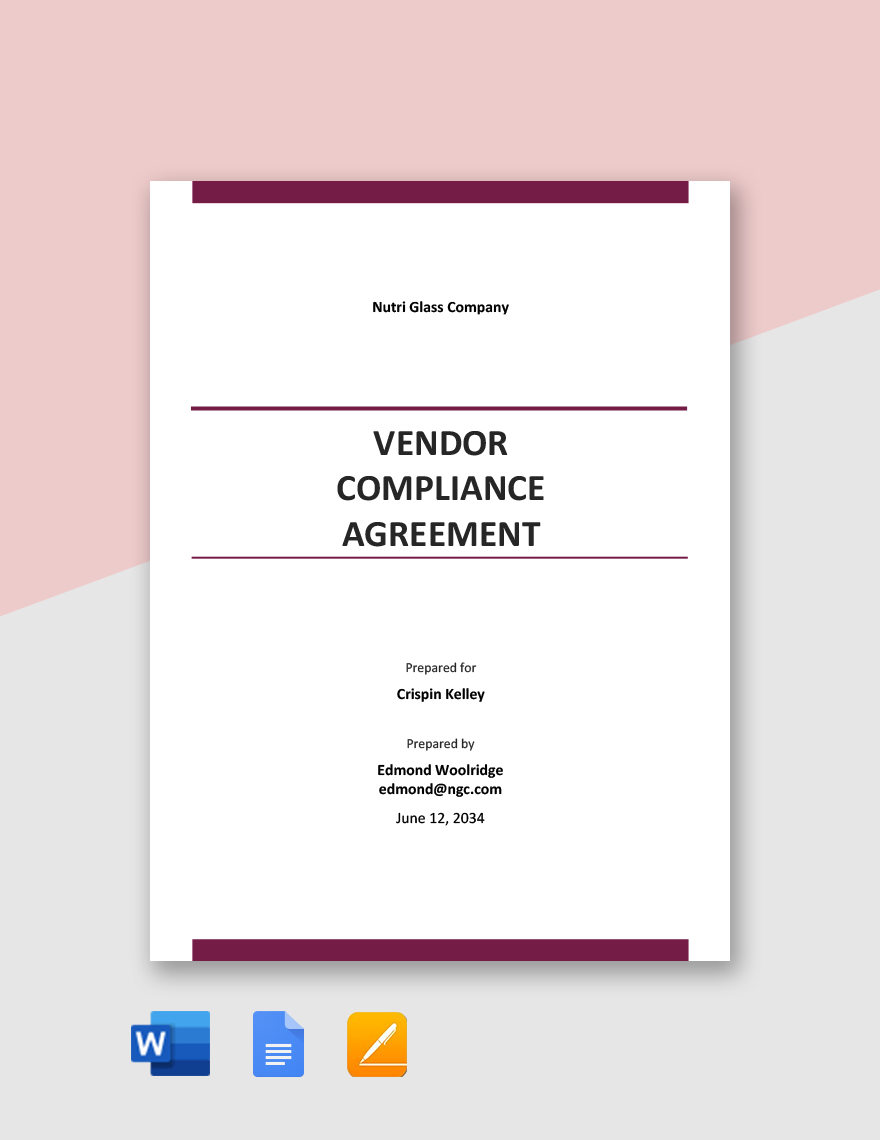
Vendor Compliance Agreement Template
Source: Template.net
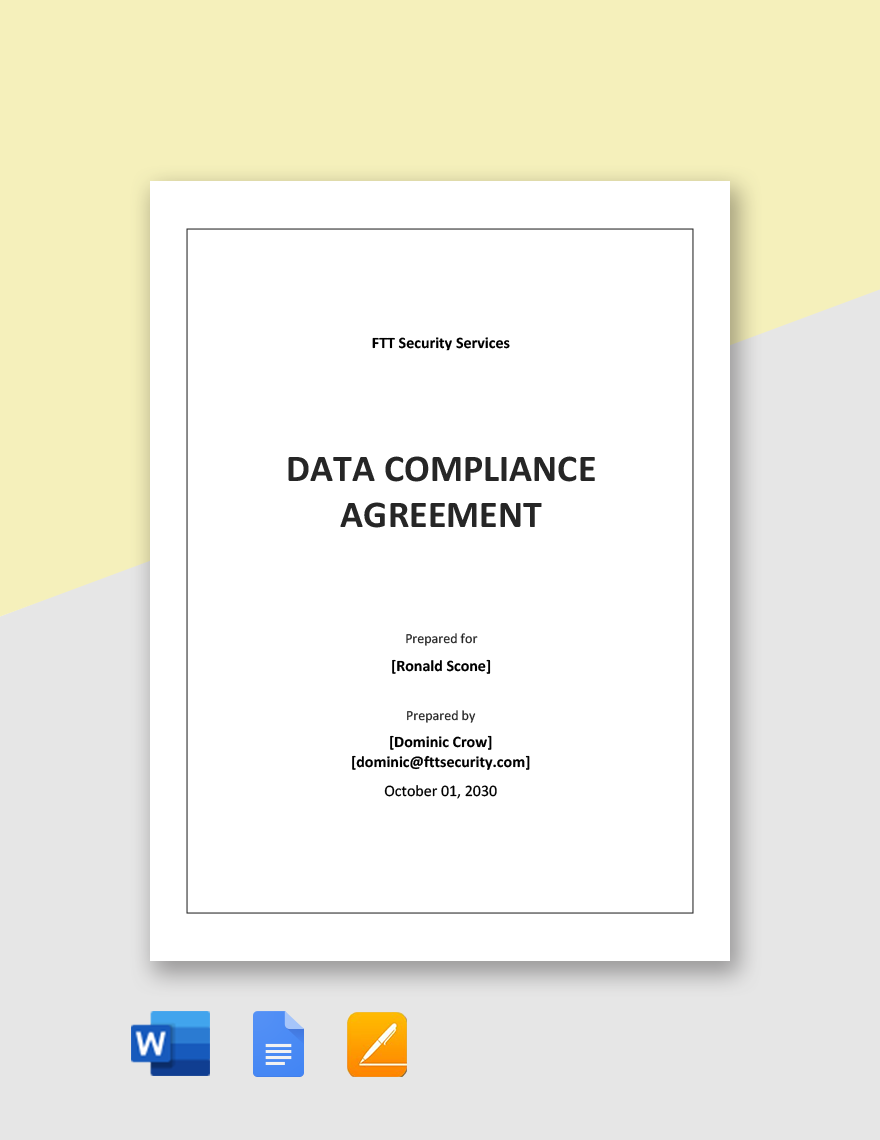
Data Compliance Agreement Template
Source: Template.net
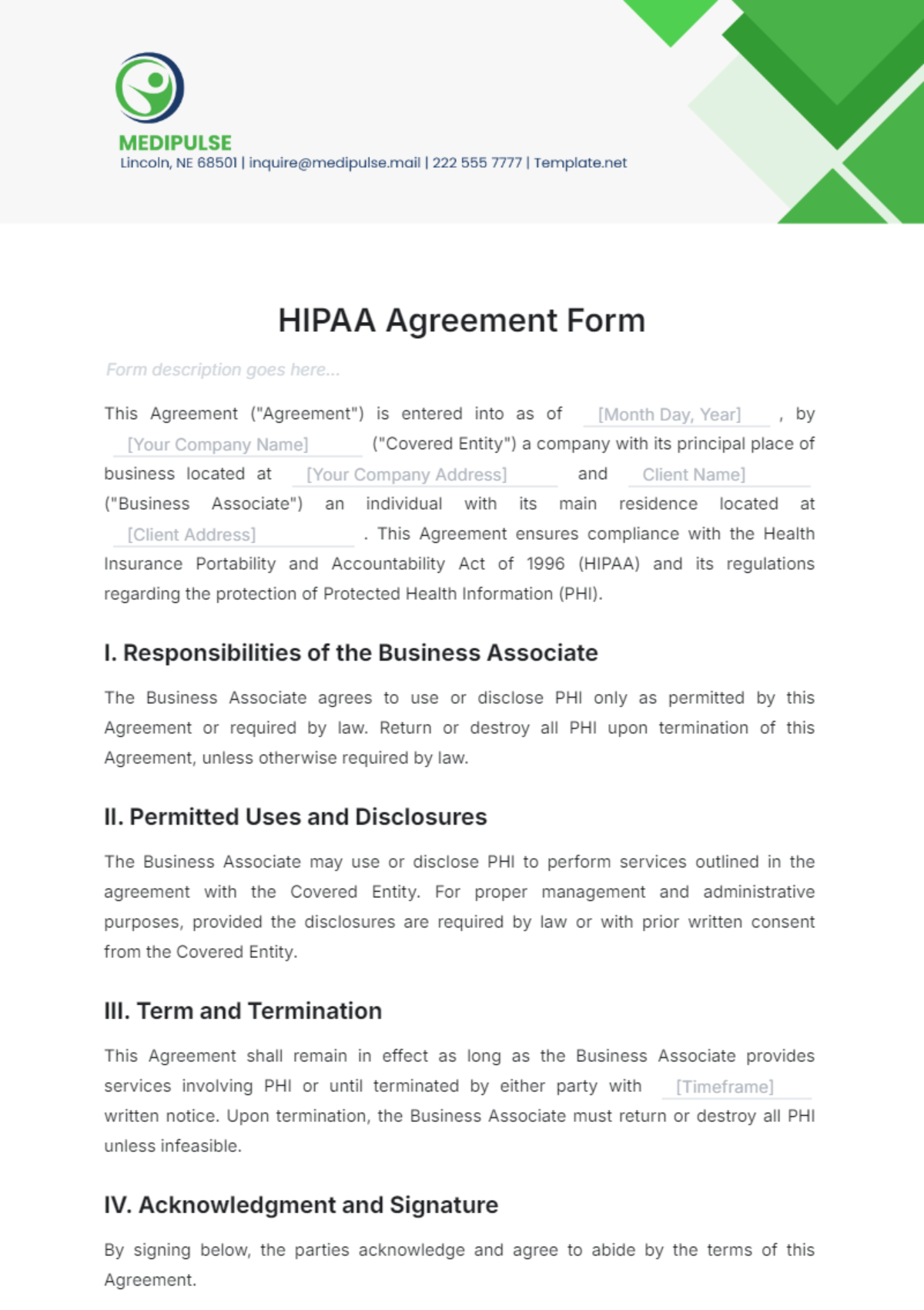
HIPAA Agreement Form Template
Source: Template.net
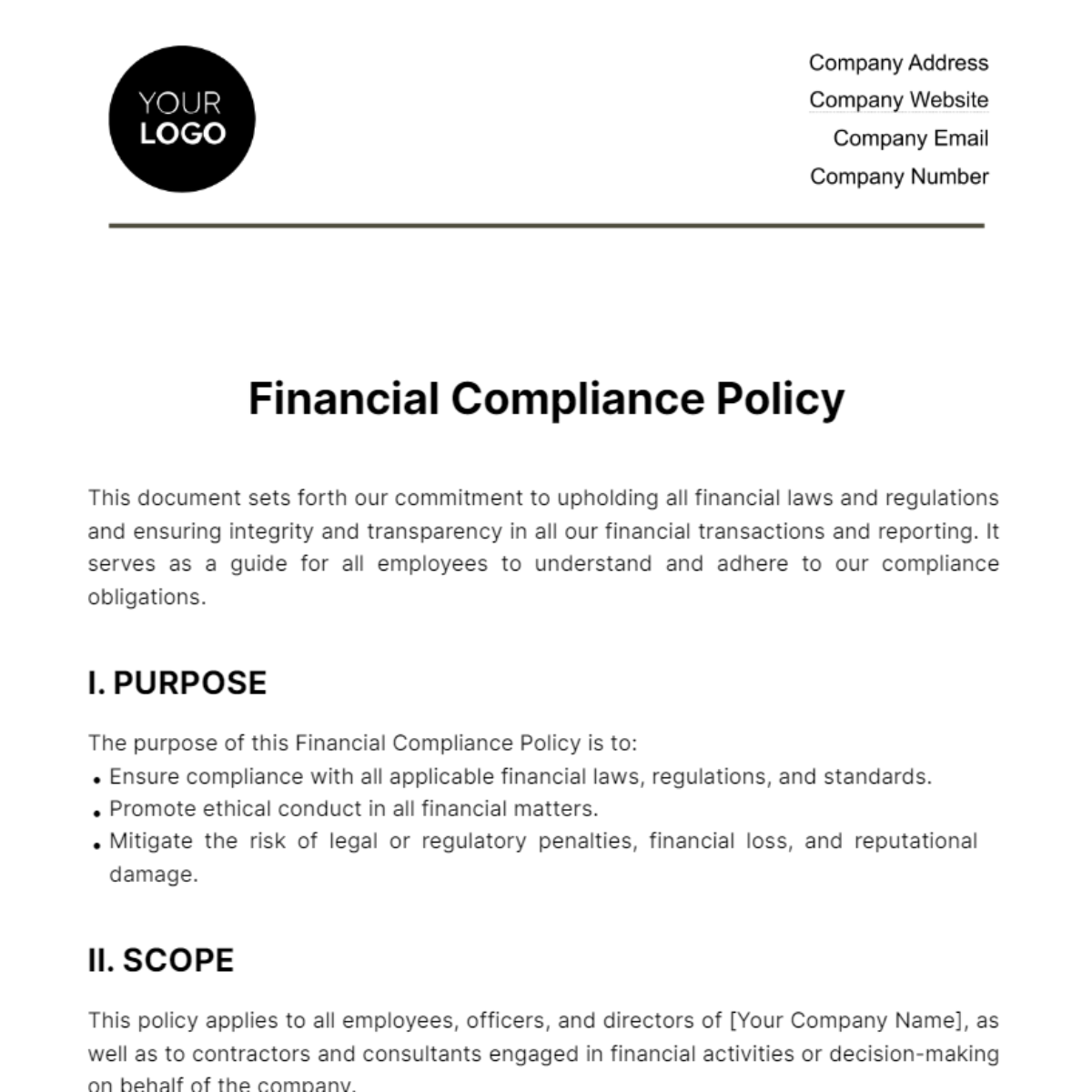
Financial Compliance Policy Template
Source: Template.net
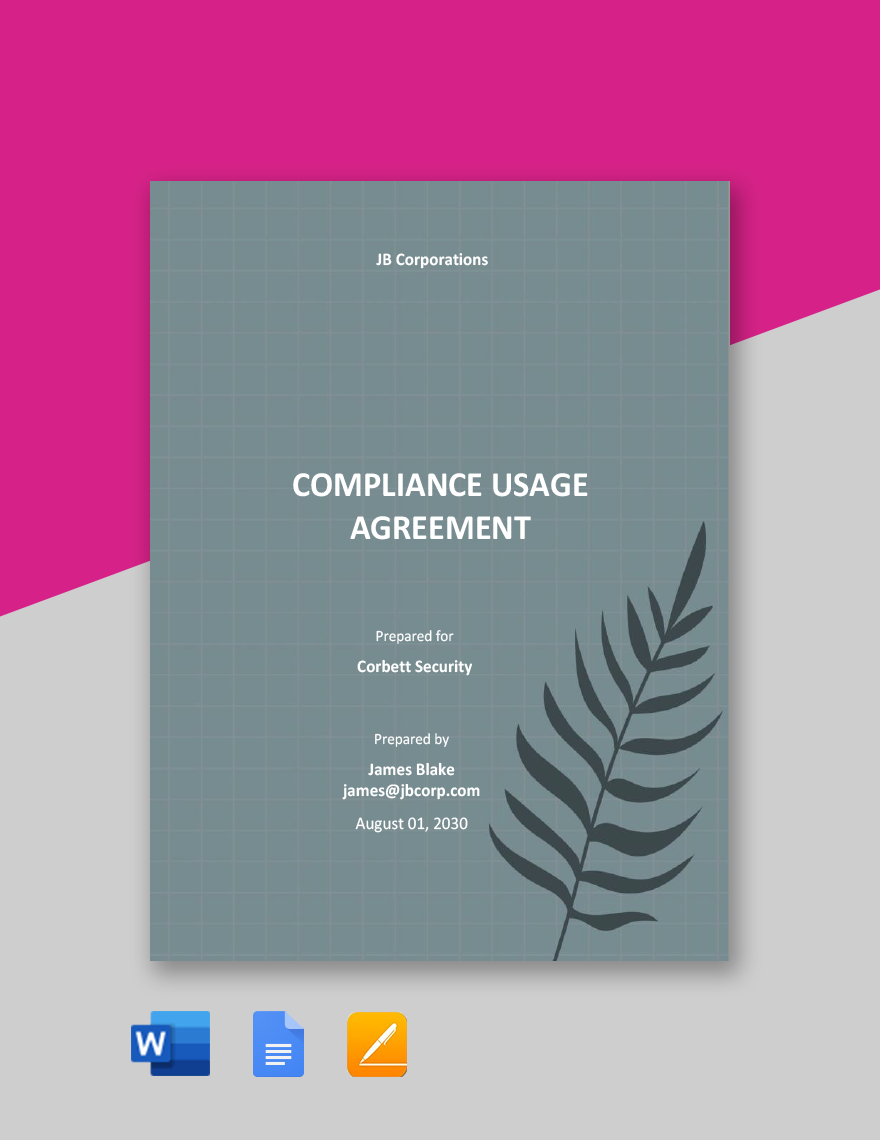
Compliance Usage Agreement Template
Source: Template.net