A well-designed Company Profile Brochure can be one of the most effective tools for presenting a business in a professional and memorable way. Unlike a simple business card or short advertisement, a brochure gives companies enough space to explain who they are, what they offer, and why customers should choose them.
A professional company brochure can also strengthen brand identity. The right combination of company information, images, colors, typography, and persuasive content helps potential clients understand a business within a few minutes.
Whether you run a startup, established company, consulting firm, creative agency, manufacturing business, or professional service provider, a well-structured brochure can support marketing, sales, networking, and client presentations.
The key is to create a brochure that looks professional while keeping the information clear and easy to understand. This guide explains the essential elements, design principles, content ideas, and practical tips for creating an effective company profile brochure.
What Is a Company Profile Brochure?
A company profile brochure is a printed or digital marketing document that introduces a business to potential customers, partners, investors, or other stakeholders. It typically contains important information about the company, its services, achievements, values, and contact details.
Unlike a basic flyer, a company profile brochure usually provides a more complete overview of the organization. It can communicate both factual information and the personality of the brand.
Why Is a Company Brochure Important?
A professional brochure helps a company make a strong first impression. When prospects receive a well-designed document, they can quickly learn about the business without searching through multiple pages or websites.
A brochure can also be used in many situations, including business meetings, trade shows, networking events, sales presentations, client proposals, conferences, and promotional campaigns.
- Introduces the company professionally.
- Explains products and services clearly.
- Builds brand credibility and trust.
- Supports sales and marketing activities.
- Provides important contact information.
- Creates a useful printed or digital reference for prospects.
Essential Elements of a Professional Company Profile Brochure
A successful brochure should contain enough information to be useful without overwhelming the reader. Every section should have a clear purpose and contribute to the overall message of the company.
Company Introduction
Start with a concise introduction that explains who the company is and what it does. Avoid writing a long corporate history unless it is directly relevant to the audience.
A strong introduction should communicate the company’s expertise, target market, and primary value proposition in a simple and confident way.
Mission, Vision, and Values
Mission and vision statements help readers understand what the company stands for. Company values can also demonstrate the principles that influence the organization’s decisions and relationships with customers.
Keep these statements concise. Readers should be able to understand the company’s direction without reading several paragraphs of corporate language.
Products and Services
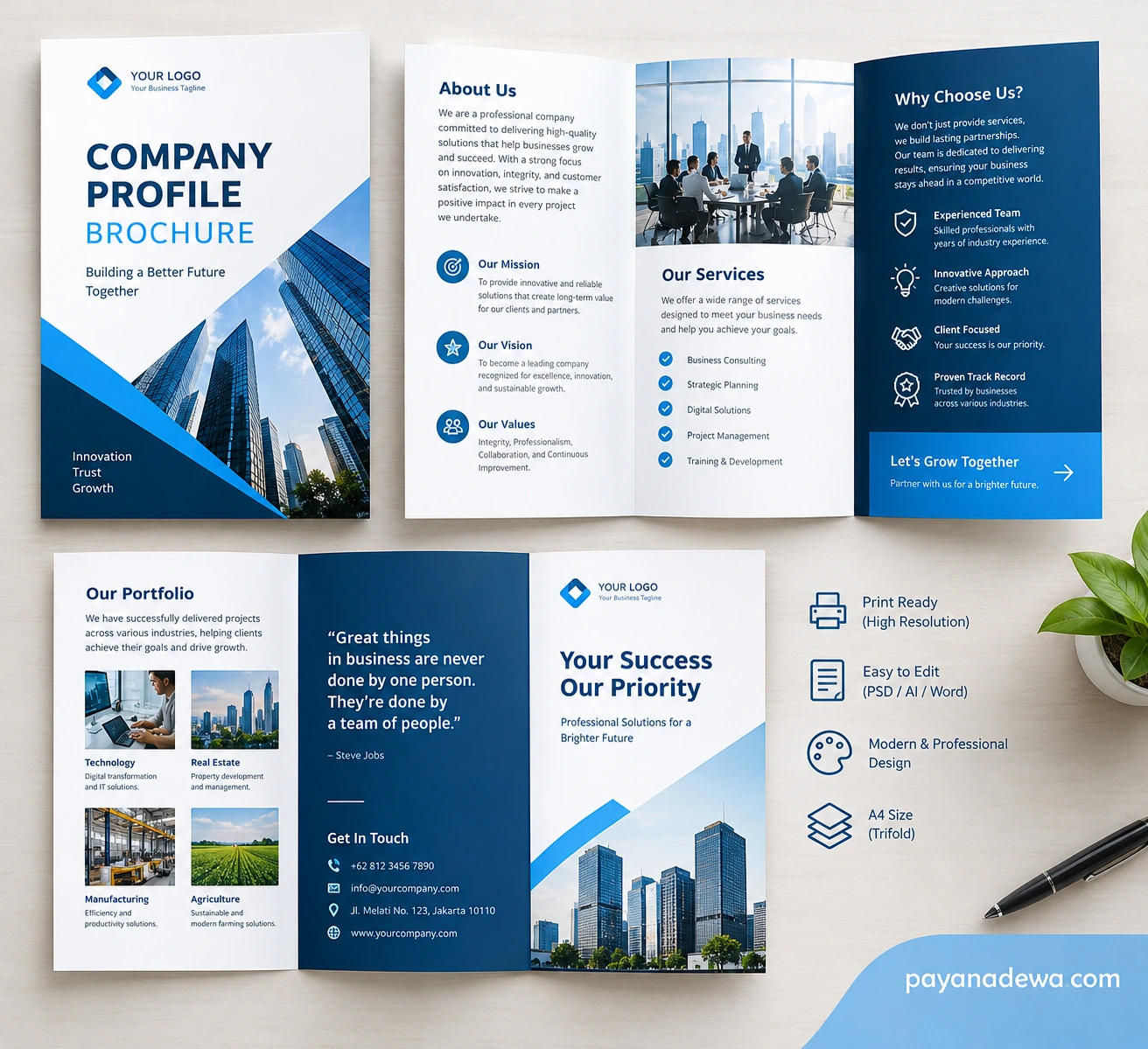
The services section should explain what customers can actually receive from the company. Use clear headings, short descriptions, and supporting visuals where appropriate.
- Business consulting
- Digital solutions
- Project management
- Professional services
- Training and development
- Specialized industry solutions
Only include services that are relevant to the intended audience. A focused brochure is usually more effective than one containing every service the company has ever offered.
How to Design an Effective Company Profile Brochure
Good brochure design is not only about making the document attractive. The layout should guide the reader naturally from the company introduction to its services and finally toward a desired action.
Use a Clear Visual Hierarchy
Visual hierarchy determines which information readers notice first. The company name, main headline, key services, and call to action should be easy to identify.
Use different font sizes and weights to separate headings from supporting information. Avoid using too many font styles because excessive variation can make the brochure look unprofessional.
Choose Consistent Brand Colors
Brand colors should appear consistently throughout the brochure. A limited color palette usually creates a cleaner and more professional appearance.
For corporate brochures, combinations such as navy, blue, white, gray, or neutral tones can create a trustworthy visual identity. However, the best colors depend on the company’s existing branding and industry.
Use High-Quality Images
Images can communicate information faster than large blocks of text. Use photographs, product images, workplace scenes, team photos, or relevant illustrations that support the company’s message.
Every image should have a purpose. Avoid adding decorative pictures that do not help explain the business or strengthen its brand.
What Information Should a Company Brochure Include?
The exact content depends on the business and target audience. However, most effective company profile designs include several common sections.
- Company name and logo
- Company introduction
- Mission and vision
- Core values
- Products or services
- Key benefits
- Company achievements
- Portfolio or previous projects
- Client testimonials
- Industry experience
- Contact information
- Website and social media details
- Call to action
Prioritize information based on what your audience wants to know. A prospective customer may care more about services, benefits, and previous results than a lengthy company history.
Company Profile Brochure Layout Ideas
The layout should match the purpose of the brochure. A tri-fold brochure is popular because it divides information into easy-to-read panels. A bi-fold design can provide larger sections for companies that need more space for text and images.
Tri-Fold Brochure
A tri-fold layout works well for marketing events, business introductions, and service presentations. Each panel can have a specific role, such as the cover, company overview, services, benefits, portfolio, and contact information.
Bi-Fold Brochure
A bi-fold brochure provides larger content areas and can create a more spacious presentation. It is useful when the company wants to combine detailed information with large photographs or graphics.
Corporate Presentation Brochure
For formal business meetings, a more sophisticated brochure can focus on company achievements, capabilities, industry experience, case studies, and business solutions.
Tips for Writing Better Brochure Content
Even an attractive design can fail if the written content is difficult to understand. Use direct language and focus on benefits instead of filling the brochure with complicated corporate terminology.
Write for the Target Audience
Think about who will read the brochure. A technology company may need different language from a construction company, financial firm, restaurant, or creative agency.
Understanding the audience makes it easier to choose the right tone, terminology, examples, and selling points.
Focus on Benefits
Do not only describe what your company does. Explain how your products or services help customers solve problems, save time, reduce costs, improve efficiency, or achieve their goals.
Keep Paragraphs Short
Short paragraphs improve readability, especially when the brochure is viewed on a screen. Use headings, bullet points, and visual breaks to make important information easier to scan.
Common Mistakes to Avoid
Several mistakes can reduce the effectiveness of a company profile brochure. Avoiding them can make the final design cleaner and more persuasive.
- Using too much text on every page.
- Adding low-quality or irrelevant images.
- Using too many colors or fonts.
- Making the contact information difficult to find.
- Using vague descriptions instead of clear benefits.
- Ignoring the company’s existing brand identity.
- Forgetting a strong call to action.
- Failing to proofread the final document.
A brochure should feel organized rather than crowded. White space is useful because it gives important information room to stand out.
How to Make Your Brochure More Persuasive
A persuasive brochure should answer the questions a potential customer is likely to have. What does the company offer? Who does it serve? What makes it different? Why should the customer trust it? What should the customer do next?
Use evidence whenever possible. Statistics, certifications, awards, testimonials, case studies, project examples, and client results can strengthen credibility.
A clear call to action is also important. Encourage readers to visit the website, request a quote, schedule a consultation, contact the sales team, or learn more about a particular service.
Using a Company Profile Brochure Template
Starting with a Company Profile Brochure Template can save time and simplify the design process. Templates provide a structured foundation for arranging text, images, headings, and contact information.
A good template should still allow customization. Replace placeholder text with original company information, update the colors to match your brand, add relevant images, and adjust the layout according to your audience.
Before printing, check the document carefully. Make sure the logo is clear, contact details are accurate, images have sufficient resolution, and all important information is easy to read.
Digital and Printable Company Brochures
Modern companies often need both printed and digital versions of their brochures. A printable brochure can be distributed at meetings, exhibitions, and networking events, while a digital PDF can be shared through email, websites, and messaging platforms.
When preparing a digital version, optimize the file size without significantly reducing image quality. Make sure links, contact details, and calls to action work correctly.
For printed brochures, consider the paper size, folding method, paper quality, margins, and printing requirements before sending the final design to a printer.
Final Checklist Before Publishing
Use a final checklist to make sure the brochure is ready for customers and business partners.
- Confirm the company name and logo.
- Proofread all text.
- Verify phone numbers and email addresses.
- Check website and social media links.
- Make sure images are high quality.
- Confirm brand colors and typography.
- Review the overall visual hierarchy.
- Check the call to action.
- Test the digital PDF on different devices.
- Check print dimensions and resolution before printing.
Conclusion
A professional Company Profile Brochure can help businesses communicate their identity, services, strengths, and value in a compact and visually engaging format. The most effective brochures combine clear writing, strong branding, useful information, high-quality imagery, and an easy-to-follow layout.
Whether you create a brochure from scratch or customize a professional template, always design it around the needs of your target audience. Keep the information focused, highlight meaningful benefits, and finish with a clear call to action.
With the right structure and thoughtful design, a company brochure can become a valuable marketing asset that supports sales, builds credibility, and gives potential customers a strong reason to learn more about your business.