Having a baby is one of the most meaningful experiences in life, but it can also bring many new questions. From feeding and sleep to baby milestones, daily routines, safety, and essential supplies, new parents often have a lot to learn in a short amount of time. A simple and organized approach can make everyday baby care feel more manageable and enjoyable.
Every baby develops at a different pace, so there is no single routine that works perfectly for every family. The goal is to understand your baby’s basic needs, observe their individual patterns, and create a safe and loving environment where they can grow. This guide covers practical baby care tips that parents and caregivers can use throughout the early months and beyond.
Understanding Your Baby’s Basic Needs
Babies rely on adults for almost everything, including nutrition, comfort, hygiene, sleep, and protection. Understanding these basic needs is an important first step for new parents.
Feeding
Whether a baby is breastfed, formula-fed, or receives a combination of both, feeding is an important part of early development. Newborns generally eat frequently because their stomachs are small. Parents should pay attention to hunger and fullness cues rather than relying only on a strict clock-based schedule.
Common hunger cues may include rooting, sucking on hands, opening the mouth, or becoming increasingly alert. Crying can also indicate hunger, although it is often a later sign. During feeding, keep your baby comfortable and supported, and allow enough time for them to feed calmly.
If you have questions about feeding amounts, breastfeeding difficulties, formula preparation, allergies, or your baby’s growth, speak with a pediatrician or qualified healthcare professional.
Sleep
Sleep patterns can vary considerably during the first year. Newborns often sleep in short periods throughout both day and night, and frequent waking is normal because babies need regular feeding and care.
Create a calm sleep environment by keeping the baby’s sleeping area clear of loose blankets, pillows, stuffed toys, and other objects. Follow current safe-sleep recommendations from trusted pediatric health organizations, and always place a baby on their back for sleep.
Diapering and Hygiene
Regular diaper changes help keep a baby’s skin clean and comfortable. Check diapers frequently and change them when wet or soiled. During changes, gently clean the diaper area and allow the skin to dry before putting on a fresh diaper.
If your baby develops persistent redness, swelling, sores, or another unusual skin reaction, consult a healthcare professional for appropriate advice.
Creating a Simple Baby Routine
A predictable routine can help parents organize the day while giving babies familiar patterns. However, a routine does not need to be rigid. Babies’ needs can change from one day to another, especially during growth spurts, illness, teething, or developmental changes.
A simple daily routine may include:
- Morning feeding and diaper change
- Gentle interaction and age-appropriate play
- Nap or quiet time
- Regular feeding throughout the day
- Diaper checks and hygiene care
- Tummy time when appropriate and supervised
- A calming evening routine
- Quiet preparation for nighttime sleep
Instead of trying to make every day identical, focus on recognizing your baby’s signals. Over time, you may notice patterns in feeding, sleeping, play, and periods of alertness.
Baby Development and Milestones
Watching a baby learn new skills is one of the most rewarding parts of early parenthood. Development happens gradually, and babies may reach milestones at different times. Milestones can include physical, communication, social, and cognitive skills.
Common Early Milestones
Depending on their age and individual development, babies may begin to smile, make new sounds, hold their head up, roll over, sit with support, crawl, stand, take early steps, or use simple sounds to communicate.
Parents can keep a simple baby milestone record to document memorable moments. Recording the date, baby’s age, and a short description can make it easier to remember these special events later.
It is important not to compare one baby too closely with another. Developmental ranges are broad, and a small difference in timing does not automatically mean something is wrong. If you have concerns about your baby’s development, discuss them with your pediatrician.
Baby Essentials Every Parent Should Consider
It is easy to feel overwhelmed by the number of baby products available. Fortunately, you do not need every item marketed to new parents. Start with practical essentials and add other products only when they genuinely make daily life easier.
Useful baby essentials may include:
- A safe sleep space
- Diapers and changing supplies
- Appropriate clothing
- Feeding supplies based on your chosen feeding method
- Baby-safe bathing supplies
- Burp cloths and washable towels
- A properly fitted car seat when transportation requires one
- Age-appropriate toys and books
- A basic baby care and first-aid kit
- A notebook or printable baby journal for important records
Choose products based on safety, practicality, durability, and your family’s actual needs rather than buying everything at once.
Keeping Your Baby Safe at Home
Baby safety begins with looking at everyday surroundings from a baby’s perspective. As babies become more mobile, hazards that were previously out of reach can quickly become accessible.
Basic Safety Tips
- Keep small objects away from babies because they can become choking hazards.
- Store medicines, cleaning products, and chemicals out of reach.
- Use age-appropriate and safety-tested baby equipment.
- Keep hot drinks and hot surfaces away from curious hands.
- Secure furniture that could tip over.
- Keep electrical cords and outlets appropriately protected.
- Never leave a baby unattended on an elevated surface.
- Use an appropriate car seat whenever required.
Safety needs also change as babies grow. A newborn who cannot move independently will eventually roll, crawl, pull up, and explore. Regularly review your home environment as your baby’s abilities develop.
Making Baby Memories Last
The early months can pass surprisingly quickly. Keeping a record of everyday details can turn ordinary moments into meaningful memories. A baby journal can be used for more than major milestones.
Parents can record a baby’s first smile, favorite toy, preferred lullaby, funny expressions, feeding observations, sleep patterns, memorable family moments, and other details that may otherwise be forgotten.
What to Record in a Baby Journal
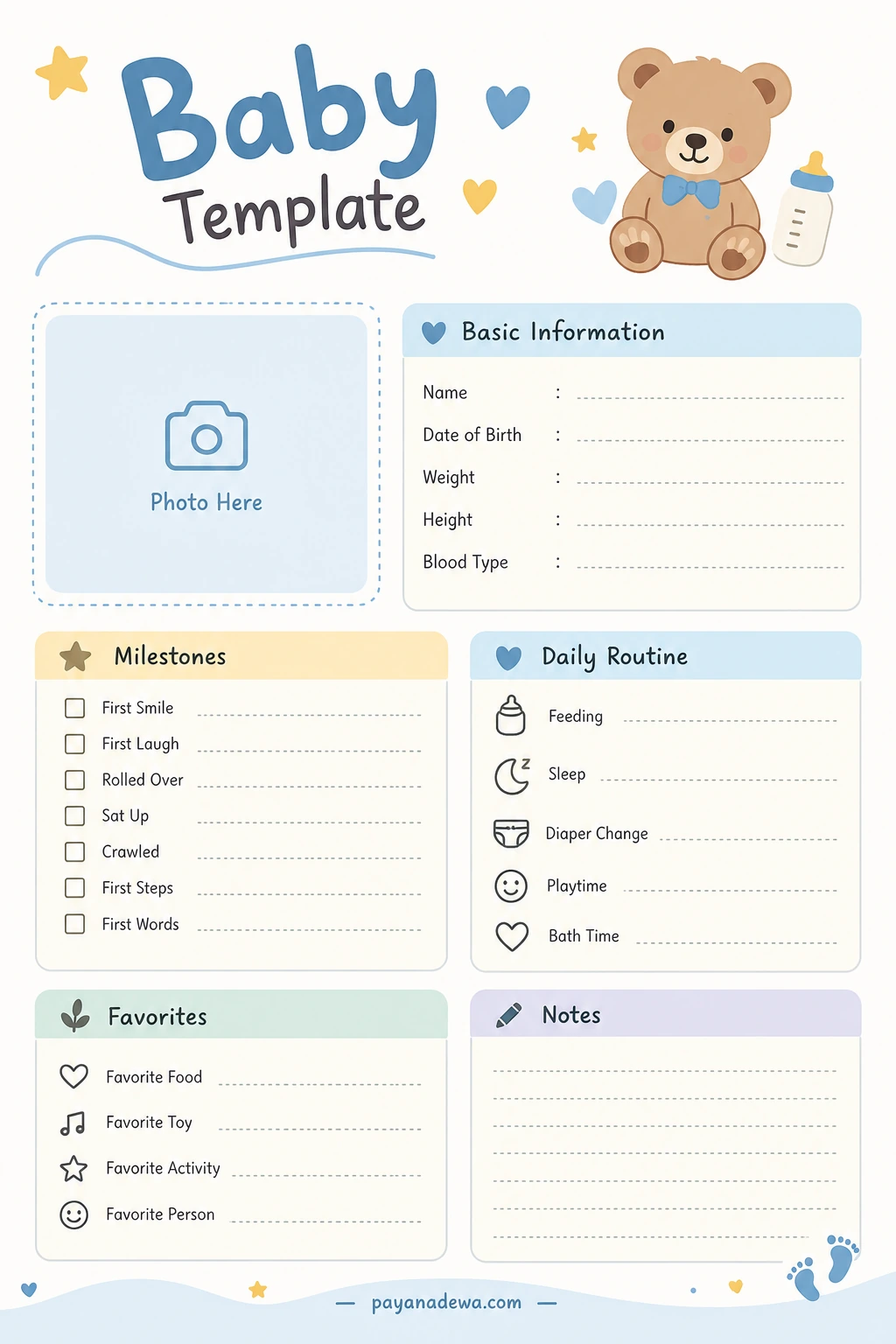
- Baby’s name and date of birth
- Birth weight and height
- Important milestone dates
- Favorite foods or feeding preferences when age-appropriate
- Favorite toys and activities
- New sounds and first words
- Special family memories
- Photos and short notes
A printable baby template can make this process easier because important information is already organized into dedicated sections. Parents can print several copies, keep one in a baby journal, or use individual pages to track changing routines and milestones.
Tips for Making Everyday Baby Care Easier
Baby care can feel less stressful when you prepare for common situations in advance. Small organizational habits can save time and reduce unnecessary frustration.
- Prepare supplies in advance: Keep diapers, wipes, clothing, and feeding supplies in convenient locations.
- Keep a simple record: Write down important appointments, milestones, and questions for your healthcare provider.
- Create a flexible routine: Use routines as a guide rather than a strict schedule.
- Accept help: Trusted family members or friends may be able to help with meals, household tasks, or errands.
- Take care of yourself: Rest whenever possible and remember that parental well-being matters too.
- Ask questions: Pediatricians, nurses, lactation professionals, and other qualified experts can provide personalized guidance.
When to Contact a Healthcare Professional
Parents should not feel that they need to solve every baby-related concern alone. Healthcare professionals can help answer questions about feeding, growth, sleep, development, illness, skin changes, and other concerns.
Seek professional medical advice when something about your baby’s health or behavior concerns you, especially when symptoms are sudden, severe, persistent, or unusual for your baby. For urgent or potentially life-threatening symptoms, seek emergency medical care immediately.
Keeping a record of symptoms, feeding patterns, temperature readings when appropriate, and other relevant observations can help you provide useful information during a medical consultation.
Conclusion
Caring for a baby is a continuous learning experience. The most important foundations are providing appropriate nutrition, safe sleep, hygiene, comfort, supervision, opportunities for development, and plenty of loving interaction.
Rather than trying to create a perfect routine, focus on learning your baby’s individual cues and adjusting as they grow. Simple organization can also make daily life easier, whether you use a notebook, baby journal, milestone tracker, or printable Baby Template.
Most importantly, remember that every baby is unique. Celebrate the small moments, document the milestones that matter to your family, and seek professional guidance whenever you have concerns about your baby’s health or development.