An effective architecture flyer is more than a simple promotional document. It is a visual marketing tool that communicates your design philosophy, showcases your architectural projects, and attracts potential clients. Whether you run an architecture firm, work as an independent architect, or provide interior design services, a professionally designed flyer can help you present your services in a memorable way.
In today’s competitive design industry, first impressions matter. A well-organized architectural flyer combines beautiful imagery, clear typography, thoughtful layouts, and persuasive messaging. It helps potential customers understand what you offer and why they should choose your services.
If you are looking for architecture flyer inspiration, practical design advice, or a ready-to-customize architecture flyer template, this guide will help you create promotional materials that look professional and communicate your brand effectively.
What Is an Architecture Flyer?
An architecture flyer is a printed or digital promotional design used by architects, architectural studios, construction companies, and interior designers to advertise their services. It typically includes company information, architectural photography, project highlights, service descriptions, and contact details.
Unlike a traditional business advertisement, an architectural marketing flyer places strong emphasis on visual presentation. Architectural photography, building illustrations, floor plans, and geometric compositions help communicate creativity and professional expertise.
Architecture flyers can be used for several purposes, including:
- Promoting architectural design and consultation services.
- Advertising residential and commercial building projects.
- Showcasing completed architectural portfolios.
- Introducing a new architecture firm or design studio.
- Promoting property development and construction services.
- Attracting clients at exhibitions, networking events, and industry conferences.
Why Professional Architecture Flyer Design Matters
Your promotional materials often introduce your business before you have an opportunity to speak with a potential client. A professional architecture flyer helps establish credibility and makes your services easier to understand.
1. Creates a Strong First Impression
Architecture is a visual profession. People want to see the quality of your work before discussing a project. A flyer featuring impressive building photography, balanced spacing, and elegant typography immediately communicates professionalism.
2. Showcases Your Architectural Style
Every architecture firm has a distinctive creative identity. Some specialize in minimalist residential buildings, while others focus on contemporary commercial spaces or sustainable architecture.
Your flyer should reflect that identity through its colors, imagery, composition, and overall design language. Consistency helps potential clients recognize your brand.
3. Communicates Services Clearly
Potential clients should quickly understand what your company offers. A well-structured flyer can highlight residential architecture, commercial building design, interior architecture, landscape planning, and architectural consultation without overwhelming the reader.
4. Supports Online and Offline Marketing
A single architecture flyer design can serve multiple marketing purposes. Print it for meetings and exhibitions, share it through email, or publish it on your website and social media platforms.
Essential Elements of an Effective Architecture Flyer
A successful flyer combines visual appeal with useful information. Every element should have a clear purpose and support your marketing message.
Professional Architectural Photography
High-quality images are among the most important elements of an architectural flyer. Use photographs of completed projects, modern buildings, interior spaces, or architectural renderings.
Choose images that represent the services you want to promote. Avoid overcrowding the layout with too many photographs. One impressive hero image can sometimes communicate more effectively than several smaller images.
Clear and Attractive Headline
Your headline should immediately tell readers what your business does. Examples include:
- Architecture and Design Solutions
- Creating Modern Spaces for Better Living
- Innovative Residential Architecture
- Professional Architectural Design Services
- Building Your Vision Through Creative Design
Keep the headline short and easy to read. Use a strong font with sufficient contrast against the background.
Company Logo and Branding
Place your company logo in a visible position. Include your brand colors and typography to maintain consistency across your website, business cards, brochures, and other marketing materials.
Services and Business Information
List your most important services using short descriptions. For example:
- Residential Architecture: Custom home designs that balance beauty and functionality.
- Commercial Architecture: Modern spaces designed for businesses and organizations.
- Interior Architecture: Thoughtful interior environments with practical layouts.
- 3D Architectural Visualization: Realistic project presentations and building renderings.
- Architectural Consultation: Professional guidance from concept development to planning.
Contact Information and Call to Action
Make it easy for potential clients to contact you. Include your phone number, email address, website, and social media accounts when relevant.
A strong call to action can encourage readers to take the next step. Consider phrases such as “Book a Design Consultation,” “Explore Our Portfolio,” or “Let’s Build Your Dream Space.”
Popular Architecture Flyer Design Styles
Choosing the right visual style is important because it influences how people perceive your architectural brand. Here are several popular approaches.
Modern Minimalist Architecture Flyer
Minimalist designs use clean layouts, generous white space, simple typography, and carefully selected photographs. This approach works particularly well for contemporary architecture studios and luxury residential designers.
Neutral colors such as white, gray, beige, and black create an elegant appearance.
Luxury Architecture Flyer
A luxury architecture flyer often features sophisticated typography, premium architectural photography, and refined color combinations. Navy, charcoal, cream, and gold are popular choices.
This style is suitable for high-end residential projects, luxury property developers, and premium architectural consultation services.
Modern Corporate Architecture Flyer
Corporate layouts focus on clarity, organization, and professional communication. They typically feature structured grids, clear service sections, company branding, and concise descriptions.
This style is useful for established architecture firms and commercial design businesses.
Creative Architectural Portfolio Flyer
Portfolio-style flyers place completed projects at the center of the design. They may include multiple photographs, project names, architectural concepts, and short descriptions.
This approach is especially effective when you want potential clients to evaluate your design experience and creative capabilities.
How to Create an Architecture Flyer Step by Step
You do not need to start from scratch to create an impressive architectural promotional flyer. Following a structured process makes the design easier and more consistent.
Step 1: Define Your Marketing Goal
Decide what you want the flyer to accomplish. Are you promoting a new architecture business, advertising residential design services, or presenting a completed project?
A clear objective helps determine the content, images, and layout.
Step 2: Identify Your Target Audience
Think about the people you want to reach. Homeowners, property developers, business owners, and construction professionals may respond to different messages.
For example, homeowners may be interested in personalized home designs, while commercial clients may prioritize functionality, project management, and professional experience.
Step 3: Select a Suitable Layout
Choose a layout that makes information easy to scan. A practical architecture flyer structure includes:
- Logo and company name at the top.
- Main headline and promotional message.
- Large architectural photograph.
- Short service descriptions.
- Reasons to choose your company.
- Contact information and call to action.
Step 4: Choose Colors and Typography
Limit your palette to two or three primary colors. Select fonts that are easy to read and complement your architectural identity.
Use larger typography for headlines and smaller typography for supporting information. Maintain consistent alignment and spacing throughout the document.
Step 5: Add High-Quality Visual Content
Use original project photographs whenever possible. If you do not have a completed project portfolio, consider using architectural illustrations or properly licensed stock imagery.
Ensure that images have sufficient resolution for printing. Avoid blurry photographs and inconsistent image styles.
Step 6: Review and Export Your Flyer
Before publishing, check spelling, contact information, image quality, and alignment. For printed materials, confirm the document dimensions, bleed settings, and color requirements with your printer.
Export a print-ready PDF for physical distribution and a compressed image version for digital marketing.
Architecture Flyer Template: A Practical Starting Point
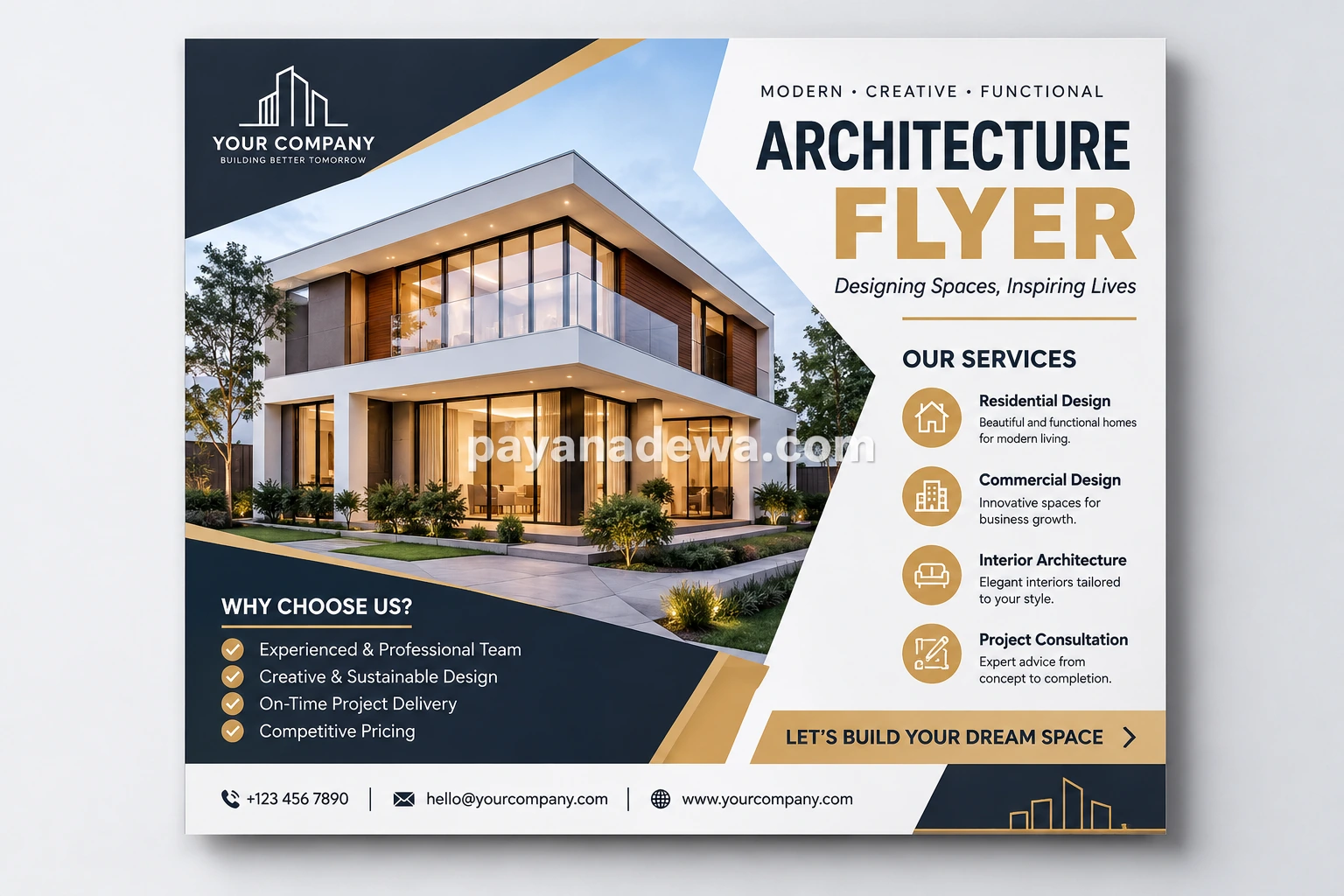
Using an architecture flyer template can save time while providing a professional foundation for your promotional materials. Instead of designing every element individually, you can customize an existing layout with your company information, photographs, and brand colors.
The Architecture Flyer Template featured in this article uses a modern navy, white, and gold color combination. Its organized composition includes a prominent architectural photograph, service descriptions, company highlights, and a contact section.
This layout is suitable for architecture firms, residential design studios, commercial architects, and independent architectural consultants.
When customizing the template, consider these recommendations:
- Replace the sample company logo with your own branding.
- Use original photographs of your architectural projects.
- Update the service descriptions to match your actual offerings.
- Replace sample contact details with accurate business information.
- Adjust the colors to match your company’s visual identity.
- Include a QR code that directs readers to your website or portfolio.
A template should be treated as a starting point rather than a finished advertisement. Personalizing the design makes your flyer more authentic and relevant to your target audience.
Tips for Making Your Architecture Flyer More Effective
Even a visually attractive flyer needs a thoughtful marketing strategy. These practical tips can help improve its effectiveness.
Keep the Message Simple
Do not try to include every detail about your company. Focus on the information your audience needs to make an initial decision. Additional details can be provided through your website or portfolio.
Prioritize Visual Hierarchy
Guide the reader’s attention from the headline to the main photograph, services, and contact information. Use consistent spacing, font sizes, and alignment to create a natural reading flow.
Use Authentic Project Examples
Whenever possible, showcase work completed by your own firm. Authentic photographs and project descriptions provide stronger evidence of your experience than generic promotional statements.
Optimize for Digital Sharing
If you plan to share your flyer online, make sure the text remains readable on mobile devices. Compress image files without sacrificing visual quality, and provide a clickable website or email address when the format supports it.
Include a Clear Call to Action
Tell readers exactly what to do next. Whether you want them to schedule a consultation, request a quotation, or explore your portfolio, make the next step obvious.
Common Architecture Flyer Design Mistakes to Avoid
Some design decisions can reduce the effectiveness of your marketing material. Avoid these common mistakes:
- Too much information: Excessive text makes flyers difficult to scan.
- Low-quality photographs: Blurry images can weaken your professional image.
- Inconsistent typography: Too many font styles create visual confusion.
- Poor color contrast: Difficult-to-read text reduces accessibility.
- Missing contact details: Readers need a simple way to reach your business.
- Weak calls to action: A flyer should encourage a specific next step.
- Unbalanced composition: Poor spacing and alignment can make the design look unfinished.
Conclusion
A professional architecture flyer is an effective way to showcase your creative capabilities, promote architectural services, and build trust with potential clients. By combining strong architectural photography, clear messaging, consistent branding, and a well-organized layout, you can create promotional materials that communicate your business identity effectively.
Whether you prefer a minimalist architecture flyer, a luxury promotional design, or a modern corporate layout, the most important thing is to make your information easy to understand and visually appealing.
Start with a professional architecture flyer template, customize it with your own branding and project images, and make sure your contact information and call to action are clearly visible. With thoughtful design and a clear marketing objective, your architecture flyer can become a valuable part of your business promotion strategy.