Today, you do not need advanced graphic design skills to create a professional-looking flyer. With the right design inspiration, colors, typography, and layout, anyone can produce an eye-catching promotional design. In this guide, you will discover creative art flyer ideas, essential design elements, practical tips, and ways to make your flyer stand out.
What Is an Art Flyer?
An art flyer is a printed or digital promotional document designed to communicate information about an artistic activity, event, product, or creative service. It combines visual elements and written content to attract attention and deliver a clear message.
Artists and creative businesses use flyers for many purposes. For example, an art gallery might promote an upcoming exhibition. Meanwhile, an art teacher could use a flyer to advertise painting classes or creative workshops.
Unlike ordinary advertisements, artistic flyers often focus on visual storytelling. They use colors, illustrations, photography, and creative typography to express a particular mood or identity.
Popular Types of Art Flyer Designs
There are many ways to design an art flyer. The best style depends on your audience, promotional goals, and creative concept. Here are several popular options to consider.
1. Art Exhibition Flyer
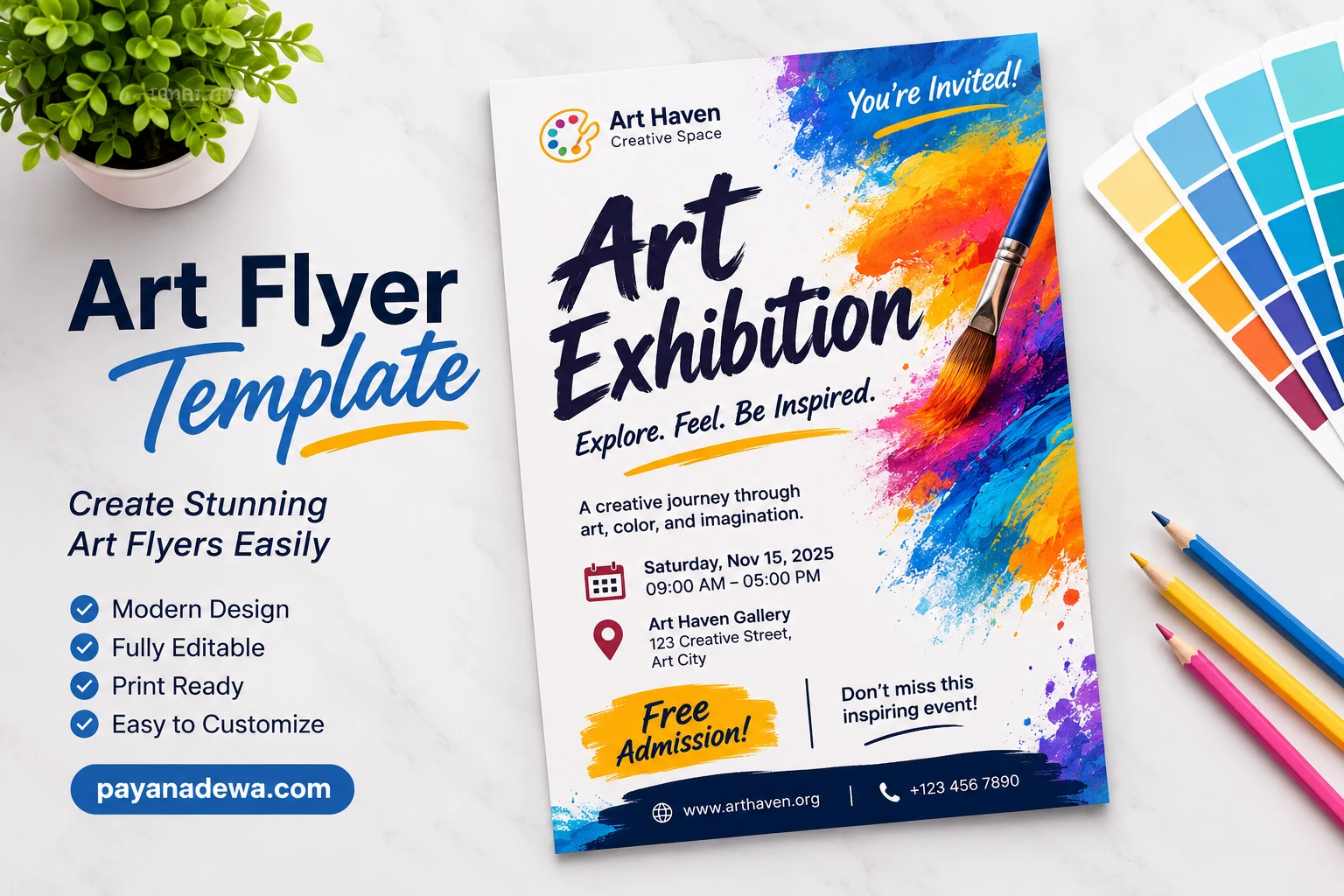
An art exhibition flyer promotes gallery events, painting displays, photography collections, and other artistic presentations. It usually features a striking image or artwork as the main visual element.
Include the exhibition title, artist’s name, event date, venue, and contact information. You can also add a short description to give visitors a reason to attend.
2. Art Workshop Flyer
An art workshop flyer encourages people to join creative learning activities. These workshops may include painting, drawing, sculpture, illustration, or digital art.
Use friendly colors and engaging visuals to make the event feel welcoming. Remember to highlight the workshop schedule, registration details, available seats, and participation fees.
3. Modern Art Flyer
A modern art flyer uses contemporary design techniques to create a fresh and memorable appearance. Common elements include geometric shapes, bold typography, abstract illustrations, and contrasting colors.
This style works particularly well for creative studios, design events, contemporary exhibitions, and independent artists.
4. Minimalist Art Flyer
A minimalist art flyer focuses on simplicity. Instead of filling the page with decorative elements, it uses clean layouts, generous white space, and carefully selected typography.
This approach makes important information easier to read. It also creates an elegant appearance that works well for professional galleries and sophisticated creative events.
5. Digital Art Flyer
A digital art flyer is created specifically for online promotion. You can share it through social media, websites, email newsletters, and messaging applications.
Digital designs often use vibrant colors, attractive illustrations, and clear headlines. However, make sure the text remains readable on smaller smartphone screens.
Essential Elements of an Effective Art Flyer
A beautiful design is important, but a successful flyer must also communicate information clearly. Before starting your project, consider these essential elements.
- Attention-grabbing headline: Use a short and memorable title that explains the purpose of your event.
- Strong visual elements: Include relevant artwork, illustrations, photographs, or graphic compositions.
- Readable typography: Choose fonts that match your artistic style while remaining easy to understand.
- Balanced color palette: Select colors that complement the artwork and support your message.
- Important event details: Display the date, time, location, and other essential information.
- Call to action: Encourage readers to register, visit, purchase tickets, or contact you.
- Contact information: Add your website, email address, social media account, or phone number.
When these elements work together, your flyer becomes more attractive and informative. Most importantly, readers can understand your message quickly.
How to Create an Attractive Art Flyer
Creating a professional art flyer does not have to be complicated. By following a simple design process, you can achieve a polished result without wasting time.
Step 1: Define Your Purpose
Start by identifying what you want to promote. Are you advertising an art exhibition, selling original artwork, or inviting people to a creative workshop?
Your objective will influence the entire design. For instance, an exhibition flyer may require an elegant appearance, while a children’s painting workshop could benefit from playful illustrations and bright colors.
Step 2: Choose the Right Layout
A good layout organizes information in a logical order. Place the main headline near the top, followed by the central artwork and supporting information.
Use visual hierarchy to guide readers through the design. Important details should stand out without making the composition feel crowded.
Step 3: Select Suitable Colors
Color plays an important role in artistic communication. Different combinations can create different moods and visual experiences.
- Blue and white: Create a clean, calm, and professional appearance.
- Orange and yellow: Communicate energy, warmth, and creativity.
- Black and white: Deliver a sophisticated and minimalist look.
- Pastel colors: Create a soft and friendly atmosphere.
- Bold contrasting colors: Help important elements attract immediate attention.
Try to use a consistent color palette. Too many unrelated colors can make your flyer difficult to understand.
Step 4: Add High-Quality Artwork
Visual content is often the most memorable part of an art flyer. Choose images that directly relate to your event or creative project.
Use high-resolution photographs, original illustrations, or properly licensed artwork. Avoid blurry images because they can reduce the overall quality of your design, especially when printed.
Step 5: Write Clear and Engaging Content
Your text should explain the event without overwhelming the reader. Use short sentences and focus on the most important information.
For example, instead of writing a long introduction, use a simple headline such as “Discover the World of Creative Art.” Then provide a brief description and the event details.
Step 6: Review and Export Your Design
Before publishing, check spelling, dates, contact details, alignment, and image quality. Make sure the design looks good on both large and small screens.
For printing, export a high-quality PDF using the printer’s preferred settings. For online promotion, PNG or JPG files are practical choices. Always confirm the required dimensions and resolution before exporting.
Best Tools for Designing an Art Flyer
Choosing the right design tool can make your creative process easier. Several popular applications offer useful features for beginners and experienced designers.
Canva
Canva is a beginner-friendly design platform with customizable flyer templates, fonts, illustrations, and graphic elements. You can quickly modify an existing layout and create a professional-looking design.
Adobe Photoshop
Adobe Photoshop is suitable for designers who want more control over image editing, colors, textures, and visual effects. It is particularly useful for creating unique artistic compositions.
Adobe Illustrator
Adobe Illustrator is a strong choice for vector-based designs. It allows you to create scalable illustrations, logos, typography, and decorative graphics without losing image quality.
Free Online Flyer Templates
Ready-made flyer templates are another practical option. They provide a starting point for your project and help reduce design time.
Look for editable templates with organized layouts and flexible design elements. Always check the licensing terms before using a template for commercial purposes.
Creative Art Flyer Ideas for Inspiration
If you are unsure where to begin, explore different creative directions. Here are some ideas that can help you develop a distinctive design.
- Abstract painting concept: Combine colorful brush strokes, irregular shapes, and expressive typography.
- Vintage art poster: Use muted colors, retro lettering, and traditional illustration styles.
- Watercolor theme: Add soft paint textures and flowing color combinations.
- Contemporary gallery style: Use clean typography, large artwork, and plenty of white space.
- Creative collage: Combine photographs, paper textures, illustrations, and layered compositions.
- Geometric art concept: Create visual interest with structured shapes and bold color contrasts.
Do not be afraid to experiment. However, keep the main message clear so your audience can understand the purpose of the flyer.
Tips for Making Your Art Flyer More Effective
Even a visually impressive flyer may not deliver good results if important information is missing. Use these practical tips to improve your design.
- Know your audience: Choose a visual style that appeals to the people you want to reach.
- Keep the layout organized: Give each section enough space to breathe.
- Use readable fonts: Avoid decorative typefaces for long descriptions and small details.
- Highlight the main message: Make the event title or promotional offer easy to notice.
- Include a clear call to action: Tell readers exactly what to do next.
- Optimize for mobile: Check how your digital flyer appears on smartphone screens.
- Maintain visual consistency: Match the flyer with your brand colors, logo, and overall identity.
Additionally, consider creating different versions for different platforms. A vertical design may work well for printed posters, while a square or portrait layout may perform better on social media.
Frequently Asked Questions About Art Flyers
What size should an art flyer be?
Common flyer sizes include A4, A5, and US Letter. A4 works well for detailed promotional materials, while A5 is convenient for handouts. For digital use, choose dimensions that match the platform where you plan to share your design.
Can beginners create an art flyer?
Yes. Beginners can use editable templates and online design tools to create attractive flyers. Start with a simple layout and gradually experiment with colors, fonts, and illustrations.
What should I include in an art exhibition flyer?
Include the exhibition title, artist’s name, artwork or featured image, date, opening hours, venue, and contact information. You can also add an admission fee or registration link.
How can I make my art flyer look professional?
Use high-quality visuals, consistent colors, readable typography, and a balanced layout. Check every detail before exporting the final design.
Is a digital art flyer better than a printed flyer?
Both formats offer advantages. Digital flyers are easy to distribute online, while printed flyers can reach people in physical locations. Choose the format that best supports your promotional goals.
Conclusion
An effective art flyer combines creativity, visual appeal, and clear communication. Whether you are promoting an exhibition, advertising an art workshop, or showcasing your creative services, the right design can help attract attention and connect with your audience.
Start by defining your purpose, choosing a suitable layout, selecting complementary colors, and adding high-quality artwork. Then organize your information and include a compelling call to action.
You can also save time by starting with an editable art flyer template. Customize the colors, typography, images, and text to match your creative vision. With thoughtful design choices, you can create an attractive flyer that communicates your message and leaves a lasting impression.