Whether you are a marketing beginner, a business owner, a freelancer, or an experienced professional refreshing your skills, learning about strategic marketing can help you connect creative thinking with measurable business goals. Before choosing a program, it is useful to understand what the subject covers, what to look for in a course, and how to turn new knowledge into results.
What Is an Innovative Marketing Strategy Certificate?
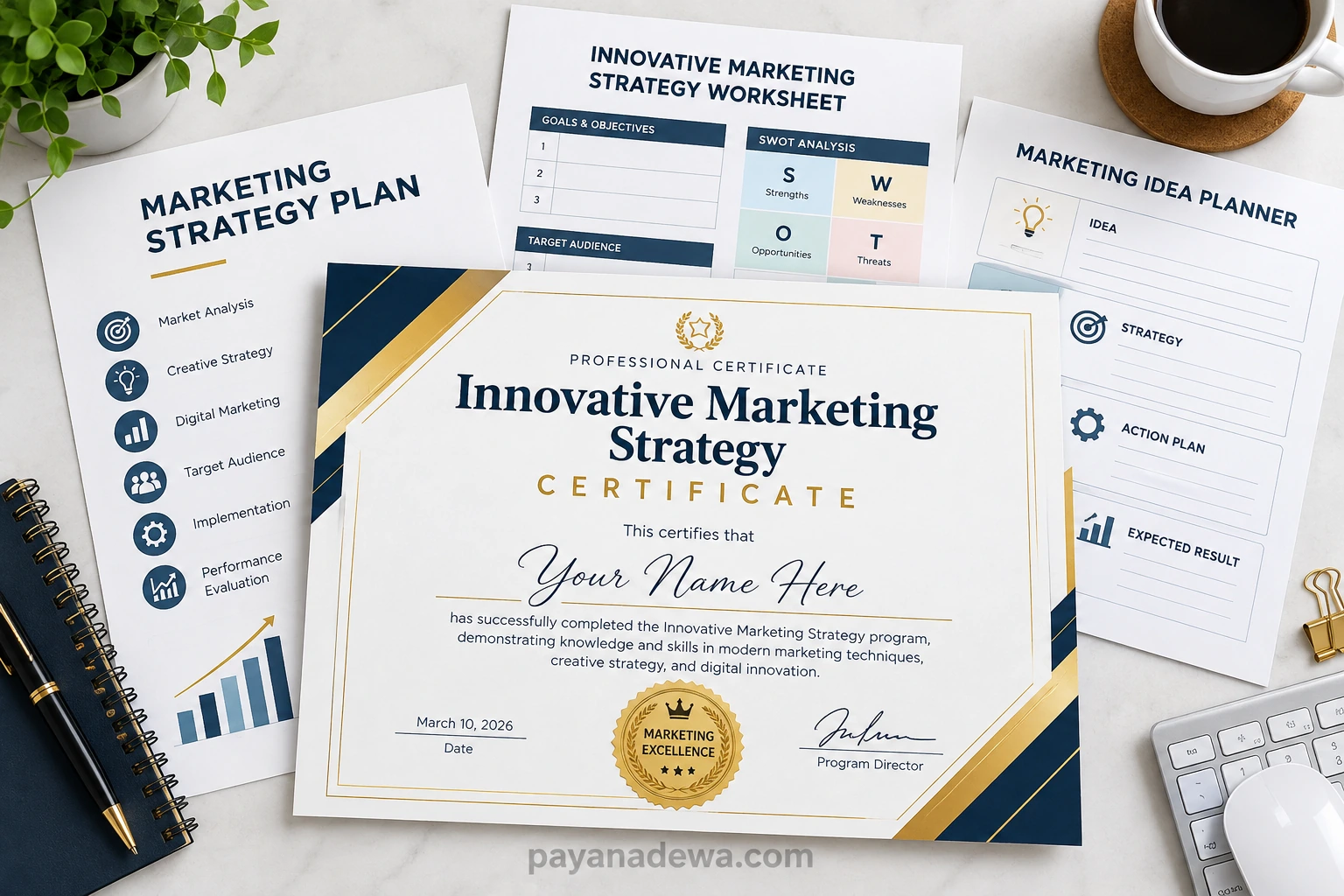
An Innovative Marketing Strategy Certificate is a credential that may be offered by a training provider, educational institution, or professional learning platform after a learner completes a defined program. Course content varies, so review the syllabus and assessment requirements rather than assuming every certificate covers the same topics.
Programs in this area commonly explore how to identify customer needs, position a product or service, select marketing channels, communicate a distinctive value proposition, and evaluate campaign performance. Innovation can mean testing a new message, improving a customer journey, using research to uncover an underserved audience, or adapting a campaign to changing market conditions.
Skills You May Develop Through Marketing Strategy Training
Audience research and customer insight
Strong marketing starts with understanding people. Training may introduce customer interviews, surveys, competitor reviews, audience segmentation, and the use of analytics to identify patterns. These methods help marketers move beyond assumptions and create messages that address real customer needs.
Brand positioning and value propositions
A clear position explains who a product serves, which problem it solves, and why customers might choose it over alternatives. You can practise describing a product’s benefits in plain language, identifying points of difference, and keeping brand messages consistent across channels.
Creative campaign planning
Innovation is more than coming up with an unusual slogan. It involves matching a relevant idea to a specific audience, business objective, budget, and channel. A useful plan includes a campaign concept, content themes, a publishing schedule, responsibilities, and a way to evaluate results.
Data-informed decision-making
Marketing metrics can help teams learn what is working and where changes may be needed. Depending on the program, you may study click-through rate, conversion rate, customer acquisition cost, return on marketing investment, engagement, or retention. Metrics should be chosen according to the campaign goal, not simply because they are easy to measure.
Benefits for Professionals, Entrepreneurs, and Students
A certificate can provide a learning structure and a clear endpoint for a focused period of study. It may also help you explain which topics you have studied when discussing your development with an employer, client, or collaborator. However, a certificate does not automatically guarantee a job, promotion, client, or business result.
- For marketing professionals: refresh planning methods, explore emerging practices, and build a portfolio project that demonstrates your approach.
- For small business owners: organise marketing around defined audiences, realistic budgets, and goals that can be measured.
- For freelancers and consultants: create a repeatable process for discovery, strategy development, campaign execution, and reporting.
- For students and career changers: gain structured exposure to marketing concepts and use practical assignments to identify areas for further learning.
To make the experience more valuable, pair course completion with evidence of your work. A concise case study, sample campaign plan, customer persona, or performance report can show how you apply concepts instead of relying on a credential alone.
Suggested image placement:
How to Choose the Right Certificate Program
Check the curriculum and learning outcomes
Look for a syllabus that clearly states what you will be able to do by the end. Relevant topics may include market research, segmentation, positioning, channel selection, content strategy, experimentation, budgeting, and performance measurement. Prefer specific outcomes over vague promises of marketing success.
Review the provider and assessment method
Confirm who issues the certificate, what is required to earn it, and whether the program includes assignments, projects, quizzes, or feedback. If a credential is described as accredited or recognised, check that claim directly with the named accrediting or professional organisation. Do not assume that all certificates have the same standing with employers.
Consider time, cost, and practical support
Compare the total fee, expected study time, access period, instructor support, and any additional costs. A shorter course can be useful for a focused skill, while a more extensive program may offer deeper practice. Choose a format that fits your schedule and gives you enough time to complete meaningful exercises.
How to Apply What You Learn in a Real Marketing Plan
Turn the material into a small project as soon as possible. Start with one product, service, or organisation and work through a simple process:
- Set one clear objective. For example, increase qualified enquiries, grow repeat purchases, or improve sign-ups within a defined period.
- Describe the target audience. Summarise the audience’s needs, challenges, motivations, and likely decision process using available evidence.
- Review the market. Note competitor messages, customer feedback, relevant trends, and gaps your offer may be able to address.
- Choose a focused strategy. Define the value proposition, core message, channels, content, budget, and campaign timeline.
- Decide how success will be measured. Record a baseline, set a realistic target, and choose a small set of metrics tied to the objective.
- Test and improve. Run a manageable experiment, review the results, document what you learned, and decide what to change next.
Keep the first project small enough to finish. A clear one-page strategy with thoughtful reasoning and measurable next steps is often more useful than a lengthy plan that nobody implements.
Common Mistakes to Avoid
One common mistake is choosing a certificate based only on its title. Similar program names can represent very different levels of depth, so read the details carefully. Another is focusing on tools and trends without defining the customer problem or business objective first.
It is also easy to track too many metrics, change several campaign elements at once, or interpret a short-term result as proof that a strategy will always work. Keep notes on your assumptions, test changes systematically where possible, and consider context such as seasonality, budget, audience size, and channel limitations. Finally, do not list a credential as completed until you have met the provider’s requirements.
Frequently Asked Questions
Is an Innovative Marketing Strategy Certificate worth considering?
It may be useful if the course matches your goals, teaches relevant skills, and includes practical work. Compare the curriculum and cost with your needs, and consider whether a portfolio project or another learning route would serve you better.
Can beginners take a marketing strategy certificate course?
Some programs are designed for beginners, while others expect prior marketing experience. Check the stated prerequisites and sample lessons before enrolling.
Will a certificate guarantee a marketing job?
No certificate can guarantee employment. Hiring decisions can depend on experience, demonstrated skills, communication, portfolio quality, role requirements, and local market conditions. Use the course to build practical examples you can discuss.
What should I include in a marketing portfolio project?
Include the objective, audience research, key insight, positioning, channel plan, sample creative, budget assumptions, measurement plan, and lessons learned. Clearly label simulated data or hypothetical results so readers can distinguish them from real campaign performance.
Conclusion
An Innovative Marketing Strategy Certificate can offer a structured way to learn about audience insight, positioning, creative planning, and data-informed marketing. Its usefulness depends on the quality of the program and the effort you put into applying the material. Review the curriculum, verify the provider’s claims, and choose a course that fits your goals and budget. Most importantly, turn what you learn into a practical marketing plan and a portfolio example that demonstrates your thinking, decisions, and ability to learn from results.