A Mobile Home Bill of Sale is an important document used to record the transfer of ownership of a mobile or manufactured home from a seller to a buyer. It provides a written record of the transaction and can help both parties document essential details such as the purchase price, property description, payment terms, and signatures.
Whether you are selling an older manufactured home, purchasing a mobile home from a private owner, or simply preparing your records, using a well-organized bill of sale can make the transaction easier to document. The form can also help reduce confusion by putting the agreed terms in writing before the transaction is completed.
However, requirements for transferring ownership of a mobile home can vary by state and local jurisdiction. A bill of sale may be only one part of the process. Depending on the circumstances, additional documents may be required for title transfers, registration, taxes, liens, or ownership records.
What Is a Mobile Home Bill of Sale?
A Mobile Home Bill of Sale is a written document that records the sale of a mobile or manufactured home between two parties. It generally identifies the seller and buyer, describes the home being sold, states the agreed purchase price, and records the date of the transaction.
The document can serve as evidence that both parties agreed to the terms of the sale. It may also provide useful information when the buyer needs to organize ownership records or complete additional administrative requirements.
A properly completed form should be clear, accurate, and consistent with other documents involved in the transaction. Any identifying information should be checked carefully before the buyer and seller sign the agreement.
Why Use a Mobile Home Bill of Sale?
Private sales can involve many details, especially when the transaction concerns a manufactured home. A written bill of sale helps create a record of what was agreed upon and when the sale took place.
For buyers, the document can provide a useful record of the purchase. For sellers, it can document the date and basic terms of the transfer.
Benefits for the Buyer
- Provides written evidence of the purchase.
- Records the agreed purchase price and payment method.
- Documents important information about the mobile home.
- Helps organize paperwork related to ownership transfer.
- Creates a reference for future records and transactions.
Benefits for the Seller
- Documents that the mobile home was sold to the buyer.
- Records the agreed terms of the transaction.
- Provides a written record of the sale date.
- Helps both parties confirm what was included in the sale.
- Creates a useful document for personal records.
These benefits do not replace any title, registration, tax, or other requirements imposed by the applicable jurisdiction. Buyers and sellers should verify the specific requirements that apply to their transaction.
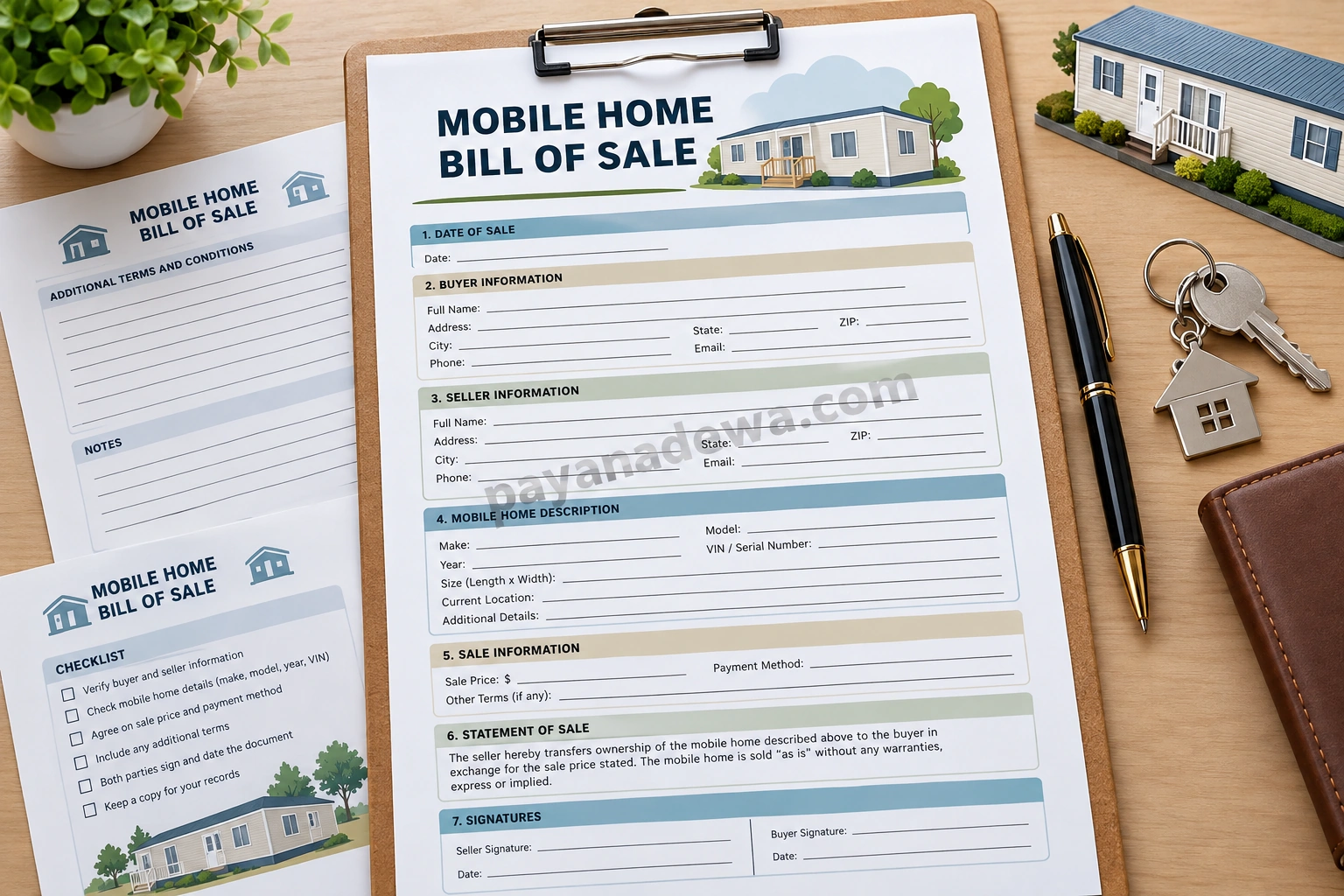
What Information Should a Mobile Home Bill of Sale Include?
A useful bill of sale should contain enough information to clearly identify the parties, the mobile home, and the terms of the transaction. The exact requirements can differ depending on where the home is located.
1. Date of Sale
Start by entering the date on which the sale is agreed upon or completed, according to the form’s purpose and applicable requirements. Using a clear date format can prevent confusion when the document is reviewed later.
2. Seller Information
The seller section should identify the person or entity selling the mobile home. Depending on the circumstances, this may include the seller’s full legal name, address, telephone number, and other relevant contact information.
3. Buyer Information
The buyer section should contain the purchaser’s identifying and contact information. Both parties should review these details before signing the document to make sure names and addresses are accurate.
4. Mobile Home Description
The description should provide enough information to distinguish the mobile home from other properties. Useful details may include the manufacturer, model, year, dimensions, serial number, VIN or identification number when applicable, and current location.
- Manufacturer or make
- Model
- Year
- Serial number or VIN, when applicable
- Size or dimensions
- Current location
- Other identifying characteristics
5. Purchase Price and Payment Terms
Clearly state the agreed sale price. If the buyer is paying in installments, using another payment arrangement, or making a deposit, those terms should be documented clearly rather than left to verbal agreement.
The document can also identify the payment method and indicate whether the purchase price has been paid in full at the time of signing.
6. Additional Terms and Conditions
If the parties have agreed to additional terms, they should be written down. For example, the parties may need to clarify whether appliances, fixtures, furniture, transportation arrangements, or other items are included in the sale.
Clear language can help prevent disagreements about what the buyer is purchasing and what remains with the seller.
7. Signatures
The buyer and seller should sign and date the document as required. Some transactions may also involve witnesses, notarization, or additional documentation. These requirements depend on applicable law and the circumstances of the transaction.
How to Complete a Mobile Home Bill of Sale
Completing the form carefully is important because errors in identifying information can create problems later. Before signing, both parties should review every section of the document.
Step 1: Identify the Parties
Enter the legal names and contact information of the buyer and seller. Make sure the information matches the parties’ official records where appropriate.
Step 2: Describe the Mobile Home
Record the manufacturer’s information, model, year, serial number or other identifying information available for the home. Compare the information against existing ownership or title documents.
Step 3: Enter the Sale Terms
Write the purchase price and agreed payment terms. If a deposit or installment arrangement applies, document those details clearly.
Step 4: Add Special Conditions
Include any additional terms that both parties have agreed upon. Avoid relying on informal verbal promises for important parts of the transaction.
Step 5: Review and Sign
Both parties should read the completed document before signing. Check names, numbers, dates, property information, and payment details carefully. Each party should retain a copy of the signed document.
Mobile Home Bill of Sale vs. Title
A bill of sale and a title are not necessarily the same document. A bill of sale generally records the transaction, while a title or ownership certificate may establish or document legal ownership under the applicable state system.
This distinction is important because completing a bill of sale may not by itself complete the official ownership transfer. Buyers should determine whether a title assignment, registration application, tax document, lien release, or other paperwork is also required.
Before completing a private sale, check the requirements of the relevant state or local agency. This is particularly important when the mobile home has an existing lien or when the home is being moved to another location.
Important Details to Check Before Buying a Mobile Home
A signed bill of sale is only one part of due diligence. Buyers should review the condition and documentation of the mobile home before completing the transaction.
- Verify the seller’s identity and ownership documentation.
- Compare serial numbers or other identification information.
- Ask whether there are outstanding liens or financial claims.
- Review available title and registration records.
- Confirm the mobile home’s current location.
- Understand whether the land is included in the transaction.
- Clarify which appliances, fixtures, or other items are included.
- Confirm any transportation or relocation responsibilities.
- Check applicable taxes, fees, and transfer requirements.
One especially important issue is whether the sale includes the land underneath the mobile home. A transaction involving the home itself can be different from a real estate transaction involving both the manufactured home and the land. The applicable rules should therefore be confirmed before signing.
Common Mistakes to Avoid
Simple paperwork errors can make a private transaction more difficult to document. Taking a few extra minutes to review the form can help avoid preventable problems.
Leaving Identification Information Blank
Do not leave important identification fields incomplete when the information is available. Serial numbers, VINs, or other identifiers can be particularly useful when multiple documents need to be matched.
Using Vague Payment Terms
Avoid unclear statements such as “payment arranged” without explaining the actual agreement. The purchase price, deposit, remaining balance, and payment schedule should be documented when relevant.
Failing to Document Included Items
If appliances, furniture, sheds, decks, fixtures, or other items are part of the agreement, identify them clearly. This can reduce disagreements after the sale.
Ignoring Existing Liens
Buyers should determine whether the mobile home is subject to an existing lien or other financial claim. The appropriate records should be reviewed before money changes hands.
Not Keeping Copies
Both parties should keep a signed copy of the completed bill of sale and related transaction records. Digital copies can provide an additional backup for future reference.
Tips for Creating a Reliable Mobile Home Bill of Sale
A professional-looking template can make the transaction easier to organize, but accuracy is more important than appearance. Use straightforward language and provide enough space for all relevant information.
- Use complete names: Identify the buyer and seller clearly.
- Describe the home accurately: Include available identifying information.
- Record the financial terms: State the purchase price and payment arrangement.
- Document special agreements: Write down important conditions instead of relying on verbal promises.
- Check local requirements: Confirm whether additional forms are required.
- Keep supporting documents: Store copies of titles, receipts, lien releases, and other relevant records.
- Have both parties review the document: Correct errors before signing.
Frequently Asked Questions About Mobile Home Bill of Sale Forms
Is a Mobile Home Bill of Sale legally required?
The requirement depends on the applicable jurisdiction and the type of transaction. Some locations may require a bill of sale for particular ownership or registration procedures, while others may rely on additional or different documentation. Check the rules that apply where the mobile home is located.
Can I use a printable Mobile Home Bill of Sale Template?
A printable template can provide a convenient starting point for documenting a transaction. However, the template should be reviewed and adapted to meet the specific requirements of the transaction and applicable jurisdiction.
Does a bill of sale transfer ownership?
A bill of sale documents the sale, but it does not necessarily replace an official title or ownership transfer process. Buyers should complete any additional procedures required by the relevant authority.
Should both buyer and seller keep a copy?
Yes. Keeping a signed copy gives each party a record of the transaction and its agreed terms. Supporting documents should also be stored with the bill of sale when appropriate.
Should a Mobile Home Bill of Sale be notarized?
Notarization requirements vary. Some transactions or jurisdictions may require notarization, while others may not. Verify the applicable requirements before signing the document.
Final Thoughts on Using a Mobile Home Bill of Sale
A Mobile Home Bill of Sale provides a practical way to document an important private transaction. By identifying the buyer and seller, describing the mobile home, recording the purchase price, documenting payment terms, and obtaining the required signatures, both parties can create a clearer record of their agreement.
The most important step is to make sure the bill of sale matches the actual transaction and any applicable state or local requirements. A template can simplify the process, but it should not be treated as a substitute for checking official ownership, title, registration, tax, lien, or other legal requirements.
Before completing the sale, review every detail carefully, keep copies of the signed paperwork, and confirm whether additional documents are needed. With accurate information and organized records, a Mobile Home Bill of Sale can serve as a useful part of a well-documented mobile home transaction.