A Bill of Sale is a useful document for recording the transfer of ownership from a seller to a buyer. Whether you are selling a vehicle, motorcycle, boat, electronics, furniture, equipment, or another personal item, a properly completed bill of sale can provide both parties with a clear written record of the transaction. It can document important details such as the names of the buyer and seller, item description, purchase price, sale date, payment method, and signatures.
Using a well-organized Bill of Sale Template can make the process faster and easier. Instead of creating a document from scratch, you can start with a structured form and fill in the information relevant to your transaction. A clear template can also help reduce the chance of forgetting important details.
Before using any bill of sale, remember that requirements can vary depending on the location, type of property, and transaction. A bill of sale may not replace other documents required for registration, title transfer, taxes, or licensing. Always check the applicable local requirements when completing an important transaction.
What Is a Bill of Sale?
A bill of sale is a written record of a transaction between a seller and a buyer. It generally identifies the property being sold, states the agreed purchase price, and records the parties involved. Depending on the transaction and local rules, it may also contain information about warranties, conditions, liens, payment status, or other terms.
The document is particularly helpful when the buyer and seller want a straightforward record showing what was sold, when it was sold, and under what basic terms. Keeping a completed copy can make it easier for both parties to refer back to the transaction later.
Why Is a Bill of Sale Important?
A properly completed document can provide several practical benefits. It creates a written record that both parties can retain and review if questions arise after the transaction.
- Records the identity of the buyer and seller
- Describes the property involved in the transaction
- Documents the agreed purchase price
- Records the date of the sale
- Provides space for signatures and acknowledgments
- Helps organize information needed for future reference
- Can support other transaction or ownership records when applicable
What Information Should a Bill of Sale Include?
The exact requirements depend on the transaction and jurisdiction, but a useful bill of sale generally includes several key categories of information. Providing specific and accurate details makes the document easier to understand.
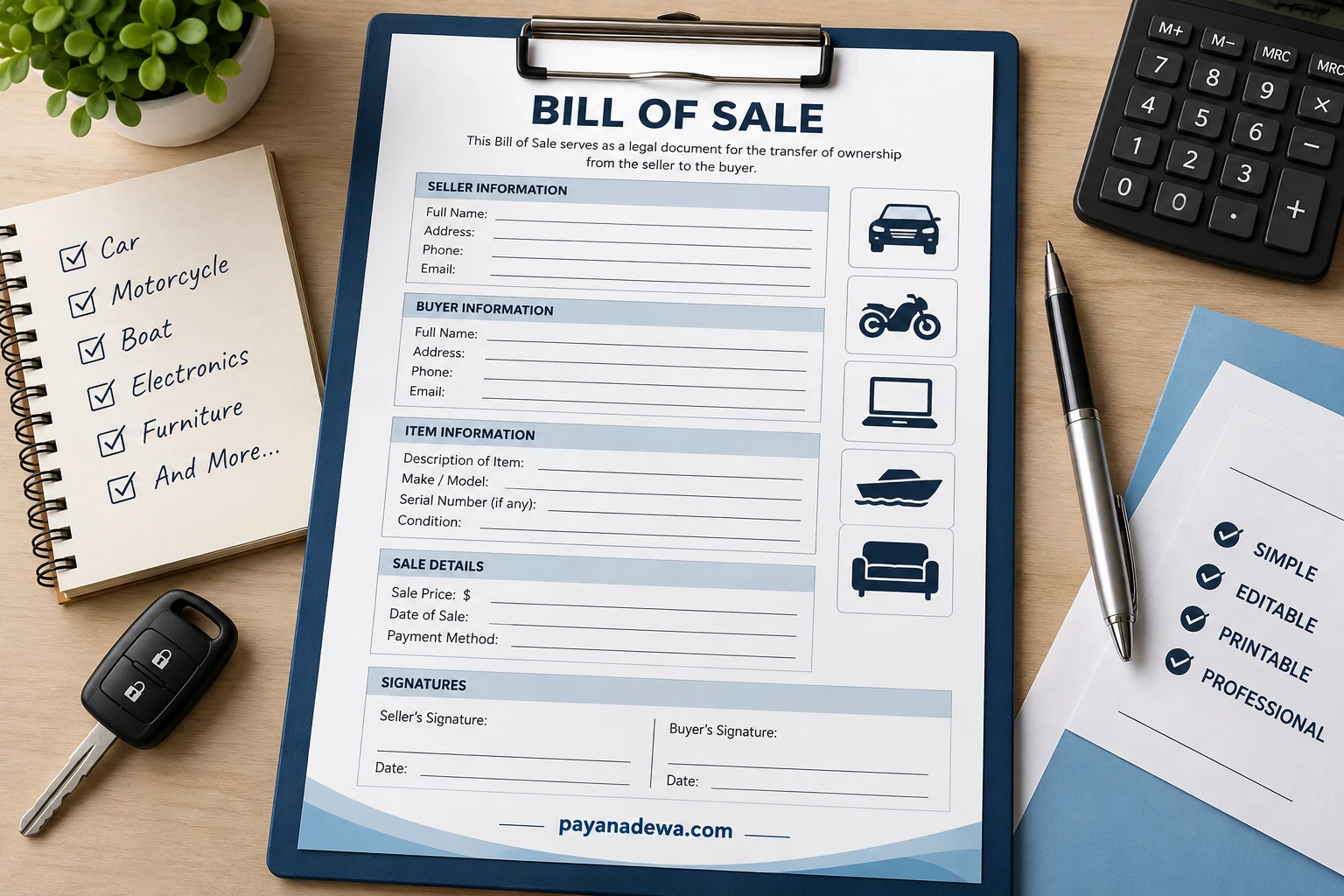
Seller and Buyer Information
Start by identifying the people involved. Include the full legal names of the seller and buyer and, when appropriate, their addresses and contact information. For business transactions, use the appropriate legal business name and authorized representative information.
Description of the Property
The property description should be detailed enough to distinguish the item from similar items. For a vehicle, this may include the make, model, year, vehicle identification number, mileage, color, and other identifying information. For equipment or electronics, include model numbers, serial numbers, or other identifying details when available.
Sale Price and Payment Details
Clearly state the agreed purchase price. If relevant, identify the payment method and whether the amount has been paid in full. If the transaction involves installments or another payment arrangement, the parties may need additional terms or documentation.
Date and Signatures
Include the date of the transaction and provide signature lines for the seller and buyer. Some transactions may also require witnesses, notarization, or additional certifications, so check the rules that apply to your situation.
Common Types of Bill of Sale
A bill of sale can be adapted to many different transactions. The information required can vary according to the type of property being transferred.
- Vehicle Bill of Sale: Used for cars, trucks, and other motor vehicles and may include identification and mileage information.
- Motorcycle Bill of Sale: Can document the sale of a motorcycle and include its make, model, year, VIN, and condition.
- Boat Bill of Sale: Can record the transfer of a boat and relevant identification information.
- Equipment Bill of Sale: Useful for machinery, tools, commercial equipment, and other valuable assets.
- Personal Property Bill of Sale: Can be adapted for furniture, electronics, collectibles, appliances, and other goods.
- General Bill of Sale: Provides a flexible format for transactions that do not require a specialized form.
How to Fill Out a Bill of Sale Template
Completing a bill of sale is generally straightforward when you work through each section carefully. Use accurate information and avoid leaving important fields unclear.
1. Enter the Seller’s Information
Enter the seller’s full name and other requested contact information. Review spelling carefully, especially when the document will be used alongside official ownership records.
2. Enter the Buyer’s Information
Add the buyer’s information in the corresponding section. Both parties should review the information before signing the document.
3. Describe the Item
Provide a clear description of the property. Include serial numbers, identification numbers, model information, or other details that can help identify the exact item being sold.
4. Record the Sale Details
Enter the purchase price, transaction date, and payment information. If there are specific conditions agreed upon by both parties, make sure they are documented appropriately.
5. Review and Sign
Both parties should review the completed document before signing. Each person should receive a copy of the signed bill of sale for their records.
Bill of Sale vs. Receipt: What Is the Difference?
A receipt primarily confirms that a payment was received. A bill of sale generally provides broader information about the transaction and the property involved. It can identify the buyer and seller, describe the property, state the purchase price, and document the date and signatures.
Although these documents can overlap in some situations, they are not necessarily interchangeable. A receipt may be useful as proof of payment, while a bill of sale can provide a more comprehensive record of the transaction.
Tips for Creating a Better Bill of Sale
A good document should be clear, specific, and easy for both parties to understand. Before finalizing the transaction, use these practical tips.
- Use complete names: Avoid vague names or informal nicknames.
- Be specific about the item: Add identification numbers and distinguishing details when available.
- State the price clearly: Make sure the purchase price is easy to identify.
- Record the sale date: Use a consistent date format.
- Document important conditions: Include relevant terms agreed upon by both parties.
- Check every field: Correct errors before signing.
- Keep copies: Both buyer and seller should retain a completed copy.
- Check local requirements: Additional forms may be required for certain property or vehicle transactions.
When Should You Use a Bill of Sale?
A bill of sale can be useful whenever ownership or possession of valuable personal property changes hands. Private sales are a common example because the document gives both parties a written record of their agreement.
For vehicles and other regulated property, however, a bill of sale may be only one part of the documentation process. Registration, title, tax, insurance, licensing, or transfer requirements may involve separate forms and procedures.
Printable Bill of Sale Template Benefits
A printable Bill of Sale Template can be especially convenient for people who want a simple document that can be completed by hand or printed for signing. A structured layout separates seller information, buyer information, property details, sale terms, and signatures into easy-to-follow sections.
A digital copy can also be useful for recordkeeping. After the parties complete and sign the document, they can retain copies according to their normal document-storage practices.
Frequently Asked Questions About Bill of Sale Forms
Is a Bill of Sale legally required for every sale?
No single rule applies to every transaction. Requirements can differ based on the jurisdiction and type of property. Some transactions may require a bill of sale, while others may use different official documents. Check the applicable local requirements before relying on a template.
Can I create my own Bill of Sale?
In many ordinary private transactions, the parties can create a written record using a suitable template. However, specialized transactions may have additional requirements. A general template should not be assumed to satisfy every legal or registration requirement.
Should both parties keep a copy?
Yes. Keeping a copy allows both the buyer and seller to retain a record of the transaction. Digital and printed copies can be stored according to each party’s recordkeeping needs.
Does a Bill of Sale prove ownership by itself?
Not necessarily. Its legal effect depends on the circumstances and applicable law. For property such as vehicles, additional title, registration, or transfer documents may be required.
Conclusion
A Bill of Sale provides a practical way to document an agreement between a buyer and seller. By recording the parties, property description, sale price, transaction date, payment information, and signatures, the document can create a clear reference for the transaction.
A well-structured Bill of Sale Template makes the process easier by organizing the essential information in one place. Before using any template, review the requirements that apply to your specific transaction and location. When the transaction involves significant value, regulated property, or complicated terms, consider obtaining appropriate professional advice.