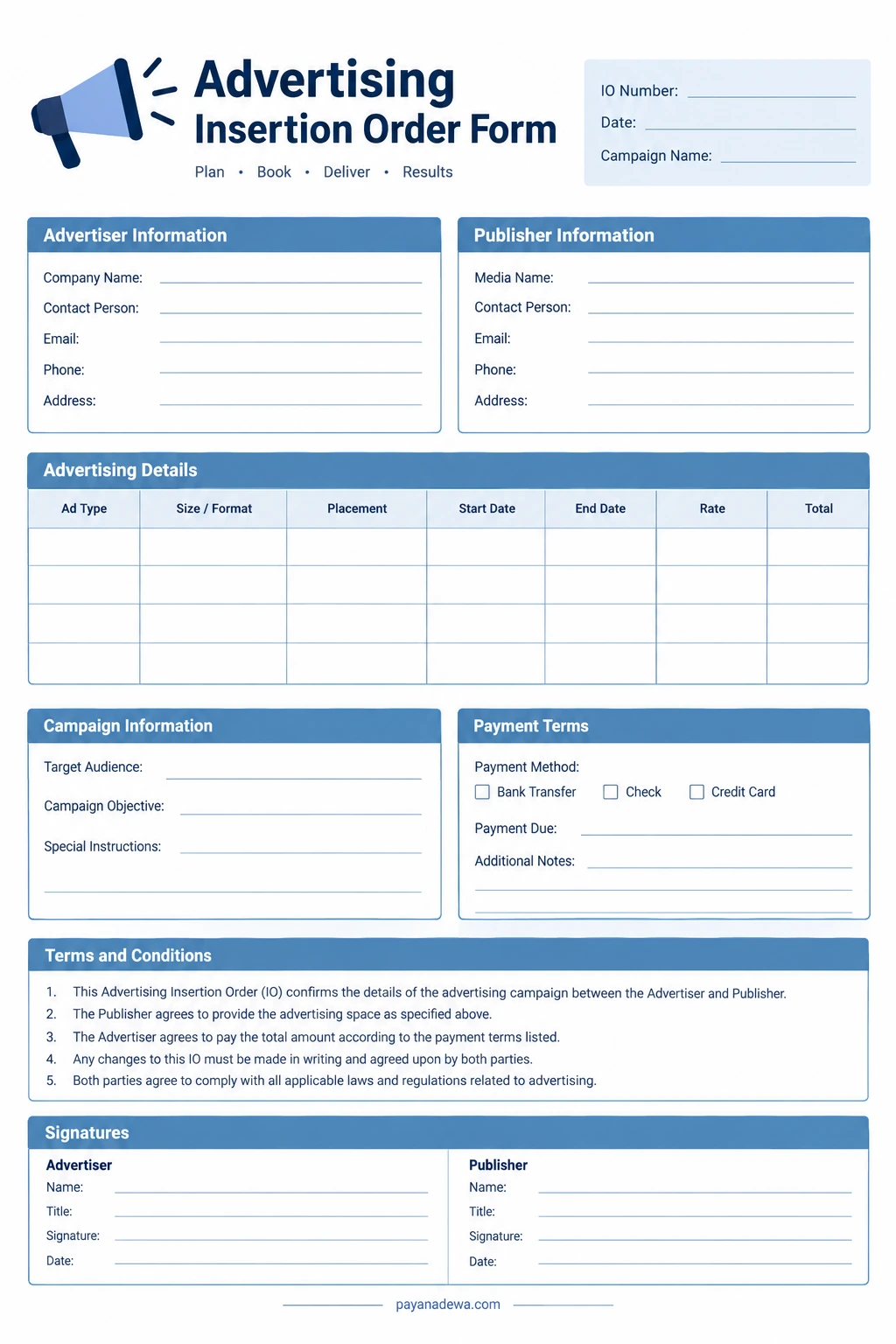
An Advertising Insertion Order Form is an essential document for organizing and confirming an advertising campaign between an advertiser and a publisher. It records important campaign information such as ad placement, advertising format, publication dates, pricing, payment terms, and approval details.
Whether you are purchasing advertising space in a magazine, newspaper, website, newsletter, podcast, or digital media platform, a well-prepared insertion order can help both parties understand exactly what has been agreed upon. It also provides a clear reference when managing campaign delivery, billing, and changes.
In this guide, you will learn what an advertising insertion order is, what information it should contain, how to create one, and how to use an insertion order template effectively.
What Is an Advertising Insertion Order Form?
An Advertising Insertion Order Form, often called an IO form, is a written agreement or authorization used to document an advertising purchase. The advertiser uses the form to request specific advertising services, while the publisher uses it to confirm the agreed campaign details.
An insertion order may be used for traditional advertising as well as digital advertising. Depending on the campaign, it can cover display ads, sponsored content, print advertisements, email promotions, social media placements, video advertising, or other media inventory.
The document normally identifies the parties involved and specifies what will be delivered, when it will run, where it will appear, and how much it will cost.
Why Use an Advertising Insertion Order?
A clear advertising order form can make campaign management easier for everyone involved. Instead of relying on emails, messages, or verbal instructions, the parties have one document containing the approved campaign details.
Some of the main benefits include:
- Clear campaign instructions: Important advertising requirements are documented in one place.
- Fewer misunderstandings: Placement, dates, pricing, and deliverables can be reviewed before the campaign begins.
- Better billing control: The agreed advertising rates and total cost are recorded for invoicing.
- Easy campaign tracking: Marketing and media teams can use the IO to monitor scheduled placements.
- Professional documentation: A standardized form creates a consistent process for advertisers and publishers.
- Approval record: Signatures or other approval methods can show that both parties accepted the campaign terms.
Key Information to Include in an Advertising Insertion Order Form
A useful advertising insertion order should contain enough information to identify the campaign and explain the commercial arrangement. The exact fields may vary depending on the type of media being purchased.
1. Advertiser Information
Start with the advertiser’s basic information. This section can include the company name, contact person, email address, telephone number, billing information, and business address.
Including accurate contact information makes it easier for the publisher to communicate about creative assets, approvals, revisions, deadlines, and invoices.
2. Publisher Information
The form should also identify the publisher or media company providing the advertising space. Include the media name, account representative, contact details, and relevant billing information.
3. Insertion Order Number and Date
An IO number gives the campaign a unique reference. This number can be used on invoices, emails, purchase records, and internal campaign documents.
The issue date is also useful for establishing when the advertising order was prepared or approved.
4. Campaign Details
Describe the campaign clearly. Useful fields can include the campaign name, campaign objective, target audience, special instructions, and any creative requirements.
For digital campaigns, you may also need fields for landing page URLs, tracking requirements, ad specifications, tracking pixels, or other technical instructions.
5. Advertising Placement and Format
The insertion order should specify exactly what advertising inventory has been purchased. Depending on the medium, this could include a website banner, newsletter placement, print advertisement, sponsored article, podcast advertisement, or video placement.
For digital advertising, consider recording details such as ad dimensions, device placement, page position, impressions, clicks, or other agreed delivery requirements.
6. Start and End Dates
Clearly state when the advertising campaign begins and ends. If the advertisement runs on specific dates rather than continuously, list those dates in the form.
Having defined campaign dates helps both sides coordinate creative delivery and verify whether the advertising placement was delivered according to the order.
7. Rates and Total Cost
Pricing is one of the most important parts of an advertising insertion order. The form should identify the applicable rate, quantity, subtotal, discounts when applicable, taxes or fees when applicable, and final amount due.
For example, an order may use a flat placement fee, cost per thousand impressions (CPM), cost per click (CPC), cost per acquisition (CPA), or another agreed pricing model.
8. Payment Terms
State when and how payment should be made. Common fields include payment method, invoice information, payment due date, deposit requirements, and other billing instructions.
Clear payment terms can help prevent confusion after the campaign has been completed.
How to Create an Advertising Insertion Order Form
Creating an effective IO does not have to be complicated. The goal is to make the document detailed enough to remove ambiguity while keeping it easy to read.
Step 1: Identify Both Parties
Enter the legal or business names of the advertiser and publisher, along with the appropriate contact information. Make sure the information matches the records used for contracts and invoicing.
Step 2: Assign an IO Number
Give the order a unique reference number. A consistent numbering system makes it easier to locate campaign records later.
Step 3: Define the Advertising Purchase
List the advertising format, placement, quantity, dimensions, dates, and other relevant specifications. Avoid vague descriptions such as “online advertising” when more precise information is available.
Step 4: Add Pricing and Payment Information
Record the agreed rate and total campaign cost. Include payment deadlines and any other commercial terms that could affect billing.
Step 5: Add Special Instructions
Use a dedicated section for creative requirements, campaign notes, approval procedures, tracking instructions, or other conditions that are important to campaign delivery.
Step 6: Review and Approve the Order
Before the campaign starts, both parties should review the insertion order carefully. Check the campaign dates, advertising placements, prices, quantities, creative requirements, and payment terms.
Once approved, retain a copy of the completed form with the campaign records.
Advertising Insertion Order vs. Advertising Contract
An insertion order and an advertising contract can serve different purposes, although they may sometimes overlap.
An advertising contract generally establishes broader legal and commercial terms between the parties. It may cover issues such as warranties, intellectual property, cancellation, liability, confidentiality, and dispute resolution.
An advertising insertion order is typically more focused on the details of a particular advertising purchase. It may specify the campaign, placement, schedule, pricing, and deliverables.
In some business relationships, an insertion order operates under a broader master advertising agreement. The exact legal effect of an IO depends on the wording of the document and the agreement between the parties.
Tips for Using an Advertising Insertion Order Template
A template can save time, but it should be customized to match the campaign and business relationship. Before sending an IO, consider these practical tips:
- Use specific descriptions: Clearly identify the advertising placement and deliverables.
- Double-check dates: Confirm campaign start and end dates before approval.
- Verify pricing: Make sure rates, quantities, discounts, fees, and totals are correct.
- Document changes: Record significant campaign changes rather than relying only on informal messages.
- Include creative deadlines: State when advertisements, artwork, copy, or other assets must be supplied.
- Keep signed copies: Store the approved IO with campaign and billing records.
- Use consistent numbering: A standardized IO numbering system makes historical records easier to manage.
- Review applicable terms: Make sure the document is consistent with any master agreement or applicable business requirements.
Common Mistakes to Avoid
Even a simple advertising order can cause problems when important information is missing. Avoid these common mistakes when preparing an IO.
Using Vague Advertising Descriptions
A description such as “homepage banner” may not be specific enough. Consider including the exact page, ad dimensions, placement position, campaign dates, and other relevant specifications.
Leaving Pricing Details Unclear
Do not assume that everyone understands how the final advertising fee was calculated. Record the applicable rate, quantity, and total amount whenever possible.
Failing to Document Changes
Campaigns often change after an initial order is approved. If dates, placements, quantities, or pricing change, update the documentation and make sure the relevant parties approve the revised terms.
Ignoring Creative Deadlines
A campaign can be delayed when the advertiser submits creative materials too late. Include clear asset submission deadlines when they affect campaign delivery.
Who Can Use an Advertising Insertion Order Form?
An advertising insertion order can be useful for many types of organizations and advertising relationships. Publishers, agencies, media buyers, marketing departments, and independent advertising platforms can adapt the document to their workflows.
For example, a digital publisher may use an IO to document banner advertising purchased by a business. A magazine may use one for a print advertisement. An agency may use insertion orders to document media purchases made on behalf of clients.
What Should Happen After an IO Is Approved?
Once the advertising insertion order has been approved, the next step is to execute the campaign according to the documented specifications.
- Confirm that all creative materials have been received.
- Check that advertisements meet the required technical specifications.
- Schedule the campaign according to the approved dates.
- Monitor delivery and record relevant performance information.
- Communicate promptly if a placement cannot be delivered as ordered.
- Use the approved pricing information when preparing invoices.
- Keep the completed IO and supporting records for future reference.
Frequently Asked Questions
Is an advertising insertion order legally binding?
An insertion order may create contractual obligations depending on its wording, the circumstances, and applicable law. Businesses should ensure that their IO is consistent with any underlying advertising agreement and obtain appropriate legal advice when necessary.
Can an insertion order be used for digital advertising?
Yes. An advertising insertion order can be adapted for websites, newsletters, social media campaigns, video advertising, sponsored content, and other digital advertising arrangements.
What is the difference between an IO and a media plan?
A media plan generally describes the broader strategy for where and how advertising will be placed. An insertion order is more focused on documenting and authorizing a specific advertising purchase and its commercial details.
Can I customize an Advertising Insertion Order Form template?
Yes. A template should normally be customized to reflect the advertising format, payment structure, campaign requirements, branding, approval process, and other needs of the business.
Conclusion
An Advertising Insertion Order Form provides a practical way to document advertising purchases and establish a shared understanding between advertisers and publishers. By recording campaign details, placements, dates, pricing, payment terms, and approval information in one document, businesses can create a more organized advertising workflow.
Whether you manage digital media, print advertising, sponsored content, newsletters, or another type of advertising placement, a well-structured insertion order can make campaign administration easier. Start with a clear template, customize it for each campaign, review every important detail, and keep the approved document with your advertising records.