When clients evaluate an advertising proposal, they are not only looking at creative ideas, pricing, and campaign strategies. They also want to know who will actually deliver the work. A strong team can give clients confidence that their investment will be managed by experienced professionals who understand the brand, audience, and business goals.
This is where Key Personnel Bios for Advertising Proposals become valuable. A well-written personnel bio introduces the people behind the proposal while highlighting their expertise, relevant experience, responsibilities, and achievements. Instead of presenting a generic list of employees, an effective bio shows clients why each team member is relevant to the project.
Whether you are preparing a proposal for a creative campaign, media strategy, branding project, digital advertising program, or integrated marketing initiative, professional team bios can make the proposal more credible and easier to evaluate.
What Are Key Personnel Bios for Advertising Proposals?
Key Personnel Bios for Advertising Proposals are concise professional profiles that introduce the individuals responsible for planning, managing, creating, and executing an advertising campaign. They are commonly included in agency proposals, RFP responses, pitch decks, marketing proposals, and client presentations.
Unlike a traditional resume, a proposal bio should focus on information that matters to the prospective client. It should quickly communicate the person’s role, experience, relevant skills, and ability to contribute to the proposed project.
Why Team Bios Matter in an Advertising Proposal
Clients often make decisions based on more than the proposed strategy. They also consider whether the agency has the right people to execute that strategy. A clear personnel section can help answer important questions about experience, accountability, and project expertise.
- Builds credibility: Demonstrates that qualified professionals are supporting the proposed campaign.
- Creates trust: Gives clients a clearer understanding of the people they may work with.
- Highlights relevant expertise: Connects individual skills to the client’s specific requirements.
- Strengthens differentiation: Shows what makes the agency’s team valuable beyond its services.
- Improves proposal readability: Organizes important team information into an easy-to-scan format.
For these reasons, personnel profiles should be treated as an important part of the overall proposal strategy rather than as an afterthought.
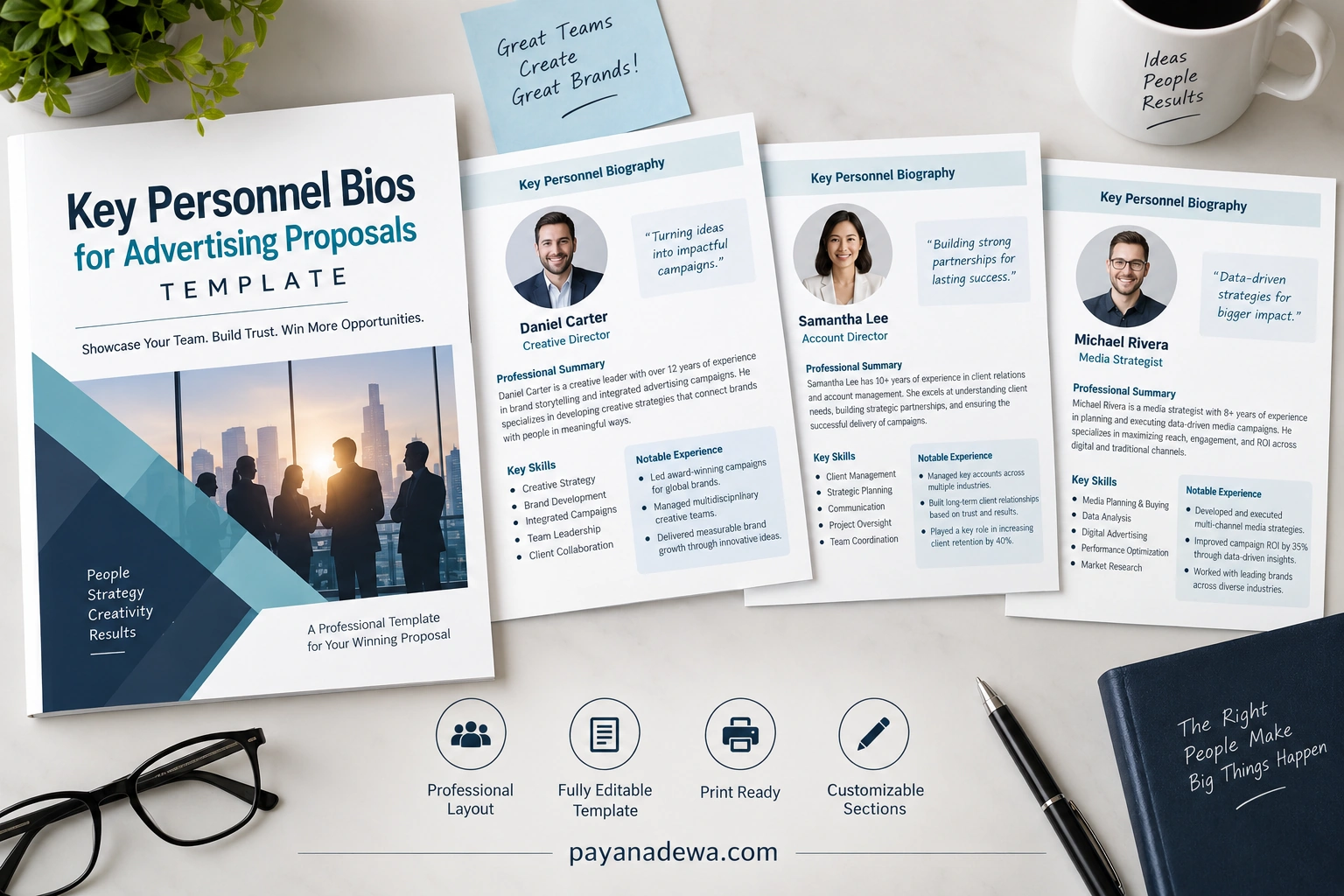
Essential Elements of a Professional Personnel Bio
A useful team profile does not need to be lengthy. In most advertising proposals, clients benefit from concise information that can be understood quickly. A consistent structure also makes the proposal look more professional.
1. Name and Job Title
Start with the person’s full name and current role. The title should make their responsibility clear, such as Creative Director, Account Director, Media Strategist, Copywriter, Art Director, Digital Marketing Manager, or Campaign Strategist.
The job title immediately establishes why the individual is included in the proposal and helps the client understand their expected contribution.
2. Professional Summary
The professional summary should provide a short overview of the person’s experience and specialization. Rather than listing every career achievement, focus on experience that supports the proposed advertising project.
For example, a media strategist could emphasize experience with paid media planning, audience targeting, campaign optimization, performance measurement, and cross-channel advertising.
3. Key Skills
A short skills section makes the bio easier to scan. Select skills that are directly connected to the project rather than filling the page with unrelated abilities.
- Creative strategy
- Brand development
- Campaign management
- Media planning and buying
- Digital advertising
- Client relationship management
- Market research
- Performance analytics
- Content strategy
- Team leadership
4. Relevant Experience and Achievements
Whenever possible, support experience with specific examples. A statement such as “experienced in advertising” is less informative than describing the types of campaigns managed, industries served, or measurable improvements achieved.
Relevant achievements can include successful campaign launches, improvements in engagement, increased conversion rates, successful brand repositioning, major client accounts, or experience managing multidisciplinary teams.
How to Write Strong Bios for an Advertising Proposal
Writing an effective personnel bio requires more than copying information from LinkedIn or a resume. The content should be adapted to the proposal and written from the client’s perspective.
Match Each Bio to the Client’s Needs
Review the project requirements before writing the profiles. If the client is requesting a social media campaign, emphasize social strategy, content development, community engagement, and performance analytics. If the project focuses on brand development, highlight positioning, creative direction, research, and brand strategy.
This approach makes each bio feel relevant instead of generic. It also demonstrates that the agency understands the client’s requirements.
Keep the Writing Concise
Long biographies can make a proposal harder to read. Aim to communicate the most valuable information in a few focused paragraphs. Use short sentences and clear headings so decision-makers can find important details quickly.
A useful structure is to introduce the person’s experience, explain their specialization, and then connect their expertise to the proposed project.
Use Evidence Instead of Generic Claims
Strong bios rely on specific information. Instead of saying that someone is “highly experienced,” explain what they have done and where their experience is relevant.
For example, a profile might mention experience managing integrated campaigns across paid search, social media, display advertising, and traditional media. Specific details provide more context and make professional claims easier to understand.
Recommended Structure for a Key Personnel Bio Template
A consistent template can save time and create a polished appearance across the entire proposal. Each profile can follow the same basic structure while allowing the content to reflect the individual’s expertise.
- Full Name
- Professional Title
- Professional Summary
- Core Skills
- Relevant Experience
- Notable Achievements
- Project Responsibility
- Optional Professional Quote
Using the same layout for every team member improves consistency. It also allows clients to compare roles and understand how different specialists contribute to the overall campaign.
Design Tips for Advertising Proposal Team Profiles
Good content should be supported by a clean visual presentation. A professional proposal bio should look polished without becoming overly decorative.
Use a Clear Visual Hierarchy
Names and job titles should be easy to identify. Use headings, spacing, and concise sections to guide the reader through each profile. Avoid large blocks of uninterrupted text.
Add Professional Photography When Appropriate
Professional headshots can make a team profile feel more personal and credible. Use consistent image sizes and styles throughout the proposal. If photographs are not available, a clean text-based layout can still look professional.
Maintain Brand Consistency
Use your agency’s typography, colors, logo placement, and visual style consistently. The personnel section should feel like a natural part of the proposal rather than a separate document.
Common Mistakes to Avoid
Even experienced agencies can weaken their proposals by presenting team information poorly. Avoid these common mistakes when preparing personnel profiles.
- Using identical generic bios: Each profile should explain the individual’s specific value to the project.
- Including irrelevant experience: Prioritize information connected to the client’s needs.
- Writing excessively long biographies: Focus on the most important qualifications and achievements.
- Making unsupported claims: Use concrete experience and measurable results whenever possible.
- Inconsistent formatting: Keep headings, profile lengths, typography, and layouts consistent.
- Ignoring project responsibilities: Clearly explain what each person will actually do.
How a Personnel Bio Template Saves Time
Creating a proposal from scratch for every client can take significant time. A reusable Key Personnel Bios for Advertising Proposals template gives agencies a reliable starting point for future pitches.
Instead of redesigning every profile, the team can update names, roles, experience, achievements, and project responsibilities while keeping the overall structure consistent. This can make proposal production more efficient and reduce formatting errors.
A template can also make collaboration easier. Account managers, creative teams, media specialists, and business development professionals can provide their information using the same format.
Practical Tips for Creating Client-Focused Team Bios
Before adding personnel profiles to your next advertising proposal, review each bio from the client’s perspective. Ask whether the information clearly explains why this person is qualified for the proposed work.
- Keep each profile focused on project relevance.
- Use plain, professional language.
- Prioritize recent and relevant experience.
- Include measurable achievements when they are available.
- Explain the person’s specific responsibility on the account.
- Keep formatting consistent across all profiles.
- Proofread names, titles, company names, and statistics carefully.
- Update bios regularly as team members gain new experience.
It is also useful to review the final proposal as a complete document. The team profiles should support the strategy, services, timeline, and pricing rather than repeat information already presented elsewhere.
Conclusion
Key Personnel Bios for Advertising Proposals help agencies introduce the professionals behind their ideas and demonstrate how those professionals can contribute to a client’s goals. When written with relevant experience, clear responsibilities, specific achievements, and consistent formatting, personnel profiles can make a proposal easier to understand and more professional.
The most effective approach is to keep each bio concise, client-focused, and connected to the proposed campaign. A reusable template can further simplify the process by providing a consistent structure for creative directors, account managers, media strategists, designers, analysts, and other specialists.
By combining strong content with a clean presentation, your advertising proposal can give prospective clients a clearer picture of the people who will turn the proposed strategy into actual campaign results.