An Influencer Brand Advertising Brief gives creators and marketing teams a clear roadmap for a successful influencer campaign. Instead of relying on scattered messages, assumptions, or last-minute instructions, a well-written brief puts the campaign objective, target audience, brand message, creative direction, deliverables, timeline, compensation, and measurement plan in one place.
Whether you are working with one creator or managing a larger influencer marketing campaign, a strong brief helps everyone understand what needs to be communicated and how the content should support the brand. It also gives influencers enough context to create authentic content without losing sight of the campaign goals.
In this guide, you will learn what an influencer advertising brief should contain, how to structure one, common mistakes to avoid, and practical ways to make your campaign easier to manage and measure.
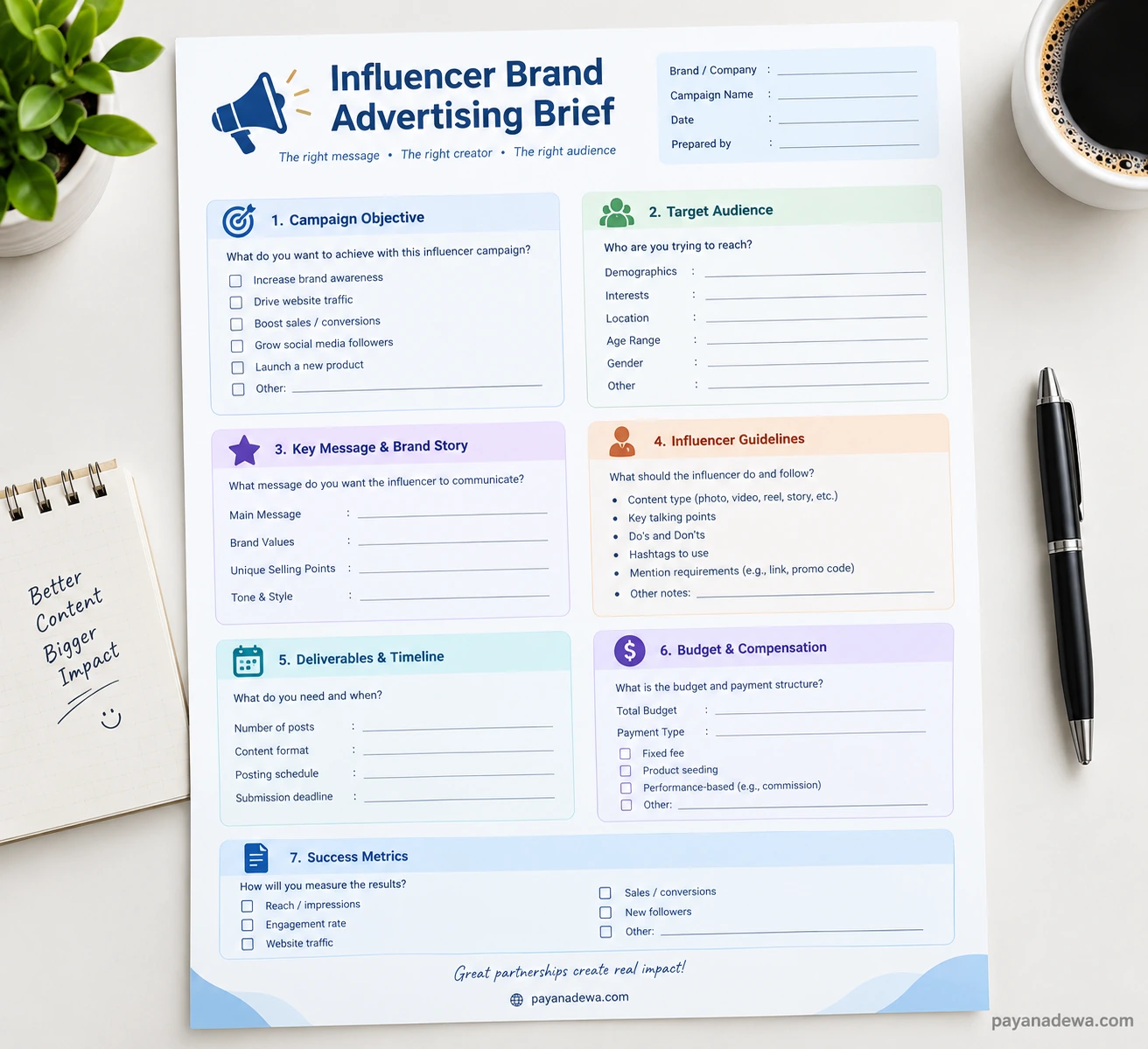
What Is an Influencer Brand Advertising Brief?
An influencer brand advertising brief is a planning document that explains how a brand and influencer should work together on a sponsored campaign. It translates a marketing strategy into practical instructions that a creator can understand and use when developing content.
The brief can be as simple as a one-page document or as detailed as a multi-section campaign guide. The ideal format depends on the size and complexity of the campaign. However, most useful briefs answer the same essential questions:
- What is the campaign trying to achieve?
- Who is the target audience?
- What should the audience remember?
- What content must the influencer create?
- What brand guidelines must be followed?
- When is the content due and when should it be published?
- How will campaign performance be measured?
A clear brief reduces confusion and creates a shared reference point for the brand, agency, influencer, and other campaign stakeholders.
Why an Influencer Advertising Brief Matters
Influencer marketing works best when strategic direction and creator authenticity are balanced. A brand needs to protect its message and campaign requirements, while an influencer needs enough creative freedom to communicate naturally with their audience.
A detailed influencer campaign brief helps establish that balance. It can prevent misunderstandings about content formats, deadlines, required mentions, promotional codes, product claims, or approval processes.
It Aligns Everyone Around One Goal
Campaigns can become inefficient when different people interpret the objective differently. For example, a brand may want product sales while a creator assumes the main goal is awareness. Stating the primary objective in the brief helps everyone make better content decisions.
It Saves Time During Content Production
Creators can produce content faster when they know exactly what is expected. A good brief provides the important information before filming, writing, editing, and publishing begins.
It Protects Brand Consistency
The brief can explain approved terminology, visual requirements, key product benefits, brand tone, required disclosures, and other important campaign standards. This gives creators useful boundaries without forcing every piece of content to look identical.
Key Elements of an Influencer Brand Advertising Brief
A practical brief should contain enough information to answer the creator’s most important questions. The following sections provide a strong starting structure.
1. Campaign Overview
Begin with a short overview of the campaign. Include the brand name, campaign name, product or service, campaign period, and a concise explanation of what the partnership is about.
Keep this section easy to scan. The influencer should understand the campaign context within a few seconds.
2. Campaign Objectives
Define the specific outcome the campaign is intended to support. Common influencer marketing objectives include:
- Increasing brand awareness
- Generating website traffic
- Launching a new product
- Increasing sales or conversions
- Growing social media engagement
- Building a new audience segment
- Supporting a seasonal promotion
Whenever possible, connect the objective to a measurable result. A clear objective makes it easier to choose the right creator, content format, call to action, and performance metrics.
3. Target Audience
Describe the people the campaign is designed to reach. Include relevant demographic and behavioral information such as age range, location, interests, lifestyle, purchase behavior, or customer needs.
Audience information is particularly important when selecting influencers. A large follower count does not automatically mean that a creator has the right audience for the campaign.
4. Key Message and Brand Story
Explain the central idea that the influencer should communicate. Focus on the most important takeaway rather than giving the creator a long list of marketing statements.
You can also provide supporting information such as the product’s unique selling points, customer benefits, brand values, and the problem the product helps solve.
A useful approach is to separate must-communicate points from optional talking points. This gives creators clarity while preserving room for authentic storytelling.
5. Creative Direction and Influencer Guidelines
This section explains how the content should be created and what boundaries apply. Depending on the campaign, include the required content format, visual direction, tone of voice, hashtags, account tags, links, discount codes, product placement requirements, and call to action.
It is also helpful to include a short list of do’s and don’ts. For example, a brand may ask an influencer to demonstrate the product naturally but avoid making unsupported claims about its performance.
Keep creative instructions specific enough to prevent major errors, but avoid over-controlling every detail. Influencers understand their audience and platform behavior, so their creative perspective can add significant value.
Planning Deliverables and Deadlines
Every influencer partnership should clearly define what the creator is expected to deliver. A deliverables section may include the number of posts, videos, short-form clips, stories, livestreams, blog posts, or other content assets.
For each deliverable, specify the required format and deadline. If the campaign includes content approval, identify the draft submission date and expected revision period as well.
- Content type: Reel, short video, story, static post, blog article, or other format
- Quantity: Number of required content pieces
- Draft deadline: Date the content must be submitted for review
- Publication date: Date and approximate time the content should go live
- Approval process: Who reviews and approves the content
A detailed timeline prevents the common problem of discovering that a creator’s schedule does not match the campaign launch date.
Budget, Compensation, and Usage Rights
Compensation should be clearly documented so both sides understand the commercial arrangement. Depending on the partnership, payment may involve a fixed fee, product gifting, affiliate commission, performance incentives, or a combination of these structures.
The brief or related agreement should also clarify important usage terms. If the brand wants permission to reuse influencer content in paid advertising, on its website, or across other marketing channels, those expectations should be discussed and documented rather than assumed.
Other commercial details may include payment timing, invoicing requirements, exclusivity, content licensing, whitelisting or creator-authorized advertising, and campaign cancellation terms.
How to Define Success Metrics
A campaign brief should explain how success will be evaluated. The right metrics depend on the campaign objective.
- Awareness: Reach, impressions, video views, and audience growth
- Engagement: Likes, comments, shares, saves, and engagement rate
- Traffic: Link clicks, landing-page visits, and referral traffic
- Conversions: Purchases, leads, registrations, or downloads
- Sales: Revenue, affiliate sales, or promotional-code usage
Avoid measuring every possible metric simply because the platform provides the data. Select the indicators that connect directly to the campaign objective.
Practical Tips for Creating a Better Influencer Brief
Keep the Most Important Information Visible
Creators often manage several partnerships at once. Put essential details such as deadlines, required tags, key messages, deliverables, and approval instructions in easy-to-find sections.
Write for the Influencer, Not Only the Marketing Team
Internal marketing language may be familiar to a brand team but confusing to an external creator. Use plain English, explain unfamiliar terms, and provide examples when a requirement could be interpreted in different ways.
Separate Requirements From Creative Suggestions
Clearly distinguish non-negotiable requirements from ideas that the influencer can adapt. This helps creators understand which elements are mandatory and where they have creative freedom.
Use One Source of Truth
Once the campaign begins, avoid sending important changes through scattered conversations whenever possible. Update the main brief or shared campaign document so everyone can refer to the same current information.
Review the Brief Before Sending It
Before sharing the document, check that the product name, links, dates, discount codes, social handles, required disclosures, and deliverables are accurate. A small error in a campaign brief can create unnecessary revisions or missed deadlines.
Common Influencer Brief Mistakes to Avoid
Even a professional-looking document can create problems if the information is unclear. Watch for these common mistakes:
- Too much information: A long brief can bury the details the creator actually needs.
- Vague objectives: Statements such as “make the campaign successful” do not provide useful direction.
- Unclear deadlines: A single launch date may not be enough if drafts and approvals are required.
- Overly restrictive creative rules: Excessive scripting can make sponsored content feel unnatural.
- Missing measurement criteria: Without agreed metrics, evaluating results becomes difficult.
- Unclear content rights: Reuse and advertising rights should be discussed before content is produced.
How to Use an Influencer Brand Advertising Brief Template
A template makes campaign planning faster because the basic structure is already prepared. Start by entering the brand and campaign information, then complete each section based on the specific partnership.
Next, review the completed brief from the influencer’s perspective. Ask whether a creator could produce the required content without needing to send multiple clarification messages. If important information is missing, improve the brief before the campaign starts.
For recurring campaigns, keep a master version of the template and create a new copy for each campaign. This approach helps maintain consistency while allowing each partnership to have its own goals, audience, creative direction, and deliverables.
Final Checklist Before Launching an Influencer Campaign
Use this checklist to make sure the advertising brief is ready:
- Campaign objective is clearly stated
- Target audience is defined
- Key message and product benefits are accurate
- Required deliverables are listed
- Content deadlines and publication dates are confirmed
- Creative guidelines are easy to understand
- Required tags, links, hashtags, and codes are included
- Compensation terms are documented
- Content usage expectations are clarified
- Success metrics are connected to the campaign objective
Conclusion
An effective Influencer Brand Advertising Brief turns a creative partnership into a clearly organized campaign. It gives influencers the context they need, helps brands protect important campaign requirements, and creates a shared understanding of objectives, deliverables, deadlines, and performance measurement.
The strongest briefs are clear without being restrictive. They communicate what matters most while leaving enough creative space for influencers to produce content that feels natural to their audience. By using a structured template and reviewing the details before launch, brands can reduce confusion, improve collaboration, and create a more consistent influencer marketing workflow.