A Trust Agreement is a legal document that creates rules for a trust. It explains who creates the trust. It also identifies the trustee and beneficiaries.
In addition, the document explains how trust assets should be managed. It can also describe how beneficiaries receive trust assets or other benefits.
Therefore, a clear Trust Agreement can make trust administration easier. It gives the trustee clear instructions to follow.
In this guide, you will learn what a Trust Agreement is. You will also learn what it should contain and how to review it.
What Is a Trust Agreement?
A Trust Agreement is a written document that sets the rules for a trust. The document explains how the trust should operate.
Usually, the person who creates the trust is the grantor. This person may also be called a settlor or trustor.
Next, the grantor chooses a trustee. The trustee manages the property according to the trust terms.
Meanwhile, the beneficiaries receive benefits from the trust. The agreement explains their rights and interests.
Trust property can include money, real estate, investments, or business interests. It can also include other assets allowed by law.
Who Are the Parties in a Trust Agreement?
A trust normally includes several important parties. Each party has a specific role.
Grantor or Trustor
First, the grantor creates the trust. The grantor also transfers property to the trust.
In addition, the grantor sets many of the trust rules. These rules guide the trustee during administration.
Trustee
Next, the trustee manages the trust property. The trustee must follow the trust terms.
For example, the trustee may manage investments. The trustee may also keep records and make approved distributions.
However, trustee powers depend on the trust terms and applicable law.
Beneficiaries
Finally, beneficiaries are the people or organizations that receive trust benefits.
For this reason, the Trust Agreement should identify them clearly. It should also explain when they can receive distributions.
Why Is a Trust Agreement Important?
A clear Trust Agreement gives the trustee written instructions. As a result, the trustee can better understand the trust’s purpose.
Furthermore, the document explains beneficiary rights. It can also reduce confusion about asset management.
A trust agreement may help to:
- Explain how assets should be managed.
- Identify the trust beneficiaries.
- Set rules for asset distributions.
- Define trustee duties.
- Define trustee powers.
- Name a successor trustee.
- Explain amendment procedures.
- Explain termination procedures.
- Identify the governing law.
However, trust laws vary between jurisdictions. Therefore, the document should match the laws that apply to the trust.
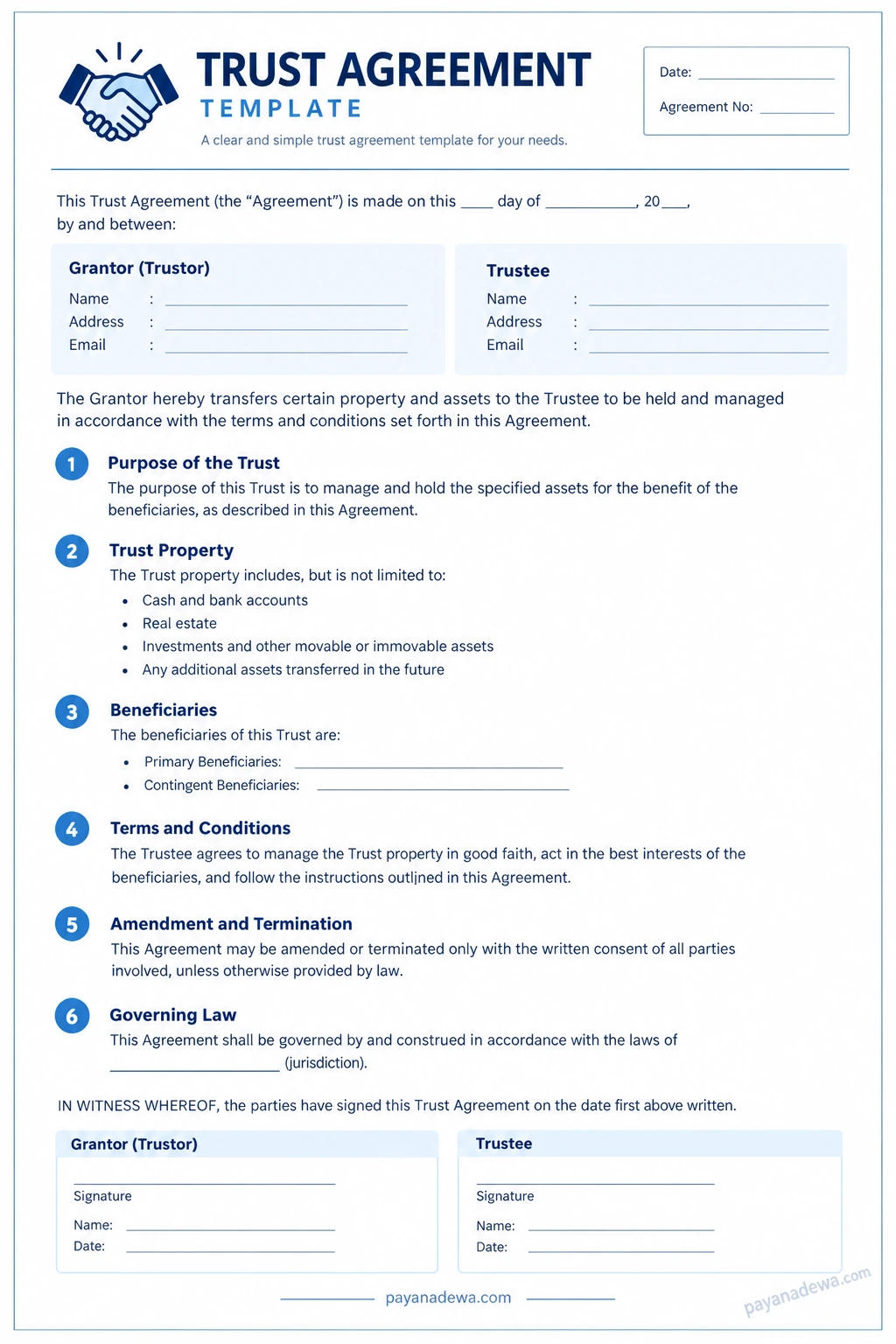
What Should a Trust Agreement Include?
Every trust has different needs. Even so, many Trust Agreements contain similar sections.
Therefore, it helps to understand the main parts before preparing a trust document.
1. Names of the Parties
First, the document should identify all important parties. These parties can include the grantor, trustee, and beneficiaries.
Use accurate legal names throughout the document. Also, keep names consistent in every section.
2. Purpose of the Trust
Next, explain why the trust exists. A clear purpose helps the trustee understand the intended use of the trust.
For example, a trust may hold family property. It may also manage assets for a child or another beneficiary.
As a result, the purpose section can provide useful direction during trust administration.
3. Trust Property
The Trust Agreement should describe the property placed into the trust.
For example, trust property may include:
- Cash.
- Bank accounts.
- Real estate.
- Investment accounts.
- Business interests.
- Personal property.
- Other permitted assets.
However, listing property in the agreement may not complete the transfer. Some assets require separate transfer steps.
For example, real estate may require a deed. Likewise, some financial accounts may require a registration change.
4. Beneficiary Provisions
Next, the agreement should identify the beneficiaries. It should also explain their interests.
For example, the agreement may set a distribution schedule. It may also set conditions for certain distributions.
In addition, the document can identify primary and contingent beneficiaries.
5. Trustee Duties and Powers
The Trust Agreement should explain the trustee’s duties. It should also explain the trustee’s powers.
Common trustee duties include:
- Managing trust property.
- Protecting trust assets.
- Keeping accurate records.
- Managing permitted investments.
- Making approved distributions.
- Communicating with beneficiaries.
- Following the trust terms.
Furthermore, the agreement may describe specific trustee powers. Those powers should remain consistent with applicable law.
6. Successor Trustee
A Trust Agreement can name a successor trustee. This person can take over when the original trustee cannot continue.
For example, a trustee may resign. The trustee may also become unable to serve.
Therefore, clear successor rules can make future administration easier.
7. Amendment and Termination
The document should explain whether the trust can change. It should also explain when the trust can end.
In addition, the agreement can explain what happens to the remaining assets after termination.
However, amendment rules vary by trust type. Therefore, review these provisions carefully.
8. Governing Law
Finally, the agreement may identify the governing law. This section can be useful when parties or assets are in different locations.
However, the appropriate jurisdiction depends on the circumstances. Local legal requirements should always be considered.
Common Types of Trust Agreements
There are several common types of trusts. Each type can serve a different purpose.
Revocable Trust
A revocable trust generally allows the grantor to make changes. In many cases, the grantor can also revoke the trust.
However, the exact rules depend on the trust terms and applicable law.
Irrevocable Trust
An irrevocable trust usually has more restrictions. Changes may require additional steps or approvals.
Therefore, legal and tax advice can be useful before creating this type of trust.
Living Trust
A living trust is generally created during the grantor’s lifetime.
Depending on its terms, the trust can provide instructions for managing property during life. It may also provide instructions for later administration.
Testamentary Trust
A testamentary trust is generally created through a will.
Usually, it becomes effective after the relevant requirements following the grantor’s death are completed.
How to Create a Trust Agreement
Creating a Trust Agreement requires careful planning. First, identify the purpose of the trust.
Next, identify the people involved. Then, identify the assets that should enter the trust.
After that, establish clear management and distribution rules.
A practical process includes these steps:
- Define the purpose of the trust.
- Identify the grantor.
- Choose the trustee.
- Identify the beneficiaries.
- Choose a successor trustee.
- List the trust property.
- Set management rules.
- Set distribution rules.
- Define trustee powers.
- Review amendment rules.
- Review termination rules.
- Identify the governing law.
- Complete required signing steps.
- Store the final document safely.
In addition, check whether each asset needs a separate transfer document. This step can be important for real estate and financial accounts.
How to Use a Trust Agreement Template
A Trust Agreement template can help organize the main information. It can also provide a useful document structure.
However, a general template may not fit every situation. Therefore, review each section before using it.
Check whether the template includes:
- The correct trust type.
- Complete party information.
- A clear property description.
- Beneficiary information.
- Trustee duties.
- Trustee powers.
- Successor trustee rules.
- Distribution instructions.
- Amendment rules.
- Termination rules.
- Governing law.
- Signing requirements.
In short, a template can help with organization. However, it should not automatically replace professional legal advice.
Practical Tips for Reviewing a Trust Agreement
Before signing a Trust Agreement, review every section carefully. This simple step can help you find errors.
Check Names and Dates
First, check every name and date. Make sure all information matches the supporting documents.
Review the Trust Assets
Next, review the property listed in the agreement. Confirm that each description is accurate.
Understand Distribution Rules
Then, read the beneficiary provisions. Make sure the timing and conditions are clear.
Review Trustee Powers
Also, review the trustee powers. The trustee should have clear instructions for managing trust property.
Check Successor Rules
Finally, review the successor trustee section. Make sure the agreement explains what happens if the trustee cannot serve.
Trust Agreement vs. Other Estate Planning Documents
A Trust Agreement is different from a will. A will generally provides instructions for property after death.
In contrast, a trust can hold and manage property under separate trust terms.
Other estate planning documents serve different purposes. For example, a power of attorney can address financial decisions.
Similarly, healthcare documents can address medical decisions. Therefore, several documents may work together in an estate plan.
When Should You Seek Legal Advice?
Legal advice can help when a trust involves complex assets. It can also help when the trust has important legal or tax consequences.
For example, consider professional guidance when the trust involves:
- Large or complex assets.
- Real estate in different jurisdictions.
- Business ownership.
- Multiple beneficiaries.
- Special distribution conditions.
- Potential tax issues.
- An irrevocable trust.
- Complex family arrangements.
Furthermore, trust laws can differ between jurisdictions. Therefore, a document that works in one location may not work the same way elsewhere.
Frequently Asked Questions About Trust Agreements
Is a Trust Agreement legally binding?
A Trust Agreement can create legal rights and duties when the parties properly create and execute it.
However, the exact requirements depend on the trust type and applicable law.
Can a Trust Agreement be changed?
It depends on the type of trust and its terms.
Generally, revocable trusts allow more changes than irrevocable trusts. However, always review the specific agreement before making changes.
Does a Trust Agreement transfer property?
The agreement establishes the trust arrangement. However, some assets require additional transfer steps.
For example, real estate may require a deed. Similarly, financial accounts may require a registration change.
Can a Trust Agreement protect family assets?
A trust can hold and manage property for family members. However, the appropriate structure depends on the purpose and applicable law.
Therefore, review the trust terms carefully before transferring important assets.
Conclusion
A Trust Agreement provides a framework for creating and managing a trust. It identifies the parties and explains how the trust should operate.
In addition, it can define trustee duties, beneficiary rights, distribution rules, and trust procedures.
A Trust Agreement template can help organize this information. However, every trust has different requirements.
For that reason, review the document carefully before signing it. Also, check the legal requirements that apply to your situation.
Finally, consider professional legal advice when the trust involves complex property, significant assets, or important legal consequences.
🔗 +2.84567241 ВТС. GET ->> graph.org/Mining-08-27-2?hs=5d63dd99efefe9e54613aca7cab2bd57& 🔗