A Termination of Lease Agreement is a written document that confirms the end of a lease. It can help landlords and tenants understand when the tenancy ends and what happens next.
A lease may end because the agreed term has expired. It may also end early when both parties agree. In some cases, the lease may end because of a specific right under the contract or local law.
A clear termination agreement can prevent confusion. It can also record important details such as the move-out date, unpaid rent, security deposit, and property condition.
Important: Lease laws differ by location. This guide provides general information. It is not legal advice. Always check the original lease and local requirements before signing a termination document.
What Is a Termination of Lease Agreement?
A Termination of Lease Agreement is a document that records the end of a rental agreement. It normally identifies the landlord, tenant, property, and termination date.
The document can also explain what each party must do before the lease ends. For example, it may cover rent, utilities, repairs, cleaning, keys, and the security deposit.
In addition, a written agreement creates a useful record. Both parties can keep a copy for their records.
When Can a Lease Be Terminated?
There are several common reasons for ending a lease. However, the correct process depends on the lease and local law.
Lease Expiration
A lease can end when the agreed rental period reaches its final date. In this situation, the parties should still review the lease for notice and move-out requirements.
Mutual Agreement
A landlord and tenant may agree to end the lease early. When both parties agree, they can document the terms in a written termination agreement.
Early Termination
A lease may sometimes end before its scheduled expiration date. The lease may contain an early termination clause. Local law may also provide specific rights in certain situations.
Lease Violation
A serious violation of the lease may create grounds for termination. However, specific notice and legal procedures may apply.
Therefore, neither party should assume that a lease can simply be ended without checking the applicable requirements.
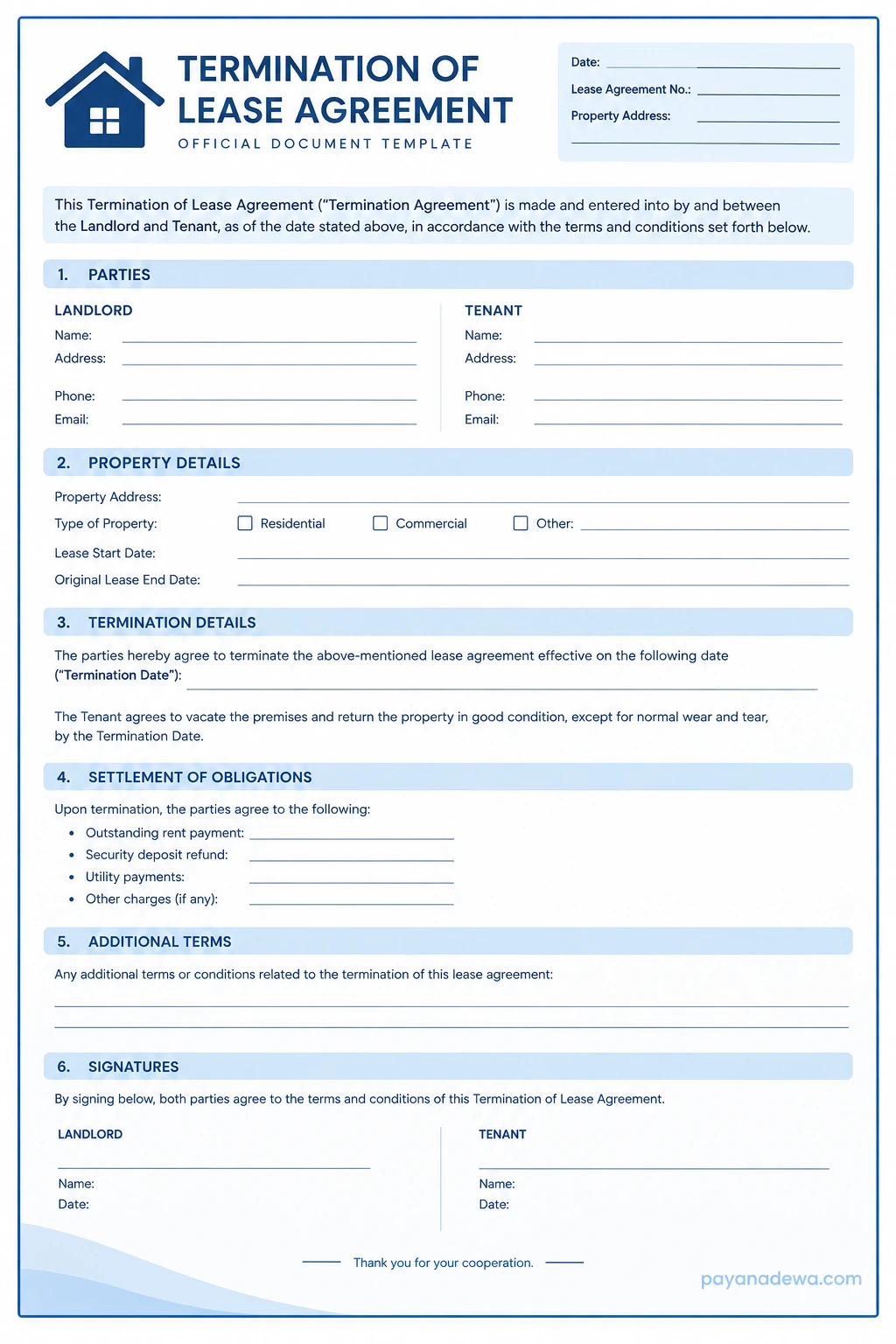
What Should a Lease Termination Agreement Include?
A good termination agreement should be clear and easy to understand. It should also address the main responsibilities of both parties.
1. Landlord and Tenant Information
First, identify the landlord and tenant. Use the names that appear in the original lease.
Include contact information when appropriate. If there are multiple tenants or landlords, make sure the relevant parties are listed.
2. Property Details
Next, identify the rental property. Include the complete address and unit number when applicable.
This helps prevent confusion about which property the termination agreement covers.
3. Original Lease Information
Reference the original lease agreement. Include the lease date and agreement number if one exists.
This makes it easier to connect the termination document with the original contract.
4. Termination Date
The termination date is one of the most important details. State the exact date when the lease ends.
Also explain when the tenant must leave the property. Clear dates can help prevent disagreements later.
5. Outstanding Payments
The agreement should explain how outstanding payments will be handled. These may include:
- Unpaid rent
- Utility charges
- Permitted late fees
- Repair costs
- Other agreed charges
Only include charges that are permitted by the lease and applicable law.
6. Security Deposit
The document should address the security deposit when one exists. State whether the deposit will be returned or applied to permitted charges.
Local laws may also set deadlines for returning a security deposit. Therefore, check the applicable rules before including a specific deadline.
7. Property Condition
Explain how the tenant should return the property. The agreement may cover cleaning, repairs, inspections, and normal wear and tear.
It can also explain when keys, access cards, parking permits, or other items must be returned.
8. Signatures
Finally, include signature and date sections for the required parties.
Each party should keep a signed copy of the final agreement.
How to Write a Termination of Lease Agreement
Writing a lease termination agreement does not have to be difficult. Follow these practical steps.
Step 1: Review the Original Lease
Start by reading the original lease. Check the expiration date, notice period, termination rules, and move-out requirements.
Also look for rules about deposits, repairs, utilities, and early termination.
Step 2: Confirm the Reason for Termination
Next, identify why the lease is ending. For example, the lease may be expiring normally. Alternatively, both parties may have agreed to an earlier date.
Step 3: Agree on the Termination Date
Both parties should understand the exact termination date.
Avoid unclear phrases such as “at the end of the month.” Instead, use a specific calendar date.
Step 4: Resolve Financial Obligations
Review all outstanding financial matters. This includes rent, utilities, deposits, and other agreed costs.
Record the agreed arrangements in the termination document.
Step 5: Plan the Move-Out
Set out the move-out requirements clearly. Explain when the property must be empty and when the keys must be returned.
If a final inspection is required, include that information as well.
Step 6: Sign the Agreement
Review the final document before signing. Make sure the names, property address, dates, and financial terms are correct.
After signing, each party should keep a complete copy.
Mutual Termination vs. Early Lease Termination
Mutual termination usually means that the landlord and tenant agree to end the lease. They can then record the agreed date and conditions in writing.
Early lease termination means the lease ends before its original expiration date. However, early termination may involve specific conditions.
For example, the lease may require advance notice or an early termination fee. Local law may also affect the parties’ rights.
For this reason, always check the original lease before agreeing to an early termination.
Common Lease Termination Mistakes
A few simple mistakes can create problems during the move-out process. Fortunately, most can be avoided with careful planning.
Using an Unclear Termination Date
Always state a specific date. Both parties should know exactly when the lease ends.
Ignoring the Original Lease
Do not rely only on a generic termination form. First, review the original lease and its termination provisions.
Leaving Money Matters Unclear
Address unpaid rent, deposits, utilities, and other permitted charges. Clear financial terms can reduce future disagreements.
Forgetting the Move-Out Process
Include important details about cleaning, repairs, inspections, keys, and possession of the property.
Relying Only on Verbal Agreements
Important agreements should be written down. A written record can make the final terms easier to verify.
Failing to Keep Copies
Both parties should keep the signed termination agreement. They should also keep the original lease and relevant payment records.
Tips for a Smooth Lease Termination
A little preparation can make the termination process much easier.
- Review the lease before discussing termination.
- Confirm the termination date in writing.
- Communicate important changes promptly.
- Keep copies of emails and other relevant communications.
- Document the property’s condition at move-out.
- Arrange a final inspection when appropriate.
- Keep receipts for relevant payments.
- Return keys and access devices on time.
- Keep the signed termination agreement in a safe place.
Can a Tenant Terminate a Lease Early?
A tenant may be able to end a lease early in some circumstances. However, the answer depends on the lease and applicable law.
Some rental agreements include an early lease termination clause. Such a clause may explain notice requirements, fees, or other conditions.
In addition, local law may provide specific termination rights in certain situations.
Therefore, a tenant should review the lease before moving out early. Leaving the property does not necessarily mean that every contractual obligation has ended.
Can a Landlord Terminate a Lease Early?
A landlord’s ability to end a lease early also depends on the contract and applicable law.
A landlord should first determine whether the lease or local law provides a valid reason for early termination.
If the termination involves a lease violation, specific notice or legal procedures may apply. Those requirements vary by location.
When the situation is disputed, getting advice from a qualified local professional can help clarify the proper process.
Why Use a Written Lease Termination Document?
A written termination document provides a clear record of the agreement. It can show when the lease ends and what each party must do.
It can also help clarify financial matters. For example, the document can address rent, deposits, utilities, and agreed repairs.
Furthermore, a signed document can reduce confusion after the tenant leaves the property.
For these reasons, a written termination agreement can be useful even when both parties have a good relationship.
Lease Termination Checklist
Before signing a Termination of Lease Agreement, review the following checklist:
- Confirm the landlord’s name.
- Confirm the tenant’s name.
- Check the property address.
- Reference the original lease.
- Confirm the termination date.
- Review outstanding rent.
- Review utility payments.
- Confirm security deposit arrangements.
- Explain move-out requirements.
- Confirm key and access-device returns.
- Review any additional terms.
- Check all signatures and dates.
- Keep a complete copy of the signed agreement.
Frequently Asked Questions About Lease Termination
What is a lease termination agreement?
A lease termination agreement is a written document that records the end of a rental or lease agreement. It can identify the termination date and the remaining responsibilities of the landlord and tenant.
Can a lease be terminated before the end date?
In some circumstances, yes. However, early termination depends on the lease terms and applicable law. Check the contract before ending the lease early.
Does a termination agreement need to be signed?
When the termination is based on mutual agreement, signatures can provide important evidence that both parties accepted the terms. Requirements can vary by location.
What happens to the security deposit after lease termination?
The security deposit is generally handled according to the lease and applicable law. Depending on the circumstances, it may be returned or reduced by permitted deductions.
Should I keep a copy of the termination agreement?
Yes. Both parties should keep a complete copy of the signed agreement. It is also useful to keep the original lease and related payment records.
Conclusion
A Termination of Lease Agreement provides a clear way to document the end of a tenancy. It can help landlords and tenants understand the final date and their remaining responsibilities.
Before signing, review the original lease carefully. Then confirm the termination date, financial obligations, security deposit, property condition, and move-out requirements.
Finally, keep a signed copy of the completed document. A clear written record can make the end of a lease easier to manage.
Because rental laws differ between locations, always check the applicable requirements before using a termination form. A template can provide a useful starting point, but it may need changes for a specific lease or jurisdiction.