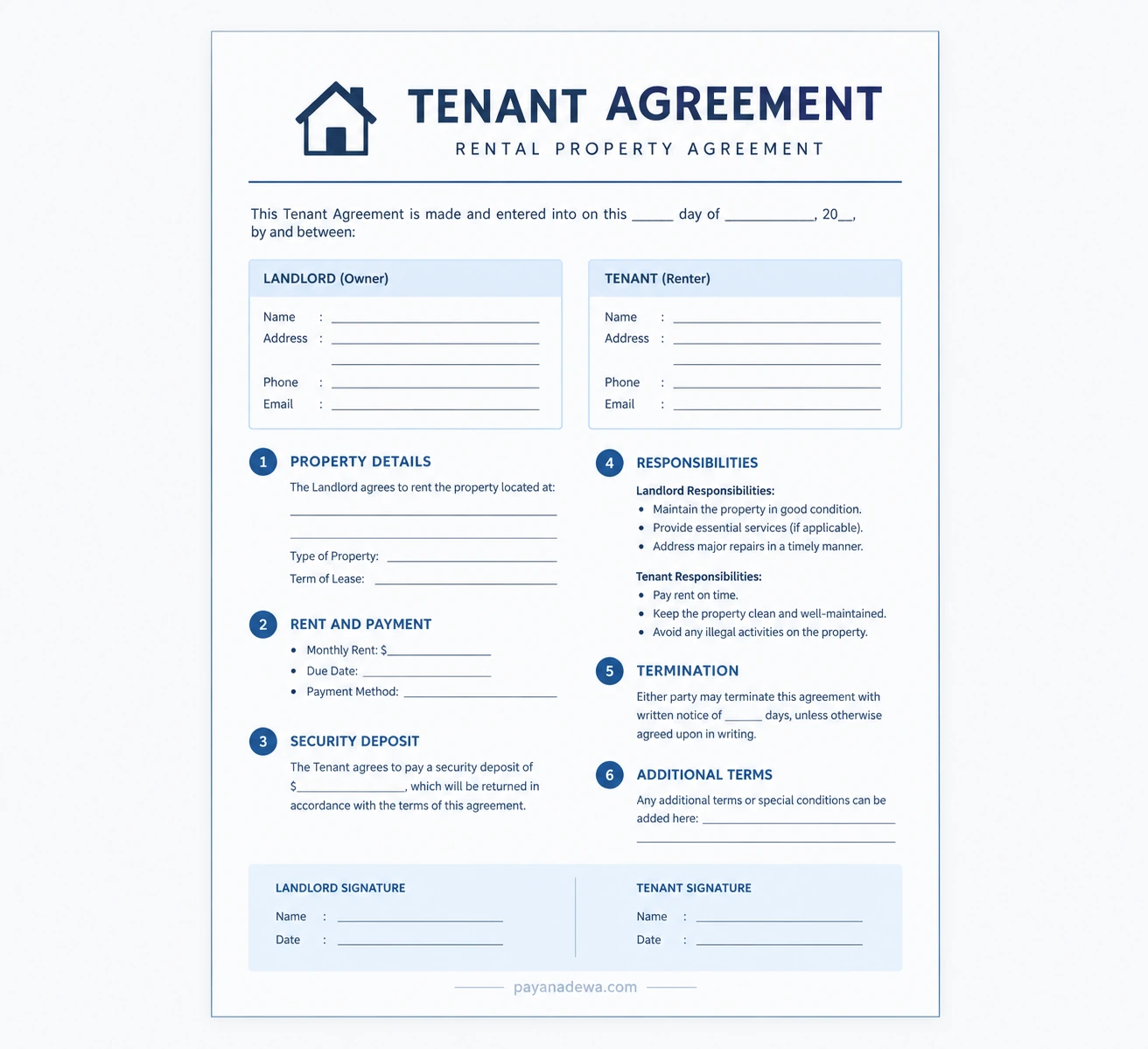
A Tenant Agreement sets out the main terms between a landlord and a tenant. It explains the rental property, rent, deposit, responsibilities, and other important conditions.
A clear agreement can prevent confusion later. It also gives both parties a written record of what they agreed to before the tenancy begins.
Whether you rent a house, apartment, room, or other property, the right agreement can make the rental process easier. However, rental laws vary by location. Therefore, always check the rules that apply to your property.
What Is a Tenant Agreement?
A Tenant Agreement is a written document between a landlord and a tenant. It explains the terms under which the tenant can occupy or use a property.
Depending on the location, it may also be called a rental agreement, tenancy agreement, lease agreement, or rental contract.
The document usually includes the names of the parties, property details, rent, payment dates, deposit terms, and tenancy rules. It can also explain how the agreement can end.
Most importantly, the agreement should be clear. Both parties should understand their duties before they sign it.
Why Is a Tenant Agreement Important?
A written rental agreement gives both parties a clear reference. As a result, it can reduce misunderstandings during the tenancy.
For example, the agreement can explain:
- Who the landlord and tenants are
- Which property is being rented
- How much rent must be paid
- When rent is due
- How the security deposit works
- Who handles repairs and maintenance
- Which property rules apply
- How much notice is required to end the tenancy
In addition, a written agreement can help both parties review their responsibilities when a question comes up.
What Should a Tenant Agreement Include?
Every rental situation is different. However, most useful rental agreements contain several key sections.
1. Landlord and Tenant Information
First, identify everyone who is part of the agreement. Include the landlord’s legal name and the name of each tenant.
You should also include suitable contact details. This makes it easier to send notices and communicate about the property.
2. Property Information
Next, describe the rental property clearly. Include the full address and unit number when applicable.
You can also list areas or facilities included with the rental. These may include a parking space, storage area, garden, balcony, or shared facility.
3. Rental Term
The agreement should state when the tenancy starts. If it has a fixed end date, include that date as well.
Some agreements are periodic. For example, a tenancy may continue from month to month. In that case, explain the applicable notice and renewal terms.
The exact rules depend on local law. Therefore, make sure the rental term follows the requirements in your area.
4. Rent and Payment Terms
Clearly state the rent amount. Also include the payment due date and accepted payment method.
For example, the agreement can state whether rent must be paid by bank transfer, online payment, check, or another permitted method.
If late fees apply, explain them clearly. However, any fee should comply with applicable laws.
5. Security Deposit
If a security deposit is required, state the amount in the agreement. Also explain the basic conditions that apply to the deposit.
The agreement may describe when deductions can be made. It can also explain how and when the remaining deposit will be returned.
Deposit laws vary between locations. Therefore, landlords should check the current rules before adding deposit provisions.
Landlord and Tenant Responsibilities
A good Tenant Agreement should explain the responsibilities of both parties. Clear duties can make maintenance and property care easier to manage.
Common Landlord Responsibilities
- Maintain the property as required by law
- Handle qualifying repairs within the required time
- Provide required services and facilities
- Follow applicable property entry rules
- Handle security deposits according to local requirements
Common Tenant Responsibilities
- Pay rent on time
- Keep the property reasonably clean
- Report maintenance problems promptly
- Use the property for an allowed purpose
- Follow reasonable property rules
- Avoid unnecessary property damage
These responsibilities can vary by location. Therefore, the agreement should not remove rights or duties that local law protects.
Important Rules to Add to a Rental Agreement
Some rental properties need additional rules. Adding them to the agreement can make expectations clearer from the start.
Pets
State whether pets are allowed. If they are allowed, explain any applicable conditions.
Guests
Explain reasonable guest rules and occupancy requirements. The rules should also comply with local tenancy laws.
Smoking
If smoking is restricted, clearly identify the areas where smoking is not allowed.
Utilities
State who pays for electricity, water, gas, internet, trash collection, and other services. Clear wording can prevent payment disputes.
Maintenance
Explain how the tenant should report repair problems. Include the preferred contact method when appropriate.
Property Changes
If tenants need permission before painting, installing fixtures, or making other changes, state that requirement clearly.
Parking
If parking is included, identify the assigned space and any important parking rules.
Fixed-Term Lease or Periodic Rental Agreement?
A rental arrangement can have a fixed term or continue on a periodic basis.
A fixed-term agreement has a specific start and end date. For example, the agreement may cover a period of six months or one year.
A periodic agreement continues from one rental period to the next. A common example is a month-to-month tenancy.
Each option has different legal and practical effects. Therefore, the agreement should clearly state which type of tenancy applies.
How to Create a Clear Tenant Agreement
Use Simple Language
Write each term as clearly as possible. Avoid vague statements when you can provide a specific detail.
For example, instead of saying that rent must be paid regularly, state the exact due date.
Record the Property Condition
Before the tenant moves in, record the property’s condition. A written inspection report can help.
Photos can also be useful. If possible, take dated photographs of existing damage and keep them with the rental records.
Check All Financial Terms
Review the rent, deposit, utilities, fees, and payment dates carefully. Both parties should know exactly what they must pay.
Give Both Parties a Copy
After signing, give a complete copy to the landlord and each tenant. Keep digital backups when appropriate.
Also keep any related documents, such as inspection reports, addendums, and written amendments.
Common Tenant Agreement Mistakes
Small omissions can create larger problems later. Therefore, review the agreement carefully before signing.
- Leaving the property address incomplete
- Failing to list all tenants
- Not stating the rent due date
- Leaving utility responsibilities unclear
- Using unclear termination terms
- Failing to document existing property damage
- Adding terms that conflict with local law
- Relying on verbal promises instead of written terms
Before signing, both parties should read the entire document. If something is unclear, discuss it before the tenancy begins.
Tenant Agreement Checklist
Use this simple checklist before finalizing your rental agreement:
- Landlord’s full name
- Tenant’s full name
- Contact information
- Complete property address
- Tenancy start date
- Tenancy end date, if applicable
- Rent amount
- Rent due date
- Payment method
- Security deposit details
- Utility responsibilities
- Maintenance responsibilities
- Pet and guest rules
- Smoking rules
- Parking terms
- Notice requirements
- Termination terms
- Additional conditions
- Signatures and dates
Practical Tips for Landlords and Tenants
Both landlords and tenants can take a few simple steps to make the rental process smoother.
For landlords: Keep accurate records of rent payments, repairs, notices, and communications. Also make sure the agreement follows applicable rental laws.
For tenants: Read the agreement before signing. Keep a copy of the document and report maintenance problems as soon as possible.
In addition, both parties should communicate in writing when discussing important changes. Written records can make the agreed terms easier to confirm later.
Frequently Asked Questions About Tenant Agreements
Is a Tenant Agreement the same as a lease agreement?
These terms are often used in similar ways. However, their legal meaning can differ by location. In some areas, a lease may refer to a fixed-term arrangement, while a rental agreement may describe a periodic tenancy.
Can a Tenant Agreement be changed after signing?
Changes may be possible if both parties agree and the law allows them. Important changes should normally be recorded in writing.
Should a Tenant Agreement be in writing?
A written agreement provides a clear record of the rental terms. Some jurisdictions also require certain rental arrangements or terms to be written.
What if the Tenant Agreement does not cover an issue?
Local tenancy laws may provide default rules for issues that are not included in the agreement. However, it is usually better to address important practical matters clearly whenever the law allows.
Conclusion
A clear Tenant Agreement helps landlords and tenants understand their rental responsibilities. It can cover rent, deposits, property rules, repairs, utilities, tenancy dates, and termination requirements.
Before signing, review every section carefully. Make sure the information is accurate and easy to understand.
Finally, remember that rental laws vary by location. A template is a useful starting point, but it should be adapted to the property and the laws that apply to the tenancy.