A Tenancy Agreement is an important document that sets out the terms and conditions of a rental arrangement between a landlord and a tenant. It explains who is renting the property, how much rent must be paid, how long the tenancy will last, and what responsibilities each party has during the rental period.
Whether you are renting an apartment, house, room, or other residential property, a clear tenancy agreement can help both parties understand their rights and obligations. It can also reduce misunderstandings by putting important rental terms in writing before the tenant moves in.
This guide explains what a tenancy agreement should contain, why it matters, and how landlords and tenants can use a rental agreement template more effectively.
Important: Rental laws and requirements can vary depending on the country, state, province, or local jurisdiction. A template is a starting point and should be reviewed against applicable local laws before it is signed.
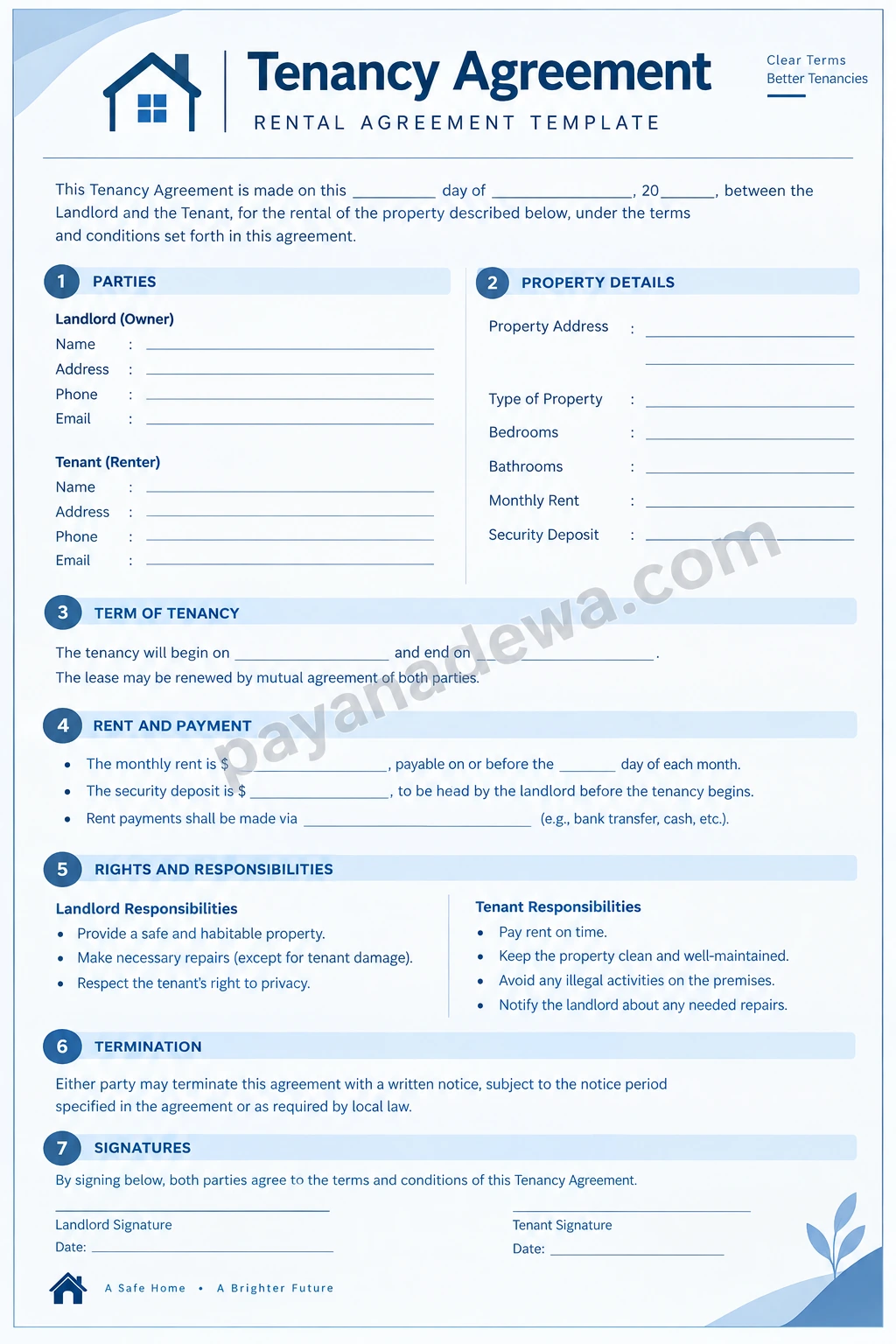
What Is a Tenancy Agreement?
A tenancy agreement is a written contract between a landlord and a tenant for the use of a rental property. The agreement normally identifies the property, the people involved, the rental period, the rent amount, and other rules that apply to the tenancy.
Depending on the arrangement and local regulations, a tenancy agreement may be called a rental agreement, lease agreement, residential lease, or rental contract. The exact terminology can differ by jurisdiction.
A well-prepared agreement should be easy to understand and specific enough to answer common questions before they become disputes. Both the landlord and tenant should read the document carefully and make sure the information is accurate before signing.
Why Is a Tenancy Agreement Important?
A written rental agreement provides a clear record of what the landlord and tenant agreed to at the beginning of the tenancy. Verbal arrangements can be difficult to prove or remember, particularly when several rental conditions are discussed.
A detailed tenancy agreement can help clarify important matters such as:
- The amount of rent and when it is due
- The amount and purpose of any security deposit
- The start and end dates of the tenancy
- Who is responsible for repairs and maintenance
- Rules concerning pets, guests, smoking, or property use
- Notice requirements for ending or renewing the tenancy
- Responsibilities for utilities and other property expenses
- Procedures for reporting damage or maintenance problems
Having these terms in writing can make communication easier and provide useful documentation if a disagreement occurs.
What Should a Tenancy Agreement Include?
Although the exact requirements depend on local law, most residential tenancy agreements cover several key areas. The agreement should contain enough information for both parties to understand the rental arrangement without relying on separate verbal promises.
1. Landlord and Tenant Information
Start by identifying the parties to the agreement. Include the landlord’s name and contact information and the tenant’s full legal name and appropriate contact details.
If more than one tenant will occupy the property, each tenant may need to be identified in the agreement. The contract should also explain whether the tenants have individual or shared responsibilities under the arrangement.
2. Property Details
Clearly describe the property being rented. Include the complete address and, where appropriate, the unit or apartment number.
You may also include useful details such as the property type, number of bedrooms, parking arrangements, storage areas, or other spaces included with the tenancy. If furniture or appliances are provided, consider attaching an inventory or condition report.
3. Tenancy Term
The agreement should state when the tenancy begins and, if applicable, when it ends. Some arrangements have a fixed term, while others continue on a periodic basis.
For a fixed-term tenancy, specify the exact start and end dates. If the agreement may be renewed, explain how renewal works and whether either party must provide notice before the current term ends.
4. Rent and Payment Terms
One of the most important sections of a rental agreement is the rent clause. State the agreed rental amount, payment frequency, due date, and accepted payment method.
The agreement should also explain any applicable late-payment provisions, subject to local law. If rent increases are possible, the agreement should address how and when an increase may occur rather than leaving the issue unclear.
5. Security Deposit
If a security deposit is required, specify the amount and explain the purpose of the deposit. The agreement should also describe the general conditions under which deductions may be made and how the deposit is handled at the end of the tenancy, where required by local law.
Landlords should avoid using vague language about deposits. Tenants should understand what may result in a deduction and what documentation may be provided when deductions are made.
Landlord and Tenant Responsibilities
A useful tenancy agreement should clearly divide common responsibilities between the landlord and tenant. Specific obligations can vary according to local law and the type of property.
Typical Landlord Responsibilities
- Provide the property in the condition required by applicable law.
- Carry out repairs that are legally the landlord’s responsibility.
- Address serious maintenance or safety issues within the required timeframe.
- Respect the tenant’s legal rights to privacy and use of the property.
- Provide required notices before entering the property, where applicable.
Typical Tenant Responsibilities
- Pay rent according to the agreed schedule.
- Keep the rental property reasonably clean and well maintained.
- Report significant maintenance problems promptly.
- Use the property in accordance with the agreement and applicable law.
- Avoid causing unreasonable damage to the property.
- Follow agreed rules concerning pets, guests, noise, parking, and other property matters.
These responsibilities should always be adjusted to reflect the actual rental arrangement and applicable tenancy legislation.
Important Rules to Add to a Rental Agreement
Not every tenancy has the same requirements, so the agreement should reflect the specific property and living arrangement. Additional clauses can make the document more practical when they are relevant and legally permitted.
- Utilities: State which utilities are included in the rent and which are paid separately.
- Pets: Explain whether pets are allowed and whether additional conditions apply.
- Smoking: Specify whether smoking is permitted inside the property or in designated areas.
- Guests: Set reasonable rules for long-term guests where permitted by law.
- Maintenance: Explain how tenants should report repairs and emergencies.
- Alterations: State whether tenants need written permission before painting, installing fixtures, or making other changes.
- Parking: Identify assigned parking spaces or restrictions when relevant.
- Subletting: Explain whether the tenant may sublet or transfer the tenancy, subject to applicable law.
Fixed-Term vs. Periodic Tenancy Agreements
Understanding the type of tenancy is important because the rules for ending or renewing an agreement may differ.
Fixed-Term Tenancy
A fixed-term tenancy lasts for a specified period, such as six months or one year. The agreement normally identifies both the beginning and ending dates.
This arrangement can provide greater certainty because both parties know the agreed rental period. However, the rules concerning early termination, renewal, and notice depend on the agreement and applicable local law.
Periodic Tenancy
A periodic tenancy continues from one rental period to the next, such as month-to-month. Instead of having a single fixed end date, the tenancy generally continues until it is properly ended according to the agreement and applicable legal requirements.
Because notice periods can vary, both landlords and tenants should check the relevant local rules before attempting to terminate a periodic tenancy.
How to Use a Tenancy Agreement Template
A tenancy agreement template can save time by providing a structured starting point. However, a template should not simply be downloaded and signed without reviewing its contents.
Before using a rental agreement template, check the following:
- Replace all blank fields with accurate information.
- Remove clauses that do not apply to the property.
- Add legally required information for your location.
- Confirm that rent, deposit, and payment information is correct.
- Review the termination and notice provisions carefully.
- Attach an inventory or property condition report when appropriate.
- Make sure every required party receives a copy of the signed agreement.
A template is most useful when it improves organization while still allowing the agreement to reflect the actual circumstances of the tenancy.
Tips for Creating a Clear Tenancy Agreement
Good rental documents do not need to use complicated language. Clear and specific wording is usually easier for everyone to follow.
- Use specific dates: Avoid unclear phrases such as “next month” when an exact date can be provided.
- Define payment details: State the amount, due date, frequency, and payment method.
- Keep important terms together: Avoid relying on informal messages for major rental conditions.
- Document property condition: Take photographs and complete an inventory where appropriate.
- Record changes in writing: If both parties agree to change an important term, document the change properly.
- Keep copies: Both landlord and tenant should retain a complete copy of the signed agreement and relevant attachments.
Common Mistakes to Avoid
Several simple mistakes can make a rental agreement less useful. Leaving blank spaces, using inconsistent dates, or failing to explain payment terms can create unnecessary confusion.
Another common mistake is copying a generic lease without checking whether its clauses apply to the property or comply with local requirements. Rental laws can differ significantly between jurisdictions, so a document created for one location may not be suitable for another.
Landlords and tenants should also avoid relying entirely on verbal promises that are not reflected in the written agreement. If an important term has been agreed upon, it is generally better to document it clearly and retain the relevant records.
When Should a Tenancy Agreement Be Signed?
A tenancy agreement is generally prepared and signed before the tenant takes possession of the property. This gives both parties an opportunity to review the terms before the rental relationship begins.
Before signing, the tenant should inspect the property and raise questions about anything that is unclear. The landlord should make sure the agreement accurately reflects the agreed rent, deposit, tenancy dates, included facilities, and other important conditions.
If local law requires specific disclosures, notices, registration, or additional documents, those requirements should also be addressed at the appropriate time.
Frequently Asked Questions About Tenancy Agreements
Is a tenancy agreement the same as a lease?
The terms “tenancy agreement” and “lease” are sometimes used interchangeably, but their legal meaning can vary by jurisdiction. In some locations, a lease refers specifically to a fixed-term arrangement, while a tenancy agreement can describe a wider range of rental arrangements.
Can a tenancy agreement be changed after signing?
Changes may be possible when the parties agree and the change complies with applicable law. Important amendments should be documented clearly rather than relying on a verbal conversation.
Should tenants receive a copy of the agreement?
Yes. Both parties should keep a complete copy of the signed tenancy agreement and any important attachments or amendments. Having the same version helps reduce confusion about the agreed terms.
What happens if the tenancy agreement does not cover an issue?
If an issue is not addressed by the agreement, applicable tenancy laws and other relevant legal rules may determine the parties’ rights and responsibilities. The parties should avoid assuming that an unwritten condition automatically applies.
Conclusion
A well-prepared Tenancy Agreement provides a practical framework for a rental relationship. By clearly documenting the property details, tenancy period, rent, security deposit, responsibilities, property rules, and termination procedures, landlords and tenants can start the arrangement with a shared understanding of the important terms.
A printable tenancy agreement template can make the drafting process easier, but it should always be reviewed and customized for the specific property and jurisdiction. Taking time to check the details before signing can help prevent misunderstandings later and make the rental arrangement easier to manage.
For important or complex rental arrangements, consider obtaining advice from a qualified local legal professional to ensure the agreement complies with current laws and requirements.