A Loan Agreement is an important document that explains how money will be borrowed, used, and repaid. Whether the loan is between individuals, businesses, family members, or other parties, a written agreement can help everyone understand their responsibilities from the beginning.
A well-prepared loan agreement can clearly describe the loan amount, interest rate, repayment schedule, payment methods, late fees, and other important conditions. It also gives both the lender and borrower a written record of the terms they have accepted.
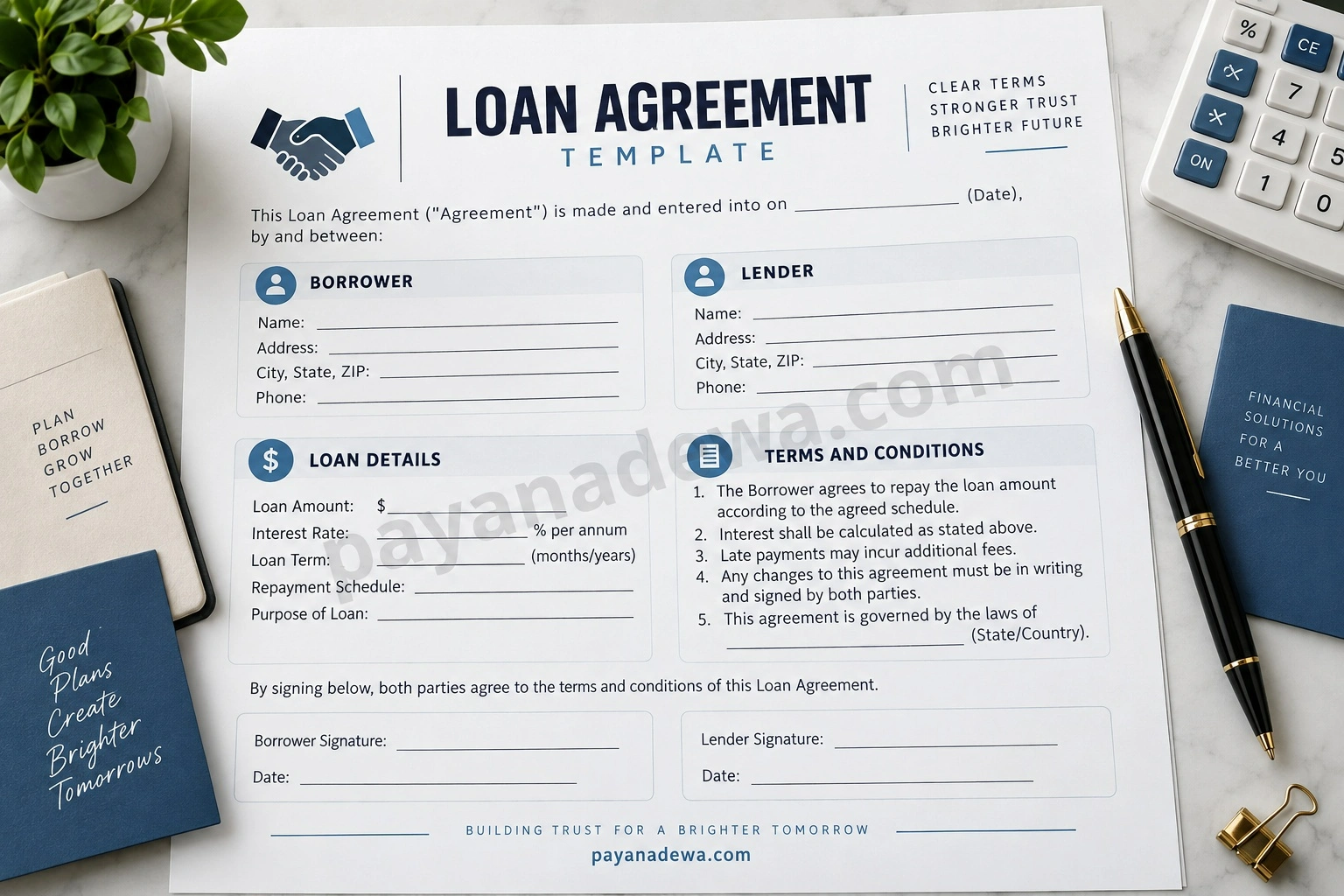
Using a structured loan agreement template can make the process easier. Instead of starting with a blank document, you can organize essential information into clear sections and customize the terms based on the specific loan.
Before signing any agreement, both parties should carefully review the terms and consider whether legal advice is appropriate for their situation. Loan requirements and enforceability can vary depending on the jurisdiction and type of transaction.
What Is a Loan Agreement?
A loan agreement is a written contract between a lender and a borrower. It records the conditions under which money is provided and explains how the borrower is expected to repay it.
The lender provides the agreed funds, while the borrower agrees to repay the principal and any applicable interest or other charges according to the contract. The agreement can also establish what happens if a payment is late or the borrower fails to meet the agreed obligations.
Loan agreements can be used for many situations, including personal loans, business financing, private lending, and loans between family members. The appropriate terms depend on the purpose, amount, risk, and applicable law.
Why Is a Written Loan Agreement Important?
A verbal promise may seem sufficient when the parties know and trust each other. However, memories can differ, and informal arrangements can create confusion later. A written agreement gives both parties a common reference point.
It Clarifies the Loan Terms
A written document can state exactly how much money is being borrowed, when payments are due, and how interest is calculated. This reduces uncertainty and helps both parties understand the arrangement.
It Defines Responsibilities
The agreement can explain the responsibilities of the borrower and lender. For example, it can specify payment dates, acceptable payment methods, notice requirements, and procedures for changing the agreement.
It Creates a Useful Record
Keeping a signed copy provides documentation of the transaction. This can be particularly useful when a loan involves a substantial amount of money or a longer repayment period.
What Should a Loan Agreement Include?
A complete loan agreement should contain enough information to make the arrangement clear. The exact requirements may differ based on local law and the type of loan.
1. Lender and Borrower Information
Start by identifying the parties involved. Include their legal names and relevant contact information. For businesses, the agreement may also identify the legal entity and the person authorized to sign on its behalf.
2. Loan Amount
Clearly state the principal amount being provided to the borrower. Writing the amount in both numbers and words can help reduce the risk of misunderstandings.
3. Interest Rate
If interest applies, specify the interest rate and explain how it is calculated. The agreement should also make clear whether the stated rate is annual, monthly, fixed, variable, or calculated using another method.
4. Repayment Schedule
Explain when repayment begins and how often payments must be made. Depending on the arrangement, payments may be weekly, monthly, quarterly, or based on another schedule.
- Payment due dates
- Amount of each installment
- Number of payments
- Final maturity date
- Payment method
5. Late Payment Terms
If late fees or other consequences apply, describe them clearly. The terms should be consistent with applicable laws and regulations.
6. Default Provisions
A loan agreement should explain what constitutes a default. It may also describe the notice process and the remedies available under the agreement, subject to applicable law.
7. Collateral or Security
Some loans are secured by property or another asset. If collateral is involved, the agreement should identify the secured property and describe the relevant obligations and procedures.
8. Signatures
The agreement should provide signature sections for the parties. Depending on the transaction and applicable law, witnesses, notarization, or additional documentation may also be appropriate.
Common Types of Loan Agreements
Not every loan has the same structure. Choosing an appropriate format can make the document easier to understand and adapt.
Personal Loan Agreement
A personal loan agreement is commonly used when one individual lends money to another. It can cover the loan amount, interest, repayment schedule, and consequences of missed payments.
Business Loan Agreement
A business loan agreement is designed for financing involving companies or commercial activities. It may contain more detailed provisions concerning business obligations, security, financial conditions, and default events.
Family Loan Agreement
Loans between relatives can benefit from written terms even when the parties have a close relationship. A clear document can help prevent disagreements by establishing expectations before money changes hands.
Secured Loan Agreement
A secured loan is supported by collateral. The agreement should clearly identify the collateral and explain the borrower’s obligations concerning that asset.
Unsecured Loan Agreement
An unsecured loan does not rely on specific collateral. Because there is no designated asset securing the loan, the agreement should carefully document the repayment obligations and other applicable terms.
How to Create a Loan Agreement
Creating a loan agreement becomes easier when you work through the terms in a logical order. A template can provide a useful starting structure, but it should be customized to the actual transaction.
Step 1: Identify the Parties
Write the complete legal names and relevant details of the lender and borrower. Confirm that the information is accurate before moving forward.
Step 2: Define the Loan
Enter the principal amount, purpose of the loan if relevant, interest rate, and other financial terms. Make sure the numbers are consistent throughout the document.
Step 3: Establish Repayment Terms
Set the payment frequency, due dates, installment amounts, and final repayment date. If early repayment is permitted, explain how it will work.
Step 4: Add Important Conditions
Include provisions covering late payments, default, notices, amendments, governing law, and other issues that are relevant to the transaction.
Step 5: Review the Document
Both parties should read the agreement carefully. Check names, amounts, dates, interest calculations, payment schedules, and special conditions.
Step 6: Sign and Keep Copies
Once the terms are agreed upon, the parties can sign the document using the required method. Each party should retain a complete copy of the executed agreement and related records.
Tips for Writing a Clear Loan Agreement
A good loan agreement should be easy to understand. Complex wording does not automatically make a contract stronger. Clear language can make the parties’ obligations easier to follow.
- Use specific dates: Avoid vague phrases such as “later” or “soon.”
- Check all numbers: Make sure the loan amount and payment calculations match.
- Define important terms: Explain terms that could have more than one interpretation.
- Document changes: Put agreed amendments in writing and follow the contract’s amendment procedure.
- Keep records: Store the signed agreement and payment records together.
- Review local requirements: Laws concerning interest, fees, disclosures, security, and contracts can differ by location.
Loan Agreement vs. Promissory Note
A loan agreement and a promissory note are related documents, but they are not always interchangeable. A loan agreement typically provides broader details about the transaction, including obligations, conditions, representations, default provisions, and other contractual terms.
A promissory note generally focuses on the borrower’s promise to repay a specific amount under stated terms. In some transactions, both documents may be used together.
The appropriate document depends on the nature of the transaction and applicable legal requirements. For complex or high-value financing, professional legal guidance can help determine which documents are appropriate.
Common Mistakes to Avoid
Even a simple loan can become complicated when important terms are left unclear. Avoiding common mistakes can make the agreement more useful for everyone involved.
- Leaving the repayment date undefined
- Failing to specify whether interest applies
- Using inconsistent loan amounts or payment figures
- Ignoring applicable legal requirements
- Failing to document amendments
- Not keeping a signed copy
- Assuming a template automatically fits every transaction
When Should You Consider Legal Advice?
Professional legal advice can be especially useful when a loan involves a large amount, business financing, collateral, multiple parties, unusual repayment conditions, or cross-border transactions.
Legal requirements can also vary between jurisdictions. For example, rules concerning interest rates, disclosures, consumer lending, security interests, taxes, and enforcement may depend on where the parties and transaction are located.
A template can help organize information, but it should not be treated as a substitute for legal advice when the transaction requires specialized guidance.
Final Thoughts on Loan Agreements
A well-structured Loan Agreement gives the lender and borrower a clear written understanding of their financial arrangement. By documenting the parties, loan amount, interest, repayment schedule, default provisions, and other important conditions, the document can reduce uncertainty and establish clear expectations.
A loan agreement template can provide a practical starting point for organizing these details. However, every loan should be reviewed and customized to reflect the actual transaction and applicable requirements.
Before signing, both parties should verify the financial terms, read the conditions carefully, retain a complete copy, and seek professional advice when appropriate. Clear documentation from the beginning can make the lending and borrowing process more organized and easier to manage.