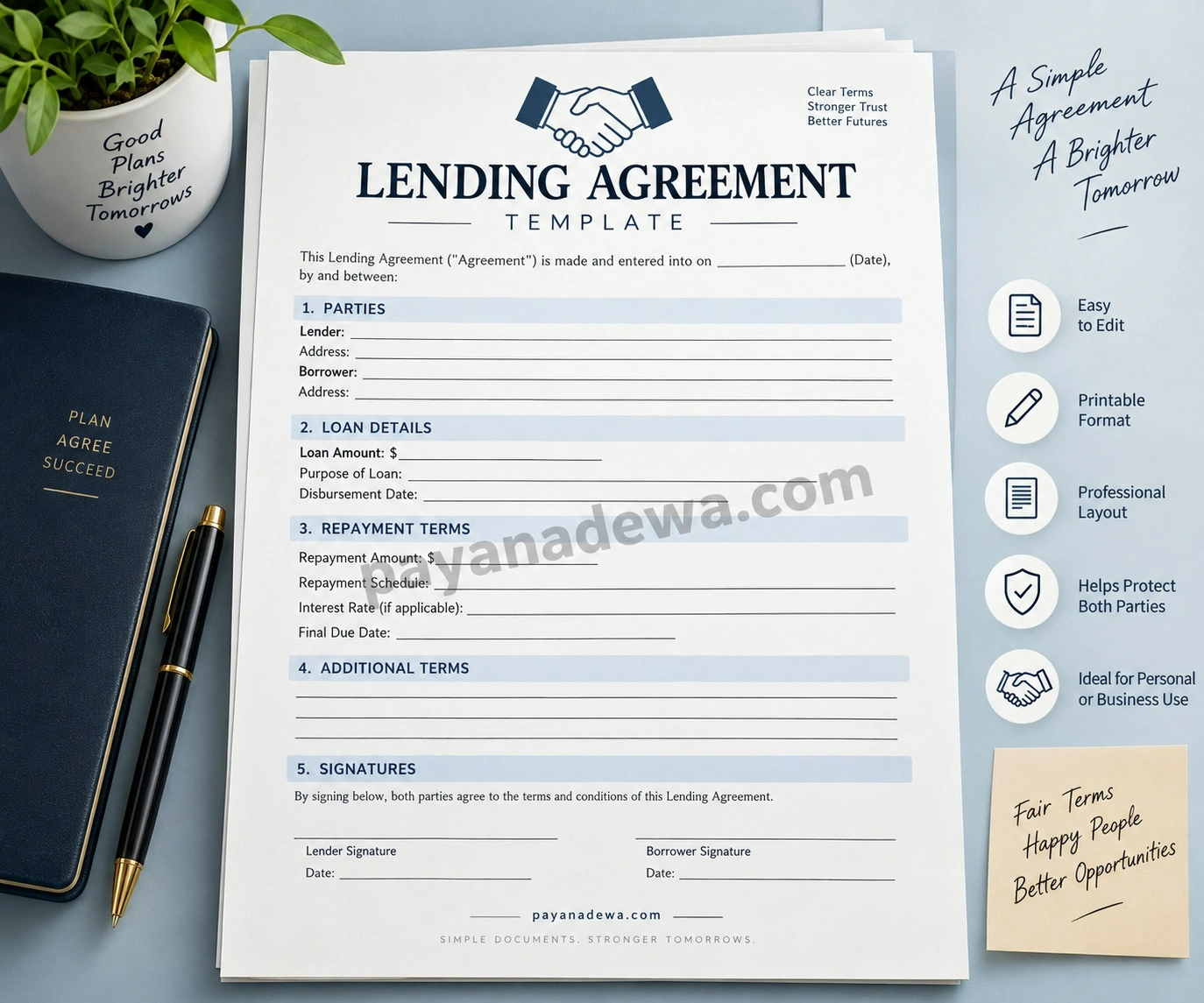
A Lending Agreement is a written document that explains the terms of a loan. It creates a clear understanding between a lender and a borrower. The agreement can cover personal loans, business loans, or other lending arrangements.
A good agreement explains how much money is being borrowed. It also states when the borrower must make payments. In addition, it can explain interest, late payments, collateral, and other important conditions.
Using a lending agreement template can make the process easier. A template gives you a clear structure to follow. However, you should always adjust the document to match the actual loan and applicable laws.
In this guide, you will learn what a Lending Agreement is, what it should include, and how to create one. You will also find practical tips for making the document clear and useful.
What Is a Lending Agreement?
A Lending Agreement is a written contract between a lender and a borrower. The lender provides money to the borrower. The borrower agrees to repay that money under specific terms.
The agreement can state the loan amount, interest rate, payment dates, and repayment period. It can also include rules for late payments and early repayment.
Depending on the situation, you may also hear terms such as loan agreement, loan contract, personal loan agreement, or business loan agreement. The correct document can depend on the type of loan and local legal requirements.
Why Should You Use a Written Agreement?
A written agreement gives both parties a clear record of the loan. It can also reduce confusion about important terms.
- Clear expectations: Both parties can see their responsibilities.
- Defined payments: The document can show when payments are due.
- Better records: Both parties can keep a copy for future reference.
- Fewer misunderstandings: Important terms are written down.
- Professional documentation: The agreement creates an organized record of the transaction.
What Should a Lending Agreement Include?
A useful Lending Agreement should explain the main details of the loan. The exact requirements can vary by location. Still, several sections are common in many loan agreements.
1. Names of the Lender and Borrower
Start by identifying both parties. Use their correct legal names. You can also include addresses and contact details when appropriate.
If a company is involved, identify the company correctly. You should also name the person who has authority to sign the agreement.
2. Loan Amount
State the exact amount of money being borrowed. Use clear numbers and words when appropriate. Check the amount before both parties sign the document.
You can also explain the purpose of the loan. For example, the funds may be used for equipment, business expenses, education, or personal needs.
3. Interest Rate
If the loan includes interest, explain the rate clearly. State how the interest is calculated. Also explain whether the rate is fixed or variable.
Clear interest terms can prevent confusion later. The agreed terms should also follow applicable lending laws and regulations.
4. Repayment Schedule
The repayment section explains how the borrower will repay the loan. It should give both parties a clear payment schedule.
- Payment amount
- Payment frequency
- First payment date
- Final payment date
- Payment method
- Instructions for recording payments
For example, the agreement may require monthly payments. It can also state the exact amount due each month.
5. Late Payments
A Lending Agreement can explain what happens when a payment is late. The document may include a late fee or another remedy when permitted by law.
Write these terms in simple language. Both parties should understand when a payment becomes late and what may happen afterward.
6. Default Terms
The agreement can define what counts as a default. It can also explain the steps that may follow a default.
For example, the agreement may require written notice before certain actions are taken. The specific terms should comply with applicable laws.
7. Collateral
Some loans use collateral. Collateral is an asset that may secure the borrower’s obligation. Examples can include certain property or other valuable assets.
If collateral is involved, identify it clearly. You should also explain the related obligations. Secured loans can involve additional legal requirements, so professional advice may be useful.
8. Signatures
The agreement should provide space for the lender and borrower to sign. Include the date of each signature.
Both parties should read the complete document before signing. They should also keep a copy of the signed agreement.
Types of Lending Agreements
Different lending situations may require different types of agreements. The basic structure can remain similar, but the terms may change.
Personal Lending Agreement
A personal lending agreement can document a loan between individuals. This type of agreement can be useful when friends or family members lend money to each other.
Even when the parties trust each other, clear terms can help avoid future confusion. The document can explain the amount, payment schedule, and other agreed conditions.
Business Loan Agreement
A business loan agreement is designed for commercial borrowing. It may contain more detailed financial and legal terms.
For example, the agreement may cover business assets, repayment conditions, default provisions, or other requirements. The terms should match the nature of the business transaction.
Simple Loan Agreement
A simple loan agreement focuses on the basic terms of a loan. It can work well for a straightforward transaction when the parties do not need complex provisions.
However, a simple document should still contain important information. Avoid removing terms that are required for clarity or legal compliance.
How to Create a Lending Agreement
Creating a Lending Agreement is easier when you work through the key details step by step. Start with accurate information. Then review every financial term before signing.
Step 1: Identify the Parties
Write the full legal names of the lender and borrower. Add relevant addresses or contact details when needed.
Step 2: Enter the Loan Amount
Write the exact principal amount. If the loan has a specific purpose, describe that purpose in the agreement.
Step 3: Set the Repayment Terms
Decide how and when the borrower will make payments. Include the payment amount, payment frequency, and final due date.
Step 4: Add Interest Terms
If interest applies, state the interest rate and calculation method. Make sure the wording is easy for both parties to understand.
Step 5: Add Important Conditions
Consider other terms that may apply to the loan. These terms can include early repayment, late payments, default, collateral, notices, and dispute procedures.
Step 6: Review the Agreement
Read the complete document before signing. Check all names, amounts, dates, and payment terms.
Both parties should have an opportunity to ask questions. Any changes should be agreed upon before the final version is signed.
Step 7: Sign and Keep Copies
Both parties should sign the final agreement. Each party should then keep a complete copy.
It is also useful to keep payment records. Bank transfers, receipts, and other records can help document the repayment history.
Tips for Using a Lending Agreement Template
A lending agreement template can save time. It can also help you organize important information. However, you should not assume that every template fits every loan.
- Use accurate information: Check all names, dates, and amounts.
- Use clear language: Avoid terms that could have several meanings.
- Explain payment dates: Make every deadline easy to identify.
- Check interest terms: Make sure the calculation is clear.
- Record changes: Put important changes in writing.
- Keep payment records: Save proof of each payment.
- Check local laws: Lending rules can differ between jurisdictions.
- Seek professional advice: Consider legal advice for complex or high-value loans.
Common Lending Agreement Mistakes
A loan agreement can become difficult to use when important details are missing. Fortunately, many common mistakes are easy to avoid.
Leaving the Loan Amount Unclear
The agreement should state the exact amount being borrowed. Avoid vague descriptions such as “a large amount” or “the agreed amount.”
Missing Payment Dates
Always state when payments are due. A clear schedule gives the borrower and lender the same expectations.
Using Unclear Interest Terms
If interest applies, explain the rate and calculation method. Do not leave the parties to guess how interest will be calculated.
Changing Terms Verbally
Loan terms may change during the repayment period. When this happens, document the change in writing. Both parties should agree to the updated terms.
Failing to Keep a Signed Copy
Both parties should keep the final signed agreement. They should also store relevant payment records in a safe location.
When Should You Use a Lending Agreement?
A written Lending Agreement can be useful whenever money is provided with an expectation of repayment.
It can be especially useful when the loan involves a large amount. It can also help when repayment will continue for several months or years.
A written agreement can also be helpful when the loan includes interest, collateral, or special conditions. In these situations, clear documentation can make the arrangement easier to manage.
How a Lending Agreement Helps Both Parties
A clear agreement can benefit both the lender and the borrower. The lender can see when payments should arrive. The borrower can see what is expected at each stage of the loan.
As a result, both parties have a shared reference. This can make communication easier throughout the repayment period.
A well-organized agreement can also make future record keeping simpler. The parties can refer to the document when they need to confirm a payment date, balance, or other condition.
Final Thoughts on Lending Agreements
A Lending Agreement provides a clear way to document a loan between a lender and a borrower. It can explain the loan amount, interest, repayment schedule, late payment rules, and other important conditions.
A lending agreement template can provide a useful starting point. It can save time and make it easier to organize the main terms. Still, every loan is different. The final document should match the actual transaction.
Before signing, check every name, amount, date, and condition. Make sure both parties understand the agreement. Also, check the legal requirements that apply to the transaction.
For complex, secured, commercial, or high-value loans, consider asking a qualified legal professional to review the agreement. With clear terms and accurate records, both parties can begin the lending relationship with a better understanding of their responsibilities.