A Grant Agreement is a formal document between a grantor and a grantee. It explains how grant funds will be provided, used, and managed.
A clear agreement can prevent confusion during a project. It can also define the grant amount, project goals, payment schedule, reporting duties, and key deadlines.
For many organizations, a Grant Agreement Template makes document preparation easier. A template provides a useful structure that can be adjusted for each grant.
Before signing an agreement, both parties should read every section carefully. They should also confirm that the terms match the funding program and project needs.
What Is a Grant Agreement?
A grant agreement is a written agreement between a party that provides funding and a party that receives it. The funding provider is often called the grantor. The funding recipient is called the grantee.
The document explains how the grant will support a specific project or program. It can also set rules for spending, reporting, monitoring, and compliance.
Unlike an informal funding letter, a detailed grant agreement can define clear duties for both parties. It can also explain what happens when project terms change.
In simple terms, a grant agreement turns a funding commitment into clear written terms.
Why Is a Grant Agreement Important?
A good grant agreement creates clarity before project work begins. Both parties can review their duties and expectations in advance.
It Defines the Grant Purpose
The agreement explains why the grant is being provided. It can identify the project, program, research activity, or community initiative that will receive funding.
A clear purpose also helps the grantee understand how the funds should be used.
It Explains Financial Terms
The agreement can state the total grant amount and payment schedule. It can also explain approved expenses and rules for unused funds.
It Supports Accountability
Grant programs often require progress reports and financial records. These records help both parties track project progress and spending.
It Reduces Confusion
Written terms give everyone one document to follow. As a result, the parties can check the agreement when questions arise.
Key Elements of a Grant Agreement
Each grant agreement can have different requirements. However, most agreements contain several important sections.
- Grantor information: Legal name, address, and contact details of the funding provider.
- Grantee information: Legal name, address, contact person, and authorized representative.
- Grant purpose: A clear description of the project or program.
- Grant amount: The total amount of approved funding.
- Grant period: The project start date and end date.
- Payment terms: Details about when and how funds will be paid.
- Use of funds: Rules for approved and restricted expenses.
- Reporting duties: Required financial and project reports.
- Recordkeeping: Rules for storing receipts and project records.
- Compliance: Applicable laws, policies, and grant conditions.
- Amendments: The process for changing the agreement.
- Termination: Conditions and procedures for ending the agreement.
- Signatures: Names, titles, signatures, and dates of authorized parties.
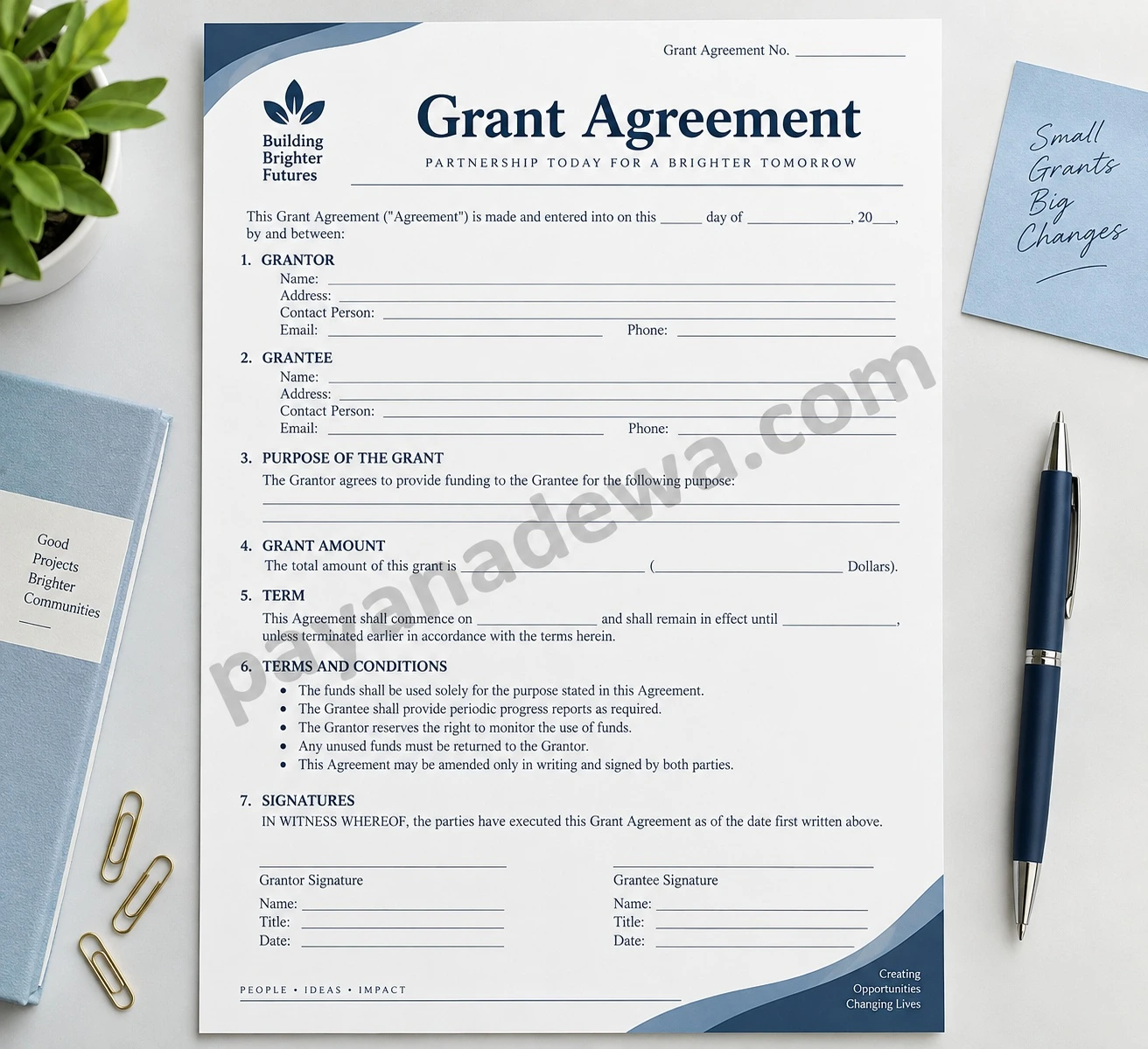
Grant Agreement Template: What Should It Include?
A Grant Agreement Template gives users a practical starting point. It can save time when an organization prepares several funding agreements.
A useful template should include sections for the grantor and grantee. It should also include the grant purpose, funding amount, project term, and payment details.
In addition, the template can include reporting duties and terms for using the funds. Signature sections should appear at the end of the document.
Users can then customize the template for each project. For example, they can add the project budget, milestones, reporting dates, and special conditions.
However, a template is only a starting point. Each organization should review the document before signing it. Legal requirements can differ by country, funding source, and project type.
How to Create a Grant Agreement
Creating a grant agreement becomes easier when you follow a clear process. Start with the basic information and then add the project terms.
Step 1: Identify the Parties
First, enter the legal names of the grantor and grantee. Add their addresses and contact details when needed.
Also identify the people who can sign the agreement for each party.
Step 2: Describe the Project
Next, explain the purpose of the grant. Describe the project, program, research, or activity that the funds will support.
Keep the description specific. A clear project description makes the funding purpose easier to understand.
Step 3: State the Grant Amount
Clearly state the total grant amount. Then explain how the funds will be paid.
If payments depend on milestones, include those requirements in the agreement.
Step 4: Set the Grant Period
Include the start date and end date of the grant. You can also list major milestones and reporting deadlines.
Step 5: Add Reporting Requirements
Explain which reports the grantee must submit. Include the report type, due date, and required information.
Clear reporting rules make grant administration easier for both parties.
Step 6: Add Terms and Conditions
Include rules for spending and managing the funds. You may also need terms for audits, records, changes, confidentiality, or intellectual property.
Step 7: Review and Sign
Finally, both parties should review the complete agreement. They should resolve unclear terms before signing.
After signing, each party should keep a complete copy of the final agreement.
Common Types of Grant Agreements
Grant agreements can support many types of projects. The terms often depend on the purpose of the funding.
Nonprofit Grant Agreement
A nonprofit grant agreement can support charitable programs and community services. It may also fund outreach, education, or organizational projects.
Financial reporting is often an important part of this type of agreement.
Research Grant Agreement
A research grant agreement can support scientific, academic, or technical research. It may cover research activities, project milestones, reporting, data, and intellectual property.
Community Grant Agreement
A community grant can support local programs and public projects. Examples include educational events, environmental projects, and neighborhood activities.
Educational Grant Agreement
An educational grant can fund scholarships, training, learning programs, or educational resources.
The agreement should explain how the recipient can use the funds.
Tips for Writing a Clear Grant Agreement
Good grant documents should be detailed without becoming difficult to read. Use simple language whenever possible.
- Use the same terms throughout the document.
- Define important terms before using them.
- State financial amounts clearly.
- Use exact dates for important deadlines.
- Explain approved uses of grant funds.
- List reporting requirements in a clear way.
- Explain how the parties can approve changes.
- Identify the people responsible for key duties.
- Check every section for conflicting terms.
- Keep the signed agreement in a secure location.
Grant Agreement vs. Grant Proposal
A grant proposal and a grant agreement have different purposes.
A grant proposal is usually a request for funding. It explains the project and shows why the applicant needs financial support.
A proposal may include goals, methods, budgets, expected results, and organizational information.
A grant agreement comes later in the funding process. It documents the terms for approved funding.
Therefore, the proposal explains the project, while the agreement formalizes the funding relationship.
Grant Agreement Compliance and Recordkeeping
Managing the agreement does not end after signing. The grantee should continue to follow the stated requirements during the grant period.
Good recordkeeping can make this process easier. Keep financial records and project documents in an organized location.
Depending on the grant, useful records may include:
- Invoices and receipts
- Payroll records
- Contracts and purchase records
- Financial reports
- Project progress reports
- Attendance records
- Evidence of completed activities
A simple deadline calendar can also help. Assign each reporting task to a responsible person and review deadlines before they arrive.
What Happens When Grant Terms Change?
Project needs can change after a grant begins. A project may need a new deadline or a different budget allocation.
In such cases, check the amendment section of the grant agreement. Some changes may require written approval from the grantor.
Do not assume that an informal conversation changes the signed agreement. Follow the written amendment process instead.
Keep a copy of every approved amendment with the original agreement.
Grant Agreement Checklist
Use this checklist before finalizing a grant agreement.
- Confirm the grantor’s legal name.
- Confirm the grantee’s legal name.
- Check all contact information.
- Confirm the project purpose.
- Check the grant amount.
- Review the payment schedule.
- Confirm the grant period.
- Review approved uses of funds.
- Check reporting deadlines.
- Review recordkeeping rules.
- Confirm amendment procedures.
- Review termination terms.
- Check all attachments and schedules.
- Confirm authorized signatures.
- Save the final signed copy.
Final Thoughts on Grant Agreements
A well-written Grant Agreement creates a clear framework for a funding relationship. It explains the project purpose, financial terms, deadlines, duties, and conditions.
A Grant Agreement Template can also save time. It gives organizations a consistent structure for preparing new agreements.
Still, every agreement should match the specific grant and project. Review the funding requirements before using a template.
Most importantly, make the terms clear and practical. When both parties understand their responsibilities, grant administration can become more organized and transparent.