Confidentiality Agreement Templates provide a structured starting point for documenting how sensitive information may be shared, used, protected, and handled during a business or professional relationship. These documents are commonly used when companies work with employees, contractors, consultants, vendors, investors, partners, service providers, or other parties who may receive access to information that should not be disclosed to unauthorized people.
A strong confidentiality agreement does more than identify two parties and provide signature lines. It should explain the purpose of the relationship, define Confidential Information, establish permitted uses, identify exclusions, describe authorized disclosures, establish the duration of confidentiality duties, address the handling of records, and specify other contractual terms appropriate to the situation. The exact wording should always reflect the transaction and applicable law.
Searchers often approach Confidentiality Agreement Templates with different objectives. A business owner may need a document for a potential partner, an HR department may need an employee-focused agreement, and a consultant may need a document before receiving proprietary project information. Understanding the intended relationship before selecting a template makes the drafting process more efficient and reduces the risk of using provisions that do not match the actual information flow.
What a Confidentiality Agreement Does
A confidentiality agreement is a contract designed to establish obligations concerning specified non-public information. The receiving party generally agrees to use the information only for an authorized purpose and to avoid unauthorized disclosure. Depending on the arrangement, the agreement may protect business strategies, customer records, pricing information, financial data, technical specifications, software information, designs, research, product plans, processes, formulas, or other proprietary material.
The agreement should make the relationship understandable to someone who was not involved in the original negotiation. That means the purpose of disclosure should be clear, the parties should be accurately identified, and the protected information should be described with enough precision to make the obligations practical.
The document is particularly useful before sensitive information is exchanged. Preparing the agreement afterward can create uncertainty about what was disclosed, why it was disclosed, and what restrictions were understood by the parties. A clear document established at the beginning of a relationship creates a common reference point for later handling of confidential material.
One-Way and Mutual Confidentiality Agreements
One-way confidentiality structure
A one-way agreement is designed for situations where one party primarily provides sensitive information and the other party receives it. Examples include a company sharing a business plan with a prospective investor, a client giving proprietary information to a consultant, or an employer providing internal information to an employee.
In this structure, the receiving party normally has the principal confidentiality obligations. The document should identify the disclosing party and receiving party clearly and explain exactly why the information is being provided.
Mutual confidentiality structure
A mutual agreement is appropriate when both parties expect to disclose sensitive information. This can occur during joint ventures, strategic partnerships, technology collaborations, licensing discussions, acquisition negotiations, and other commercial relationships.
Mutual agreements should be drafted so that the confidentiality obligations work in both directions. Each party should understand what information it may receive, how that information may be used, and which people may be permitted to access it.
Key Sections to Examine
Before selecting among Confidentiality Agreement Templates, examine the substance of the document rather than its visual appearance. A professional design does not automatically mean that the provisions are appropriate for a particular relationship.
- Parties: identify the correct legal names of everyone bound by the agreement.
- Effective date: establish when the agreement begins.
- Purpose: explain why confidential information is being exchanged.
- Confidential Information: describe the categories of information protected by the agreement.
- Exclusions: identify information that is outside the confidentiality obligation.
- Permitted use: establish what the recipient may do with the information.
- Authorized disclosure: address disclosures to representatives, advisers, or other permitted recipients.
- Required disclosure: explain how legally compelled disclosure should be handled.
- Security duties: describe reasonable measures for protecting confidential material.
- Duration: establish how long confidentiality duties remain in effect.
- Return or destruction: explain what happens to confidential records when the relationship ends.
- Signatures: identify the people authorized to execute the agreement.
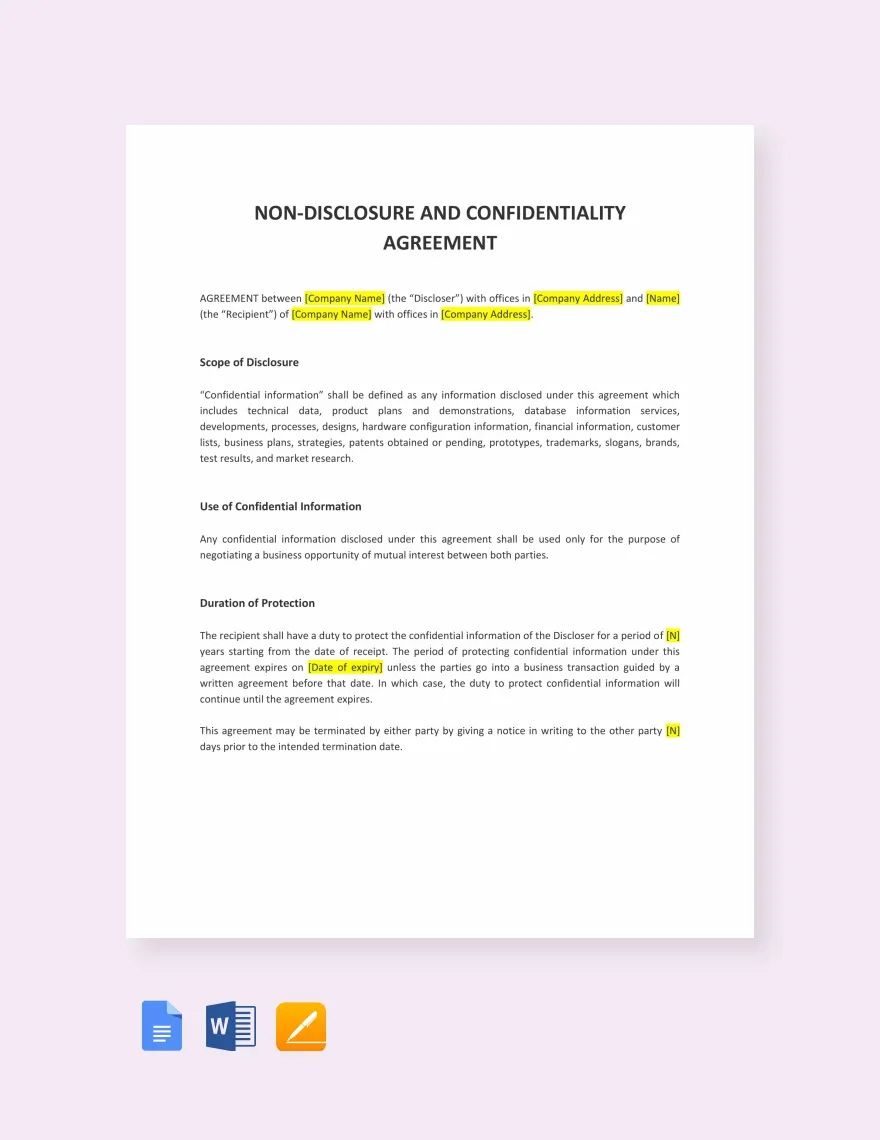
These sections should work together. For example, defining Confidential Information broadly while permitting unrestricted use would create a significant drafting inconsistency. Similarly, establishing a return obligation without considering electronic records may leave an important practical issue unresolved.
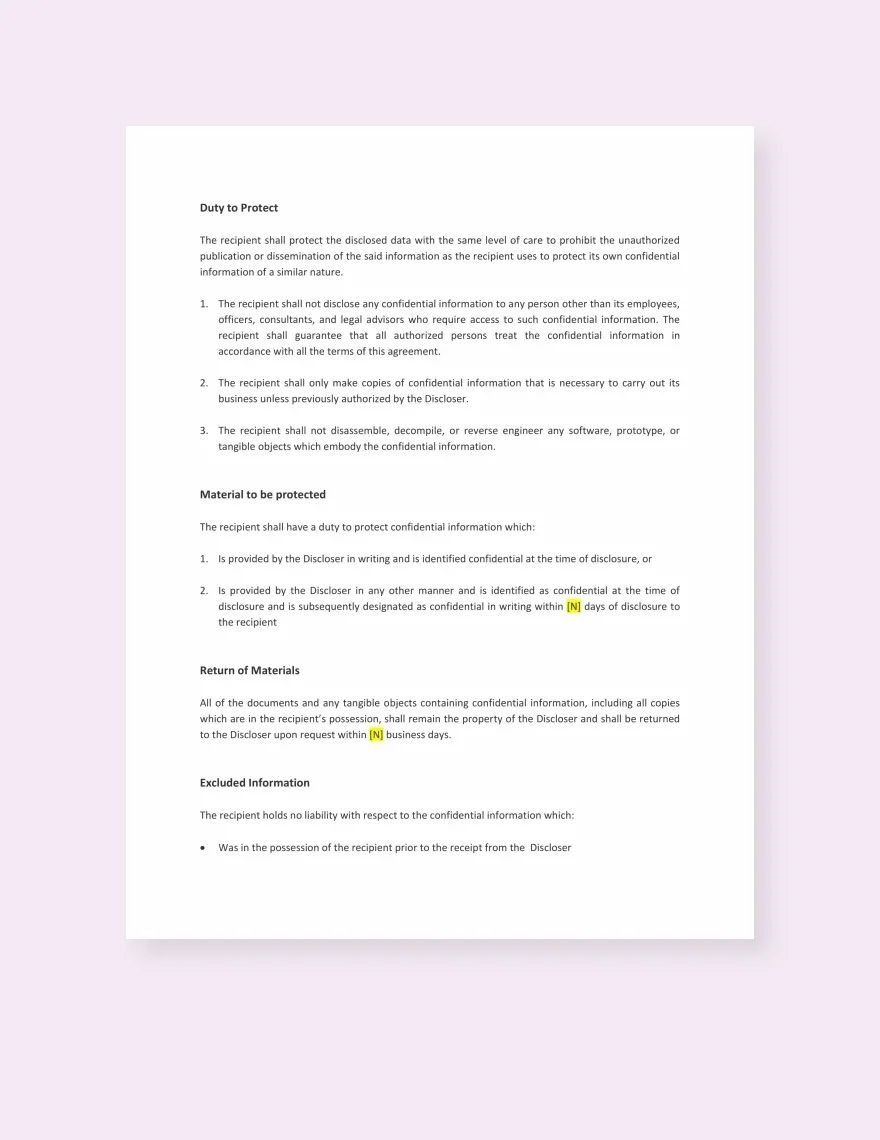
Defining Confidential Information
The definition of Confidential Information is one of the most important parts of the agreement. A useful definition should reflect the information actually being shared rather than relying on vague language that provides little practical guidance.
Possible categories include business plans, financial forecasts, pricing structures, customer information, supplier information, product specifications, technical documentation, source code, research material, prototypes, designs, marketing strategies, operational procedures, internal reports, and other non-public information.
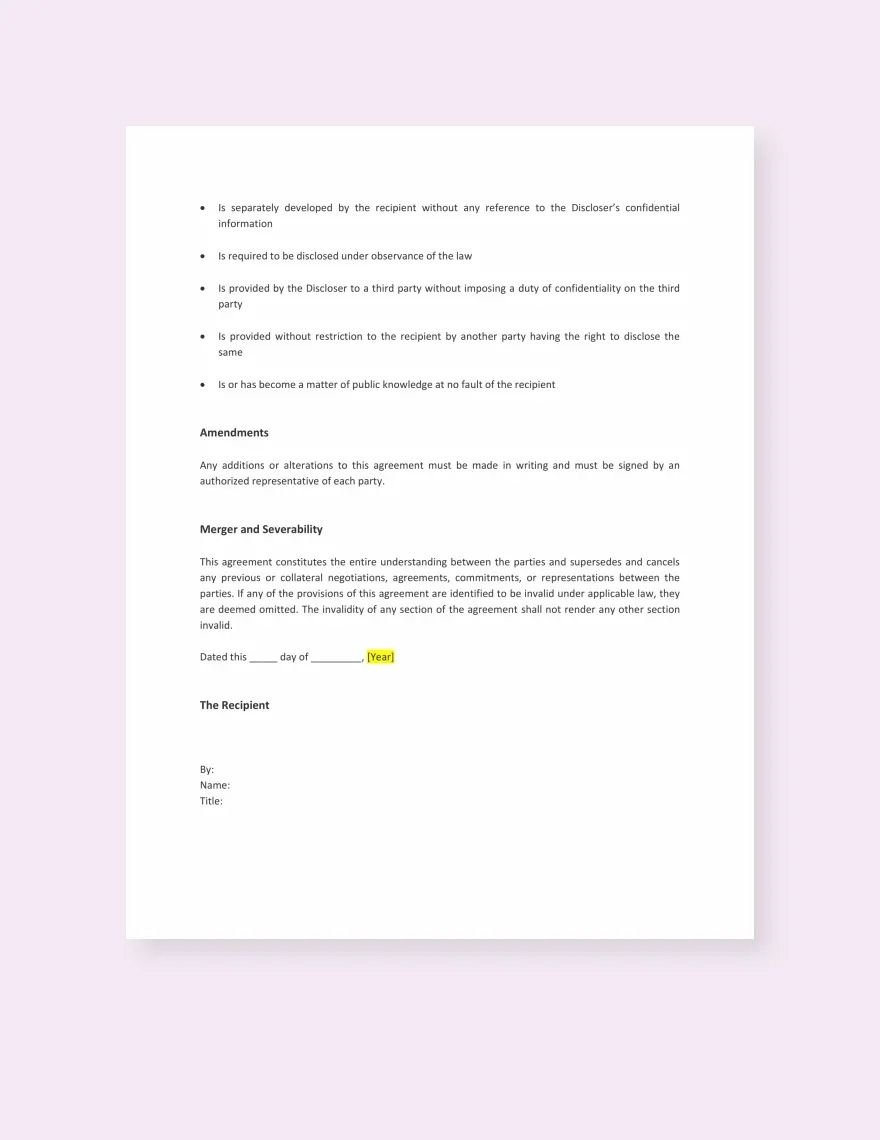
The agreement may also address information communicated orally, electronically, visually, or through demonstrations. This matters when sensitive information is discussed during meetings, shown through prototypes, transmitted electronically, or presented through temporary access to a system.
Understanding Exclusions
Confidentiality agreements commonly distinguish protected information from information that should not be treated as confidential. Depending on the agreement, exclusions may address information that was already lawfully known by the recipient, becomes public without an unauthorized disclosure, is independently developed, or is lawfully obtained from another source without a confidentiality restriction.
Exclusions are important because they prevent a confidentiality obligation from being interpreted as covering information that the recipient could legitimately obtain or develop without relying on the protected material.
Duration and Post-Relationship Duties
The duration of confidentiality obligations should be considered separately from the duration of the underlying business relationship. A consulting project might last several months while certain confidentiality duties continue afterward. The appropriate duration depends on the information, transaction, applicable law, and contractual terms.
Trade-secret information may require special treatment because its value can depend on continued secrecy. Organizations should therefore consider whether their agreement appropriately addresses information that remains commercially sensitive after a project, employment relationship, or negotiation has ended.

Return and destruction provisions should also be realistic. Information can exist in paper records, email attachments, shared folders, local devices, backups, notes, or other systems. A practical agreement should consider how the parties actually store and handle information rather than relying on a procedure that cannot be followed.

Confidentiality Agreement Templates for Employees
Employee-focused confidentiality agreements are designed around the information employees may encounter as part of their work. Depending on the role, this may include customer records, pricing information, internal procedures, product development plans, financial information, technical documentation, research, marketing strategies, or proprietary processes.
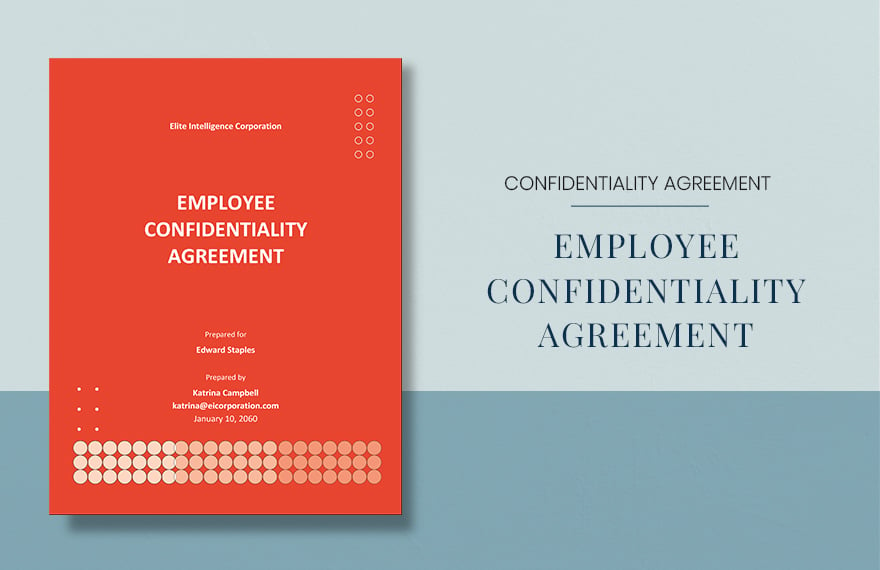
An employee agreement should also work alongside the organization’s internal policies. Access controls, information classification, onboarding procedures, security training, and offboarding processes can reinforce contractual confidentiality obligations.
The document should avoid unnecessary restrictions that do not relate to legitimate confidentiality interests. It is useful to identify the actual information that employees need to protect and establish practical rules for handling that information.
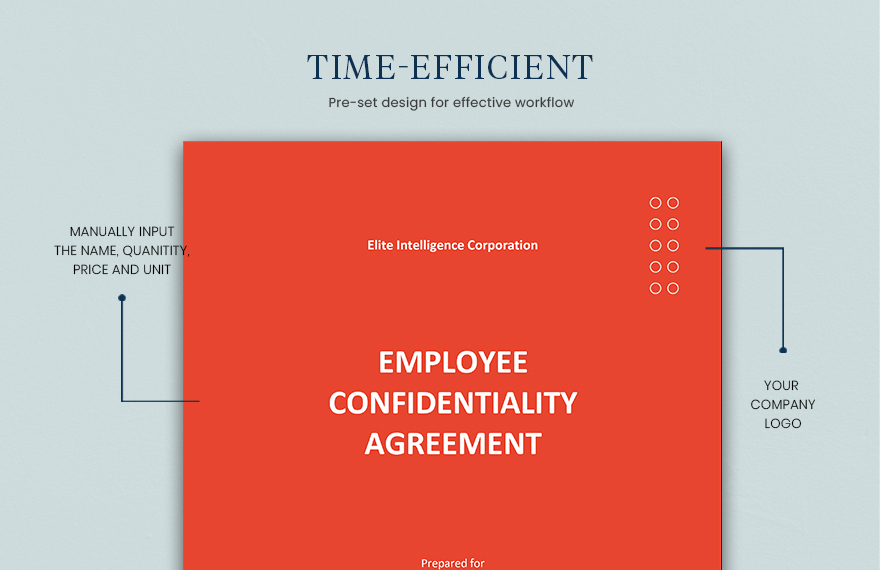
Employee agreements may also address obligations that continue after employment ends. The exact duration and scope should be reviewed according to the applicable jurisdiction and employment circumstances.
Business and Contractor Use
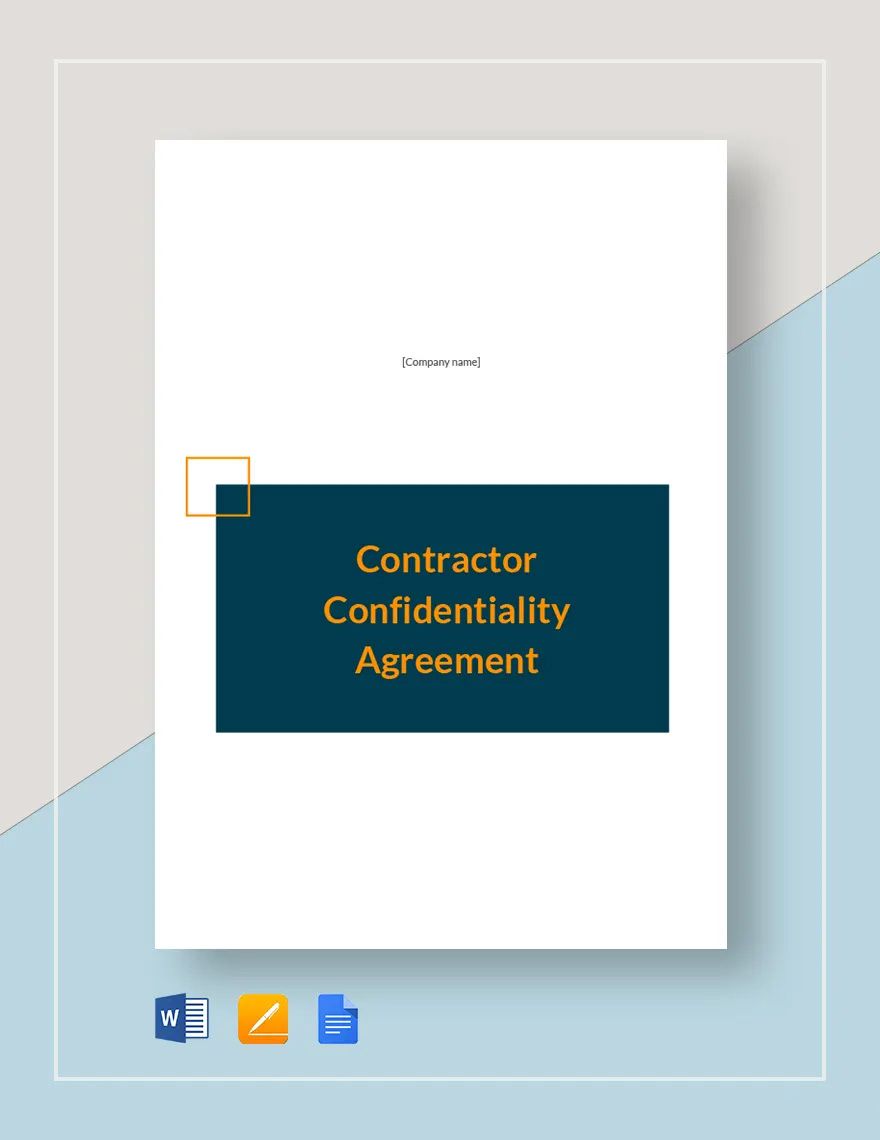
Businesses frequently exchange sensitive information with independent contractors, consultants, freelancers, agencies, vendors, and professional advisers. In these situations, the confidentiality agreement should reflect the actual services being provided and the information required to perform those services.
For example, a software contractor may require access to source code and technical documentation, while a marketing consultant may receive campaign plans, customer research, pricing information, or unreleased product information. The agreement should describe the relevant information categories without creating unnecessary ambiguity.
Independent contractors may work with several clients, making it particularly important to distinguish one client’s confidential information from another client’s information. Access permissions, storage practices, and project-specific folders can reinforce the contractual obligations.
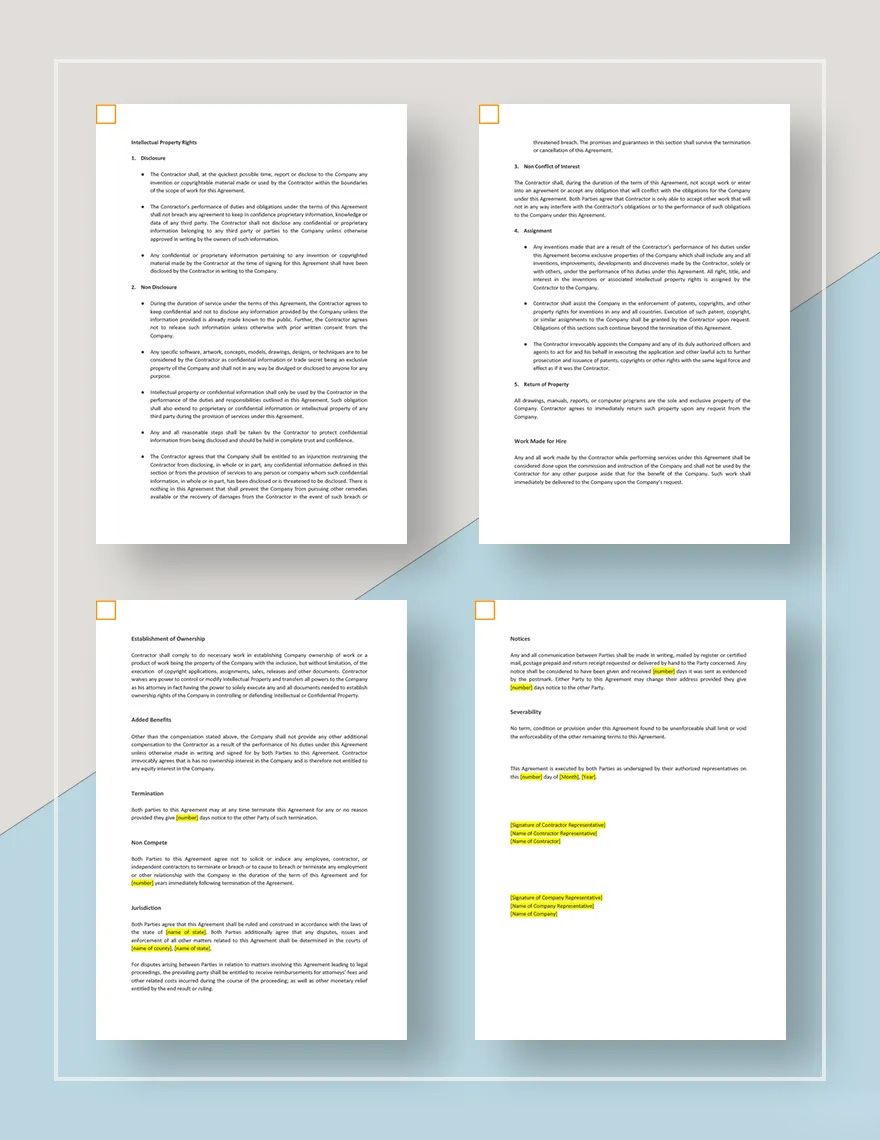
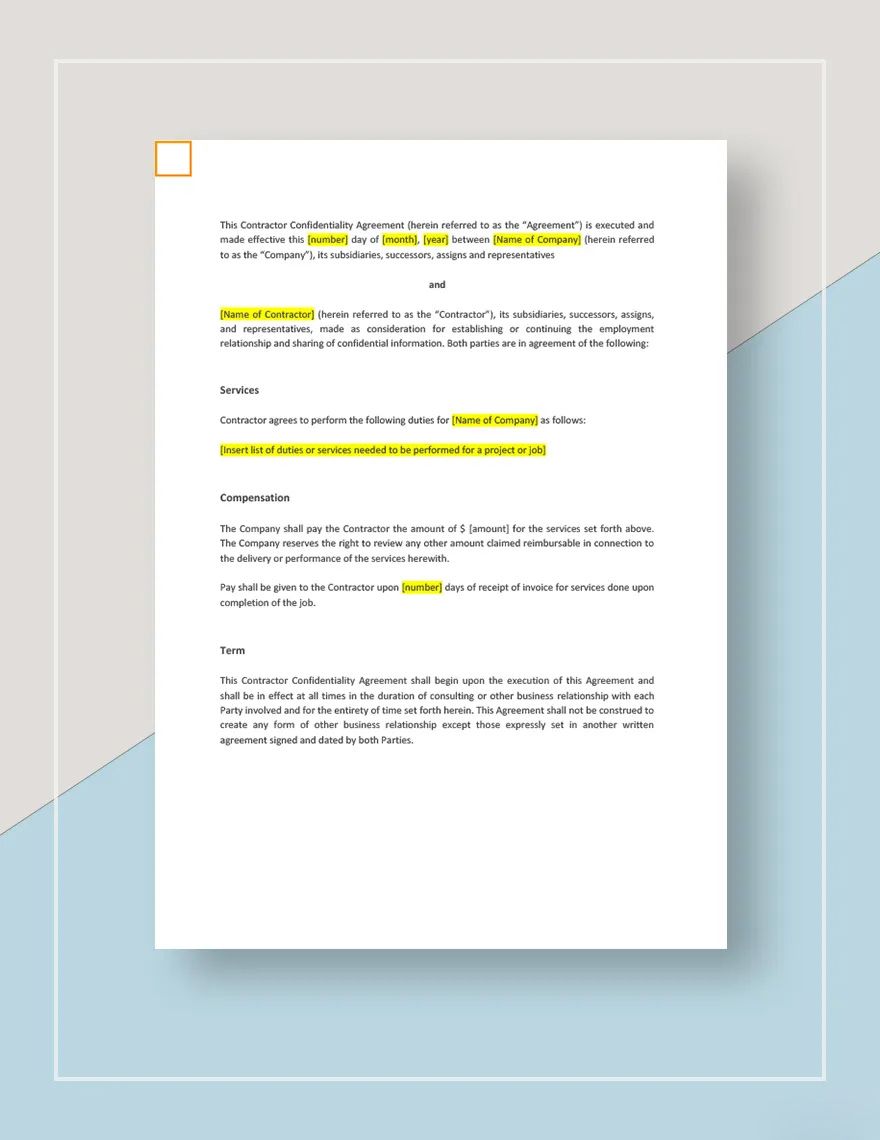
A contractor agreement may also address ownership, intellectual property, return of materials, notices, termination, and governing law. These subjects should be coordinated with any separate services agreement or intellectual-property agreement rather than duplicated inconsistently.
Financial and Payroll Information
Some confidentiality relationships involve financial information that requires careful handling. Payroll records, compensation information, financial forecasts, accounting records, and commercial terms may be sensitive because disclosure can affect employees, customers, suppliers, or business negotiations.
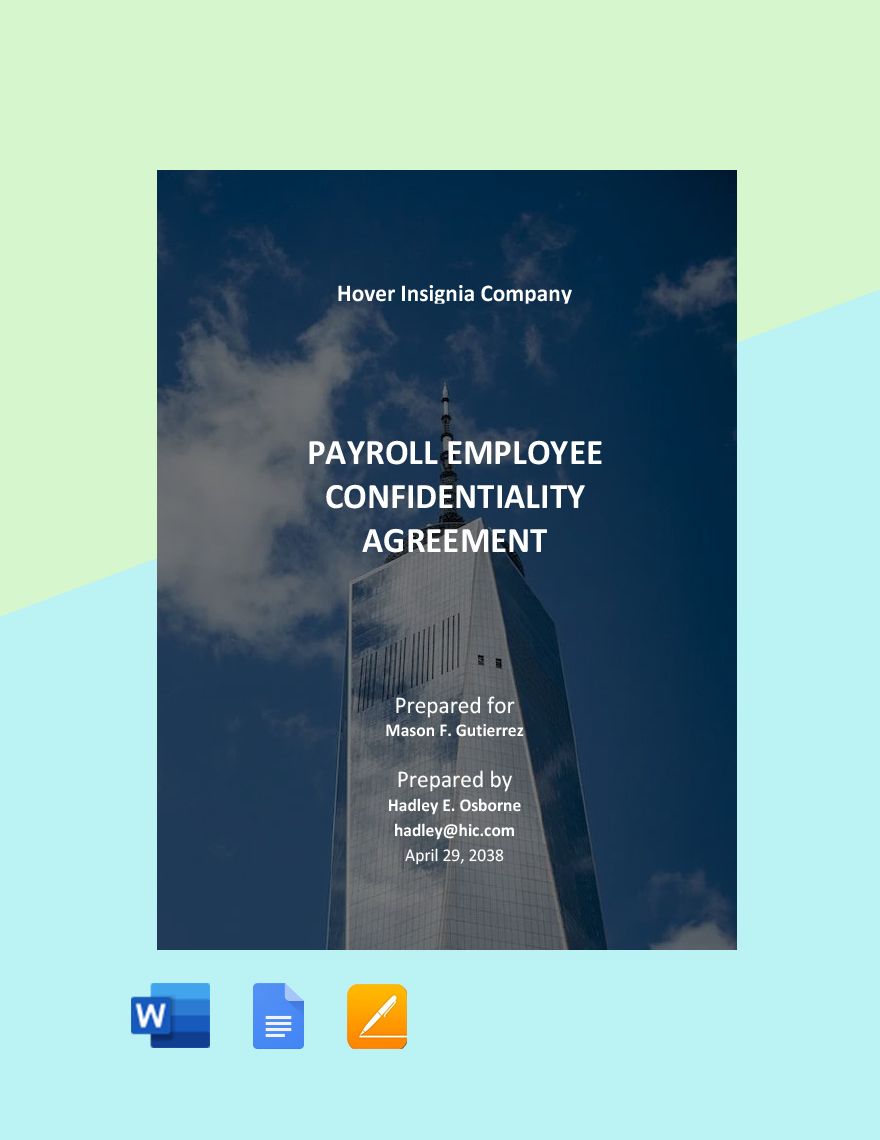
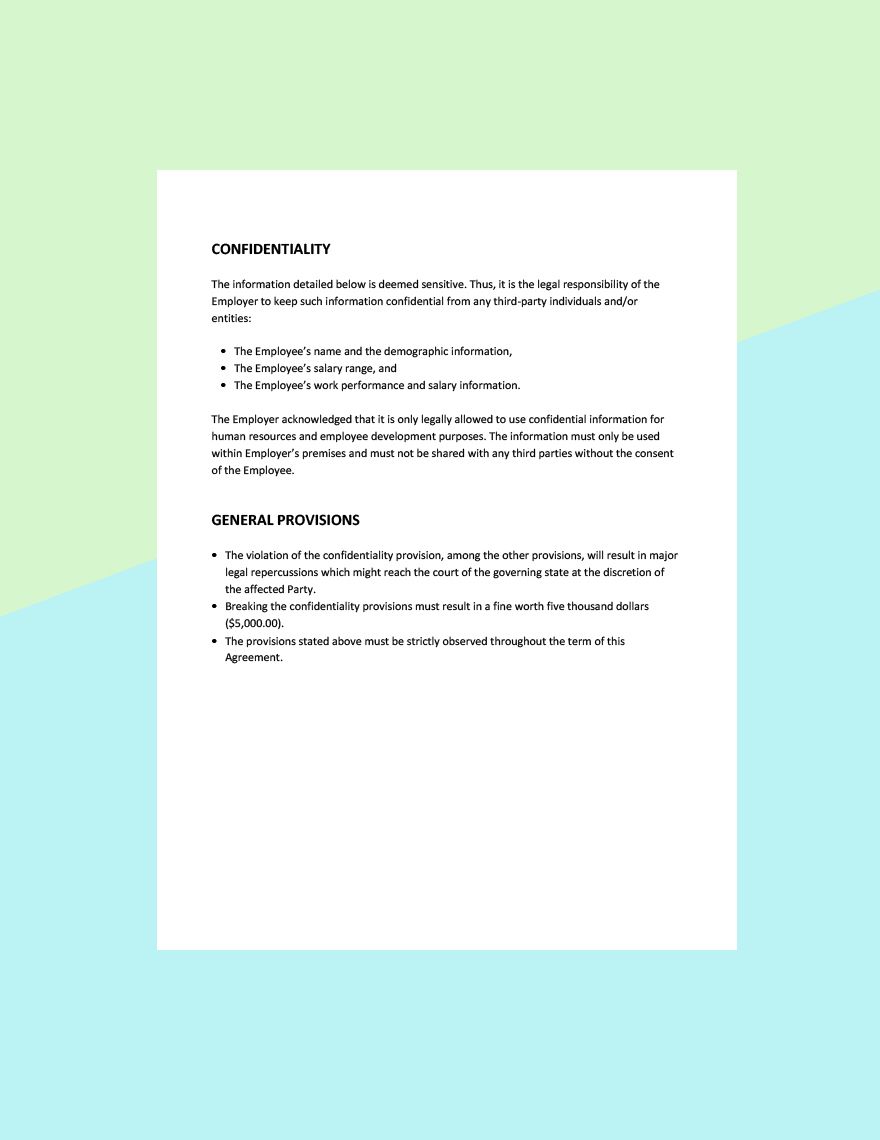
A payroll-focused document should clearly distinguish the categories of information covered and explain how the information may be used. It should also fit the organization’s access-control practices so that only authorized personnel can access sensitive records.
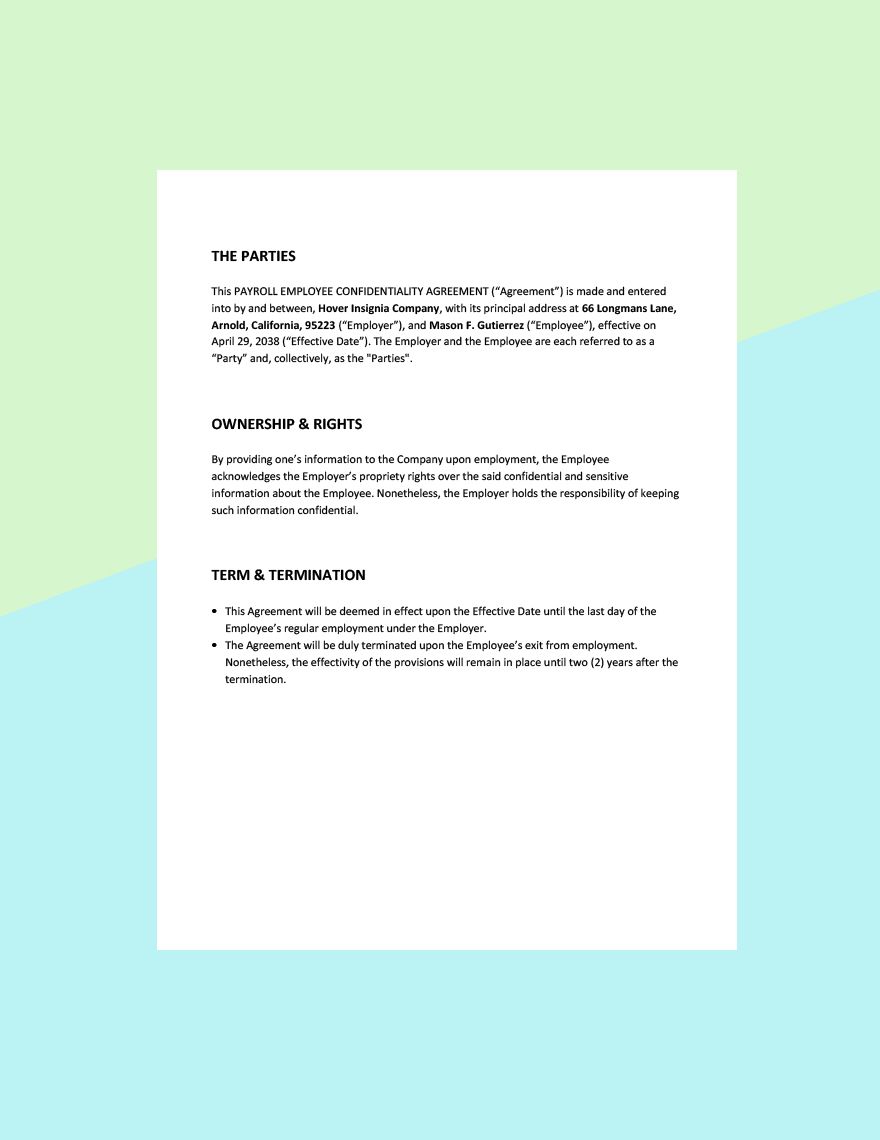
Clear language is particularly important when financial information is shared among accountants, advisers, payroll specialists, contractors, or other authorized representatives.
Independent Contractor and Research Situations
Independent contractors may need access to confidential information for a limited project. In that situation, the agreement should connect the permitted use of information to the actual project scope. The recipient should not automatically receive unrestricted rights to use the information for unrelated purposes.
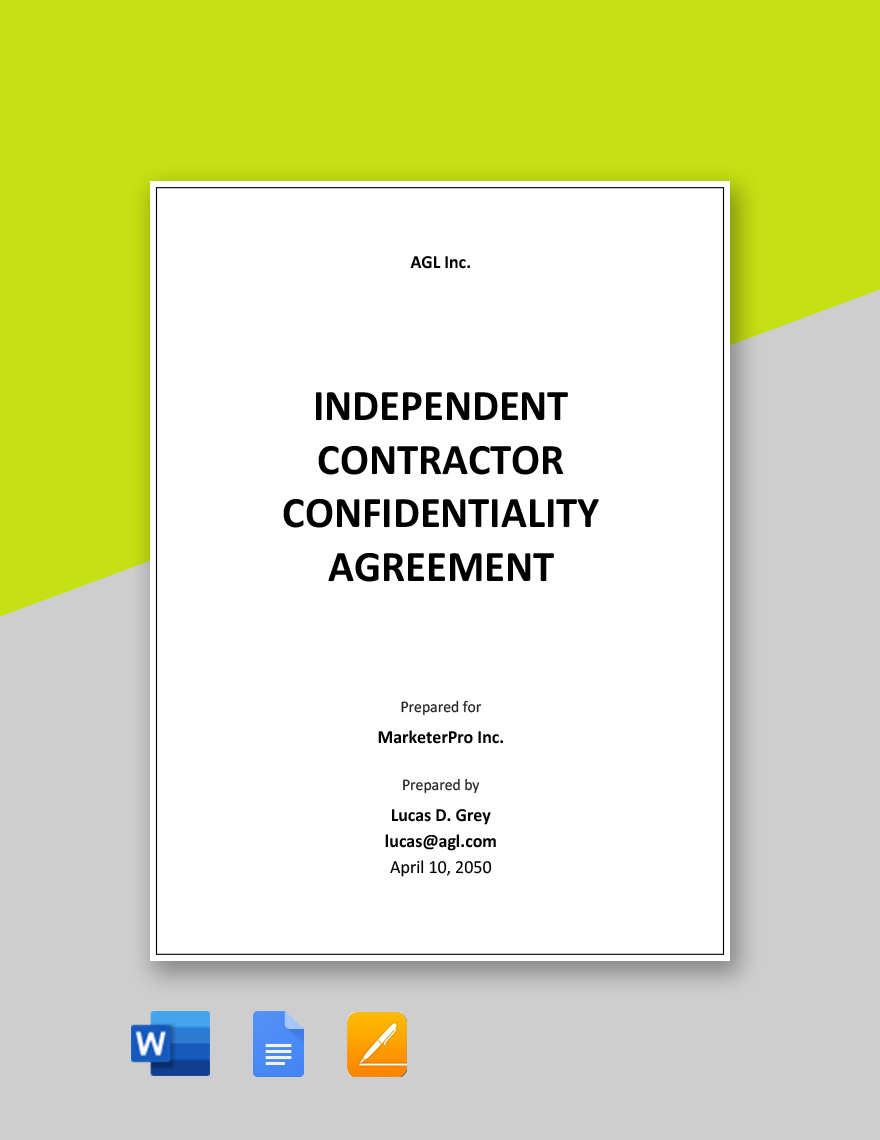
Research relationships can require additional attention because research information may include preliminary findings, methodologies, datasets, technical observations, product concepts, or unpublished results. The agreement should reflect the actual information being exchanged and any other contractual or institutional requirements that apply.

Technology and Digital Information
Technology relationships often involve information that is stored digitally and accessed through systems rather than exchanged solely as paper documents. Confidentiality agreements can address source code, system architecture, technical specifications, credentials, product roadmaps, databases, development documentation, and other proprietary material.
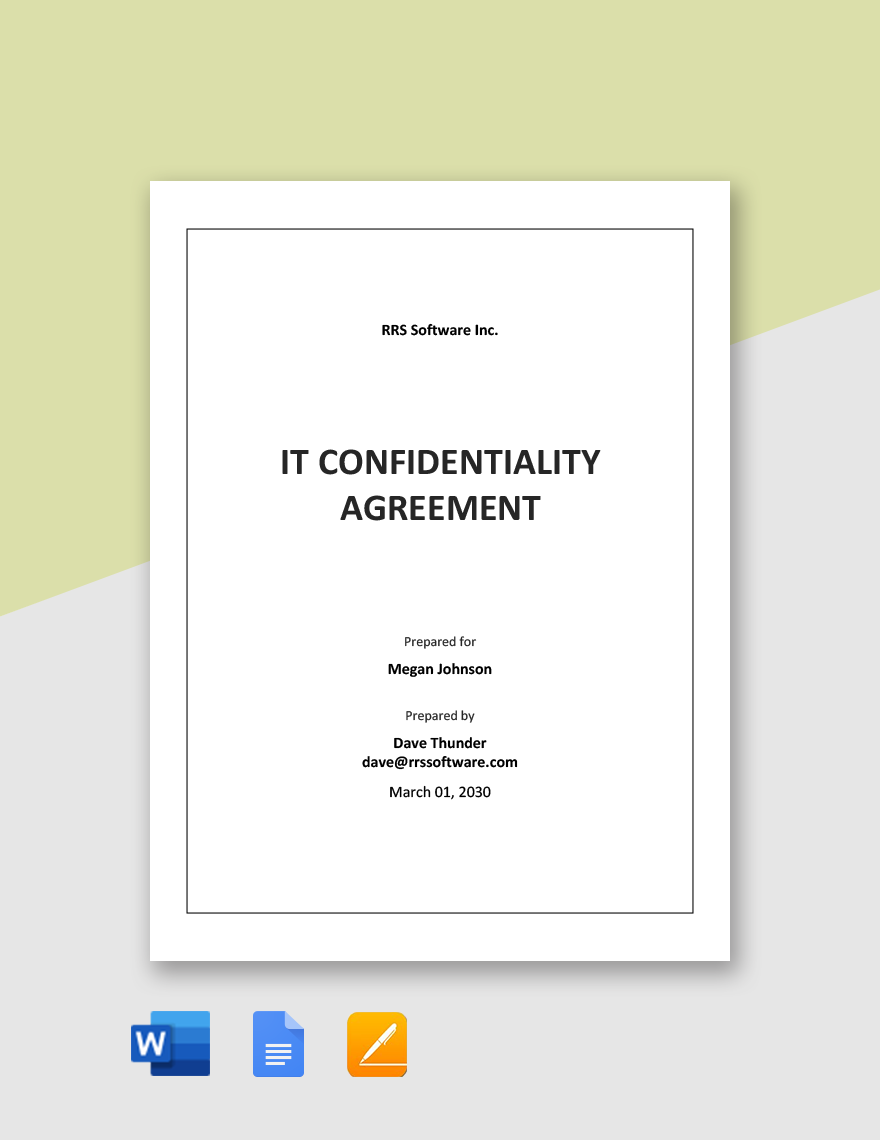
The contract should be supported by technical controls. Appropriate permissions, authentication, access logging, secure storage, controlled sharing, and prompt removal of access when a project ends can help translate contractual requirements into daily practice.
Digital records also create practical questions about copies and backups. A return-or-destruction clause should be written with the organization’s actual technical environment in mind rather than assuming that every electronic copy can be immediately eliminated.
Internship and Temporary Access
Interns, temporary workers, and project-based personnel can receive access to sensitive information even when their relationship with the organization is short. An agreement should identify the information they may access and establish the same basic expectations for appropriate handling.
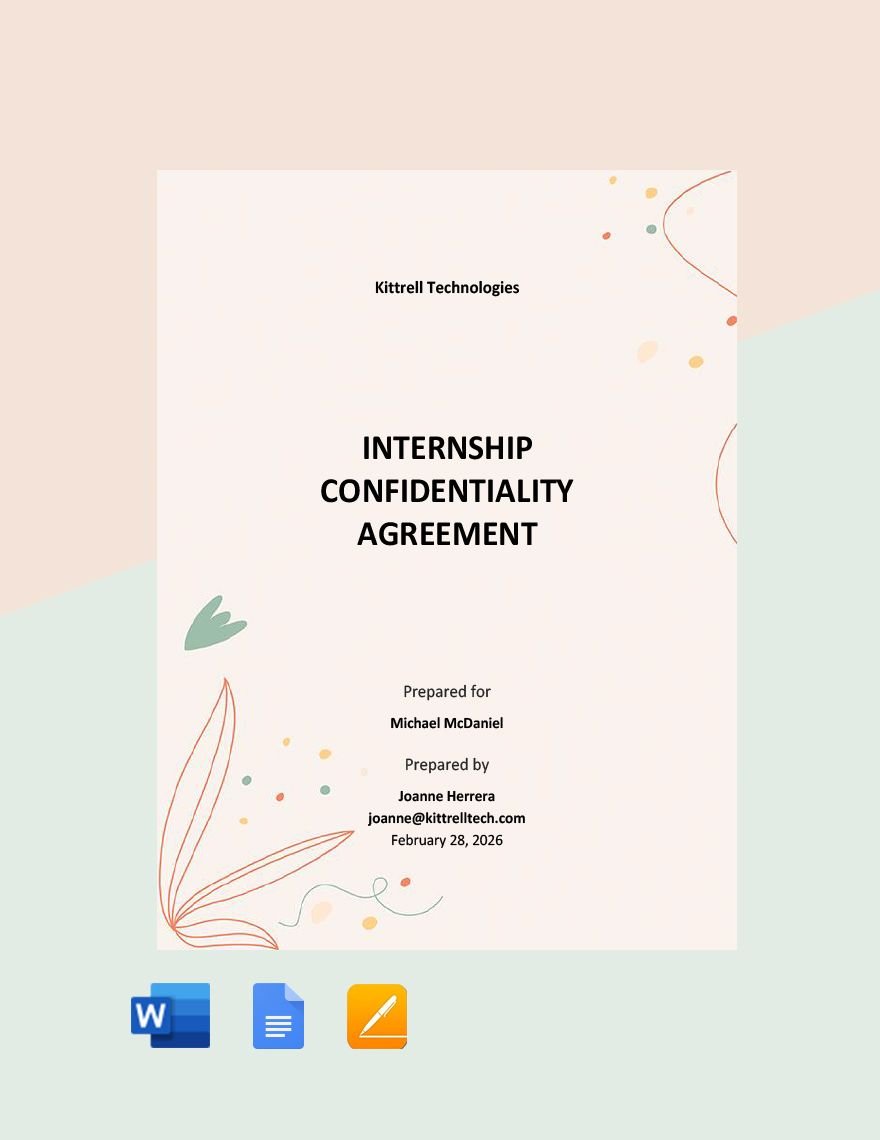
Organizations should combine the agreement with role-based access. A person should generally receive access to the information needed for assigned duties rather than unrestricted access to unrelated confidential records.
Practical Solution
The practical solution is to build a repeatable confidentiality workflow instead of selecting a document at random. Start by mapping the information that will be shared, identifying the parties who need access, determining the purpose of disclosure, and deciding how long the information should remain protected.
Step 1: Identify the information
Create a concise inventory of the information involved in the relationship. Separate public information from proprietary or sensitive information. Identify whether the material includes technical data, customer information, financial information, intellectual property, research, designs, processes, or strategic information.
Step 2: Determine the relationship
Decide whether the arrangement is one-way or mutual. Then determine whether the recipient is an employee, contractor, consultant, vendor, investor, partner, customer, or another type of party. The relationship helps determine which provisions require special attention.
Step 3: Customize the definition
Replace generic language with categories that accurately describe the information involved. Include appropriate exclusions and explain the permitted purpose. Avoid adding unrelated restrictions simply because they appear in another agreement.
Step 4: Establish handling rules
Specify how information may be used, who may access it, when disclosure to representatives is permitted, and what should happen if a legally compelled disclosure occurs. These provisions should match the organization’s real processes.
Step 5: Establish duration and exit procedures
Decide how long the obligations apply and what happens when the relationship ends. Address the return, deletion, destruction, or retention of relevant materials according to the actual circumstances.
Step 6: Review before execution
Check party names, dates, definitions, exclusions, permitted uses, duration, signatures, governing-law provisions, and other material terms. For important transactions or jurisdiction-sensitive matters, have the document reviewed by an appropriately qualified legal professional.
Common Mistakes When Using Templates
One common mistake is treating a template as a finished agreement. A template is a framework that must be adapted to the actual relationship. It may contain assumptions about parties, jurisdictions, business purposes, information categories, or remedies that do not apply to a new transaction.
Another mistake is defining confidential information so broadly that the parties cannot determine what is actually protected. Precision can make the agreement easier to administer because employees, contractors, and business partners can understand what they are expected to protect.
It is also important to avoid relying on contractual language alone. An agreement should be supported by reasonable organizational safeguards such as access controls, internal procedures, training, secure storage, and appropriate offboarding.
A final mistake is ignoring the end of the relationship. Confidential records may remain in email accounts, shared drives, local devices, project folders, printed files, and other locations. The agreement should provide a realistic process for handling those materials.
How to Compare Confidentiality Agreement Templates
When comparing several templates, use the same checklist for each document. Compare the definition of Confidential Information, exclusions, permitted use, authorized disclosures, duration, return obligations, remedies, notices, governing law, and signature provisions.
Also consider how much customization each template requires. A short agreement may be appropriate for a narrow information exchange, while a complex transaction may require detailed treatment of affiliates, representatives, intellectual property, required disclosures, electronic records, and post-relationship obligations.
The best document structure depends on the actual information relationship. A visually attractive template is useful only when its substance accurately reflects the transaction.
Document Management After Signing
Once an agreement has been executed, maintain a controlled copy of the signed version. Keep it separate from working drafts and record the effective date, parties, relationship, confidentiality period, and responsible internal owner.
Organizations with many agreements can maintain a contract register so that responsible teams can identify active agreements and review obligations approaching expiration. Consistent naming and version management also reduce the chance that an outdated draft will accidentally be treated as the executed document.
Access to signed agreements should itself be controlled. Confidentiality contracts can contain sensitive business information, party details, commercial terms, and signatures, so storage procedures should reflect the sensitivity of the records.
Legal and Jurisdictional Considerations
Confidentiality agreements are contractual documents, and the effect of a particular provision depends on the applicable law, facts, relationship, and wording. A document created for one jurisdiction should not automatically be treated as suitable for another jurisdiction.
Employment relationships may involve additional legal considerations. Certain rights or disclosures may be protected by law regardless of contractual language. Similarly, provisions relating to trade secrets, intellectual property, personal information, compelled disclosure, remedies, and post-employment restrictions can require jurisdiction-specific review.
For businesses operating in Indonesia, the agreement should be considered in the context of Indonesian contract and trade-secret rules when applicable. A foreign template may provide useful structural inspiration, but it should not be assumed to reflect every requirement relevant to an Indonesian transaction.
Reference Examples
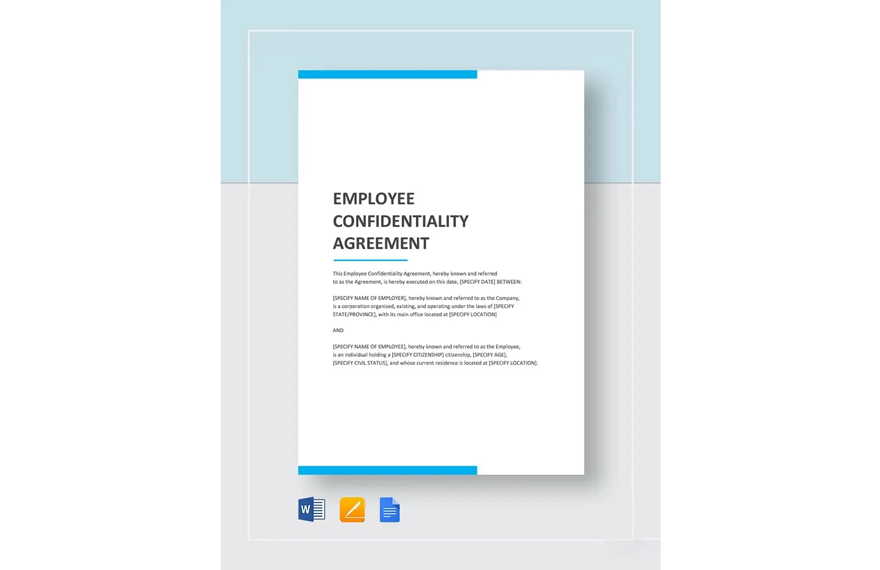
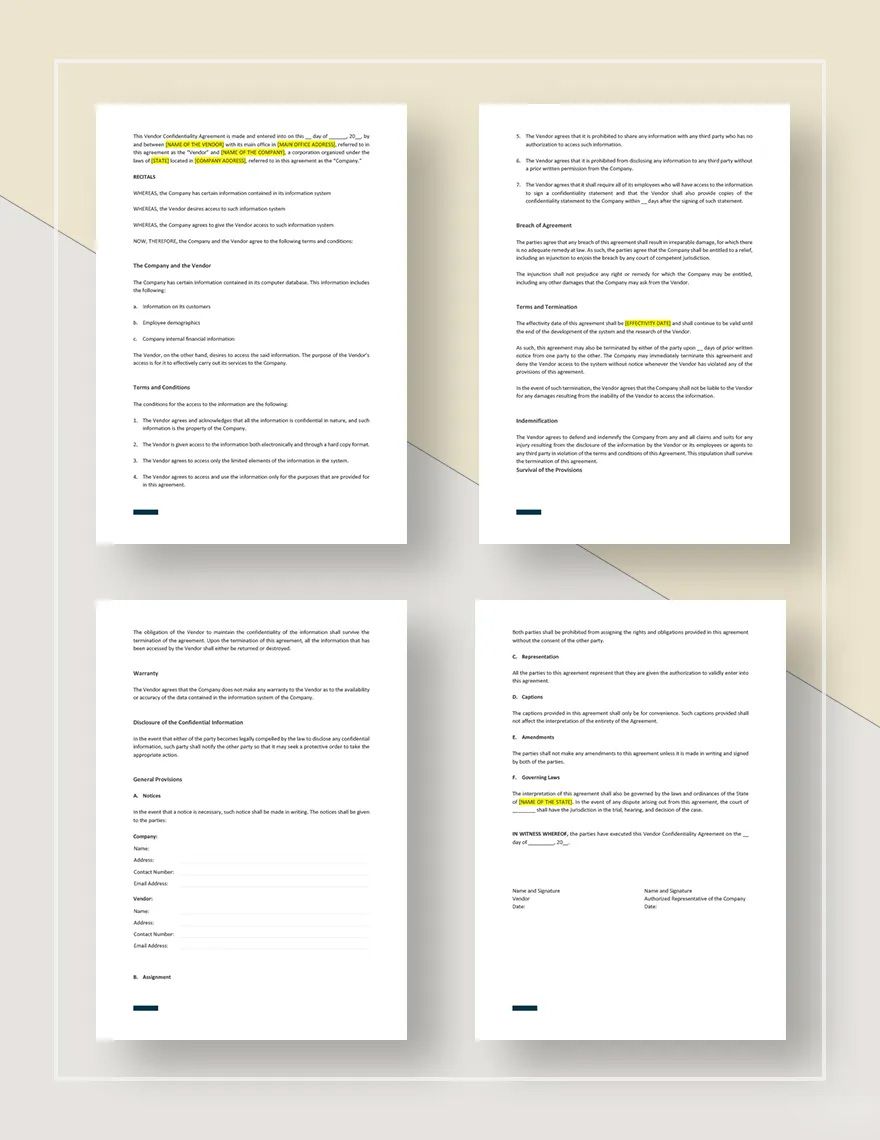
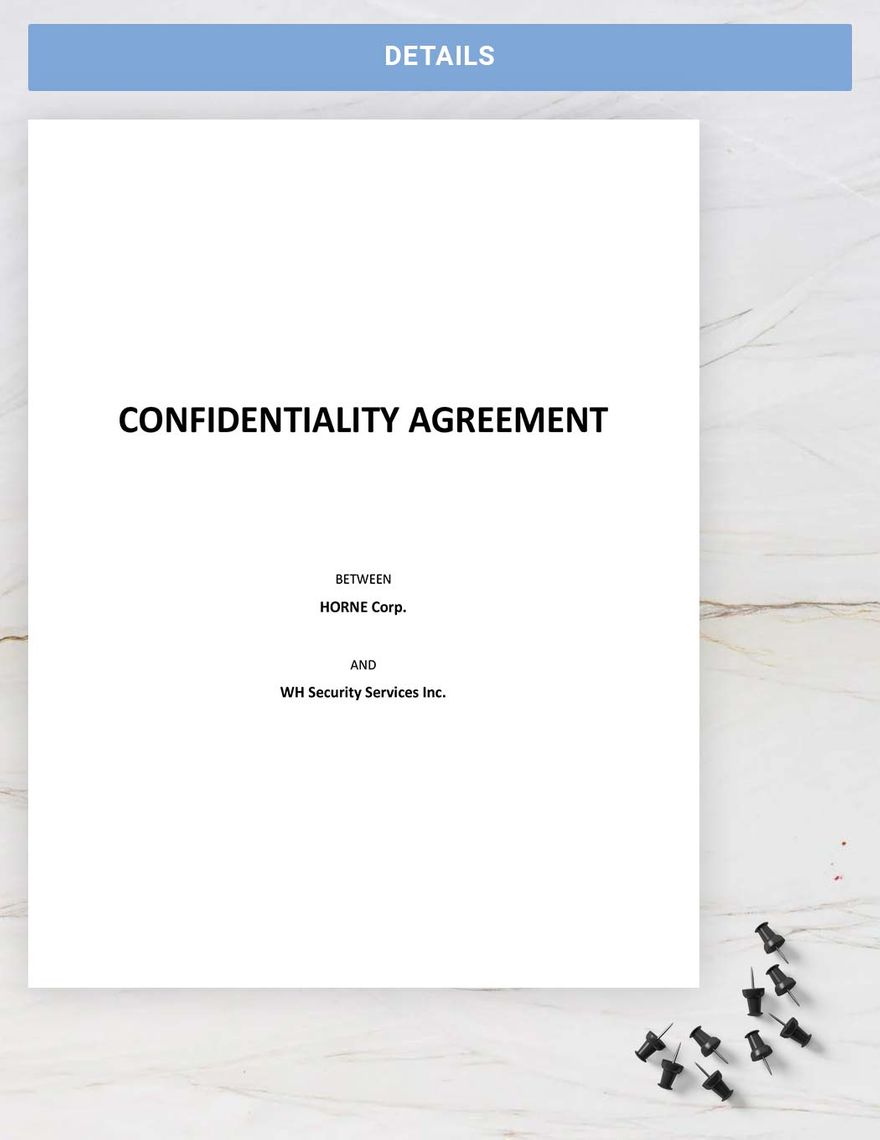
Confidentiality Agreement Templates can be easier to evaluate when readers can see different document structures side by side. The visual examples below illustrate how agreements may organize party information, definitions, confidentiality duties, exclusions, duration, termination, signatures, and other provisions. Some designs use a formal legal layout, while others emphasize a cleaner document presentation for business workflows.
These references should be viewed as visual and structural examples rather than universal legal forms. A document that looks professional may still require substantial editing before it fits a particular transaction. Compare the organization of the examples, identify the clauses relevant to the intended relationship, and then adapt the wording to the actual circumstances and applicable legal framework.
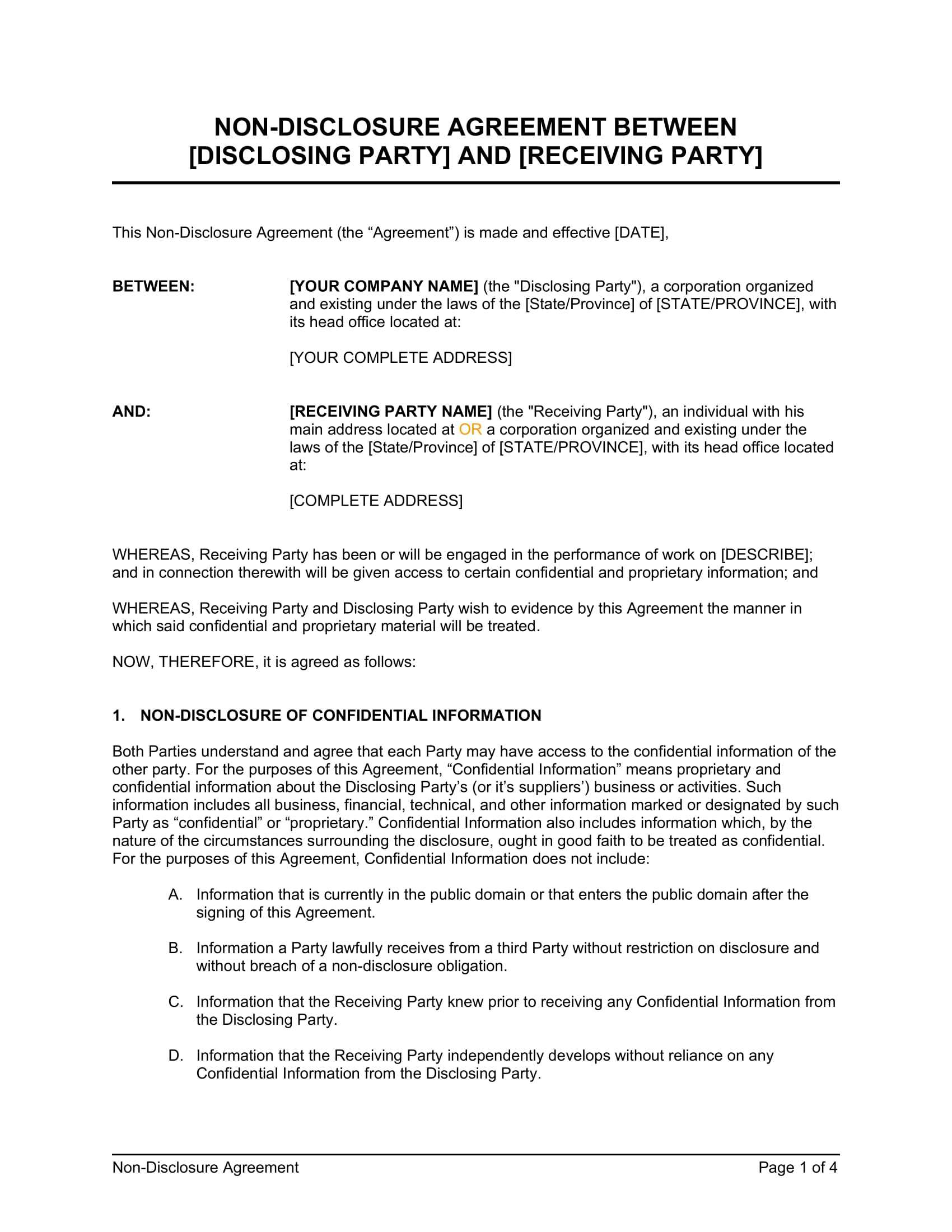
Non-Disclosure Agreement Between Two Companies
Source: Docs Bizkit
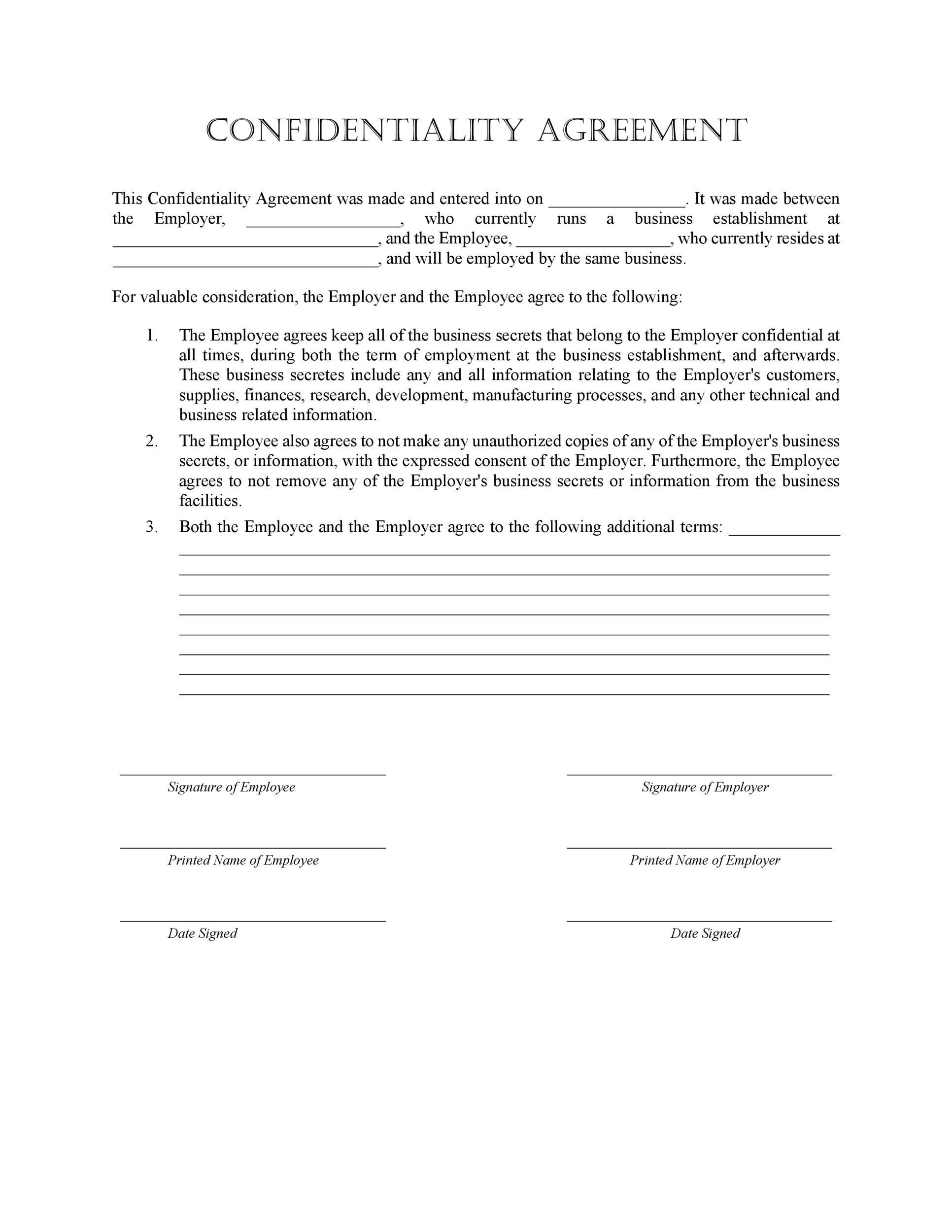
Employee Confidentiality Agreement Form
Source: TemplateLab
Non-disclosure and Confidentiality Agreement Template
Source: Template.net
Employee Confidentiality Agreement Template
Source: Template.net
Contractor Confidentiality Agreement Template
Source: Template.net