Choosing the right Apprenticeship Agreement Templates can make the process of organising an apprenticeship much clearer for employers, apprentices, training providers, and education organisations. A well-structured agreement records the essential employment and training arrangements while giving everyone a shared understanding of responsibilities, expectations, dates, and learning objectives.

For employers, the challenge is rarely finding a document with the right title. The more important task is selecting a template that fits the apprenticeship structure, jurisdiction, workplace, training programme, and employment arrangements. A document that looks professional may still require substantial editing before it is appropriate for a particular organisation.
This guide explains what to look for in an apprenticeship agreement, how to compare formats, how to approach UK-focused templates, and how to customise a document without overlooking important details. It also explores common searches such as apprenticeship agreement template 25-26, apprenticeship agreement template 2026, and apprenticeship agreement template uk.
What Should Apprenticeship Agreement Templates Include?
An apprenticeship agreement should clearly describe the relationship between the employer and apprentice. Although the exact requirements depend on the applicable legal and funding framework, a practical document normally identifies the parties, the apprenticeship role, the expected duration, employment arrangements, training commitments, and relevant signatures.
A strong template should make important information easy to locate. Instead of hiding key terms in dense paragraphs, the document should use logical sections and clearly labelled fields. This helps the apprentice understand what they are agreeing to and gives the employer a useful record for internal administration.
Essential Information to Include
- Employer details: Include the legal or trading name, business address, and appropriate contact information.
- Apprentice details: Identify the apprentice accurately and provide the required contact information.
- Role or occupation: Describe the position and the occupational area being developed.
- Apprenticeship programme: Identify the relevant programme, standard, framework, or qualification where applicable.
- Start and expected completion dates: Record the intended period of employment and training.
- Training arrangements: Explain how workplace learning and formal training will be organised.
- Employment conditions: Refer to working hours, pay, leave, workplace policies, and other applicable employment terms.
- Signatures: Provide suitable spaces for the parties who must formally approve the agreement.
The agreement should work alongside other employment and training documents rather than attempting to replace every document used during the apprenticeship. For example, a separate training plan may contain more detailed information about learning activities, progress reviews, responsibilities, and training schedules.
Why Use a Structured Apprenticeship Agreement?
An apprenticeship combines employment with structured learning, so unclear documentation can create confusion later. A well-organised agreement gives both sides a common reference point from the beginning.
For an employer, a template can provide a repeatable process when several apprentices are recruited during the year. Human resources teams can create a consistent document structure while adapting individual fields for each apprentice. This can also make internal reviews easier because the same information appears in a familiar order.
For an apprentice, the document can clarify the practical side of the arrangement. The apprentice can see who employs them, what role they are entering, how long the arrangement is expected to continue, and what learning commitments are associated with the position.
A Template Is a Starting Point, Not a Finished Legal Document
One of the most important principles is to avoid treating a generic template as automatically suitable for every situation. Employment law, apprenticeship rules, funding conditions, and administrative requirements can vary according to location and programme type.
Before signing, review every field and clause. Remove sections that do not apply, add necessary workplace information, and check that the agreement is consistent with the apprentice’s employment terms and training plan. For regulated or complex arrangements, professional legal or HR review can provide additional assurance.
Understanding Apprenticeship Agreement Template Versions
Searches for apprenticeship agreement template 2025, apprenticeship agreement template 2026, apprenticeship agreement template 25-26, and apprenticeship agreement template 26 27 often reflect a practical concern: users want a document that matches the relevant programme year or current administrative requirements.
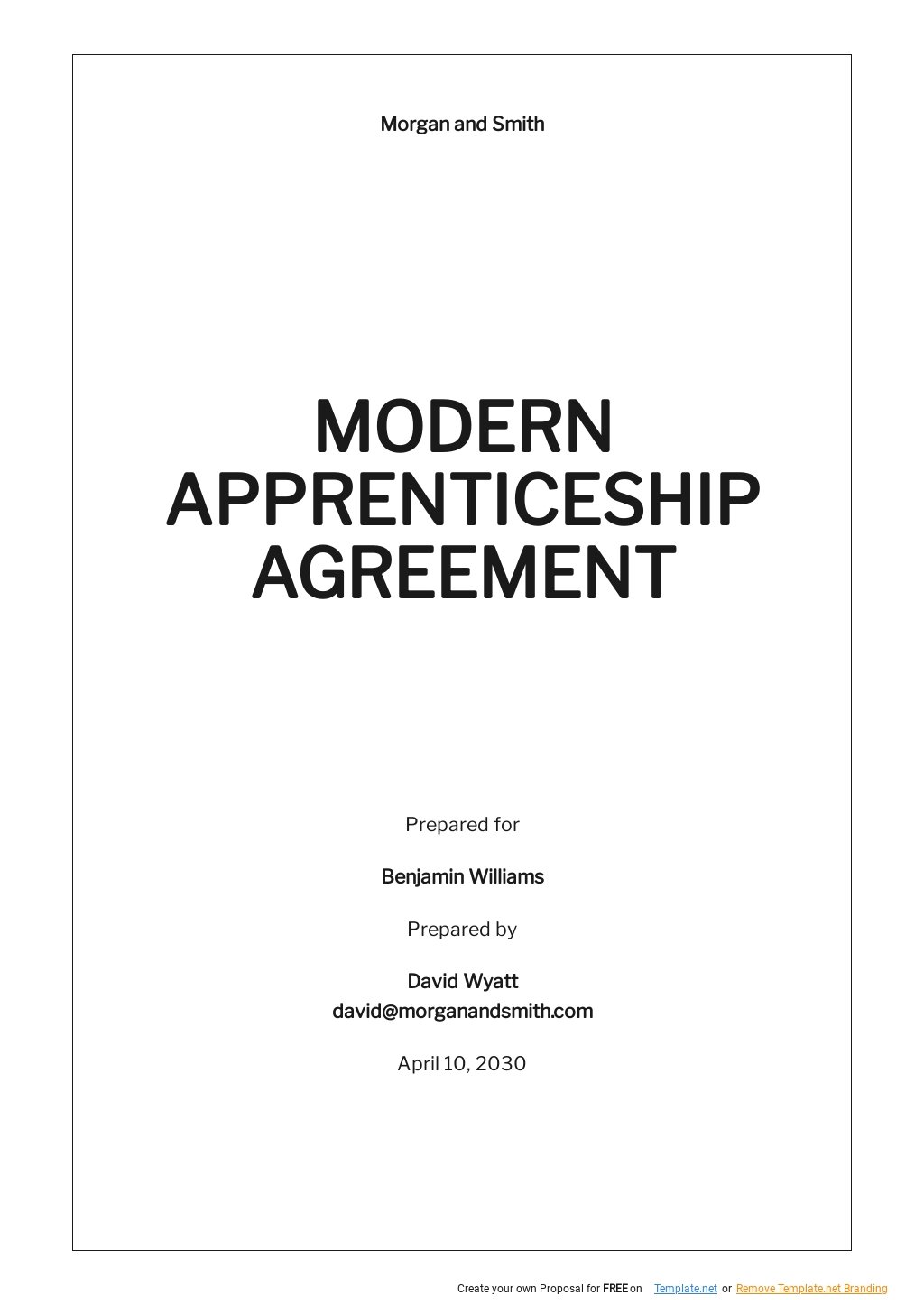
A date or academic-year label should therefore be treated as an indicator that requires verification rather than proof that a document is automatically current. A template carrying a recent year can still contain clauses that need adaptation for a particular employer or programme.
How to Compare Different Year Versions
- Check the publication or revision date shown by the source.
- Compare the required fields with the current apprenticeship arrangement.
- Review references to training, assessment, employment, and programme requirements.
- Confirm that the jurisdiction matches the apprentice’s actual workplace.
- Check whether the template is intended for employers, training providers, or another party.
- Keep a record of which version was used for each cohort.

This approach is particularly useful for organisations that manage apprentices across several recruitment cycles. Instead of replacing every document whenever a new year appears in search results, compare the actual requirements and update the document deliberately.
Choosing an Apprenticeship Agreement Template UK Format
An apprenticeship agreement template uk search usually indicates that the user wants a format suitable for a UK apprenticeship arrangement. However, the UK is not a single legal jurisdiction for every employment and education matter, so the intended location should be considered before selecting a template.
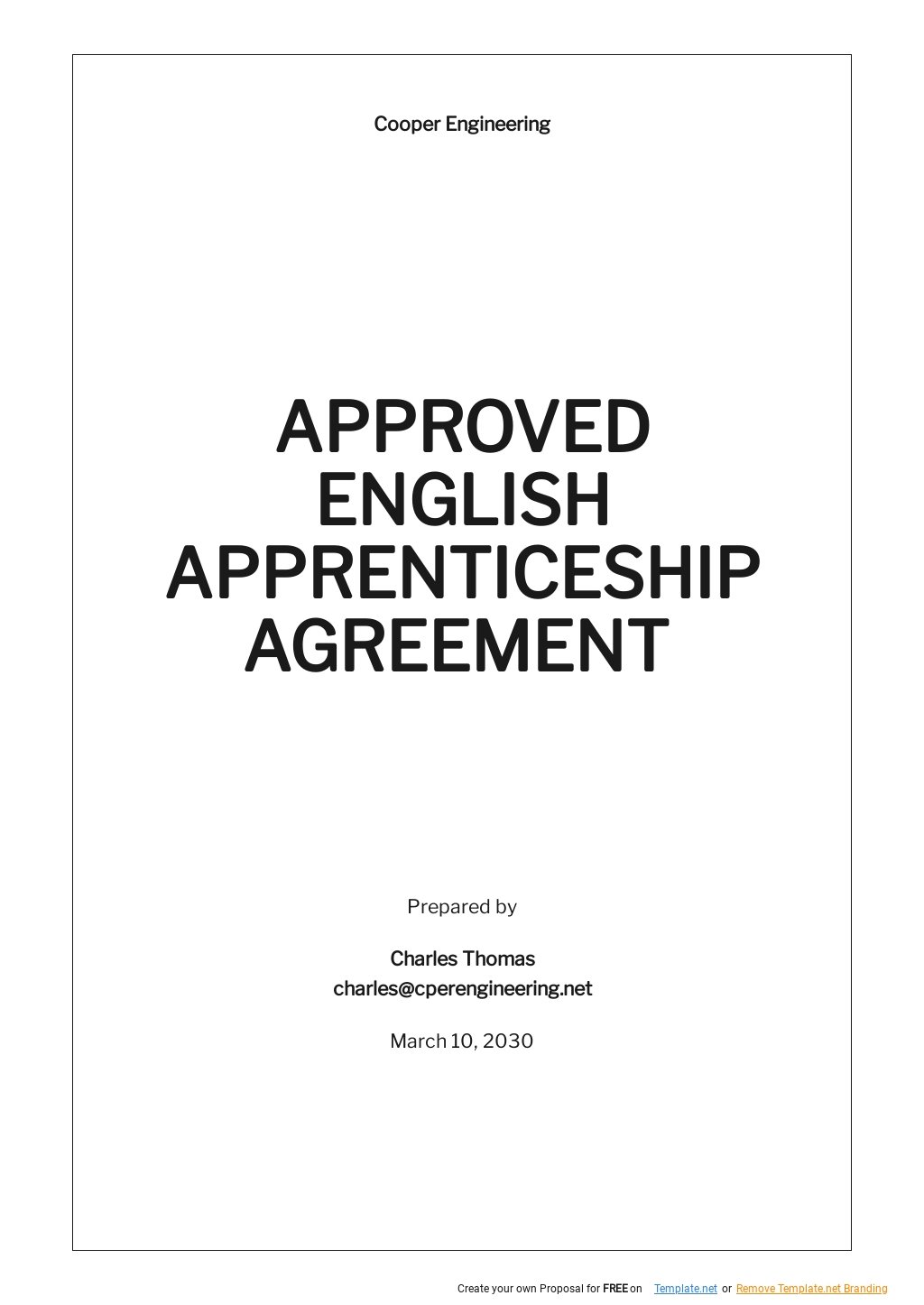
For an England-based arrangement, the employer should make sure the agreement fits the relevant apprenticeship and employment requirements. Arrangements in Wales, Scotland, and Northern Ireland may involve different rules or administrative processes. A visually similar document is not necessarily interchangeable across jurisdictions.
The safest approach is to identify the location first, then select a template that was designed for that environment. After that, compare its fields with the current requirements supplied by the relevant authority, training provider, or professional adviser.
UK Template Selection Checklist
- Confirm the nation or jurisdiction where the apprentice will work.
- Identify the apprenticeship standard, framework, or qualification.
- Confirm the expected start and completion dates.
- Check employment particulars and workplace arrangements.
- Confirm training and assessment responsibilities.
- Check signature and record-keeping requirements.
- Review the completed document before the apprentice begins the programme.

Apprenticeship Agreement Templates Word, PDF, and Printable Formats
Users commonly compare apprenticeship agreement templates word with apprenticeship agreement templates pdf because the two formats serve different purposes. Word-based documents are generally convenient when substantial editing is required, while PDF documents are useful when the final layout needs to remain consistent.
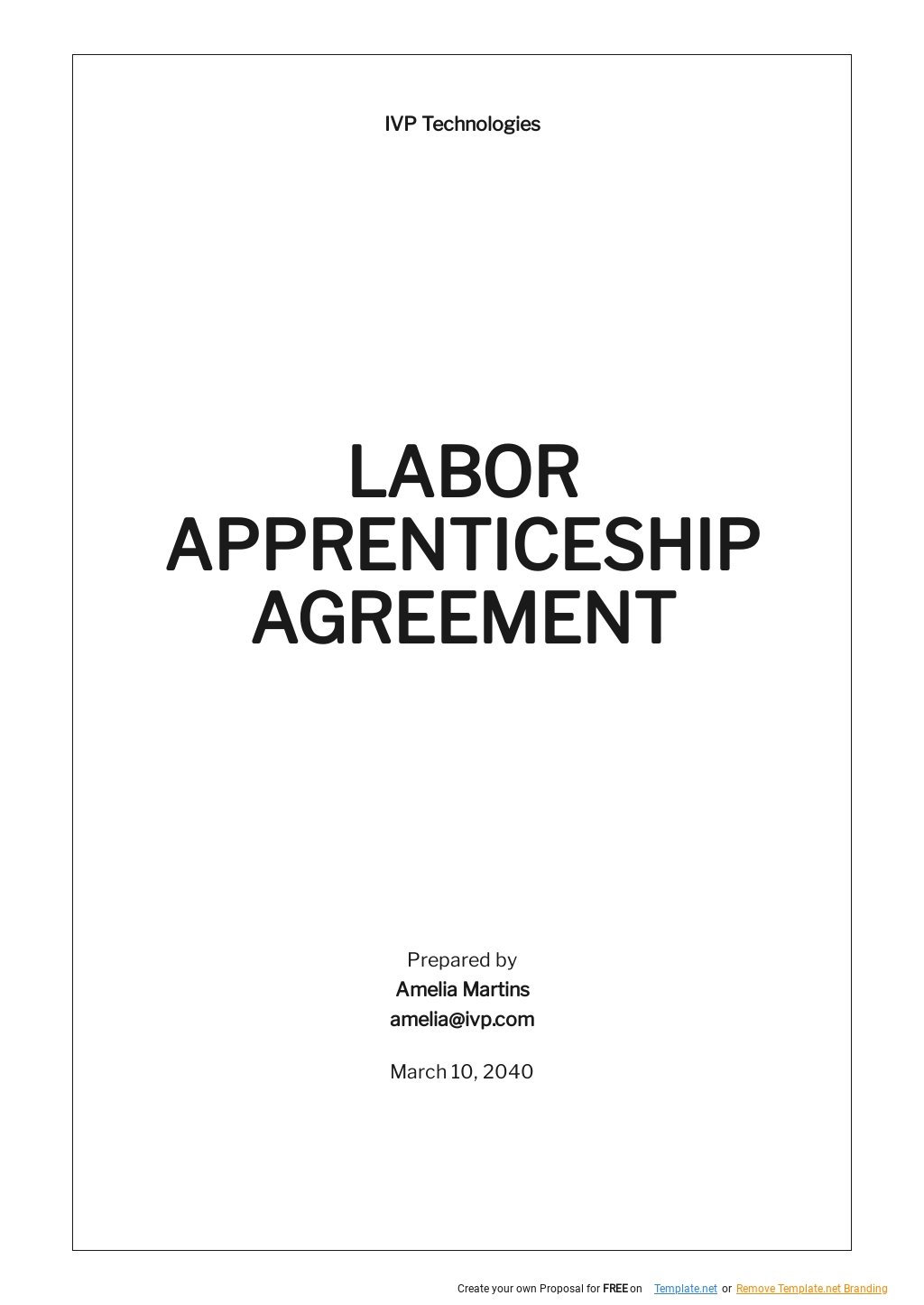
An apprenticeship agreement template word file can be particularly practical during drafting. HR staff can update names, dates, job titles, workplace details, training arrangements, and internal clauses before producing the final version.
A PDF format can be preferable once the agreement has been reviewed and approved. It can preserve page layout and reduce accidental formatting changes when the document is shared with the apprentice or another authorised party.
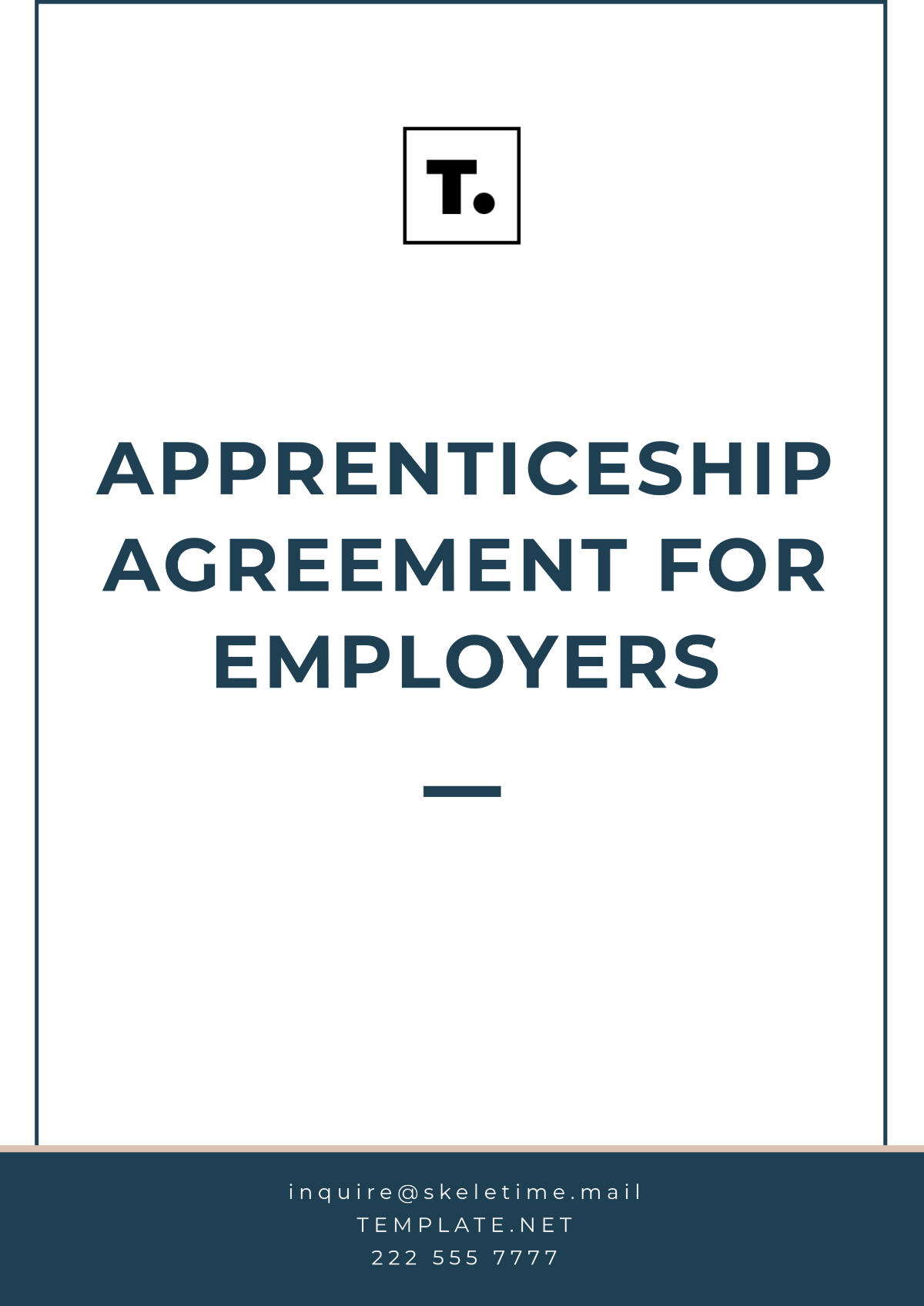
There is also demand for a free printable apprenticeship agreement because some organisations still prefer physical signing or paper records. If a printable version is used, check that the document has sufficient space for signatures, dates, names, and handwritten information.
Which Format Should You Choose?
- Word: Best for substantial customisation and internal drafting.
- PDF: Useful for controlled final copies and consistent presentation.
- Printable format: Suitable when physical signatures or paper records are required.
- Editable online format: Useful when several authorised users need to collaborate on the document.

When comparing apprenticeship agreement templates download options, examine the actual file type, editing capability, source reputation, update information, and intended jurisdiction instead of selecting a document based only on its appearance.
What Is an Apprenticeship Employer Agreement?
The phrase apprenticeship employer agreement can refer to documentation involving the employer’s role in an apprenticeship arrangement. It is important to distinguish an agreement between an employer and apprentice from an agreement between an employer and another organisation, such as a training provider or funding body.

Before choosing a template, identify exactly who the parties are. If the document is intended to establish the apprentice’s employment terms, an apprentice-employer agreement is likely the relevant document. If it concerns training delivery or another organisational relationship, a different agreement may be appropriate.
Questions Employers Should Ask Before Signing
- Does the agreement identify the correct employer?
- Does the role match the apprentice’s actual position?
- Are the programme and training details accurate?
- Are the dates consistent with other apprenticeship records?
- Are working arrangements clear?
- Are responsibilities divided clearly between employer, apprentice, and training provider?
- Have all required parties reviewed and signed the document?
How to Customise Apprenticeship Agreement Templates
Customisation should begin with factual accuracy rather than visual design. First complete the identity fields, employment information, programme details, dates, and training arrangements. Only after these essentials are correct should you refine branding, typography, spacing, or page presentation.

A useful editing process is to create a master version containing approved standard clauses. Individual agreements can then be produced from that master while changing only the fields specific to each apprentice. This reduces the chance of accidentally deleting an important section during repeated editing.
Five-Step Customisation Process
- Identify the parties: Enter the correct employer and apprentice information.
- Define the role: Specify the occupation and apprenticeship programme.
- Enter dates: Record the relevant start, expected completion, and practical training dates.
- Confirm responsibilities: Clarify employment, workplace training, learning, supervision, and review arrangements.
- Review and sign: Check the entire document against the associated employment and training records.
For larger employers, version control is especially useful. Store the approved master document separately from completed agreements and give each final document a clear internal filename or reference. This makes later administration much easier.
Common Mistakes to Avoid
Even a polished template can become problematic when information is copied without review. One common mistake is leaving placeholder text in a final agreement. Another is entering dates that do not match the apprenticeship record or training plan.

Another frequent issue is using a generic international template for a UK arrangement without checking local requirements. A document can have excellent formatting while still being unsuitable for the intended jurisdiction.
- Do not assume a template is current simply because its design looks modern.
- Do not leave generic placeholder fields in the signed version.
- Do not confuse the apprenticeship agreement with the training plan.
- Do not overlook the apprentice’s employment conditions.
- Do not use a template designed for another country without checking local requirements.
- Do not make substantial legal changes without appropriate professional review.
How to Make the Template Easier to Use
The best agreement is not necessarily the longest one. It should be detailed enough to record the necessary information while remaining easy for an apprentice to understand. Clear headings, consistent terminology, logical field placement, and straightforward sentences can significantly improve usability.
Consider using a document structure that separates identification details, employment information, apprenticeship information, training arrangements, responsibilities, and signatures. This structure helps users find important information quickly and makes the document easier to review.
Design Features Worth Prioritising
- Clear document title and version reference.
- Readable headings and subheadings.
- Consistent spacing between sections.
- Enough room for signatures and dates.
- Clearly marked fields for custom information.
- Professional but restrained branding.
- Print-friendly page proportions.
Templates intended for printing should also be checked on paper before being used at scale. A field that looks spacious on a screen may be inconvenient when completed by hand. A short physical test can reveal alignment, spacing, and readability issues before the document becomes part of an administrative workflow.
When Should You Use a Specialised Template?
A specialised template can be useful when the apprenticeship has distinctive requirements. Examples include programmes for skilled trades, fashion, hairdressing, cosmetology, education, manufacturing, or other occupations where responsibilities and workplace expectations differ.

However, specialisation should not replace legal or operational review. An industry-specific design may provide useful headings, but the employer still needs to confirm that every clause reflects the actual arrangement.

For small organisations, a simple agreement may be easier to maintain than a highly detailed document containing clauses that are never used. For larger organisations, a more comprehensive master template may be worthwhile because it can standardise onboarding across multiple apprenticeship roles.
Practical Example of a Template Workflow
Imagine a small engineering company hiring an apprentice for a structured technical programme. The HR manager begins with an apprenticeship agreement template and enters the employer details, apprentice details, job title, workplace location, start date, expected completion date, and programme information.
The manager then checks that the employment conditions correspond with the apprentice’s written employment information. Training responsibilities are reviewed against the training plan, and any organisation-specific policies are referenced appropriately. Once the information is checked, the document is presented to the relevant parties for review and signature.
The same workflow can be adapted for a larger employer. The difference is that the larger organisation may maintain a controlled master template, a review process, document versioning, and a central record of completed agreements.
Frequently Asked Questions About Apprenticeship Agreement Templates
Are Apprenticeship Agreement Templates legally binding?
A template itself is not automatically suitable simply because it has the appearance of a formal contract. Legal effect depends on the actual terms, applicable law, correct completion, and the circumstances of the arrangement. Review the completed document carefully before signing.
What should I look for in apprenticeship agreement templates pdf?
Look for a clearly structured document containing the parties’ details, apprenticeship information, employment arrangements, training information, dates, responsibilities, and signature fields. Also check that the document matches the intended jurisdiction and programme.
Is an apprenticeship agreement template word better for employers?
Word can be convenient when an employer needs to make several custom changes before finalising the document. It is particularly useful when the organisation maintains a master version that is reviewed and updated through a controlled process.
How should I evaluate an apprenticeship agreement template 2026?
Check the source, revision date, jurisdiction, programme requirements, and relationship between the agreement and the training plan. The year in the title should be treated as a reference point rather than a substitute for checking the current requirements.
Can I use an apprenticeship agreement template 2025 for a later programme?
It may provide a useful starting structure, but it should be reviewed before being used for a later programme. Compare its clauses and fields with the current requirements and update any information that has changed.
Where does an apprenticeship agreement template 26 27 fit into planning?
A template labelled for a particular programme year can help an organisation organise documents for that recruitment cycle. Before adoption, verify that its contents correspond with the applicable rules and the employer’s actual apprenticeship structure.
What is the difference between an apprenticeship agreement and an apprenticeship employer agreement?
An apprenticeship agreement commonly establishes the employment and apprenticeship arrangement involving the apprentice and employer. An apprenticeship employer agreement may instead describe obligations between an employer and another organisation or service. Always check who the parties are before selecting a template.
Final Checklist Before Signing
Before an agreement is signed, perform one final review rather than relying solely on the original template. Confirm names, dates, job information, apprenticeship details, employment conditions, training arrangements, and signatures. Check that the completed document agrees with the associated records.

- Employer information is accurate.
- Apprentice information is accurate.
- The apprenticeship role is clearly identified.
- Programme and qualification details are correct.
- Start and expected completion dates are consistent.
- Training responsibilities are clearly explained.
- Employment terms are consistent with related documentation.
- Jurisdiction and programme requirements have been checked.
- All required signatures and dates are present.
- A final approved copy is stored securely.

In the end, the best Apprenticeship Agreement Templates are the ones that combine clear structure, accurate information, appropriate formatting, and careful review. Whether you are comparing an apprenticeship agreement template 25-26, an apprenticeship agreement template 2026, an apprenticeship agreement template 2025, or an apprenticeship agreement template 26 27, focus on the actual requirements rather than the year printed on the cover. Choose the appropriate jurisdiction, select a practical Word or PDF format, customise every relevant field, and make sure the final agreement accurately reflects the apprenticeship relationship before it is signed.