Horse Agreement Templates can make equine transactions easier to organize by giving owners, buyers, sellers, lessees, boarding facilities, trainers, and groomers a clear written framework. A well-prepared agreement explains what each party expects, who is responsible for the horse, how payments work, and what should happen if the arrangement changes.
Horse transactions can involve significant responsibilities. A sale may require a veterinary examination, deposit, payment schedule, ownership transfer, and delivery arrangements. A lease may involve riding privileges, care duties, insurance, and return conditions. Boarding arrangements may need detailed rules for feeding, turnout, veterinary emergencies, and facility access. Putting these matters into writing can reduce confusion and make the relationship easier to manage.
Why Horse Agreement Templates Are Useful
A written equine agreement gives both parties a reference point. Instead of depending on conversations, text messages, or memories, the parties can review the same document and confirm the agreed terms.
This is particularly valuable when the arrangement lasts several months or involves substantial financial commitments. Even when the parties have a good relationship, circumstances can change. A horse may require unexpected veterinary treatment, a lease may end early, or boarding requirements may change.
- Clear responsibilities: Each party knows which duties belong to them.
- Financial clarity: Prices, deposits, recurring fees, and additional expenses can be recorded.
- Accurate identification: The horse can be described using identifying characteristics and registration information.
- Better communication: Care requirements and permitted activities can be documented.
- Easier administration: Important dates, signatures, and supporting information remain together.
Types of Horse Agreement Templates
The best agreement depends on the purpose of the arrangement. A sales contract should not be treated as a substitute for a lease contract, and a boarding document needs different provisions from a grooming agreement.
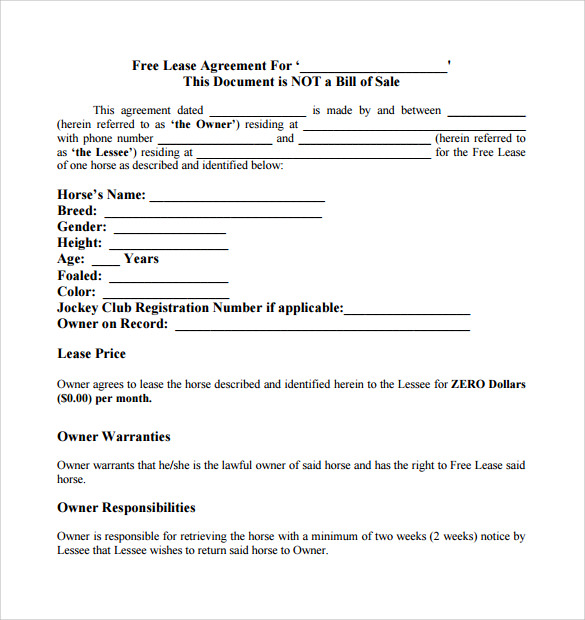
Horse Lease Agreements
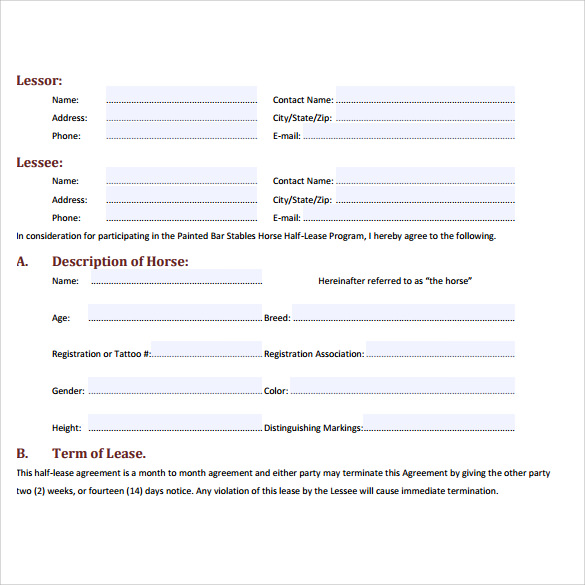
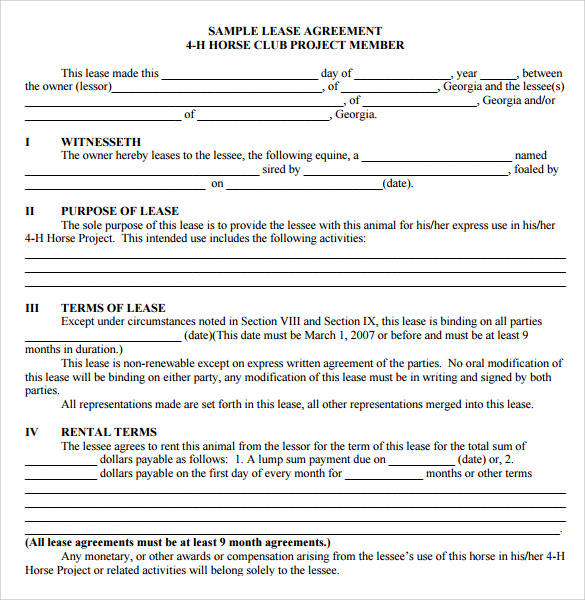
A horse lease agreement allows a person to use a horse under conditions established by the owner. The document should explain the duration of the lease, payment obligations, permitted activities, riding privileges, care responsibilities, and procedures for returning the horse.
A useful lease document should also distinguish between full and partial leases. A full lease may provide broad access, while a partial lease may restrict use to specific days or activities. These details should be written clearly so that neither party assumes rights that were never granted.
Horse Purchase Agreements
A horse purchase agreement records the terms of an ownership transfer. It normally identifies the buyer, seller, horse, purchase price, payment arrangements, delivery terms, and conditions for completing the transaction.
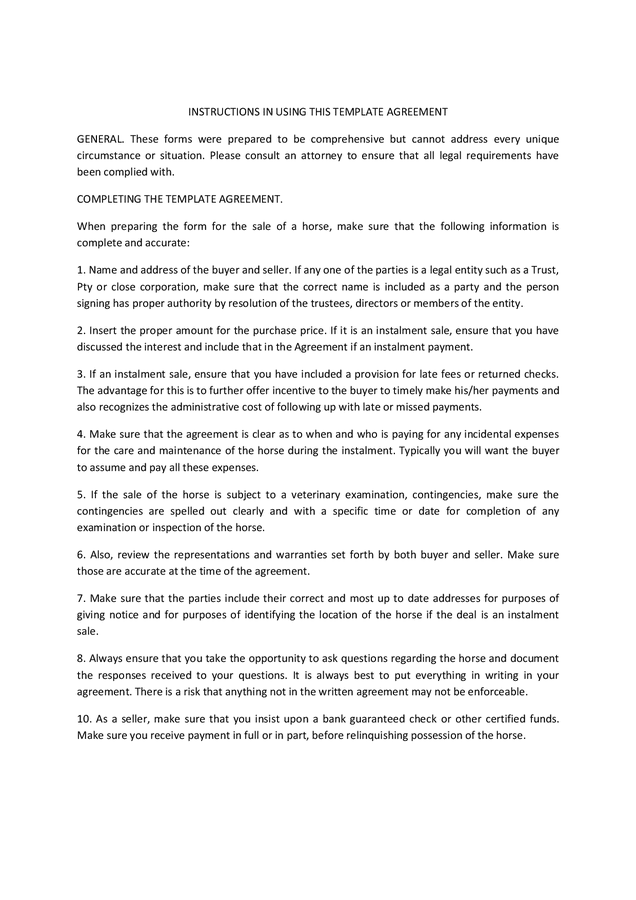
A detailed horse purchase and sale agreement can also address veterinary examinations, known health conditions, registration documents, representations made by the seller, and the point at which ownership changes.
Horse Boarding Agreements
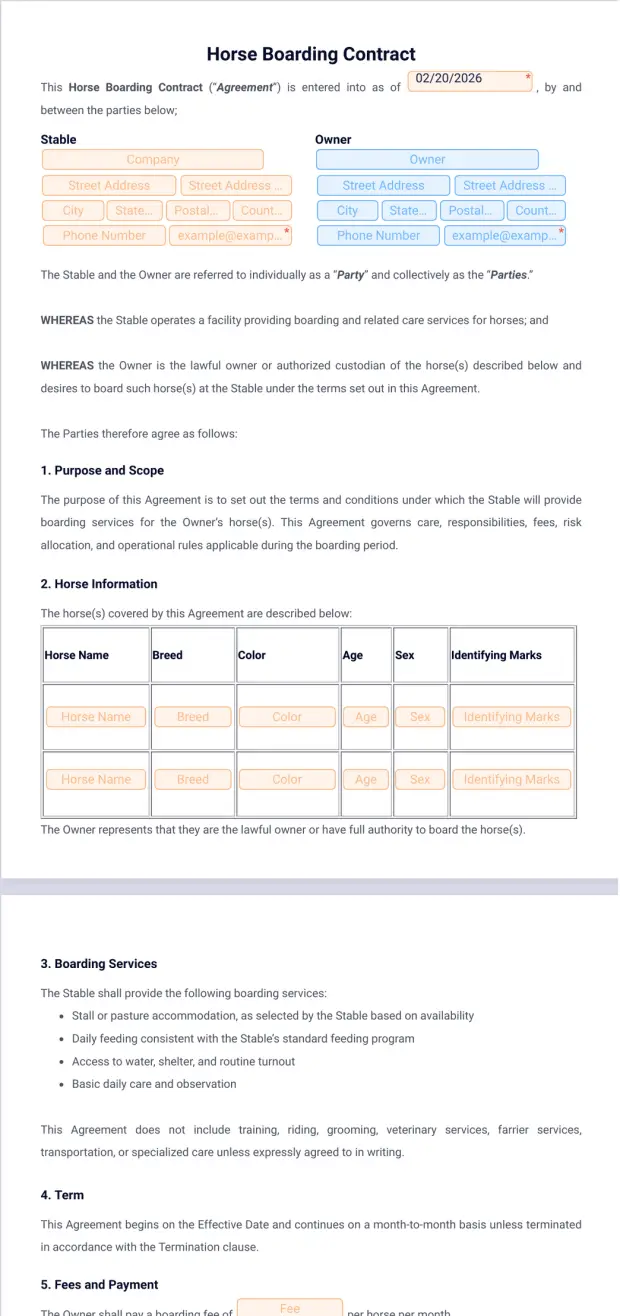
Boarding contracts establish the relationship between the horse owner and the facility providing care. The agreement should explain the boarding fee, services included, feeding arrangements, turnout, stall care, facility rules, veterinary procedures, and termination requirements.
It is particularly helpful to separate standard services from additional charges. For example, routine feeding may be part of the monthly fee, while special supplements, medication administration, transportation, or emergency services may involve additional costs.
Essential Information to Include
Identify the Parties
Begin by identifying everyone involved in the arrangement. Include full names, contact information, and business details where applicable. If a stable or equestrian business is involved, identify the responsible business entity and authorized representative.
Accurate identification becomes especially important when multiple owners, riders, or horses are involved. Each person should understand whether they are acting as an owner, buyer, seller, lessee, caretaker, service provider, or authorized representative.
Describe the Horse
The horse should be identified as precisely as practical. Include the registered name and barn name, breed, sex, age or birth date, color, distinctive markings, registration number, and microchip information when available.
- Registered name
- Stable or barn name
- Breed
- Sex
- Date of birth or approximate age
- Color and markings
- Registration information
- Microchip or identification information
Detailed identification reduces the risk of confusion and provides a useful reference if the document is reviewed months or years later.
Payment Terms and Deposits
Money should never be left to assumption. The agreement should state the total price or recurring fee, payment dates, accepted payment methods, deposit amount, and treatment of additional expenses.
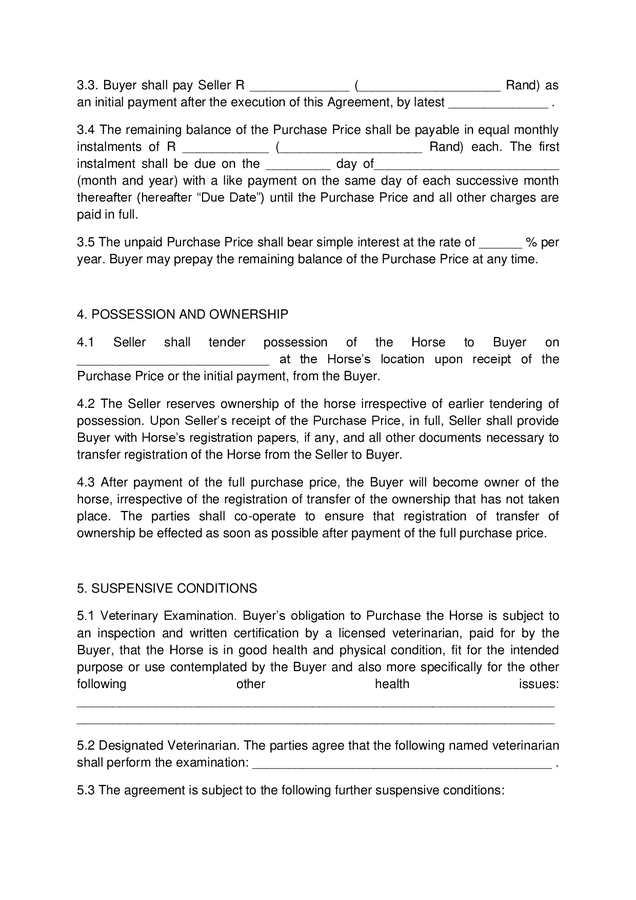
A horse purchase agreement with deposit should clearly explain how the deposit relates to the purchase price. It should also identify what happens if the transaction does not proceed. For example, the agreement may establish conditions concerning a veterinary examination, financing, cancellation, or failure to complete payment.
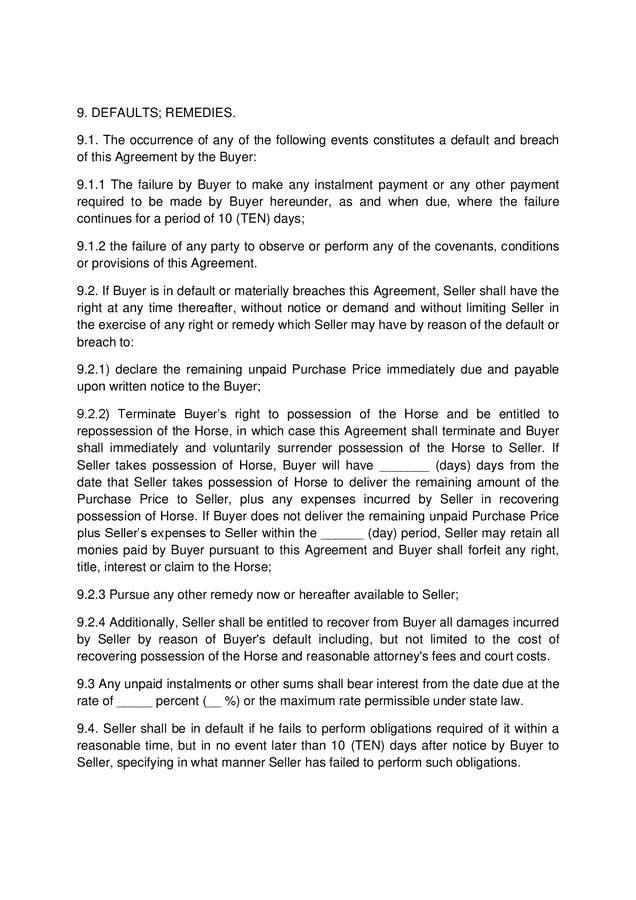
When the financial arrangement is complex, avoid vague phrases such as “payment will be made later.” State exact amounts and dates. If installments are permitted, identify each installment and explain when ownership or possession changes.
Veterinary Care and Health Information
Horse agreements should provide a clear approach to health information. Depending on the transaction, relevant details may include vaccination history, medications, known conditions, recent examinations, dental care, farrier records, and veterinary reports.
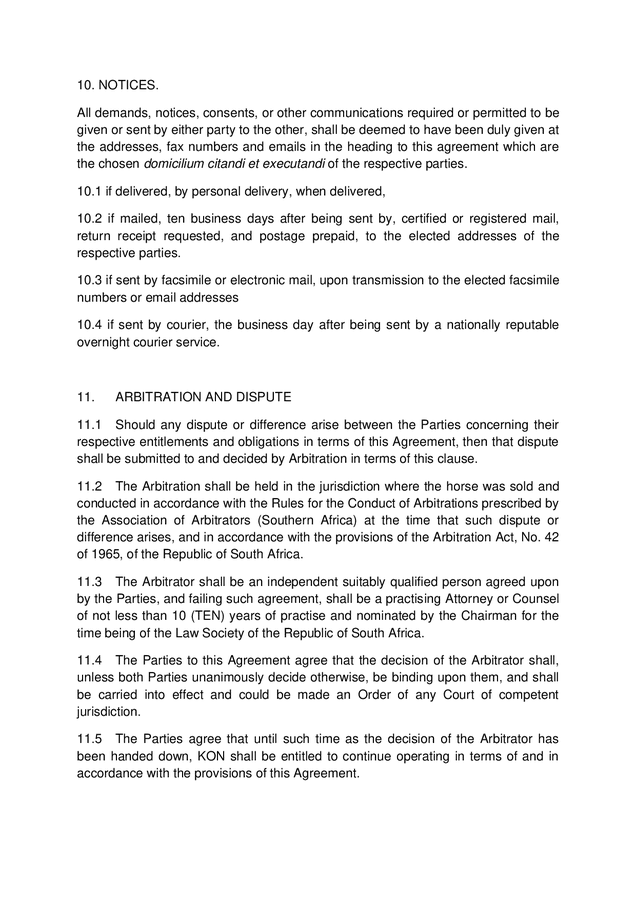
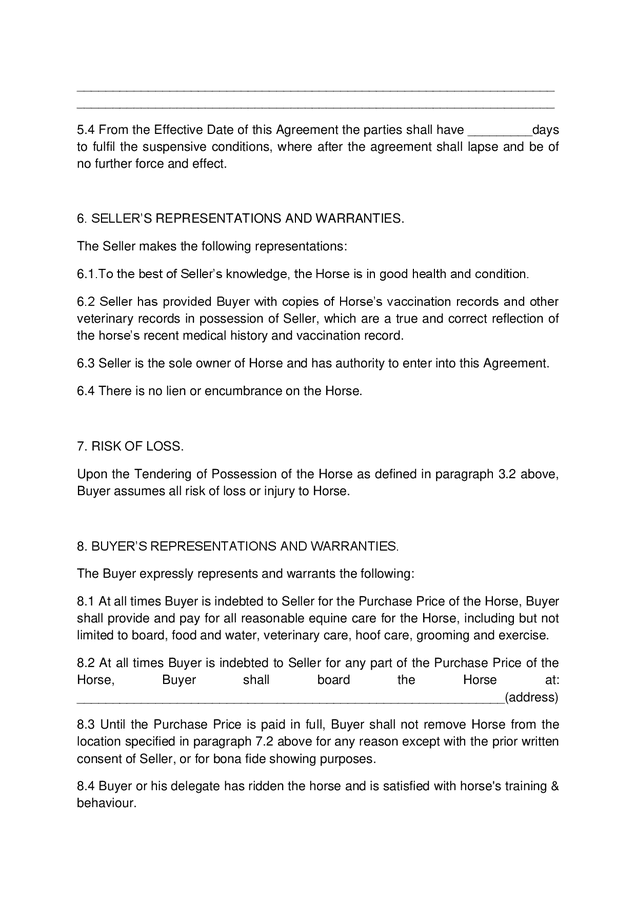
For a purchase, the buyer may want an independent veterinary examination before completing the transaction. The agreement can explain who selects the veterinarian, who pays for the examination, and how the results affect the transaction.
For boarding arrangements, the agreement should explain who may authorize emergency veterinary treatment when the owner cannot be reached. It should also state how emergency expenses are handled.
Choosing PDF or Word Formats
A PDF format is useful when the agreement has been finalized and the parties need a stable version for signing and recordkeeping. It preserves the document layout and helps ensure that the parties are reviewing the same final version.
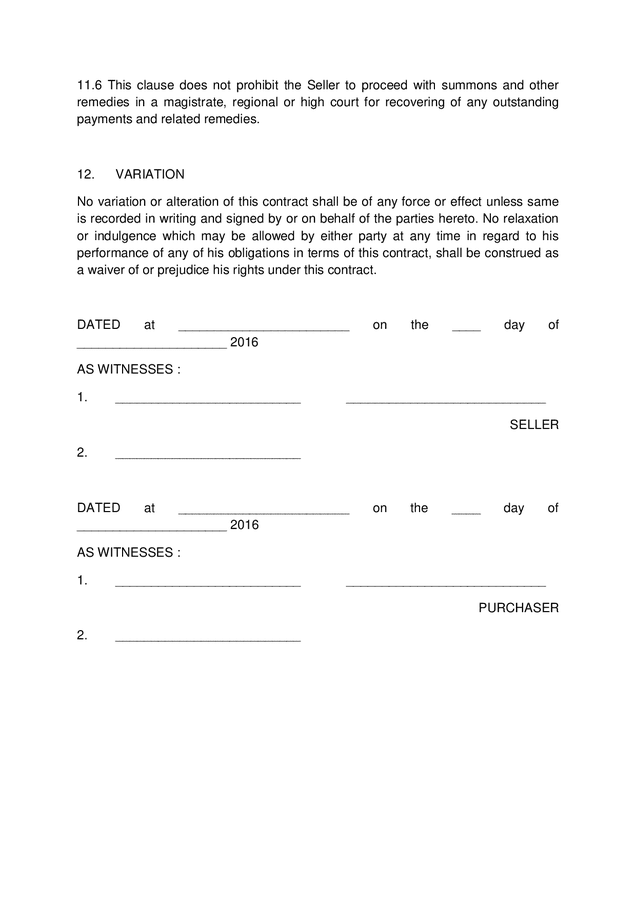
An editable Word format is convenient during preparation. Users can insert horse information, adjust payment terms, modify responsibilities, and remove clauses that do not apply. Once the wording is complete, the final version can be converted into a fixed format for signing.
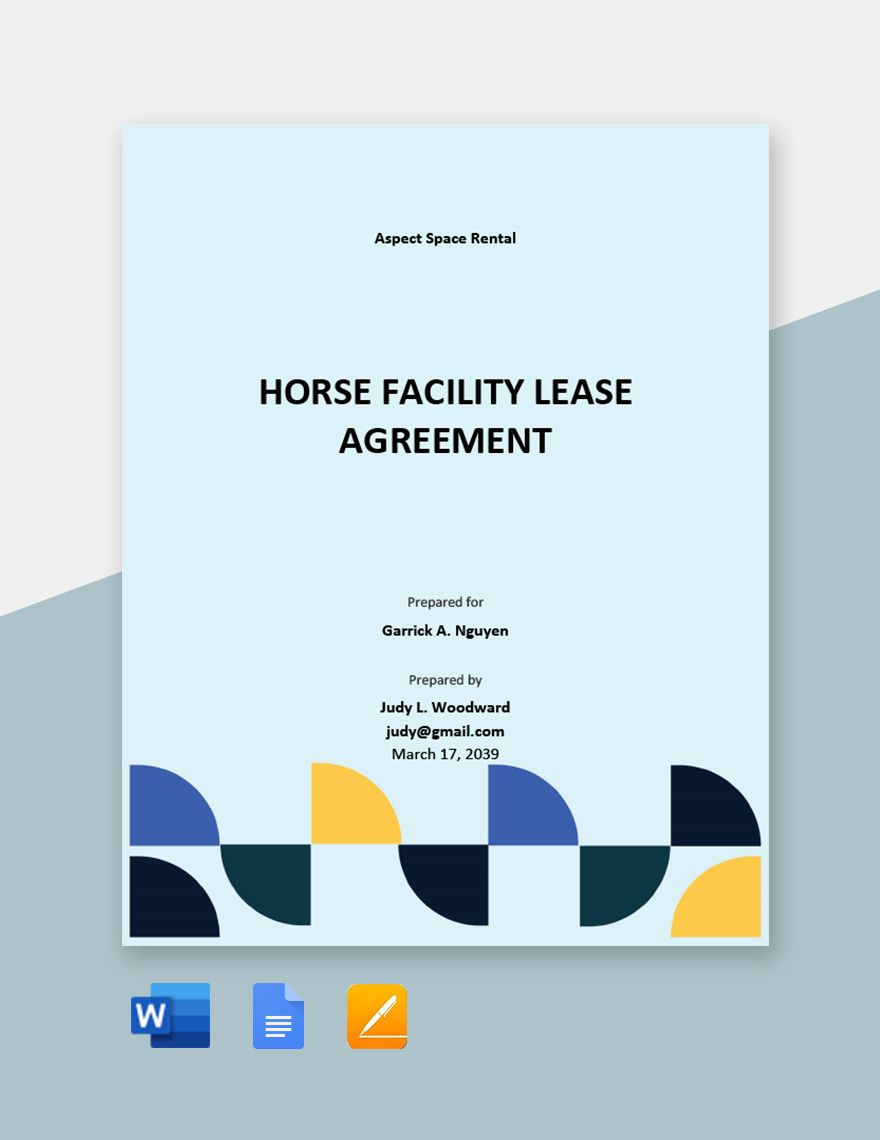
The important issue is not the file extension itself. The document should contain accurate information and terms that reflect the actual arrangement.
Agreements for Events and Grooming
Event Arrangements
Horse agreement templates for events can help organize arrangements involving shows, exhibitions, clinics, demonstrations, parades, photography sessions, or other equestrian activities.
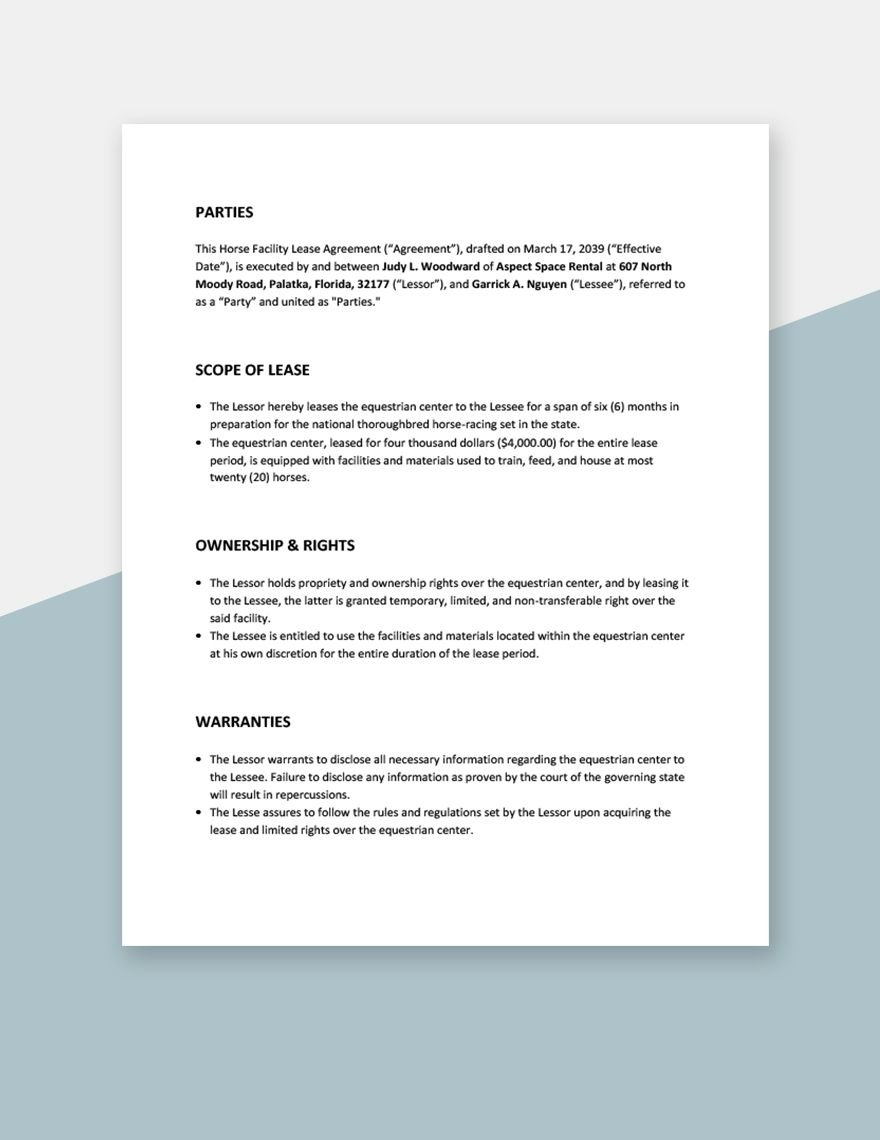
Consider documenting transportation, event dates, rider permissions, entry costs, equipment, scheduling, emergency procedures, and responsibility for the horse during travel. If several people participate, define each person’s role before the event begins.
Grooming Services
Horse agreement templates for grooming can establish the scope of services between a horse owner and groomer. Depending on the arrangement, services may include bathing, brushing, mane and tail care, clipping, preparation for competitions, or routine grooming.
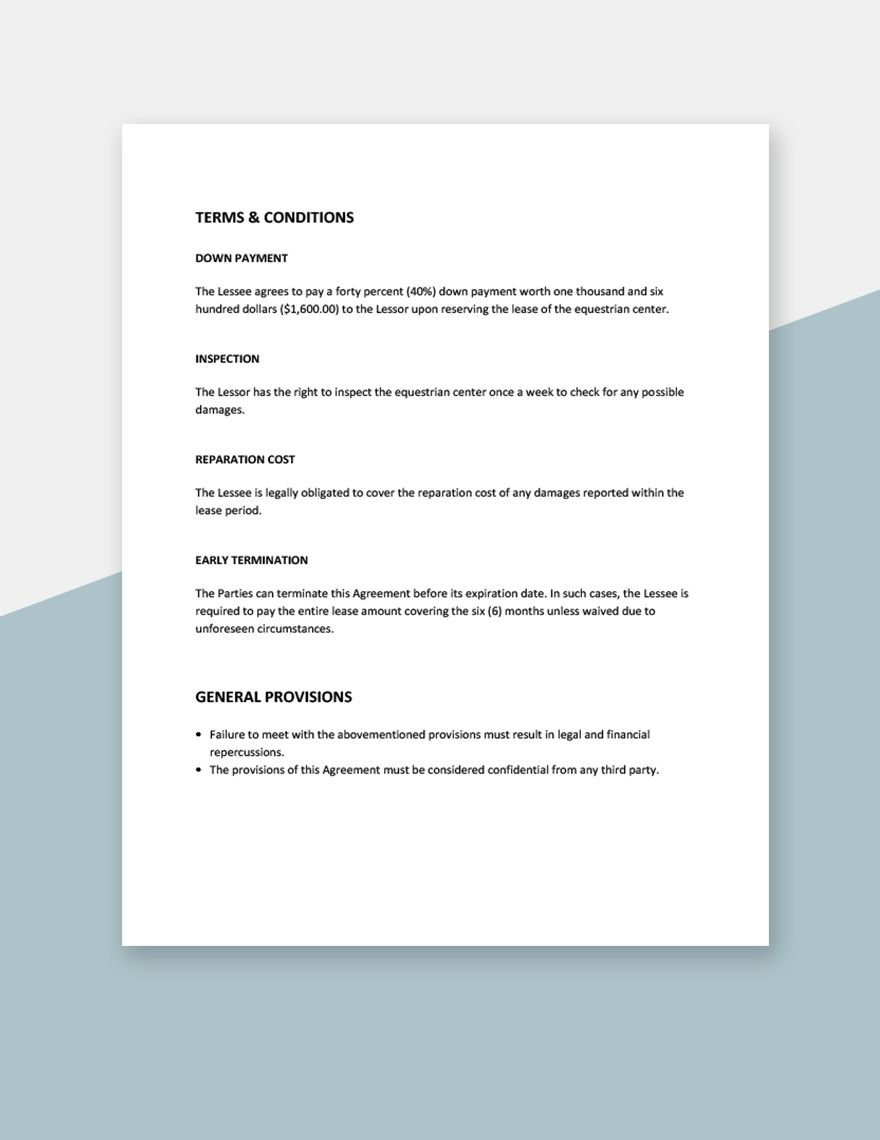
The agreement should also address scheduling, pricing, cancellation, handling requirements, and what happens if the horse cannot safely receive a particular service.
How to Customize a Horse Agreement
A template should be treated as a starting framework. Before signing, review every section and adapt it to the actual situation.
First, remove provisions that are irrelevant. Then add details that are specific to the horse and the transaction. This prevents the final document from containing confusing clauses that do not apply.
- Confirm the identity and contact information of every party.
- Complete all horse identification fields.
- Define the purpose and duration of the arrangement.
- State payment amounts and due dates.
- Explain responsibility for veterinary and farrier expenses.
- Describe feeding, grooming, exercise, and turnout expectations.
- Define transportation responsibilities.
- Address emergencies and communication procedures.
- Explain termination and return requirements.
- Review the completed document before signing.
Common Mistakes to Avoid
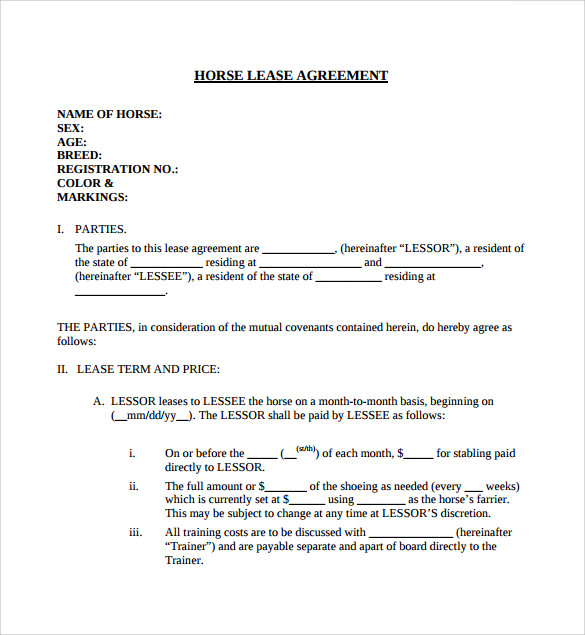
One frequent mistake is using vague descriptions. If the arrangement involves a particular horse, identify that horse precisely rather than relying on a general description.
Another problem is failing to define expenses. A horse may require unexpected veterinary treatment, medication, transportation, or special care. The agreement should explain who is responsible for those costs.
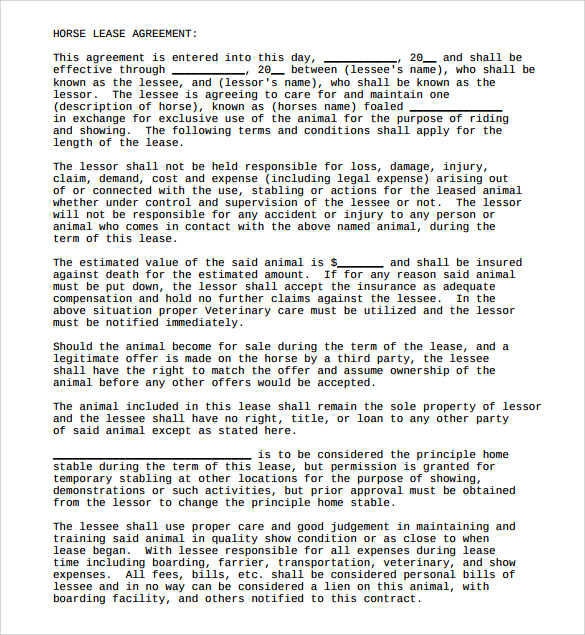
Termination is another area that deserves attention. The document should explain how notice is provided, when the agreement ends, where the horse goes afterward, and how outstanding balances are handled.
How to Select the Right Agreement
When comparing Horse Agreement Templates, start with the transaction rather than the document’s appearance. A visually polished template may still omit provisions that matter to your situation.
- Choose a lease format for temporary use arrangements.
- Choose a purchase format for ownership transfers.
- Choose a boarding format for stable-based care.
- Choose a service format for grooming or training arrangements.
- Use an event-focused format when transportation and event participation are central.
Also consider whether the document provides enough room for customized terms. An agreement that allows detailed payment, care, health, liability, and termination provisions is generally more adaptable than a very short form with limited fields.
Practical Advice for Buyers and Sellers
Advice for Buyers
Review the horse’s identification and available health information carefully. If a veterinary examination is part of the transaction, make sure the agreement clearly explains the process and timing.
Before paying a deposit, understand whether it is applied to the purchase price and under which circumstances it may be returned. Ask questions about registration papers, delivery, equipment, and known conditions before signing.
Advice for Sellers
Provide accurate information about the horse and document important representations. Identify what equipment, records, or documents are included with the sale.
Make the payment schedule and ownership-transfer conditions clear. If possession occurs before full payment, the agreement should specifically address that arrangement.
Advice for Horse Owners
Owners using boarding, leasing, grooming, or training services should define expectations before the horse enters another person’s care. Written instructions can cover feeding, exercise, medications, turnout, emergency contacts, and restrictions on activities.
Frequently Asked Questions
What should a horse agreement include?
A strong agreement generally identifies the parties and horse, defines the purpose, states financial terms, assigns responsibilities, addresses health and emergency care, establishes termination procedures, and includes signatures and dates.
Can a horse lease agreement cover riding restrictions?
Yes. A lease can specify permitted riders, riding activities, locations, competition participation, jumping restrictions, transportation, and other conditions established by the owner.
What information should appear in a horse sale agreement?
The document should normally include buyer and seller details, complete horse identification, purchase price, deposit terms when applicable, payment schedule, veterinary conditions, delivery arrangements, ownership transfer, and signatures.
Why is a deposit clause important?
A deposit clause explains the amount paid in advance and how that amount is treated if the transaction proceeds, is cancelled, or fails to meet a stated condition. Clear wording can prevent disagreements later.
Should a boarding agreement include emergency veterinary care?
Yes. Boarding arrangements should explain who may contact a veterinarian, what happens if the owner cannot be reached, and how emergency treatment costs are handled.
Final Thoughts on Horse Agreement Templates
The most useful Horse Agreement Templates are those that clearly match the actual equine arrangement. A lease requires different terms from a purchase, while boarding, grooming, training, and event arrangements each have their own practical considerations.
Before signing, verify the horse’s identity, clarify financial obligations, document health information, assign care responsibilities, address emergencies, and establish clear termination procedures. For significant transactions or agreements involving complicated ownership, liability, or financial conditions, professional legal review can provide additional protection.
A carefully completed agreement does more than organize paperwork. It gives everyone involved a shared understanding of the arrangement and provides a practical reference throughout the relationship. Taking time to customize the document before signing can make horse sales, leases, boarding arrangements, and equine services much easier to manage.